

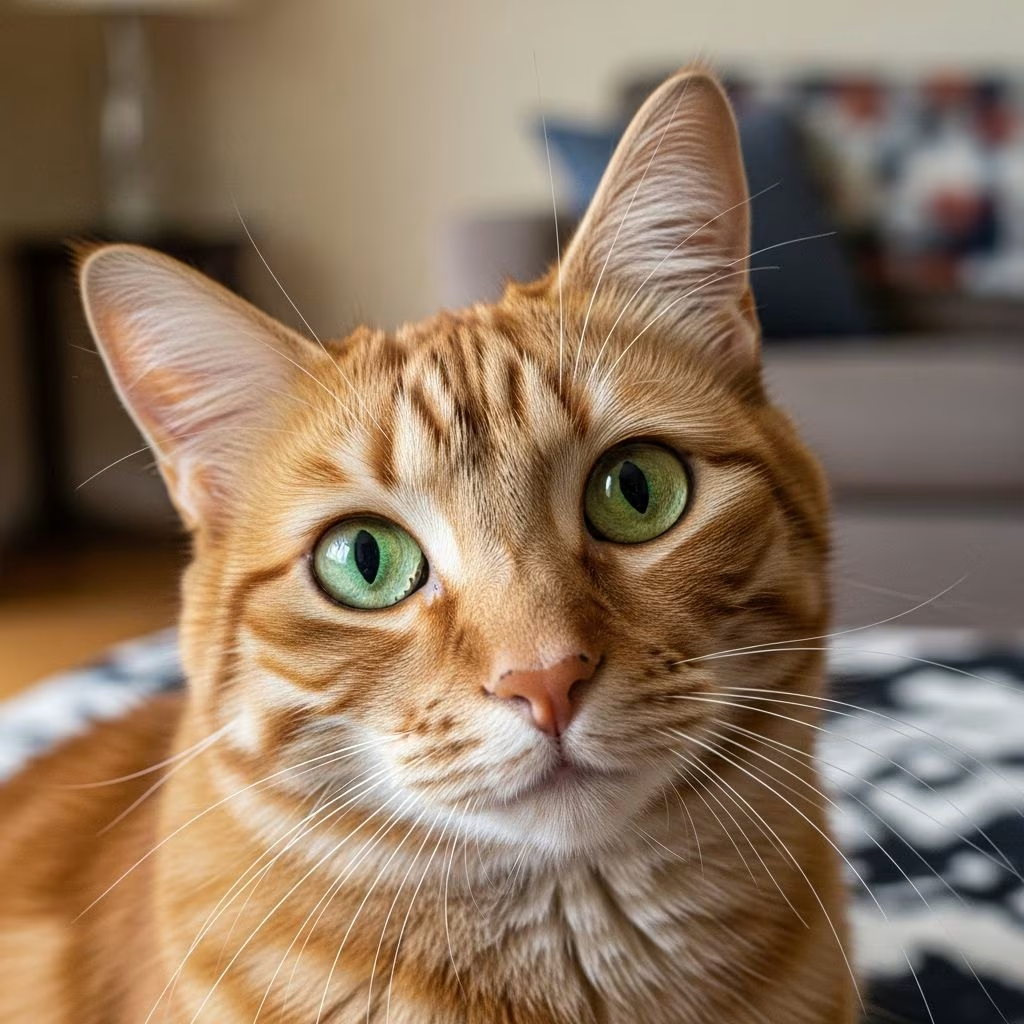
Why Do Cats Invade Your Personal Space?
If you’ve ever wondered why your cat seems determined to sit on your lap, jump onto your bed, or rest directly on your laptop while you’re trying to work, you’re not alone. This common feline behavior can be both endearing and occasionally frustrating. The truth is, when your cat invades your personal space, it’s usually a sign that something meaningful is happening in your relationship. Understanding the reasons behind this behavior can deepen your appreciation for your feline companion and help you navigate life with a cat who believes your space is their space.
The Power of the Bond: When Your Cat Loves You
The primary reason cats invade your personal space is surprisingly straightforward: they love you. When a strong and trusting bond has formed between you and your cat, they will want to be everywhere you are, and the closer the better. Cats are selective creatures by nature, so if your cat has chosen to be your constant companion, it’s a testament to the special connection you share.
Cats seek your attention, affection, and comfort. When they rest on your lap or curl up beside you, they’re not just looking for a warm spot—they’re seeking security and reassurance from the person they trust most. If your cat is stealing your space and constantly wanting your attention, it means the bond is quite strong. This behavior indicates that as an owner, you’re doing something right. Your pet would rather be with you than doing almost anything else, which is the ultimate compliment from a creature known for their independence.
Territory and Possession: Your Cat’s Claim to You
Beyond simple affection, cats invade personal space as a way of marking territory and establishing possession. Cats are inherently territorial beings, and this extends to their relationships with their favorite humans. When your cat rubs against you, sits on your belongings, or positions themselves between you and others, they’re engaging in a behavior known as bunting.
Cats have scent glands located on their cheeks, paws, and tails, which they use to deposit their unique scent on objects and areas. This behavior serves multiple purposes:
- Creating a familiar, comforting environment that reduces stress and anxiety
- Claiming you as part of their territory
- Marking resources they consider valuable
- Establishing social bonds within their household
When your cat sits on your keyboard or bed, they’re essentially saying, “This belongs to me, and so do you.” This possessive behavior is a natural expression of their territorial nature and should be understood as a sign of attachment rather than aggression or stubbornness.
The Paradox of Personal Space: Why Your Cat Demands It But Won’t Respect Yours
Here’s an interesting contradiction in cat behavior: cats can become quite upset when you invade their personal space, yet they seemingly have no issue whatsoever with taking your seat on the sofa, jumping on your bed, or resting on your laptop. This apparent double standard is rooted in their evolutionary biology and social hierarchy.
Like most animals and people, cats are surrounded by an invisible envelope of personal space. Most animals don’t like having this space invaded by others, except under certain circumstances. Cats, being a more solitary species, have a bigger personal space than dogs of the same size, which are a more social species. When this space is invaded, the animal either moves away to put the intruder outside the personal space envelope, or threatens or attacks to move the intruder away.
However, when it comes to invading your personal space, your cat operates under different rules. In their mind, they’ve established a hierarchical relationship with you where they have the privilege to enter your space whenever they choose. This isn’t disrespect—it’s confidence in the relationship and a reflection of their perceived status within your shared environment.
Security and Comfort: What Your Cat Really Needs
Beneath the surface of your cat’s space-invading behavior lies a fundamental need for security. Cats are both predators and prey in the wild, and this duality shapes their behavior in domestic settings. Small, enclosed spaces and proximity to trusted companions offer a sense of security and protection from potential threats.
Your cat views you as:
- A source of protection and safety
- A familiar anchor in their environment
- A provider of comfort and reassurance
- A territory they’ve successfully claimed
When your cat invades your personal space, they’re not just seeking attention—they’re seeking the emotional and psychological benefits that come from being close to someone they trust. This behavior is particularly pronounced when cats are stressed, anxious, or experiencing changes in their environment. Your presence serves as a calming influence, and physical proximity helps regulate their stress levels.
Cats Living Together: Multiple Cats and Personal Space Conflicts
Understanding personal space becomes even more important when you have multiple cats in your household. Some of the fighting that occurs between cats living together seems to be caused by invasions of personal space rather than dominance issues, possessiveness or even territoriality. Many, but not all, cats are tolerant of other cats if the others don’t come too close.
In multi-cat households, personal space conflicts can arise from:
- Insufficient space for each cat to retreat and feel secure
- Sudden movements that place one cat in another’s personal space envelope
- Blocked access to resources like litter boxes and feeding areas
- Lack of vertical spaces where cats can escape from each other
This is why providing plenty of space where cats can get away from each other can reduce distress and reduce fighting. In limited indoor environments, vertical space is particularly valuable. Adding perches, kitty climbers, and even cat walks along the walls can help cats stay out of the personal space of others and prevent conflicts.
Possessive Behavior: When Your Cat Gets Jealous
Your cat’s space invasion can sometimes escalate into possessive behavior, particularly when other people or pets enter the picture. If you are a pet parent in a multiple-cat household, you might feel like the object of some seemingly jealous cat behavior. This is quite a common scenario, regardless of whether those cats have grown up together or not.
Triggers for excessive possessive behavior include:
- Living with multiple cats
- Guests visiting the home
- New human family members
- Introduction of new cats to the household
- Neighborhood cats intruding on core territory
When guests or other pets divide your attention, your cat may respond with space-guarding, where they sit on or next to you and lash out at whoever comes into your personal space. Alternatively, your cat might distance themselves from the whole situation and put up a barrier of aggression. This behavior stems entirely from their discomfort with the proceedings and should never be punished, as cats lack the ability to rationalize actions as retaliation.
Respecting Your Cat’s Boundaries While They Invade Yours
While your cat may feel free to invade your personal space, it’s important to remember that they still need their boundaries respected. If a cat rests in a common area of the house, people may think they can reach out and touch the cat because they are part of the environment, but it can be a serious problem if the cat sees this as an invasion of territory and strikes out with claws or teeth to defend itself.
Key considerations for respecting your cat’s space include:
- Watching for tail signals—a stiff or quivering tail may indicate investigation, not friendliness
- Allowing your cat to initiate contact rather than forcing interaction
- Recognizing that resting in a common area doesn’t always mean your cat wants to be touched
- Understanding that your cat’s need for space can vary based on mood and stress levels
- Creating dedicated spaces where your cat can retreat without disturbance
Creating the Right Balance: Managing Space in Your Home
Successfully living with a cat who invades your personal space while respecting their need for personal boundaries requires thoughtful environmental design. Here are practical strategies:
| Strategy | Purpose | Implementation |
|---|---|---|
| Vertical Spaces | Allows cats to escape without leaving the room | Install cat shelves, climbing trees, and wall-mounted perches |
| Multiple Resources | Reduces competition and territorial conflicts | Provide multiple litter boxes, water bowls, and feeding stations |
| Quiet Retreats | Offers security and stress relief | Create enclosed spaces like cat tents or boxes in quiet areas |
| Scent Management | Helps cats feel secure in their territory | Allow natural scent marking; minimize frequent cleaning of marked areas |
| Interactive Zones | Dedicates specific areas for bonding | Set up comfortable seating where your cat can be close without monopolizing your entire space |
What Your Cat’s Space Invasion Really Means
When your cat invades your personal space, they’re communicating multiple things at once. They’re expressing affection, establishing territory, seeking security, and reinforcing the bond you share. Rather than viewing this behavior as annoying or clingy, it’s helpful to reframe it as a compliment. Your cat has chosen you as their trusted companion and safe space in an unpredictable world.
The fact that your cat wants to be close to you, sit on your lap, or follow you from room to room suggests that you’ve successfully provided them with:
- A safe, secure environment
- Consistent care and attention
- Trust and predictability
- A valuable territory worth defending
Frequently Asked Questions (FAQs)
Q: Why does my cat sit on my keyboard or phone?
A: Your cat sits on your devices not to be deliberately annoying, but because they want your attention and see those objects as competition for your focus. By sitting on them, your cat is claiming both the items and you as part of their territory while demanding interaction.
Q: Is it normal for cats to be possessive of their owners?
A: Yes, possessive behavior is normal in cats, especially when they’ve formed a strong bond with their owner. This behavior is particularly common in single-cat households and may intensify when visitors or new family members arrive.
Q: How can I help my cat feel secure without encouraging excessive space invasion?
A: Create dedicated bonding spaces like comfortable seating where your cat can be close while you work. Additionally, provide vertical spaces, hiding spots, and multiple resources throughout your home so your cat feels secure even when apart from you.
Q: What should I do if my cat becomes aggressive when I try to move them?
A: Never punish aggressive behavior, as cats don’t act in retaliation. Instead, gently move to another location and allow your cat to follow. Understanding that the behavior stems from their need for closeness and security can help you respond with patience rather than frustration.
Q: Why do my cats fight over personal space?
A: Cats are solitary animals with larger personal space requirements than social animals. Multi-cat fighting often results from insufficient space and resources. Provide vertical spaces, multiple litter boxes, and separate feeding areas to reduce conflicts.
Q: Does my cat invading my space mean they love me?
A: Generally yes. When a strong and trusting bond has formed, your cat will want to be everywhere you are. If your cat prefers being with you over other activities, it indicates a solid, loving relationship built on trust and security.
References
- Cats and Personal Space — Animal Behavior Associates. Accessed January 2026. https://animalbehaviorassociates.com/cats-personal-space/
- Why Do Cats Invade Your Personal Space? — YouTube. Accessed January 2026. https://www.youtube.com/watch?v=TEU0xjfhTEo
- Conflict between cats — International Cat Care. Accessed January 2026. https://icatcare.org/articles/conflict-between-cats
- Why Does Your Cat Crave Their Own Space? — Felix Cat Insurance. Accessed January 2026. https://www.felixcatinsurance.com/blog/cats-crave-shelter-indoors/
- Are Cats Possessive of Their Owners? — Cats.com. Accessed January 2026. https://cats.com/are-cats-possessive-of-their-owners
- Understanding Cat Behavior: Getting Visitors to Respect Your Cat’s Space — PetMD. Accessed January 2026. https://www.petmd.com/cat/behavior/understanding-cat-behavior-getting-visitors-respect-your-cats-space



