

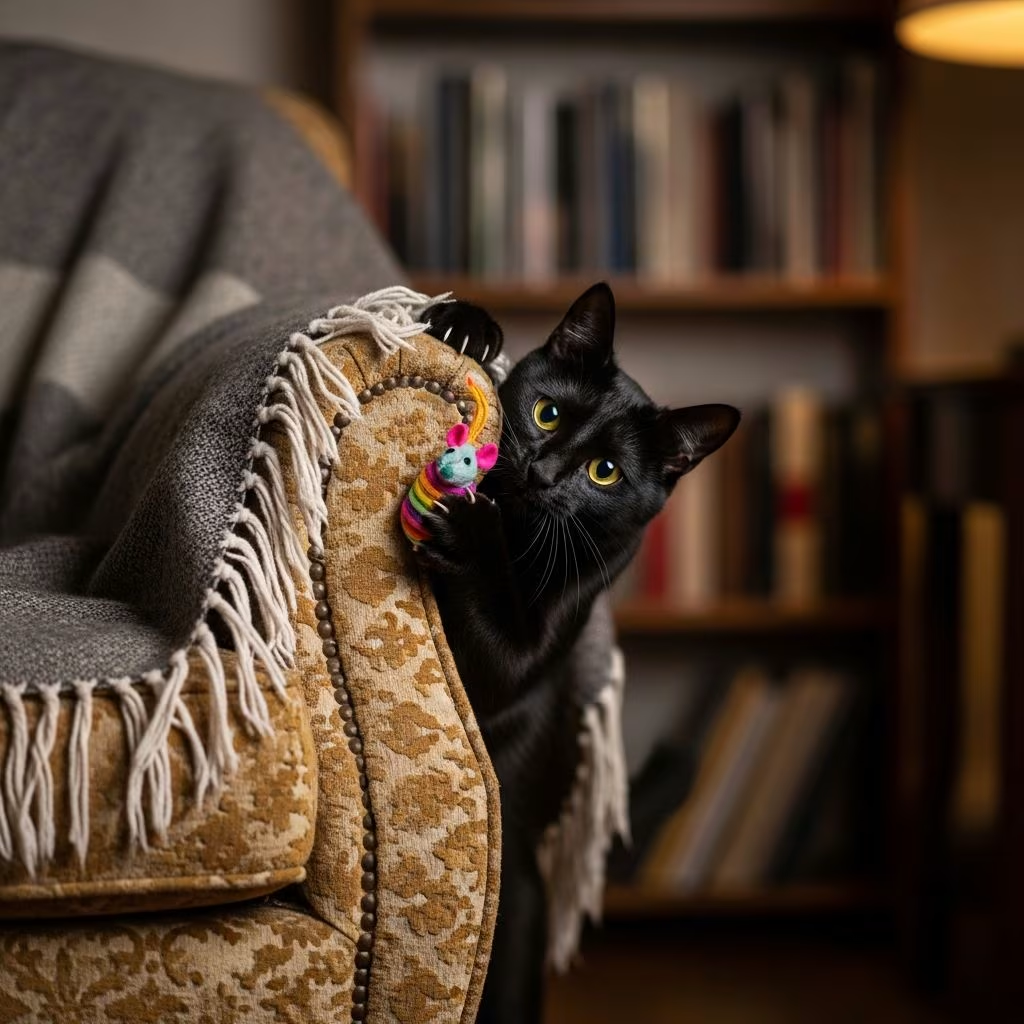
Cats hiding their toys is a common and intriguing behavior observed in many households. This quirky habit stems from deep-rooted instincts inherited from their wild ancestors, where hiding resources was essential for survival. Domestic cats, despite their comfortable lives, retain these primal urges, treating toys as surrogate prey or kittens to be safeguarded. Understanding this behavior not only strengthens the bond between cat owners and their pets but also helps address any underlying needs or environmental factors that might influence it.
In the wild, cats hide kills to protect them from scavengers, save them for later consumption, or relocate offspring to safer spots. These actions translate seamlessly into modern homes, where a plush mouse or jingly ball becomes the object of concealment under couches, in closets, or even in food bowls. This article delves into the primary reasons cats engage in this behavior, drawing from feline behavioral science and expert observations.
Instinctual Reasons Cats Hide Toys
The core driver behind cats hiding toys is their evolutionary biology. Cats are obligate carnivores with hunting instincts finely tuned over millennia. When a cat ‘catches’ a toy during play, it mimics a successful hunt, prompting them to cache it away instinctively.
- Caching Prey for Later: Wild cats often bury or hide excess food to consume later, avoiding spoilage or theft. Domestic cats replicate this by stashing toys in hidden spots, signaling a ‘kill’ they plan to return to.
- Protection from Threats: Even in safe homes, cats perceive potential dangers like vacuums or unfamiliar noises, leading them to hide ‘prey’ in secure locations such as food bowls.
- Territorial Hoarding: Cats hoard items to assert ownership, gathering toys in one place much like wild felines consolidate resources.
These behaviors are not random; they reflect a cat’s need for control and security in their environment. Studies on feline ethology confirm that such actions peak during play sessions that simulate hunting, with toys serving as perfect stand-ins for rodents or birds.
Why Cats Treat Toys Like Kittens
One particularly endearing reason is maternal instinct. Mother cats frequently move their kittens to hidden, safe locations to protect them from predators. Neutered or unneutered female cats—and surprisingly, males too—may exhibit this by relocating toys as if they were offspring.
This ‘kitten-carrying’ behavior involves gently picking up toys by the scruff and depositing them in secluded areas. It’s a nurturing impulse that provides comfort, especially for cats separated from litters early or those with strong protective drives. Observers note that cats who hide toys this way often purr contentedly afterward, indicating satisfaction.
Male cats display similar tendencies, possibly as a form of pseudo-parenting, reinforcing the idea that this is a hardwired survival trait rather than gender-specific. Providing ample hiding spots or tunnels can channel this positively, turning it into enriching play.
Hiding Toys as a Form of Play and Ambush
Not all hiding is serious business; sometimes it’s pure feline mischief. Cats love to hide toys (and themselves) to set up ambushes, pouncing out in a burst of energy. This mirrors stalking prey in tall grass, where concealment heightens the thrill of the chase.
Owners often find toys tucked under furniture, only for the cat to ‘hunt’ them later. This extends play sessions, keeping cats mentally stimulated. Interactive toys like feather wands exacerbate this, as cats hide them to prolong the fun. Encouraging safe hiding spots, such as cat tunnels or boxes, satisfies this without household chaos.
Unusual Hiding Spots: Food Bowls and Beyond
Cats get creative with hiding places. A frequent oddity is dropping toys into food or water bowls, which puzzles many owners.
| Common Hiding Spot | Possible Reason | Examples |
|---|---|---|
| Food Bowl | Safe storage mimicking a den | Plush mice, balls |
| Under Couch/Bed | Protection from ‘predators’ | Jingly toys, strings |
| Closets or Laundry | Territorial caching | Small fabric toys |
| Water Bowl | ‘Drowning’ or cleaning prey | Small rubber toys |
Food bowls represent security tied to sustenance, making them ideal for ‘saving prey.’ Water bowls evoke wild tactics of drowning prey to store it safely. These spots are convenient, central, and scent-marked by the cat, enhancing ownership feelings.
When Hiding Toys Signals Stress or Health Issues
While usually benign, excessive toy-hiding paired with withdrawal might indicate stress. Changes like new pets, moves, or loud environments trigger hiding as a coping mechanism. Cats also hide when ill, seeking quiet recovery spots.
- Monitor for signs: Lethargy, appetite loss, or unusual aggression.
- Consult a vet if hiding increases suddenly.
Environmental enrichment—scratching posts, perches, pheromone diffusers—reduces stress-induced hiding. Patience is key; forcing emergence heightens anxiety.
Tips for Cat Owners: Managing Toy-Hiding Habits
Embrace the behavior while minimizing mess:
- Rotate Toys: Introduce new ones periodically to prevent over-hoarding.
- Provide Designated Spots: Boxes, tunnels, or toy baskets encourage organized hiding.
- Play to Exhaustion: Daily sessions satisfy hunting urges, reducing random stashing.
- Cleanup Routines: Gently collect hidden toys at night, mimicking natural cycles.
- Observe Patterns: Track spots to understand your cat’s preferences.
These strategies enhance welfare, preventing boredom-linked behaviors like excessive meowing or furniture scratching.
Expert Insights on Feline Caching Behavior
Behaviorists emphasize that suppressing instincts harms well-being. Allowing moderate hiding fosters confidence. Research from feline welfare organizations supports enrichment mimicking wild behaviors for happier cats. Neutering influences intensity but doesn’t eliminate it, as instincts persist.
In multi-cat homes, competition amplifies hoarding—ensure individual resources to curb rivalry.
Frequently Asked Questions (FAQs)
Why does my cat hide her toys under the bed?
This mimics wild caching for protection. Bedsides offer dark, enclosed safety, ideal for ‘saving prey’ from perceived threats.
Is it normal for cats to put toys in their food bowl?
Yes, food bowls symbolize security. Cats ‘store’ toys there like a den, or show pride in their ‘kill’.
Why does my male cat carry toys like kittens?
Males exhibit maternal instincts too, relocating toys for protection, a nurturing remnant from wild ancestry.
Should I stop my cat from hiding toys?
No, it’s healthy unless excessive. Provide alternatives to direct chaos, supporting natural behaviors.
What if my cat suddenly starts hiding more toys?
Check for stress or health issues. New environments or illness prompt increased hiding; vet check recommended.
Do all cats hide their toys?
Not all, but most do occasionally. Personality, age, and environment influence frequency.
References
- Why do Cats Hide? | Understanding Your Cat’s Behaviour — Feline Fancy. 2023-05-15. https://felinefancy.co.uk/blogs/cat-care-tips/why-do-cats-hide
- Why Cats Put Toys in their Food Bowl — Portage Park Animal Hospital. 2024-02-10. https://www.portagepark.com/blog/why-cats-put-toys-in-food-bowl
- Why Do Cats Hide Their Toys? — YouTube (Feline Behavior Channel). 2022-11-20. https://www.youtube.com/watch?v=f6IzJ7AOWck
- Cats who “crush” on the Hide and Sneak — Dezi & Roo. 2023-08-05. https://deziroo.com/blogs/pawsitive-connections/cats-who-crush-on-the-hide-and-sneak
- Why do cats hide things? — Way of Cats. 2021-03-12. https://www.wayofcats.com/blog/do-cats-hide-things/277



