

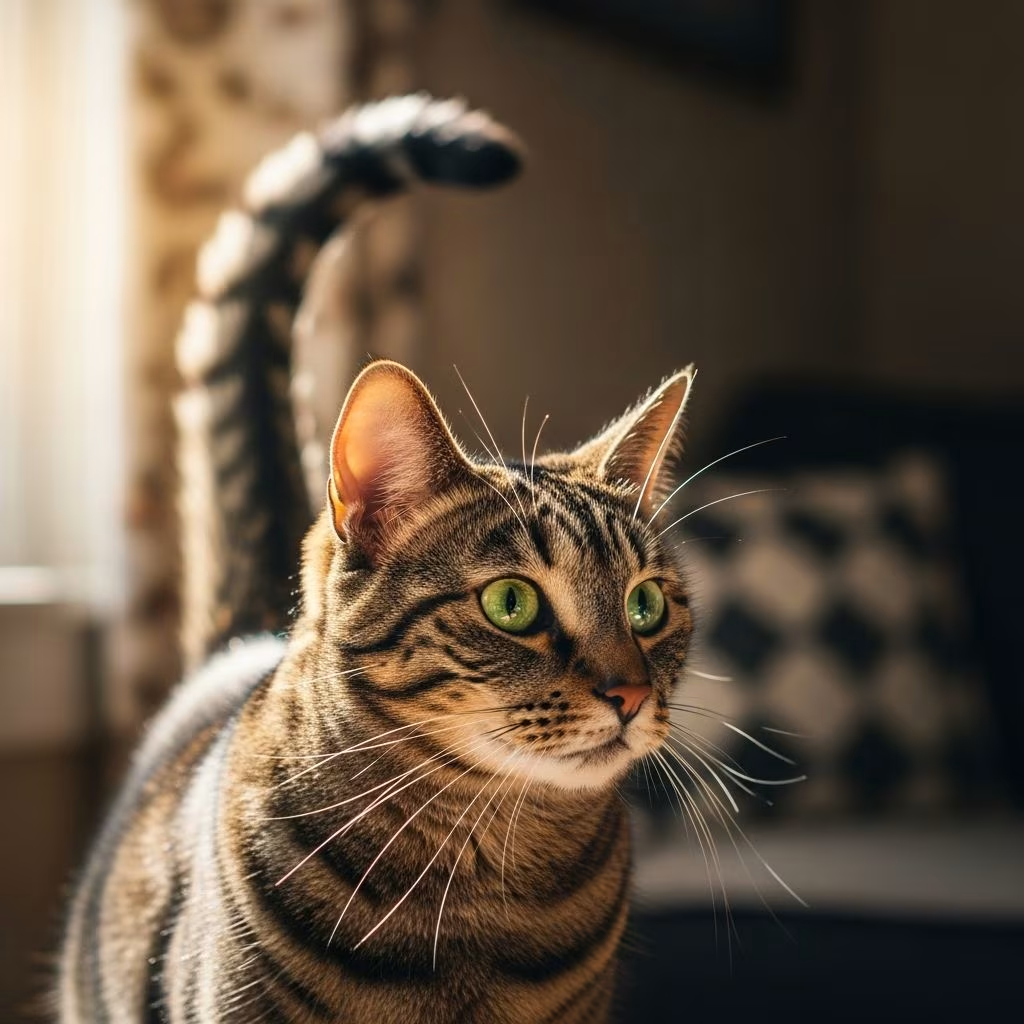
Cats possess tails as a crucial extension of their spine, serving multiple essential functions that enhance survival, communication, and mobility. Composed of up to 23 caudal vertebrae, muscles, nerves, and blood vessels, the tail is a dynamic structure unique to felines.
Cat Tail Anatomy
The tail of a cat is an intricate part of its skeletal system, extending from the end of the vertebral column. It consists of 19 to 23 caudal vertebrae in long-tailed breeds, which decrease in size from base to tip, allowing remarkable flexibility. These vertebrae are separated by soft intervertebral discs that cushion movements and enable precise control.
Surrounding the bones is a complex musculature, including key muscles such as the M. sacrocaudalis dorsalis medialis (SDM), M. sacrocaudalis dorsalis lateralis (SDL), M. coccygeus lateralis (CL), M. coccygeus medialis (CM), M. sacrocaudalis ventralis lateralis (SVL), and M. sacrocaudalis ventralis medialis (SVM). These muscles, attached via tendons, originate from the lumbar vertebrae, sacrum, and pelvic structures, enabling the tail to lift, sway, curl, or tuck.
Nerves from four to seven paired branches innervate the tail, transmitting sensory information and motor signals. Blood vessels supply nutrients, making the tail highly vascularized and sensitive to injury. This anatomy allows cats to perform finely graded movements, essential for their agile lifestyle.
Balance and Coordination
One primary reason cats have tails is for balance and coordination, acting as a counterweight during high-speed chases, leaps, and tight turns. The caudal vertebrae form the tail, used by cats as a counterbalance during quick movements, aided by elastic discs between vertebrae for shock absorption.
When a cat jumps or lands, the tail instinctively adjusts position to redistribute weight and prevent tumbling. Studies on feline locomotion show that tailless cats, like Manx breeds, struggle more with stability on narrow surfaces or during rapid directional changes. The tail’s musculature, particularly the SDL and SVL with their long tendons, produces rapid, strong movements for precise corrections.
- High jumps: Tail extends backward to counter forward momentum.
- Running turns: Tail whips sideways to shift center of gravity.
- Landing: Tail flares or curls to stabilize upright posture.
This function is evolutionarily adapted for hunting, where cats must navigate branches or uneven terrain silently and swiftly.
Communication and Mood Signaling
Cats use their tails as a primary communication tool, conveying emotions through distinct positions and movements. A raised tail signals confidence and greeting, often with a slight curl at the tip resembling a question mark, while a low, tucked tail indicates fear or submission.
Fast swishing typically denotes irritation or aggression, whereas slow, gentle swishes show focus, like during play or stalking prey. Puffed-up tails during Halloween-like arches signal extreme agitation or defense. These signals are universal among domestic and wild felines, aiding social interactions in colonies or with humans.
| Tail Position | Mood Indication |
|---|---|
| Straight up | Happy, friendly greeting |
| Low/slow swish | Relaxed observation |
| Fast lash | Annoyed or hunting focus |
| Tucked under | Fearful or submissive |
| Puffed and arched | Threatened, defensive |
Understanding these cues strengthens the human-cat bond and prevents misunderstandings.
Protection and Sensory Functions
The tail provides protection by shielding sensitive hindquarters, including genitals and anus, during fights or threats. Cats often draw the tail down or between legs to guard these areas. Its vascular nature also aids in thermoregulation; cats may wrap the tail around themselves for warmth or fan it to cool down.
Sensorily, the tail is rich in nerve endings, detecting air currents, nearby objects, or subtle environmental changes. This heightened sensitivity helps in low-light hunting, where whiskers and tail work synergistically.
Other Functions of the Tail
Beyond core roles, cat tails serve in grooming—cats wrap their tails around paws to clean hard-to-reach spots—and mating rituals. During courtship, toms raise and quiver their tails while spraying pheromones, and queens deflect tails to signal receptivity.
In play, tails act as lures or decoys, twitching to entice kittens or companions. Some breeds use tails for species-specific signals, like the Japanese Bobtail’s pom-pom tip.
Why Don’t All Cats Have Tails?
Not all cats have full tails due to genetics or injury. Breeds like the Manx, Pixie-bob, and American Bobtail have naturally shortened or absent tails from dominant mutations affecting caudal vertebrae development. These tailless varieties compensate with enhanced hind leg strength but face higher risks of spinal issues like Manx Syndrome, involving bowel and bladder incontinence.
Accidental tail loss from trauma, frostbite, or surgery doesn’t regrow, as tails lack regenerative capacity post-maturity. Tailless cats adapt but lose balance and communication advantages, underscoring the tail’s evolutionary importance.
Tail Injuries and Common Problems
Tail injuries are common due to the structure’s exposure. “Tail pull” or degloving injuries occur when slammed in doors, fracturing vertebrae or avulsing nerves and blood supply at the base. Symptoms include limp tail, swelling, pain, or dragging.
- Fractures: From falls or impacts; may require amputation if severe.
- Nerve damage: Leads to incontinence or paralysis.
- Infections: From bites or wounds; treat with antibiotics.
First aid involves cleaning wounds, immobilizing with a splint, and seeking veterinary care immediately, as spinal extension means injuries can affect bladder control or hind limbs. X-rays confirm damage; conservative management heals minor cases, while amputations preserve quality of life in chronic pain.
How to Care for Your Cat’s Tail
Prevent issues by supervising around doors, providing safe climbing, and regular grooming to check for parasites or matting. Monitor for changes in carriage, as persistent abnormalities signal health concerns like pain or neurological issues.
Nutrition with omega-3s supports skin and coat health around the tail base. Annual vet exams catch early problems. For tailless breeds, focus on core strength exercises via agility play.
Frequently Asked Questions (FAQs)
Do cats have bones in their tails?
Yes, cats have 19-23 caudal vertebrae (bones) in their tails, smaller toward the tip for flexibility.
Why do cats chase their tails?
Tail chasing stems from play, boredom, fleas, or compulsive behavior; ensure parasite-free and enrich environment.
Can a cat’s tail heal if broken?
Minor fractures heal with rest and splinting, but severe cases may need surgery or amputation.
What does it mean if a cat’s tail is twitching?
Twitching indicates excitement, irritation, or hunting focus; context matters.
Are tailless cats unhealthy?
Genetic tailless breeds risk spinal defects; choose reputable breeders and monitor health.
References
- Structure and Function of the Tail in Cats — PetPlace.com. Accessed 2026. https://www.petplace.com/article/cats/pet-health/structure-and-function-of-the-tail-in-cats
- Anatomical structure and action of the tail muscles in the cat — PubMed (Journal of Veterinary Medical Science). 1994-01-01. https://pubmed.ncbi.nlm.nih.gov/7696400/
- Do Cats Have Bones in Their Tails? Feline Anatomy Explained — Catster. Accessed 2026. https://www.catster.com/cat-health-care/do-cats-have-bones-in-their-tails/
- First Aid for Tail Injuries in Cats — VCA Animal Hospitals. Accessed 2026. https://vcahospitals.com/know-your-pet/first-aid-for-injured-tails-in-cats
- Cat anatomy — Wikipedia (referencing anatomical standards). Accessed 2026. https://en.wikipedia.org/wiki/Cat_anatomy
- The “Tail All” — The Cat Fanciers’ Association. Accessed 2026. https://cfa.org/cat-talk/the-tail-all/



