

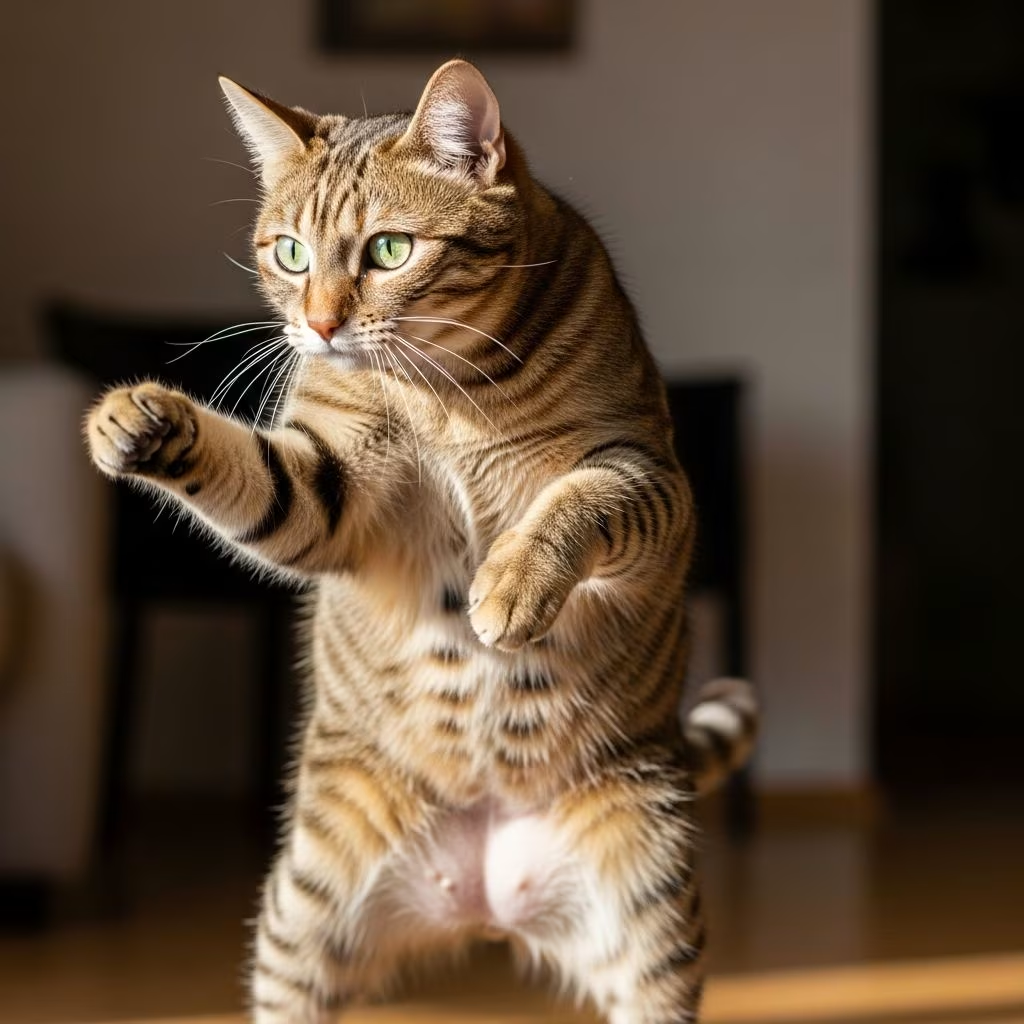
Why Do Cats Have Hanging Belly Pouches?
If you’ve ever noticed your cat’s belly swinging from side to side as they walk, you’re witnessing one of nature’s most fascinating feline features: the primordial pouch. This adorable belly flap is a perfectly normal part of cat anatomy, yet many cat owners wonder what it is and why their feline companions have it. The truth is, all cats—from your beloved tabby to majestic lions and tigers—possess this unique abdominal feature. Understanding the primordial pouch can help you better appreciate your cat’s body and recognize whether their hanging belly is a sign of health or a reason to consult your veterinarian.
What Is a Primordial Pouch?
The primordial pouch is an abdominal flap of loose skin and fatty tissue that runs along your cat’s belly, typically located between the hind limbs. This distinctive feature is composed of a mix of fat, skin, and fur that creates a sagging appearance as your cat moves. The pouch may be more or less pronounced depending on your cat’s breed, size, genetics, and age. Some cats naturally have more noticeable pouches than others, and the feature becomes increasingly visible as cats mature and age.
It’s important to note that the primordial pouch is not part of your cat’s stomach, despite its location on the belly. Rather, it’s a normal anatomical feature that develops early in a cat’s life. Both male and female kittens are born with this hanging tummy, though the pouch typically becomes more apparent around six months of age as kittens grow. The feature is so fundamental to feline biology that even newborn kittens have primordial pouches, though they may not be immediately visible in younger animals.
The Evolutionary Purpose of the Primordial Pouch
While the exact evolutionary purpose of the primordial pouch remains debated among animal experts, several well-supported theories explain why cats evolved this distinctive feature. Understanding these theories provides insight into how wild cat ancestors survived and adapted to their environments.
Protection During Combat
One of the most compelling theories suggests that the primordial pouch provides crucial protection to a cat’s internal abdominal organs. This protective function would have been especially beneficial for wild cats engaged in territorial fights or defensive encounters. When cats fight, they often use their powerful hind legs to kick their opponents with sharp claws extended. The padded cushion created by the primordial pouch acts like a protective pillow, absorbing the impact of these dangerous kicks and potentially preventing serious injury to vital organs. This defensive mechanism remains relevant even for domestic cats during rough play sessions, particularly when they engage in “bunny kicking” behavior with toys or other cats.
Enhanced Flexibility and Mobility
Another significant theory posits that the primordial pouch provides extra flexibility that enables cats to move more efficiently. The exceptional elasticity of this abdominal flap stretches like feline spandex, allowing cats to fully extend their bodies during various movements. This flexibility is particularly advantageous when cats are hunting prey or escaping from predators, as it allows them to twist, wriggle, leap, and cut from side to side quickly. The pouch’s elasticity also helps cats perform wider or longer movements than many other animals, contributing to their famous agility and athleticism. Additionally, this flexibility proves invaluable for climbing and jumping onto elevated surfaces, such as kitchen counters and cat trees.
Food Storage for Survival
For wild cats that may experience periods of food scarcity, the primordial pouch likely serves as an energy storage system. The theory suggests that the pouch acts as a fat reserve, allowing cats to eat substantial meals when prey is abundant and store the extra energy for times when food is difficult to find. This evolutionary adaptation would have been critical for wild felines that typically eat one large meal per day, such as consuming an entire gazelle rather than grazing on small amounts throughout the day.
Thermal Regulation
While less widely theorized than other functions, some experts propose that the primordial pouch may have played a role in thermal regulation by aiding with air circulation around the abdomen. This benefit, though subtle, could have contributed to the pouch’s persistence through evolutionary time.
How the Primordial Pouch Functions in Modern Domestic Cats
For today’s well-fed indoor cats, the primordial pouch may simply represent a leftover evolutionary trait inherited from wild ancestors. However, the pouch continues to serve practical functions in domestic cats’ daily lives. The elasticity of the primordial pouch allows a cat’s abdomen to expand for storing food, much like wearing loose-fitting sweatpants when enjoying a meal. This accommodation proves helpful when cats consume larger portions of food, providing comfortable space for their digestive processes. Additionally, the pouch’s flexibility continues to aid in climbing, jumping, and the twisting movements cats use when playing or stretching.
Understanding Skin Attachment in Cats
What makes the primordial pouch particularly fascinating is that cats evolved without having their skin tightly attached to their musculature, unlike many other animals. This unique adaptation provides multiple advantages beyond the primordial pouch itself. The looser skin connection allows mother cats to pick up and move kittens with ease using the scruff (excess neck skin), and it contributes to the overall flexibility that defines feline movement. This evolutionary modification makes cats remarkably twisty and turny, enabling them to navigate tight spaces, escape dangerous situations, and successfully hunt elusive prey.
Primordial Pouch vs. Weight Gain: How to Tell the Difference
One of the most common concerns among cat owners is distinguishing between a healthy primordial pouch and excessive weight gain. Understanding the differences can help you assess your cat’s health accurately.
Characteristics of a Healthy Primordial Pouch
- Appears as loose, floppy skin that swings freely from side to side when the cat walks
- Feels like a hanging bag of loose skin when you gently touch it
- May contain some fat, but should feel primarily skin-based
- Often indicates a cat at a healthy weight
- Shows no lumps or masses when gently examined
Signs of Weight-Related Belly Issues
- Abdomen appears round and solid rather than loose and floppy
- Does not sway freely as the cat moves
- Feels fatty and firm rather than like loose skin
- May indicate obesity or overweight status
- Often obscures the appearance of the natural primordial pouch
Interestingly, a prominent primordial pouch that swings noticeably when your cat walks can actually be a sign that your cat is at a healthy weight. This is because lean cats typically have more visible pouches, while overweight cats often have their pouches obscured by fatty tissue covering the abdomen. If you’re unsure whether your cat’s belly represents normal anatomy or excess weight, consult your veterinarian for a professional assessment.
Factors That Affect Primordial Pouch Prominence
Age
The primordial pouch typically becomes more pronounced with age. Kittens rarely display noticeable pouches, and the feature becomes increasingly visible as cats reach maturity. As cats age, their skin loses elasticity, causing the abdominal flap to sag more prominently. Additionally, a cat’s metabolism slows with age, making weight management more challenging and potentially contributing to a more visible pouch.
Spaying and Neutering
After spaying or neutering, cats may experience weight gain due to hormonal changes that increase appetite and decrease metabolic rate. This post-surgical weight gain can make the primordial pouch more noticeable and may contribute to overall abdominal expansion.
Pregnancy
If your unspayed female cat spends time outdoors, a noticeably sagging belly might indicate pregnancy rather than weight gain or the natural primordial pouch. Pregnant cats also develop prominent mammary glands in the abdominal area, which can be felt when gently examining the pouch.
Breed and Genetics
Some cat breeds naturally have more pronounced primordial pouches than others, depending on the breed’s size and genetic predisposition. Larger breeds and individual cats may inherit genes that result in more noticeable pouches, while others may have more subtle abdominal flaps.
Do All Cats Have Primordial Pouches?
Yes, all cats have primordial pouches. This feature is universal among felines, from domestic house cats to big cats like lions, tigers, and leopards in the wild. The pouch exists in all cats regardless of sex, age, or breed, though the prominence varies considerably. Even newborn kittens possess this anatomical feature, though it may not be immediately obvious in very young animals. The universality of the primordial pouch across all cat species underscores its evolutionary importance to feline survival and success as a species.
When to Be Concerned About Your Cat’s Belly
While the primordial pouch is a normal and healthy feature, certain signs warrant veterinary attention. You should contact your veterinarian if you notice any lumps or masses within the pouch, as these could indicate health concerns. If your cat’s abdomen appears significantly rounder and firmer than normal, this may suggest obesity requiring dietary intervention. Additionally, if the pouch appears inflamed, irritated, or if your cat shows signs of discomfort when the area is touched, professional evaluation is recommended. Sudden changes in the appearance or size of the primordial pouch may also warrant a veterinary checkup to rule out underlying health issues.
Frequently Asked Questions About Cat Belly Pouches
Q: Is my cat’s hanging belly a sign that my cat is overweight?
A: Not necessarily. A prominent, swinging primordial pouch that moves freely from side to side often indicates a cat at a healthy weight. Overweight cats typically have fatty, firm abdomens that don’t sway as freely. If you’re concerned about your cat’s weight, consult your veterinarian for professional guidance.
Q: At what age do primordial pouches become visible?
A: While all cats are born with primordial pouches, they typically become more visible around six months of age as kittens grow. The pouch becomes increasingly prominent as cats reach maturity and continue to age.
Q: Do male and female cats have primordial pouches?
A: Yes, both male and female cats have primordial pouches. This feature is not sex-specific and appears in all felines regardless of gender.
Q: Can I remove a cat’s primordial pouch through surgery?
A: While technically possible, removing a cat’s primordial pouch is not recommended. The pouch is a normal, healthy part of your cat’s anatomy and provides functional benefits. Unless there is a specific medical reason, veterinarians typically advise against surgical removal.
Q: Does the primordial pouch contain the cat’s stomach?
A: No, the primordial pouch is not part of the stomach. It is a separate abdominal flap made of loose skin and fatty tissue located between the hind limbs and running along the belly.
Q: Why do wild cats have primordial pouches?
A: Wild cats have primordial pouches for the same evolutionary reasons as domestic cats: protection during fights, enhanced flexibility for hunting and escaping predators, and energy storage during periods of food scarcity.
References
- The Primordial Pouch: All About Your Cat’s Adorable Belly Flap — Chewy. 2024. https://www.chewy.com/education/cat/health-and-wellness/yes-your-cats-belly-flap-aka-primordial-pouch-is-adorable-but-what-exactly-is-it
- The Primordial Pouch – The Belly Flap That Cats Need — Four Paws. 2024. https://www.four-paws.org.za/our-stories/the-primordial-pouch-the-belly-flap-that-cats-need
- Why Do Cats Have A Primordial Pouch? — BLVD Vet Chicago. 2024. https://www.blvd.vet/blog/why-do-cats-have-a-primordial-pouch
- What Is a Cat’s Primordial Pouch? — Hill’s Pet Nutrition. 2024. https://www.hillspet.com/cat-care/behavior-appearance/primordial-pouch-in-cats
- What Is The Primordial Pouch In Cats? — VCA Animal Hospitals. 2024. https://vcahospitals.com/pediatric/kitten/health-wellness/what-is-the-primordial-pouch
- The primordial pouch in cats: What it is and why they have it — 24PetWatch. 2024. https://www.24petwatch.com/ca/blog/what-is-the-primordial-pouch-in-cats
- Does This Belly Pouch Make Me Look Fat? — Fear Free Happy Homes. 2024. https://www.fearfreehappyhomes.com/does-this-belly-pouch-make-me-look-fat/



