

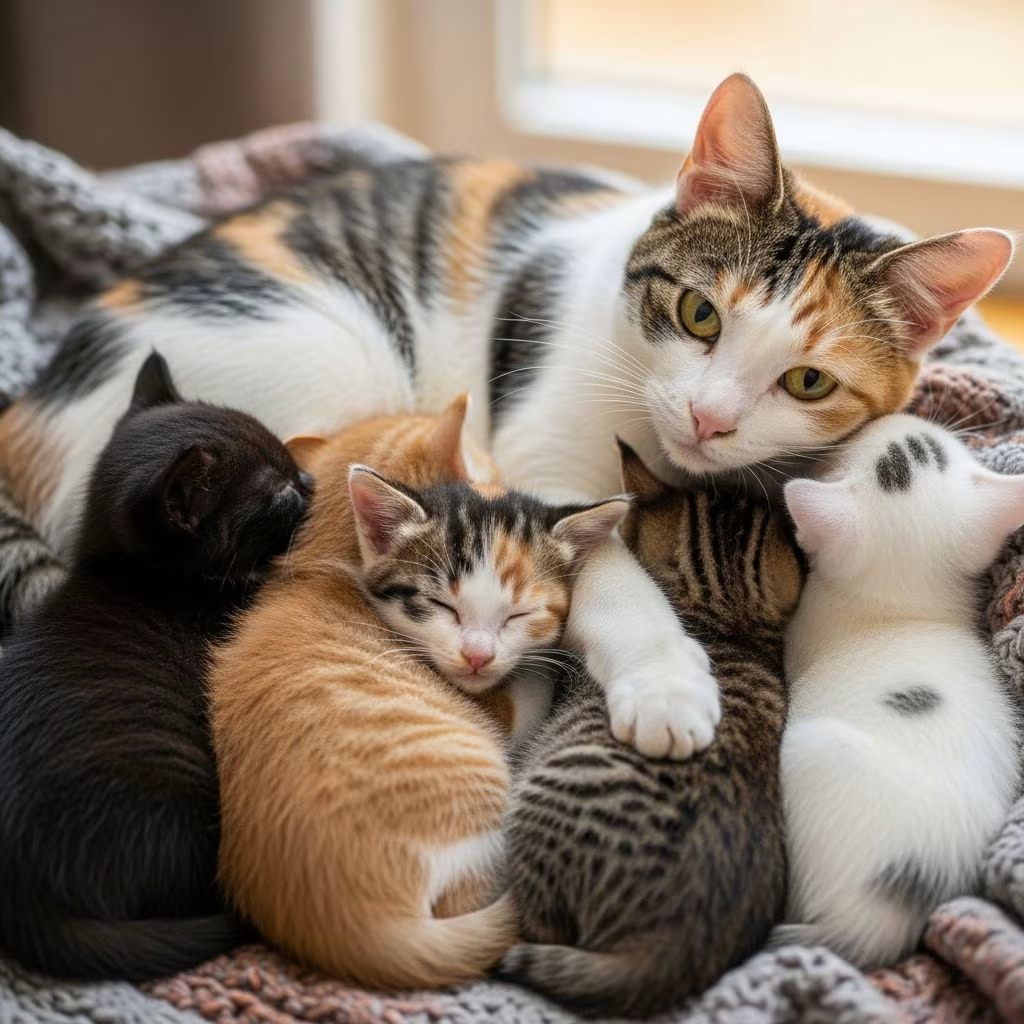
Cat owners often marvel at the diversity in a single litter, where a solid black mother cat might produce tabby, orange, and white kittens. This phenomenon stems from complex feline genetics governing coat colors and patterns. Multiple genes interact to create this variety, allowing even siblings from the same parents to display strikingly different appearances.
Understanding these genetics not only explains the surprise litters but also aids in breeding, health assessments, and appreciating feline diversity. Key factors include sex-linked traits, dominant and recessive alleles, and modifiers that influence pigmentation.
Cat Coat Genetics 101
Cat coat colors arise from two primary pigments: eumelanin (black/brown) and phaeomelanin (red/orange). Genes control their production, distribution, and dilution. The agouti gene (ASIP) determines if hairs are banded (tabby) or solid, while others like TYRP1 (brown locus) alter black to chocolate or cinnamon.
Several loci interact:
- Orange gene (O/o) on the X chromosome: Converts eumelanin to phaeomelanin, creating red tones. It’s sex-linked, explaining why orange is more common in males.
- Brown gene (B/b/b¹): B for black (dominant), b for chocolate, b¹ for cinnamon.
- Dilution gene (D/d): Recessive dd lightens colors—black to blue, orange to cream.
- Colorpoint gene (C): Variants like cs produce Siamese points.
These genes combine in countless ways, amplified during reproduction as kittens inherit random allele combinations from parents.
The Magic of the Orange Gene
The orange gene is a standout culprit for color surprises. Located on the X chromosome, females (XX) carry two copies (XO/XO orange, XO/Xo tortoiseshell/calico, Xo/Xo non-orange), while males (XY) have one (XO/Y orange, Xo/Y non-orange).
A non-orange queen (Xo/Xo) bred to an orange tom (XO/Y) yields 50% orange male and 50% tortoiseshell female kittens, mixing black-based colors with orange patches. This X-inactivation (lyonization) creates tortoiseshell mosaicism, where cells randomly express one X chromosome, blending colors uniquely per kitten.
| Mother’s Genotype | Father’s Genotype | Possible Kitten Outcomes |
|---|---|---|
| Xo/Xo (black) | XO/Y (orange) | 50% Xo/Y black males, 50% XO/Xo tortie females |
| XO/Xo (tortie) | Xo/Y (black) | 25% XO/Y orange males, 25% Xo/Y black males, 25% XO/Xo tortie females, 25% Xo/Xo black females |
| XO/XO (orange) | Xo/Y (black) | 50% XO/Y orange males, 50% XO/Xo tortie females |
This table illustrates how one litter gains variety. Pure orange females are rare, as OO requires two dominant alleles.
Other Genes Influencing Kitten Colors
Beyond orange, the dilution gene (MLPH, D/d) creates lighter shades. A black (B- D-) cat with dd becomes blue, transforming litters if parents carry the recessive.
The white spotting gene (KIT, W/w) adds white patches variably, from bicolor to nearly solid white. Dominant W causes spotting degrees, hiding underlying colors. Tabby patterns (Taqpep, Ta) add stripes or swirls on agouti (A-) backgrounds.
Long hair (FGF5, l) and curl genes (KRT71) affect texture but not color directly, yet combine for diverse looks. Barring rare mutations, litter diversity is polygenic inheritance at play.
How Genetics Play Out in a Litter
Each kitten receives one allele per gene from each parent, randomly assorting. A black tabby queen (heterozygous for dilution, orange carrier) and orange tom can produce black, blue, tabby, cream, and tortie kittens.
Independence of genes means independent segregation: color, pattern, dilution mix uniquely. Environmental factors like temperature affect points in colorpoints, but genetics dominate. Probability predicts averages, but small litters (4-6 kittens) yield surprises.
Why a Solid-Colored Mom Has Rainbow Kittens
A solid black mom appears uniform but hides recessives. If heterozygous (Bb Dd Aa Oo), breeding to diverse toms unlocks them. Solid requires aa (non-agouti) masking tabby, but kittens may inherit A for tabby.
Common scenario: Black mom (Xo/Xo B/B D/d a/a) x Orange dad (XO/Y b/b D/D A/A)—kittens: black tabby males (Xo/Y), chocolate tortie females (XO/Xo), etc. Hidden carriers explain ‘unexpected’ colors.
Special Cases: Calicos, Tabbies, and More
Calicos/Tortoiseshells: Almost always female (XO/Xo + white spotting), tri-color from mosaicism + white. Males are XXY (sterile, rare).
Tabbies: Wild-type pattern (Ta^M mackerel, Ta^b blotched); dominant over solid in heterozygotes.
White Cats: W- dominant masks all; biracial whites hide colors.
Colorpoints: cs/cs restricts pigment to cooler body parts.
Health Implications of Coat Genetics
Colors link to health: White cats (W/W) risk deafness (80% blue-eyed). Orange gene sex-linkage flags sex. Dilutes prone to certain issues, but most are cosmetic. Genetic testing (e.g., UC Davis VGL) identifies carriers for breeding.
Frequently Asked Questions (FAQs)
Can a black cat have orange kittens?
Yes, if the black queen carries the orange gene (XO/Xo) or sires with an orange tom, passing it to sons.
Why are most calico cats female?
The orange trait is X-linked; females need two Xs for mosaicism, males rarely XXY.
Can two black cats have tabby kittens?
Yes, if both carry the agouti allele (A), kittens inherit A- for tabby expression.
Do all kittens in a litter share the same father?
Not always; queens mate multiply, leading extra genetic diversity.
Is kitten color predictable?
Probabilistically yes via Punnett squares, but small litters vary widely.
Conclusion: Embracing Feline Genetic Diversity
The beauty of cat litters lies in genetic recombination, turning parental alleles into a palette of colors and patterns. Knowing these basics empowers owners to anticipate surprises and make informed breeding choices.
References
- Cat coat genetics — Wikipedia. 2023-10-15. https://en.wikipedia.org/wiki/Cat_coat_genetics
- The Science Behind Cat Colors and Genetics — Zoetis Petcare. 2023-05-12. https://www.zoetispetcare.com/blog/article/science-behind-cat-colors
- Cat Coat Genetics and Science — Basepaws. 2022-11-08. https://basepaws.com/blog/cat-coat-genetics
- From Tabby to Tortoiseshell: Understanding Cat Coat Patterns — Beverly Hills Vets. 2023-07-20. https://www.beverlyhillsvets.com/blog/from-tabby-to-tortoiseshell-understanding-cat-coat-patterns/
- The Genetics of Cat Colours and Coat Types — Melbourne Cat Vets. 2024-01-10. https://www.melbournecatvets.com.au/post/the-genetics-of-cat-colours-and-types-unlocking-the-mystery-of-feline-fur-part-1
- Cat Genetics 2.0: Colours — Labgenvet. 2023-09-05. https://labgenvet.ca/en/cat-genetics-2-0-colours/
- Feline Coat Color — Veterinary Genetics Laboratory, UC Davis. 2024-03-22. https://vgl.ucdavis.edu/resources/cat-coat-color



