

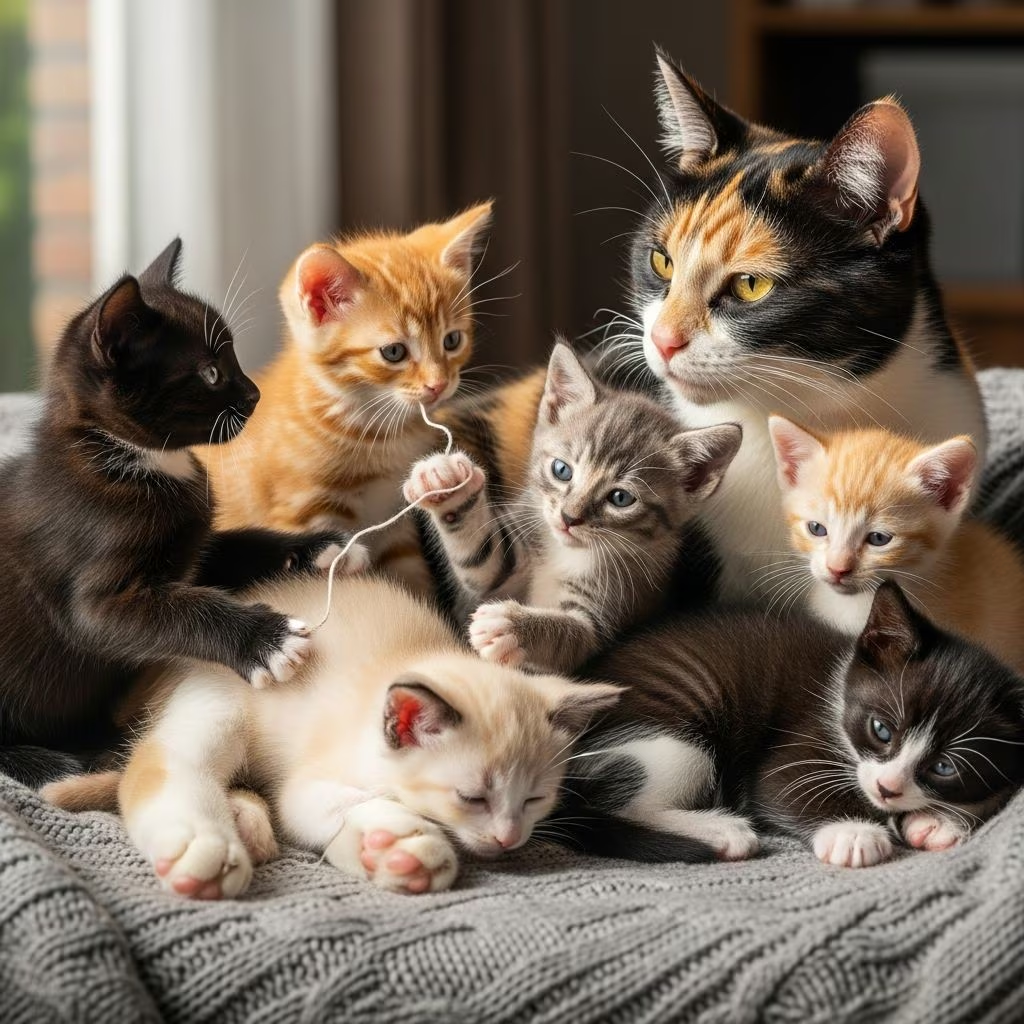
Cat owners often marvel at the variety of colors and patterns in a single litter of kittens. A black mother cat might produce orange tabby, white, and calico kittens, sparking curiosity about feline genetics. This diversity stems from complex interactions of genes controlling coat color, pattern, and sex-linked traits. Understanding these mechanisms reveals why litters exhibit such striking differences.
Understanding Cat Coat Genetics
Cat coat colors arise from pigments produced by melanocytes: eumelanin (black/brown) and phaeomelanin (red/orange). Key genes dictate these pigments’ expression. The primary gene for eumelanin is B/b/b¹, where dominant B produces black, recessive b chocolate, and b¹ cinnamon. The orange gene (O/o) on the X chromosome controls phaeomelanin, overriding black pigment.
Dilution gene D/d lightens colors in recessive homozygotes (dd): black to blue/gray, chocolate to lilac, cinnamon to fawn, orange to cream. The agouti gene (A) creates banded hairs for tabby patterns, while solid colors result from recessive a. White spotting (KIT gene) and colorpoint mutations (TYR gene) add further variety.
The Role of the Orange Gene
The orange gene is sex-linked on the X chromosome, explaining color differences in litters. Females (XX) need two O alleles for full orange; one O and one o create tortoiseshell/calico patterns via X-inactivation, where cells randomly express one X. Males (XY) express orange with one O or non-orange with o.
- OO female: Orange.
- Oo female: Tortoiseshell/calico (mosaic of orange/non-orange).
- oo female: Non-orange (black-based).
- OY male: Orange.
- oY male: Non-orange.
This leads to diverse kittens; a non-orange queen mated to an orange tom can produce both orange and non-orange offspring.
Why Calico and Tortoiseshell Cats Are Almost Always Female
Calico (tricolor: orange, black, white) and tortoiseshell (orange/black) require X-inactivation for patchy expression, possible only in XX females. Rare male calicos are XXY (Klinefelter syndrome), often sterile. A tortie queen passes one X to each kitten, yielding varied colors depending on the tom’s contribution.
| Genotype | Sex | Coat Pattern |
|---|---|---|
| XX: Oo | Female | Tortoiseshell |
| XX: OO + white spotting | Female | Calico |
| XY: OY | Male | Orange tabby |
| XY: oY | Male | Black-based |
Other Genes Affecting Coat Color
Beyond orange, multiple loci influence color:
- Brown locus (TYRP1): B (black), b (chocolate), b¹ (cinnamon).
- Dilution (MLPH): d dilutes pigments.
- White spotting (KIT): W causes white areas; dominant WD produces solid white.
- Colorpoint (TYR): c^s leads to Siamese points.
- Agouti (ASIP): A for tabby banding.
These genes assort independently, allowing a single litter to display combinations like blue cream, chocolate tabby, and seal point kittens.
Tabby Patterns and Variations
Tabby is the most common pattern due to dominant agouti. Four types exist: mackerel (stripes), classic (blotches), ticked (Abyssinian-like), spotted. Tabby genes (Taqpep) determine pattern; modifiers add spots. Even “solid” cats carry hidden tabby; wide-band genes create shaded/tipped effects.

Tabbies combine base color (black/orange) with pattern genes, contributing to litter diversity.
Dilution and Other Color Modifiers
Dilution affects 20-30% of cats, creating pastels. Double recessive dd lightens coats without altering pattern. Other modifiers: silver (I/i inhibits melanin for chinchilla), smoke (wide band on non-agouti). Barrington brown and extension genes add rare shades.
White Cats and Spotting
White coats result from KIT mutations blocking melanocyte migration (epistatic, hiding other colors). Degrees: solid white (high deafness/skin cancer risk), bicolor, van pattern. Albinism (TYR c/c) is rare, causing red-eye white.
How Litters End up with Different Colored Kittens
Litters vary because queens are heterozygous for multiple genes. Each kitten inherits one allele per gene from mom and dad randomly (Mendelian inheritance). A BbDd Oo queen x BBDD oY tom could produce: black, blue, chocolate, orange kittens. Polydactyly or other traits add variety, but color diversity is genetic recombination.
Factors amplifying diversity:
- Father’s genes: Unknown toms in ferals introduce new alleles.
- Multiple sires: Queens can mate with 2-3 toms per litter (superfecundation).
- Recessive expression: Hidden traits surface in homozygotes.
Breeds with Unique Colors and Patterns
Purebreds fix traits:
- Siamese: c^s colorpoint (cool areas darker).
- Persian: Colorpoints, bicolors.
- Abyssinian: Ticked tabby.
- Sphynx: Hairless, but colored skin.
- Bengal: Spotted hybrid pattern.
Mixed breeds show broadest variety.
Frequently Asked Questions (FAQs)
Can a solid black cat have orange kittens?
Yes, if the queen is oo (non-orange) but carries hidden orange from ancestors—no, solid black females are typically oo, but mated to OY tom, daughters can be Oo torties, sons OY orange.
Why are most orange cats male?
80% are male; males need one O on X, females two. XY easier for orange than XX OO.
Can two black cats have a white kitten?
Yes, if both carry recessive white spotting (ws/ws) or dominant W; high chance if parents bicolor.
Do color genes affect health?
White cats risk deafness/skin cancer (KIT); blue-eyed whites higher odds. Colorpoints prone to dental issues.
How many colors in one litter?
Up to 5-7 common; genetics allow dozens theoretically with modifiers.
Conclusion
The rainbow of kitten colors showcases genetic complexity. From X-linked orange to dilution and spotting, each litter is a genetic lottery. Appreciating this enhances cat ownership.
References
- The Science Behind Cat Colors and Genetics — Zoetis Petcare. 2023. https://www.zoetispetcare.com/blog/article/science-behind-cat-colors
- Cat Coat Genetics and Science — Basepaws. 2023. https://basepaws.com/blog/cat-coat-genetics
- Cat coat genetics — Wikipedia (citing primary sources). 2024-01-10. https://en.wikipedia.org/wiki/Cat_coat_genetics
- Cat Genetics: A Progressive Look at Coat Colors & Patterns — Liz’s Kitty Bootcamp. 2020-08-24. https://lizskittybootcamp.com/2020/08/24/cat-genetics-a-progressive-look-at-coat-colors-patterns/
- Feline Coat Color — Veterinary Genetics Laboratory, UC Davis. 2024. https://vgl.ucdavis.edu/resources/cat-coat-color
- The Genetics of Cat Colours and Coat Types — Melbourne Cat Vets. 2023. https://www.melbournecatvets.com.au/post/the-genetics-of-cat-colours-and-types-unlocking-the-mystery-of-feline-fur-part-1



