

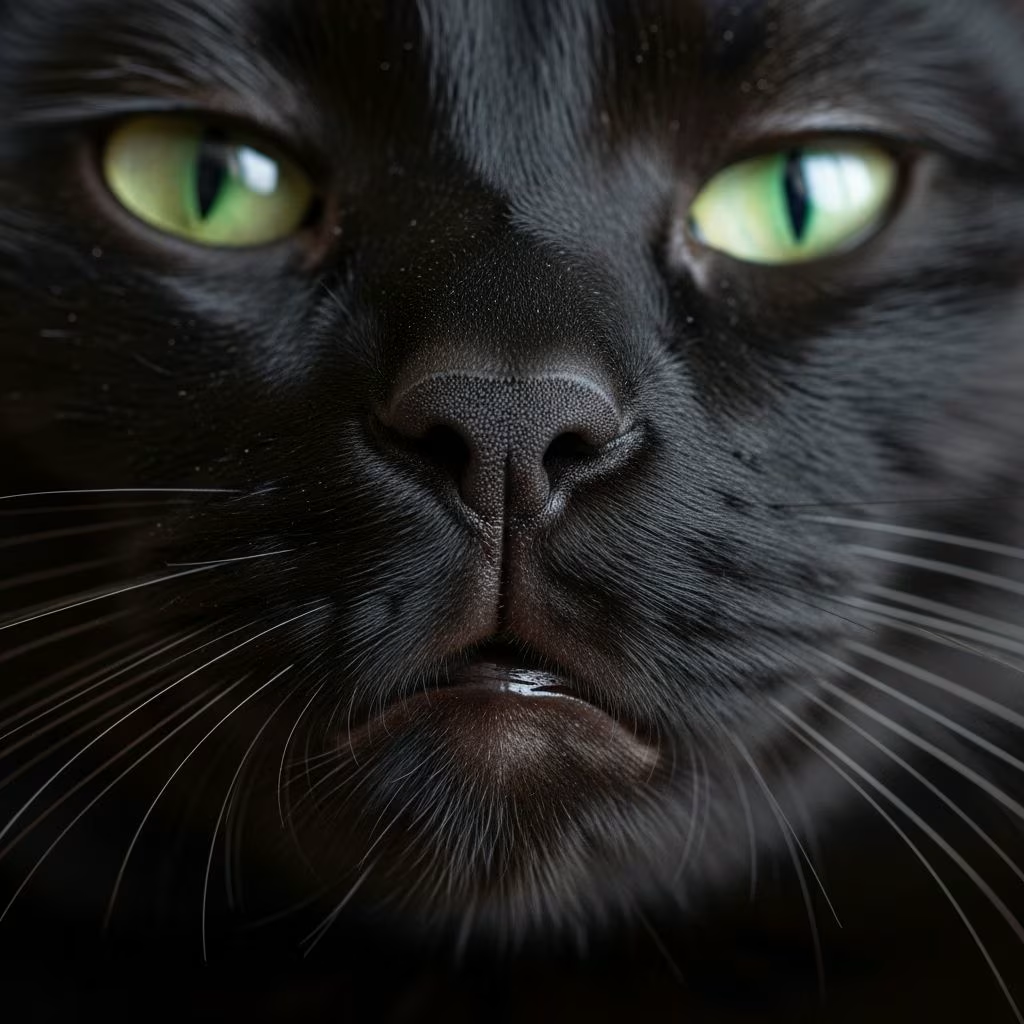
Many cat owners notice their feline friends sporting strikingly **black lips**, a feature that stands out against fur of various colors. This pigmentation isn’t random but traces back to evolutionary adaptations in wild ancestors. Cats with black lips share origins with the African Wild Cat (Felis silvestris lybica), dating approximately 130,000 years ago, where selective traits like dark lips provided survival advantages through camouflage and communication.
Domestic cats exhibit variations in nose, ear, and lip colors due to selective breeding aligned with breed standards. However, the core reason for black lips lies in ancient biology, not modern grooming. This article delves into melanism, its role in felines, abnormal pigmentation, and health considerations, helping you understand your cat’s unique features.
What Is Melanism in Animals?
**Melanism** is a condition characterized by a high concentration of **melanin**, the pigment responsible for dark coloration in skin, fur, scales, and mucous membranes like lips. Unlike albinism, which reduces melanin, melanism amplifies it, leading to black or dark hues.
This trait isn’t binary; it manifests as **polymorphism**, where populations show multiple color variations. Examples include coyotes with diverse pelage, chinchillas with shaded fur, and cats displaying everything from solid black to tabby patterns. Polymorphism allows adaptability to environments.
A classic example is the peppered moth during the Industrial Revolution. Soot-darkened trees favored melanic moths, which blended in better against predators, demonstrating natural selection’s power. Similarly, in cats, melanism aids survival by enhancing camouflage during hunts.
Melanism in Felines
Felines are **obligate carnivores**, relying on hunting for sustenance. Most are **crepuscular** (active at dawn/dusk) or **nocturnal**, stalking prey stealthily in low light. **Camouflage** is crucial, explaining melanistic variations from leopards’ spots to the African Wild Cat’s tabby stripes.
Black lips and paw pads appear in about **60% or less** of cases, offering tactical benefits. Cats possess around **200 million olfactory receptors** (versus humans’ 5 million), detecting prey from **over 650 feet away**. Yet, in dim conditions, vision for distance is limited, making dark pigmentation on visible areas like lips strategic.
Light-colored areas on noses and lips facilitate **visual communication** among cats without alerting prey. This balance prevents full melanism, as studies show all-black felines face evolutionary disadvantages in wild communication. Domestic cats, however, thrive as **diurnal** pets following human schedules, allowing solid black coats without survival penalties.
| Melanism Level | Wild Benefit | Domestic Context |
|---|---|---|
| Partial (e.g., black lips) | Camouflage + communication | Common in breeds |
| Full black | Limited (interferes with signals) | Popular in pets |
| Tabby/polymorphic | Optimal stealth | Ancestral pattern |
Abnormal Pigmentation
Not all dark spots signal normal melanism. Some light-lipped cats, especially **orange males under 1 year**, develop **black spots** on lips, gums, or tongue—a benign condition called **lentigo** (plural: lentigines). These flat, dark brown-to-black freckle-like spots result from increased **melanocytes** and mimic African Wild Cat patterns, hinting at genetics.
- Appearance: Lips, gums, tongue, cheeks, eyes, nose.
- Characteristics: Painless, non-itchy, cosmetic; may grow in number/size.
- Cause: Hereditary, not illness/infection; non-contagious.
Lentigo differs from serious issues:
- **Oral melanoma: Cancerous dark spots needing biopsy.
- **Infections: Fungal/bacterial causing discoloration.
- **Dental disease: Tartar leading to gum darkening.
Consult a vet for new/changing spots to rule out concerns. Lentigo requires no treatment.
Health Concerns: When Black or Blue Isn’t Normal
While black lips are typically evolutionary, other discolorations warrant attention. **Cyanosis**, a blue tint on lips/gums, indicates **oxygen deprivation** in blood. Deoxygenated hemoglobin appears blue, contrasting red oxygenated blood.
Common causes include:
- Congenital heart defects: E.g., ventricular septal defects in young cats.
- Toxin ingestion: Acetaminophen (Tylenol®) binds hemoglobin, preventing oxygen carry.
- Electrical shock: Lung fluid from cord-chewing.
- Trauma/inflammation: To lungs/brain/chest.
- Brachycephalic syndrome: In Persians/Himalayans/Burmese.
- Saddle thrombus: Clot blocking hind leg circulation.
- Hypothermia: Constricted vessels in cold.
Prompt vet care is essential for cyanosis, as it signals respiratory/heart emergencies.
Final Thoughts
**Black lips in cats** are a vestige from wild ancestors hunting ancient grasslands. This melanistic trait likely boosted hunting success for apex predators, aiding gene propagation through evolution—nature’s ultimate selective breeding. Today, it adds charm to our companions. Monitor changes, but embrace these features as evolutionary souvenirs. For concerns, veterinary exams ensure health.
Frequently Asked Questions (FAQs)
Q: Why do some cats have black lips while others don’t?
A: Black lips stem from melanism for camouflage, varying by genetics and breed. Light lips occur in others due to polymorphism.
Q: Is lentigo in cats dangerous?
A: No, lentigo is benign like human freckles, common in orange males, caused by melanocyte increase.
Q: What if my cat’s lips turn blue?
A: Blue lips signal cyanosis from low oxygen (e.g., heart issues, toxins). Seek immediate vet care.
Q: Can all cats develop black spots on lips?
A: Primarily light-pigmented cats under 1 year, hereditary and harmless.
Q: Do black lips affect cat health?
A: Normal black lips are healthy; watch for changes indicating issues like infections or cyanosis.
References
- Why Do Cats Have Black Lips? How This Trait Evolved — Catster. 2023. https://www.catster.com/lifestyle/why-do-cats-have-black-lips/
- Lentigo in Cats: Everything You Need to Know — VetDentistWI. 2025-01-23. https://vetdentistwi.com/why-does-my-cat-have-black-spots-in-their-mouth/
- Cyanosis in Cats — PetMD. 2023. https://www.petmd.com/cat/conditions/mouth/cyanosis-cats
- Looking Inside Your Cat’s Mouth – How to Tell if Your Cat Is Sick — HowStuffWorks. 2023. https://animals.howstuffworks.com/pets/how-to-tell-if-your-cat-is-sick3.htm



