

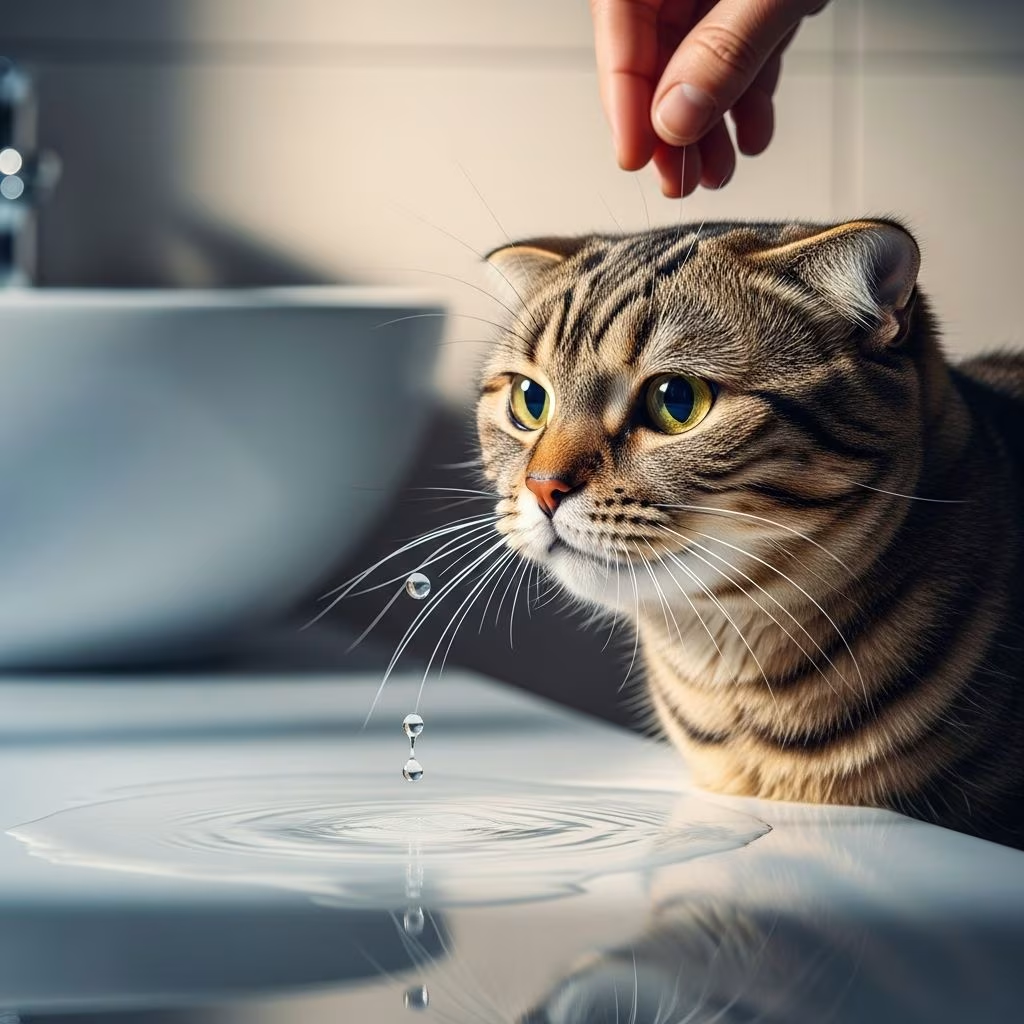
Cats are renowned for their meticulous grooming habits and graceful agility, yet many display a strong aversion to water. This common behavior puzzles cat owners who observe their pets batting at faucets or avoiding baths altogether. While not all cats despise water—some breeds even embrace it—the majority exhibit reluctance rooted in evolutionary, physical, sensory, and experiential factors. Understanding these reasons can help owners better care for their feline companions, ensuring proper hydration and reducing stress during necessary water interactions.
Not All Cats Hate Water
It’s a myth that every cat loathes water. Certain breeds, such as the Turkish Van, Maine Coon, Norwegian Forest Cat, and Bengal, often enjoy swimming or playing in water. These water-loving cats typically hail from regions with ample water sources or have water-resistant coats that dry quickly. For instance, the Turkish Van is nicknamed the “swimming cat” due to its affinity for lakes and pools. However, domestic cats descended from arid-dwelling ancestors like the African wildcat, which rarely encountered large bodies of water, leading to a generalized aversion in most modern felines.
- **Water-loving breeds:** Turkish Van, Maine Coon, Norwegian Forest Cat, Bengal, American Bobtail.
- **Common traits:** Thicker, water-repellent fur; historical exposure to wet environments; playful personalities.
Even among averse cats, curiosity often draws them to running faucets or dripping sinks, suggesting intrigue with motion rather than the water itself.
Reason #1: Their Ancestors Came from Dry Climates
Cats’ wild progenitors, including the African wildcat (Felis lybica), originated in desert regions of the Middle East and Africa where large bodies of water were scarce. These ancestors obtained moisture from prey rather than drinking from ponds or rivers, evolving no need for swimming skills. Domestic cats retain this genetic legacy, viewing deep water as unfamiliar and potentially hazardous.
John Bradshaw, author of Cat Sense and director at the University of Bristol’s Anthrozoology Institute, notes that Arabian wildcats never learned to swim, as there was no survival advantage. This ancestral fear persists, making baths or pools instinctively daunting. In the wild, getting wet could hinder hunting success, as wet fur alerts prey and slows movement.
Reason #2: Wet Fur Is Cold & Uncomfortable
Cat fur is designed for insulation and agility, featuring an oily coat that repels dirt but absorbs water readily. When soaked, it becomes heavy, restricting movement and making cats feel vulnerable—counter to their nimble, predatory nature.
Wet fur takes hours to dry, cooling the body and risking hypothermia, especially since cats seek warmth. Jennifer Vonk from Oakland University explains that waterlogged fur disrupts thermoregulation and slows escape from predators. The physical sensation feels alien, prompting frantic grooming to restore their preferred dry state.
| Aspect | Dry Fur | Wet Fur |
|---|---|---|
| Weight | Lightweight, agile | Heavy, cumbersome |
| Drying Time | N/A | Hours, uncomfortable |
| Temperature | Warm, insulating | Cools body rapidly |
| Mobility | Quick, stealthy | Slow, vulnerable |
Reason #3: They Can’t See Underwater & It Feels Unstable
Unlike dogs with adapted vision for underwater hunting, cats’ eyes are optimized for terrestrial prey. Submerged, their vision blurs due to light refraction, creating disorientation. Slippery surfaces like bathtubs exacerbate this, making quick exits impossible and heightening fear.
Cats rely on precise footing for balance; water’s instability triggers loss-of-control anxiety. Sudden splashes or unfamiliar depths amplify stress, as noted by veterinary experts.
Reason #4: Water Smells & Tastes Weird to Cats
Cats possess an acute sense of smell—14 times stronger than humans—and taste 40 times more acutely for bitterness. Tap water often contains chlorine, fluoride, or minerals that offend their palate, leading to fussiness.
Getting wet introduces foreign scents, masking natural pheromones essential for territory marking and social recognition. This olfactory disruption causes distress, as cats may not recognize their altered smell, prompting aggression or hiding. Stagnant bowls breed bacteria, further deterring drinking.
Reason #5: Bad Experiences
Early negative encounters, like forced baths or falls, imprint lifelong aversions. Kittens socialized positively to water via gentle drips or shallow pools develop confidence, but trauma reinforces fear.
Veterinarian Brittany Klesznyski emphasizes avoiding force, as it worsens anxiety. Instead, gradual exposure builds tolerance. Creatures of habit, cats generalize discomfort from one event.
How to Get Your Cat to Like Water (Or At Least Tolerate It)
While not all cats will love water, these strategies promote tolerance and hydration:
- Start young: Introduce kittens to shallow, warm water with toys for positive associations.
- Use running water: Fountains mimic fresh streams, appealing to instincts.
- Filter water: Remove chemicals; try bottled or purified sources.
- Gradual baths: Use minimal water, cat-specific shampoo, and treats; never dunk.
- Play first: Towel-dry immediately; reward calmly.
- Alternatives: Wipes or dry shampoos for cleaning.
Placement matters: elevate bowls away from food, in quiet spots. Multiple sources encourage drinking.
Reader Questions Answered
Common queries from cat owners reveal nuanced insights into water behaviors.
Why do cats like faucets but hate baths?
Cats are mesmerized by motion and sounds of dripping faucets, viewing them as prey-like. Baths involve immersion, loss of control, and overwhelming water volume—entirely different.
Do all cats hate water?
No, water-loving breeds exist, and some individuals enjoy puddles or showers due to genetics or socialization.
How can I hydrate a water-averse cat?
Offer fountains, wet food (70-80% moisture), flavored water (tuna juice), or ice cubes. Monitor for dehydration signs like tacky gums.
Is it safe to bathe my cat?
Infrequently, yes—for fleas or dirt. Use lukewarm water, supportive handling, and dry thoroughly to prevent chills.
Why does my cat drink from the toilet?
Toilet water is fresh, cool, and moving; bowls stagnate. Provide alternatives to avoid bacteria risks.
Frequently Asked Questions (FAQs)
Q: Why do cats hate water?
A: Primarily due to evolutionary desert origins, wet fur discomfort, sensory sensitivities to smells/tastes, poor underwater vision, and past traumas.
Q: Can cats learn to like water?
A: Yes, through gradual, positive exposure starting young; some adults adapt with patience.
Q: What breeds like water?
A: Turkish Van, Maine Coon, Norwegian Forest Cat, Bengal, Sphynx (less fur to wet).
Q: How often should I bathe my cat?
A: Rarely; self-grooming suffices unless medically needed. Over-bathing dries skin.
Q: Why is my cat finicky about drinking water?
A: Stagnant bowls, chemical tastes, or bowl location/materials. Use fountains or glass.
References
- Why do cats hate water? — Live Science. 2023-10-12. https://www.livescience.com/animals/domestic-cats/why-do-cats-hate-water
- Why are cats fussy about water? — The Cat Behavior Clinic. 2024-05-15. https://www.thecatbehaviorclinic.com/why-are-cats-fussy-about-water/
- Why Do Cats Dislike Water? — Rutherford Veterinary Hospital. 2023-08-20. https://rutherfordvet.com/cats-dislike-water/
- Why Do Cats Hate Water? — Zoetis Petcare. 2024-02-10. https://www.zoetispetcare.com/blog/article/why-cats-hate-water
- Why Are Cats Afraid of Water? — Mental Floss. 2023-11-05. https://www.mentalfloss.com/article/72660/why-are-cats-afraid-water
- Why Do Some Cats Hate Water? — PetMD. 2024-07-18. https://www.petmd.com/cat/general-health/why-do-some-cats-hate-water



