

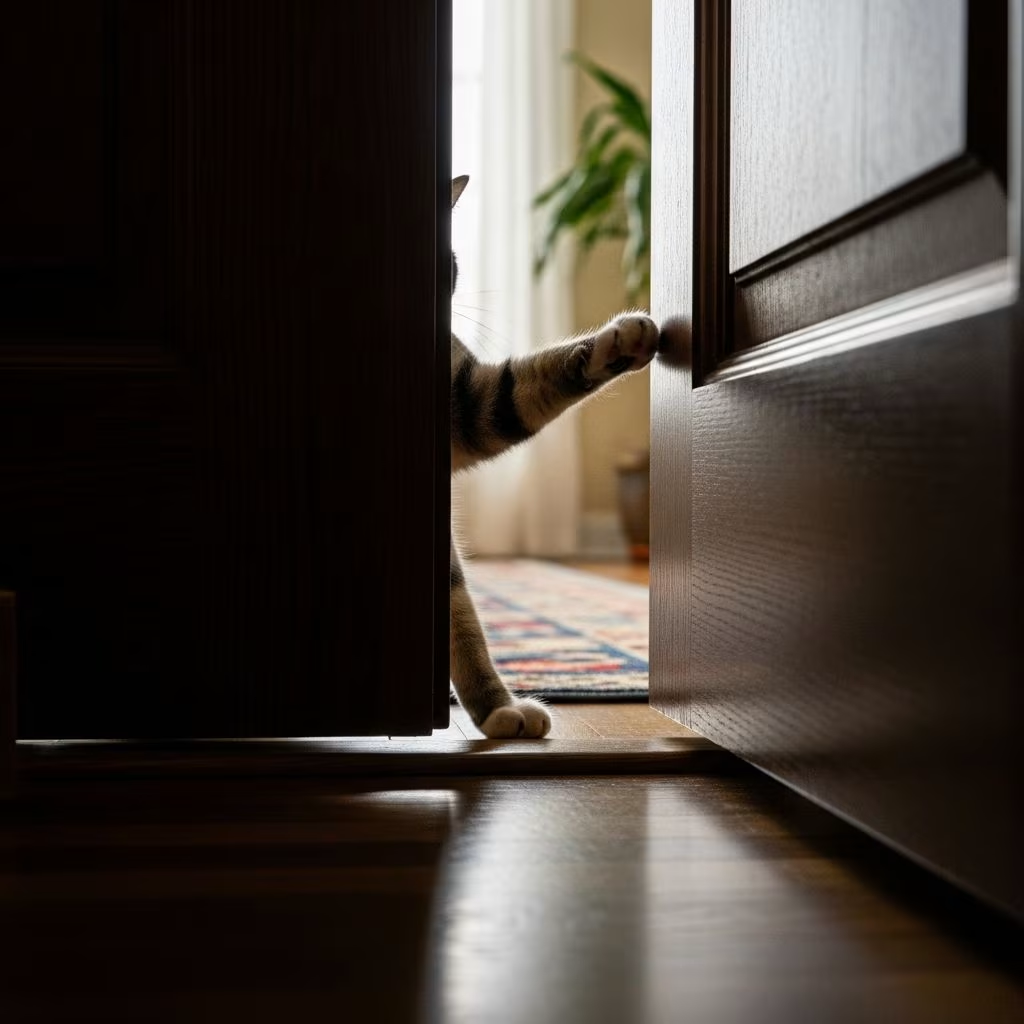
Why Do Cats Hate Closed Doors? A Complete Guide to Understanding Feline Behavior
If you’re a cat owner, you’ve likely experienced the frantic meowing, desperate scratching, and persistent pacing that erupts the moment you dare to close a door. Whether it’s the bathroom door, bedroom door, or any barrier between your feline friend and their domain, cats seem to have an almost visceral reaction to closed doors. This behavior is incredibly common, and the good news is that it’s completely normal. However, understanding why cats hate closed doors can help you better manage this behavior and create a more harmonious living environment for both you and your furry companion.
Is It Normal for Cats to Hate Closed Doors?
Yes, it’s absolutely normal for cats to dislike closed doors. In fact, veterinary behaviorists often refer to closed doors as “the natural enemy of cats.” This aversion isn’t a sign of misbehavior or defiance—it’s rooted in your cat’s natural instincts and psychology. Many cat owners experience this frustration when they simply want a moment of privacy or need to isolate their cat for a specific reason, only to be greeted with dramatic vocalizations and physical attempts to breach the barrier.
Understanding that this behavior is normal is the first step toward addressing it effectively. Rather than viewing it as problematic behavior that needs punishment, it’s more helpful to recognize it as communication from your cat about their needs and concerns.
The Six Main Reasons Why Cats Hate Closed Doors
Veterinary behaviorists have identified several key reasons why cats have such strong negative reactions to closed doors. It’s important to note that the motivation behind your cat’s door-related behavior may vary from day to day, as cats are complex animals with different drivers at different times.
1. Curiosity and the Need to Investigate
Cats are naturally curious creatures with an innate drive to explore their surroundings. When a door is closed, your cat may simply want to investigate what’s on the other side. Your cat might be in one room and suddenly decide they want to check out a different space, wondering if anything has changed or if there’s something interesting to discover. This curiosity can lead to meowing and door scratching until you open it, allowing them to peek inside.
Often, pet parents attach emotional significance to this behavior when it’s really just straightforward curiosity. Your cat might look inside, realize the room is much the same as before, and then leave without any fanfare. The dramatic nature of their request often doesn’t match the casual nature of their actual needs.
2. Feeling Trapped and Loss of Freedom
Cats value their freedom and the ability to move throughout their space without restriction. When a door closes, particularly if your cat was in the room when it happened, they may experience a feeling of being trapped or confined. This can trigger anxiety and frustration, especially if they weren’t expecting the sudden barrier.
Interestingly, your cat may not even want to actually leave the room they’re in. Instead, they simply want to have the option available to them. Imagine being unexpectedly confined and unable to leave when you choose—this is what many cats experience when a door suddenly closes. They want the freedom of choice, even if they don’t immediately exercise that choice.
3. Territorial Control and Ownership
Cats are territorial animals with a strong sense of ownership over their environment. Closed doors disrupt their ability to patrol and monitor their entire domain. When you close a door, you’re essentially creating a barrier that prevents your cat from surveying their territory and maintaining their scent boundaries.
Cats use scent glands located in their cheeks and paws to mark their territory, establishing ownership and familiarity. By rubbing against door frames and walls, they’re communicating to other animals that the space is theirs. A closed door prevents them from maintaining these scent markers and disrupts their routine territorial patrol, creating a sense of unease.
4. FOMO: Fear of Missing Out (When You’re Behind the Door)
Sometimes the situation is reversed—you’re the one behind the closed door, perhaps seeking a few moments of privacy in the bathroom. Your cat’s reaction in this scenario is often driven by FOMO, or the fear of missing out. While the exact reason cats dislike their humans being behind closed doors isn’t entirely understood, behavioral experts suggest it relates to your cat’s desire to stay involved in your activities and maintain proximity to you.
Your cat may be concerned about what you’re doing, worried they’re missing something important, or simply discomforted by the separation. This is particularly common in cats that have formed strong social bonds with their owners or cats who tend to follow their humans from room to room throughout the day.
5. Learned Behavior and Reinforcement
Many cat owners unknowingly contribute to their cat’s door-related behavior through accidental reinforcement. If your cat has learned that meowing and scratching at a closed door results in you opening it, they’ll continue to display this behavior. This creates a clear cause-and-effect relationship in your cat’s mind: meow at door, door opens, mission accomplished.
Even if this reinforcement happens intermittently throughout your cat’s life, it’s enough to establish and perpetuate the behavior. Once your cat understands that their vocalization and persistence lead to results, they have no reason to stop. This is why some cats who have experienced confinement, even accidentally, continue to display distressed behaviors when doors are closed in the future.
6. Separation Anxiety and Lack of Confinement Training
Some cats display genuine separation anxiety when separated from their owners or when faced with confinement. This can manifest as distress when you close a door, even if it’s just to use the bathroom. Additionally, cats who were never trained to accept confinement from an early age may view any closed door as stressful.
Kittens and newly adopted cats should be gradually acclimated to accepting confinement, so they develop comfort with temporary separation and closed spaces. Without this early training, even the feeling of being confined to a hallway while you’re in the bathroom can trigger anxiety responses. Cats don’t naturally accept all situations—they need to be gradually desensitized to experiences that might otherwise cause them stress.
Understanding the Survival Instincts Behind Door Aversion
Beyond behavioral psychology, there are primal survival instincts at play when your cat reacts negatively to closed doors. In the wild, cats must be constantly aware of their surroundings to avoid predators and locate food. This environmental awareness remains deeply ingrained in domesticated cats, even if they’ve never faced actual threats.
A closed door limits your cat’s ability to monitor their environment, which can trigger feelings of vulnerability. Your cat can’t see what’s happening on the other side of the barrier, which creates uncertainty and potential danger in their mind. This is why many cats prefer open spaces with multiple paths of egress—it allows them to ensure they can retreat to safety if needed.
Additionally, cats typically patrol their territory to ensure everything remains in order. A closed door disrupts this routine and leaves part of their domain unexplored, creating a sense of unease. Your cat feels compelled to verify that the space beyond the door remains safe and familiar.
When Should You Be Concerned About Your Cat’s Door Behavior?
While a cat’s dislike of closed doors is generally normal, certain situations warrant closer attention and veterinary consultation. Not all door-related behaviors indicate a problem, but sudden changes or severe responses may signal underlying stress or anxiety.
Warning Signs to Watch For
You should consider contacting your veterinarian or a veterinary behaviorist if you notice any of the following:
– Sudden changes in your cat’s behavior around closed doors- Persistent, intense vocalizations that seem disproportionate to the situation- Physical signs of distress, including hypersalivation, vomiting, diarrhea, or excessive panting- Destructive behavior that escalates or causes injury to your cat- Signs that your cat is becoming increasingly anxious or stressed over time
If you observe any of these warning signs, it’s important to schedule an appointment with your veterinarian to rule out underlying medical issues. Once medical causes have been excluded, a veterinary behaviorist can help develop a tailored plan to address your cat’s specific anxiety or behavioral concerns.
Managing Your Cat’s Reaction to Closed Doors
Understanding why your cat hates closed doors is valuable, but you likely also want practical strategies for managing the behavior. Here are several approaches that can help:
Avoid Reinforcing the Behavior
One of the most important steps is to stop rewarding your cat’s door-related behaviors. If your cat meows or scratches at a door and you immediately open it, you’re reinforcing the behavior and teaching your cat that persistence pays off. Instead, try opening the door when your cat is quiet, or practice opening doors at times when your cat hasn’t demanded it. This breaks the direct cause-and-effect relationship between their behavior and your response.
Gradual Desensitization and Training
For cats with separation anxiety or those unaccustomed to confinement, gradual desensitization can be helpful. Start by closing a door for very brief periods when your cat is calm and occupied with something enjoyable, like a treat or toy. Gradually increase the duration of closure over time. This teaches your cat that closed doors aren’t inherently threatening and don’t always result in disaster.
Create Predictable Routines
Establishing consistent boundaries can help reduce your cat’s frustration. If certain doors will remain consistently closed, your cat may eventually stop expecting access to those spaces. However, inconsistency—sometimes allowing access, sometimes not—can actually increase door-related behaviors because your cat maintains hope that the door might open.
Provide Enrichment and Environmental Control
Ensure your cat has access to sufficient enrichment, vertical space, and areas to explore and patrol. A well-enriched environment with opportunities for climbing, hiding, and investigating can reduce overall frustration and anxiety. Additionally, allowing your cat to maintain control over their environment—including having access to most spaces in your home—can decrease door-related stress.
Consider Environmental Modifications
If you need privacy for specific activities, consider using door stops or partial barriers that allow your cat to see and smell what’s happening while still maintaining a physical boundary. This can help satisfy your cat’s need for inclusion and awareness while still giving you some space.
Frequently Asked Questions
Q: Is my cat’s hatred of closed doors a sign of behavioral problems?
A: No, disliking closed doors is a completely normal feline behavior rooted in natural instincts, curiosity, and territorial drives. It doesn’t indicate a behavioral problem unless the response is unusually severe or accompanied by signs of distress.
Q: My cat follows me everywhere, including the bathroom. Is this separation anxiety?
A: Not necessarily. While some cats do have separation anxiety, many simply enjoy following their owners due to bonding and curiosity. However, if your cat displays other signs of anxiety when separated from you, consult with a veterinary behaviorist.
Q: Can I train my cat to accept closed doors?
A: Yes, through gradual desensitization and positive reinforcement, many cats can learn to accept closed doors more calmly. Early training of kittens and newly adopted cats is particularly effective.
Q: Should I always give in and open the door when my cat demands it?
A: Not necessarily. Consistently opening the door on demand reinforces the behavior. Occasionally opening doors when your cat is quiet or engaging in other activities helps break this pattern.
Q: When should I be worried about my cat’s door-related behavior?
A: Seek veterinary guidance if you notice sudden behavioral changes, excessive vocalization paired with distress signs like vomiting or diarrhea, or escalating destructive behavior.
Conclusion
Cats’ aversion to closed doors is a multifaceted behavior driven by curiosity, territorial instincts, the desire for control, social bonds, and learned behaviors. While it can be frustrating for cat owners seeking moments of privacy, understanding the root causes helps create empathy for your feline companion’s experience. By recognizing that closed doors represent a loss of control, freedom, and environmental awareness to your cat, you can approach the behavior with greater compassion and develop strategies that work for both you and your pet. Most door-related behaviors are normal and manageable, but significant changes or severe responses warrant professional veterinary consultation to ensure your cat’s emotional and physical well-being.
References
- Weird Cat Behavior: Why Do Cats Hate Closed Doors? — Chewy Education. 2025. https://www.chewy.com/education/cat/training-and-behavior/is-this-normal-why-do-cats-hate-closed-doors
- Why Cats HATE Closed Doors: Understanding Feline Territory — Chewy Education. 2025. https://www.youtube.com/watch?v=JbnpEfFlCm0
- Why Does My Cat Follow Me to the Bathroom? — Chewy Education. 2025. https://www.chewy.com/education/cat/training-and-behavior/why-does-my-cat-follow-me-to-the-bathroom



