

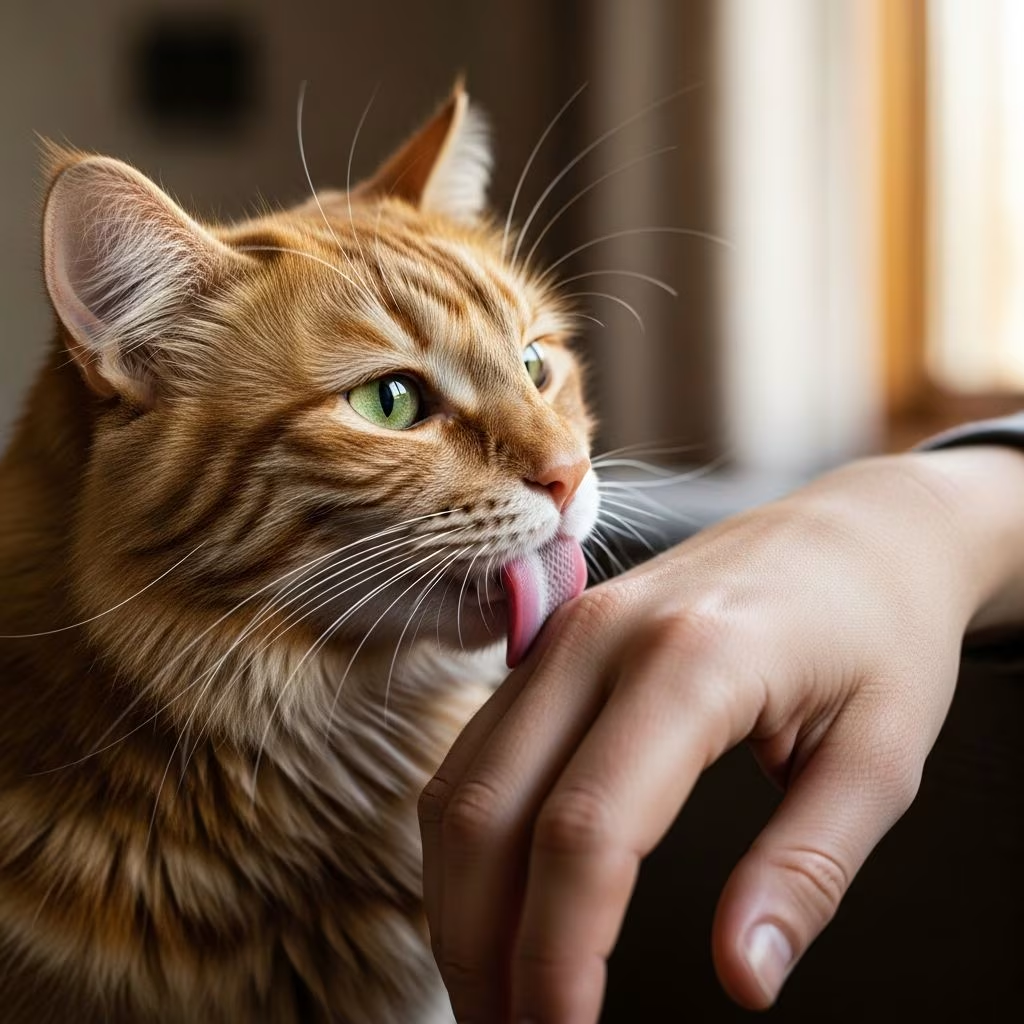
Cats are meticulous groomers, spending up to 50% of their waking hours cleaning themselves, but when they turn their rough tongues toward their human companions, it reveals a deeper layer of feline psychology and social dynamics. This behavior, known as allogrooming when directed at others, mirrors how cats interact within their social groups. Understanding why cats groom humans helps strengthen the human-feline bond and alerts owners to potential health or emotional needs.
In the wild, cats groom to maintain hygiene, distribute scents, and reinforce hierarchies, behaviors that domestic cats extend to their families—including us. Whether it’s a gentle lick on the hand or a persistent session on your arm, these actions signify trust and integration into the cat’s ‘colony.’ This article delves into the primary motivations, supported by veterinary and behavioral insights, and offers practical advice for cat owners.
It’s a Sign of Affection
One of the most heartwarming reasons cats groom humans is to express **affection**. Cats lick to show love, much like a kiss, transferring their scent and strengthening emotional ties. This mirrors maternal grooming, where mother cats clean kittens to bond and care.
Adult cats reserve this for trusted individuals, indicating you’re family. Other affection signs include head bunting (rubbing cheeks to mark with pheromones), purring, slow blinking, meowing specifically at humans, and body rubbing. These combined with grooming confirm your cat views you as a beloved companion.
Research on feline social behavior shows allogrooming releases endorphins, creating pleasure for both groomer and groomee, akin to human hugging. If your cat grooms you during relaxed moments, like cuddling, it’s a clear affection signal.
Cats Groom Humans to Bond
**Bonding** is central to why cats groom humans. In multi-cat households or feral colonies, grooming establishes group membership by sharing scents from facial glands. Domestic cats include humans in this ritual, treating you as a colony mate.
Littermates and long-term companions groom reciprocally to affirm bonds. For humans, this ‘returns the favor’ for petting and care, fostering mutual trust. Being groomed means the cat no longer sees you as a threat but as family.
Experts note this behavior persists from kittenhood, learned from mothers. It creates a unified group scent, vital for recognition in wild settings, now a domestic display of security.
Inviting You to Play
Cats may groom humans as a **play invitation**. A lick often precedes pawing, nipping, or chasing, signaling fun time. Watch for play cues: forward-pointing ears and whiskers, upright tail, dilated pupils, arched back, crouching with tail up.
This gentle affection demands attention. Unlike aggressive play (flicking tail/ears, flattened ears, walking away), grooming-initiated play is friendly. Respond with toys like feather wands to engage positively, preventing escalation.
- Ears forward: Excitement and interest.
- Tail up: Confidence and greeting.
- Dilated pupils: High arousal for play.
- Arched back/crouch: Play pounce preparation.
Sign of Comfort and Relaxation
When a cat grooms you, it often indicates **comfort** and contentment. Licking signals relaxation in your presence, a privilege not extended to strangers. This vulnerability shows deep trust.
Grooming soothes via endorphin release from tongue pressure, calming nerves. Cats may groom during petting sessions or quiet evenings, reinforcing safety. Behavioral studies liken it to human nail-biting for stress relief, but here it’s positive.
Could Be a Sign of Stress or Anxiety
Not all grooming is positive; excessive licking may signal **stress**. Anxiety-prone cats overgroom themselves or humans when overwhelmed. Increased frequency warrants vet attention, as it could indicate medical issues like allergies, parasites, or pain.
Arthritis limits self-grooming, leading to overfocus on accessible human areas. Stress triggers include changes like new pets or moves. Vets may recommend calming aids or check for hyperesthesia syndrome. Monitor for bald spots or raw skin.
Dominance or Marking Territory
In some cases, grooming asserts **dominance** or marks territory. Higher-ranking cats groom subordinates in prides, a behavior seen in domestics. Licking overlays their scent on you, claiming ownership.
Cats as ‘scent machines’ love their aroma, licking to replace yours post-petting. This possessive marking says ‘mine!’ via salivary pheromones. Rubbing and grooming combine for territorial control.
Mother cats groom kittens dominantly, an instinct in spayed females too.
Maternal Instincts at Play
**Maternal instincts** drive grooming, especially in females. Mothers clean kittens post-birth, stimulating elimination and bonding. This persists lifelong.
Even without kittens, queens groom humans/kittens similarly, viewing you as offspring. Males show it less but can if socialized.
Practical Assistance with Cleaning
Cats groom humans for **cleaning help** in hard-to-reach spots like under chins, though less common. Reciprocally, they assist perceived messy areas on you.
Grooming distributes sebum for shiny fur, removes debris, and cools via saliva evaporation. Humans benefit indirectly from this hygiene-sharing.
Health Benefits of Cat Grooming
Cat grooming offers subtle **health perks**. Their saliva contains antimicrobial proteins like histatins, aiding minor wound cleaning (though not medically recommended due to bacteria risks).
Stimulates skin oils, but watch for allergies to proteins. Bonding reduces owner stress too.
When to Worry About Excessive Grooming
Normal grooming is occasional; excessive (multiple daily sessions, skin irritation) signals issues. Causes: allergies, fleas, pain, anxiety.
| Sign | Possible Cause | Action |
|---|---|---|
| Bald patches | Allergies/Parasites | Vet exam, flea treatment |
| Overgrooming joints | Arthritis/Pain | X-rays, pain meds |
| Sudden increase | Stress | Environmental enrichment, consult behaviorist |
Long-haired breeds need brushing to prevent mats.
How to Respond to Cat Grooming
Encourage positive grooming: pet gently, speak softly. Redirect play appropriately. If stressed, provide safe spaces, pheromones. Never punish; it erodes trust.
- Gently redirect mouth to toys.
- Brush regularly for bonding.
- Use treats for calm behavior.
Frequently Asked Questions (FAQs)
Is it okay for my cat to groom me?
Yes, occasional grooming is normal and affectionate. Monitor for excess.
Why does my cat lick my hair or face?
To mark you with their scent or mimic maternal cleaning.
What if my cat suddenly stops grooming me?
Possible stress or health issue; observe and vet if persistent.
Do all cats groom humans?
No, depends on personality and bond strength.
Can grooming cause skin issues for humans?
Rarely; allergies to cat saliva possible. Clean area post-lick.
References
- Why Does My Cat Wash (Groom) Me? — WebMD. 2023-05-15. https://www.webmd.com/pets/cats/features/why-does-my-cat-wash-groom-me
- 6 Reasons Why Cats Groom Each Other — Heart + Paw. 2024-02-10. https://heartandpaw.com/pet-parent-resources/6-reasons-cats-groom-each-other
- Feline Grooming Behavior — TVMF (Today’s Veterinary Practice). 2023-08-20. https://www.tvmf.org/articles/grooming-behavior-of-cats/
- The (very very weird) reasons cats lick people — BBC Science Focus. 2024-11-05. https://www.sciencefocus.com/nature/why-do-cats-lick-people
- Why Does My Cat Lick Me? 7 Common Reasons — PetMD. 2025-01-10. https://www.petmd.com/cat/behavior/why-does-my-cat-lick-me



