

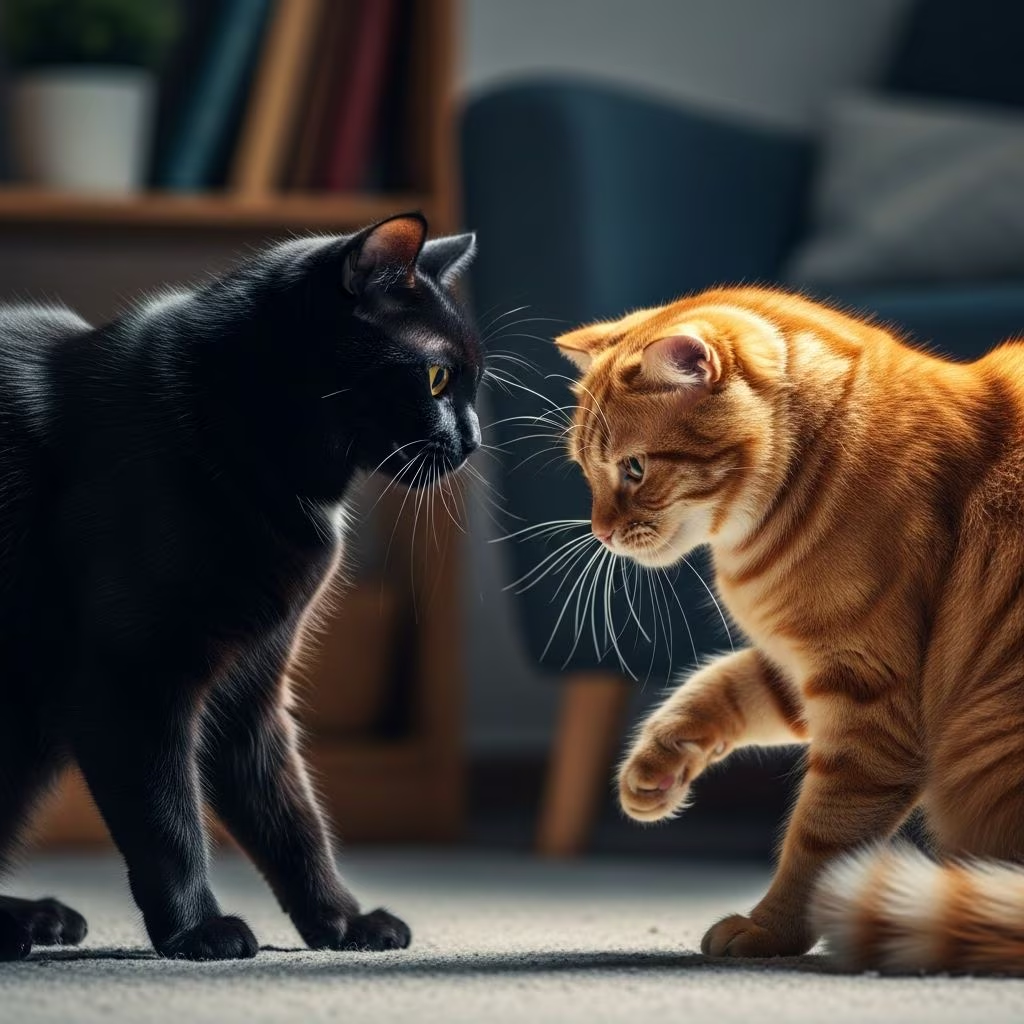
Cats are often portrayed as solitary, peaceful creatures, but fights between them can erupt suddenly, leaving owners confused and concerned. Understanding why cats fight is crucial for multi-cat households, as these conflicts stem from instinctual behaviors, environmental factors, or health issues. Common triggers include play aggression, fear, territorial disputes, redirected frustration, and medical problems. This comprehensive guide explores each reason in depth, drawing from veterinary expertise to help you identify signs, prevent escalations, and promote harmony.
Reasons Why Cats Fight
Cat fights rarely happen without cause. Felines communicate through body language, scent, and vocalizations, but misunderstandings can lead to swats, hisses, or full brawls. Key reasons include:
- Play aggression: Young or under-socialized cats roughhouse too intensely.
- Fear aggression: Defensive responses to perceived threats.
- Territorial aggression: Competition for space, resources, or status.
- Redirected aggression: Frustration vented on the wrong target.
- Hormonal or pain-induced: Intact cats or those in discomfort lash out.
Recognizing these helps intervene early, preventing injuries and stress-related illnesses like cystitis.
Play Aggression in Cats
Play aggression is common in kittens and young cats, mimicking hunting behaviors but escalating if boundaries aren’t learned. Cats under-socialized—those separated from littermates too early—miss cues like retaliatory hisses or play cessation that teach bite inhibition.
Symptoms include pouncing, stalking, batting, and light biting. Without enough daily exercise or toys, energy redirects aggressively toward housemates or owners. Adolescent cats (6-18 months) are prime offenders, as play sharpens skills but lacks moderation.
To manage:
- Provide interactive toys like wand teasers for 15-30 minutes twice daily.
- Use toys mimicking prey (feathers, bells) to channel instincts.
- Never use hands as toys; redirect to appropriate outlets.
- Enrich environment with scratching posts, tunnels, and climbing trees.
With consistency, play aggression fades as cats mature, typically by age 2.
Fear Aggression
Fear aggression occurs when a cat feels cornered or threatened, lashing out to create distance. Shy cats may attack outgoing ones approaching too quickly, or newcomers invading space. Body language signals include dilated pupils, flattened ears, tucked tail, and piloerection (fur standing up).
This defensive response protects vulnerable cats but confuses bold ones, sparking cycles of retaliation. In multi-cat homes, it arises during improper introductions or changes like new pets.
Prevention strategies:
- Introduce cats gradually via scent swapping and visual barriers.
- Provide escape routes and high perches for shy cats.
- Use pheromone diffusers (Feliway) to reduce anxiety.
- Avoid punishment, which heightens fear.
Vets recommend patience; forced interactions worsen issues.
Territorial Aggression
Cats are territorial by nature, claiming areas for sleeping, eating, and eliminating. Fights erupt over litter boxes, food bowls, window seats, or human attention. New cats challenge established hierarchies, especially intact males competing for status.
Signs: Staring, stalking, blocking paths, swatting. Conflicts intensify during social maturity (2-4 years), even among long-term housemates. Resource scarcity—like one litter box for multiples—triggers competition.
| Resource | Ideal per Cat | Why It Matters |
|---|---|---|
| Litter Boxes | n+1 (n=cats) | Prevents guarding/avoidance |
| Food Stations | Separate bowls | Reduces mealtime tension |
| Perches/Scratching Posts | 1 per cat + extras | Allows vertical territory |
| Water Bowls | Multiple locations | Encourages drinking |
Follow the ‘n+1 rule’ for essentials. Neutering/spaying cuts hormonal drives by 90%.
Redirected Aggression
Redirected aggression happens when a cat can’t access a trigger—like a stray outside or loud noise—and vents on companions. Pupils dilate, tail lashes; suddenly, indoor cats clash despite no direct beef.
Common triggers: Outdoor cats visible through windows, fireworks, vet returns (scent changes). It resolves by eliminating stimuli—close blinds, block views.
- Separate fighting cats immediately without punishment.
- Reintroduce slowly post-calm.
- Use calming aids like synthetic pheromones.
This type de-escalates fastest with environmental tweaks.
Hormonal Aggression
Intact cats fight over mates, spraying and yowling. Males roam, females in heat attract battles. Spaying/neutering eliminates 90% of cases, per vets. Maturity (2-4 years) amplifies intact rivalries.
Post-surgery, behaviors subside in weeks, though learned patterns linger.
Pain-Induced Aggression
Pain from arthritis, dental issues, hyperthyroidism, or injuries makes cats irritable. They snap at touch or movement. Rule out medically first—a vet exam is essential before behavior mods.
How to Stop Cats From Fighting
Immediate steps:
- Safety first: Separate with carriers/rooms; never grab mid-fight.
- Vet check: Exclude pain/disease.
- Enrich environment: More resources, vertical space.
- Reintroduce: Scent swap, supervised meals.
- Calming tools: Pheromones, anxiety wraps.
For chronic issues, consult behaviorists. Punishment fails; positive reinforcement works.
Signs of Cat Fights to Watch For
Early intervention prevents wounds:
- Pre-fight: Staring, growling, swishing tail, ear flattening.
- During: Hissing, swatting, rolling, biting.
- Post: Abscesses, fur loss, urine spraying, hiding.
Monitor stress: Appetite loss, litter avoidance signals deeper issues.
FAQs
Why do my cats suddenly fight after years of peace?
Triggers like illness, new scents, or maturation shift dynamics. Check health and resources.
Will neutering stop cat fights?
Yes, for 90% of hormonal cases, but territorial habits may persist.
How do I introduce cats to prevent fighting?
Separate spaces, scent exchange, gradual visuals, supervised meets.
Is it normal for cats to fight during play?
Light play is fine; stop if hissing or fur flies—redirect energy.
When to see a vet for cat aggression?
Always first—rules out pain/thyroid.
References
- Why Cats Fight With Other Cats and How To Help — PetMD. 2023. https://www.petmd.com/cat/behavior/why-cats-fight
- Feline Behavior Problems: Aggression — Cornell University College of Veterinary Medicine. 2023-01-14. https://www.vet.cornell.edu/departments-centers-and-institutes/cornell-feline-health-center/health-information/feline-health-topics/feline-behavior-problems-aggression
- Conflict Between Cats — The Ohio State University Indoor Pet Initiative. 2023. https://indoorpet.osu.edu/cats/problemsolving/conflict
- Feline Behavior Problems: Aggression — Highway 92 Animal Hospital. 2023. https://www.hwy92ah.com/blog/feline-behavior-problems-aggression
- Aggression Between Cats in Your Household — ASPCA. 2023. https://www.aspca.org/pet-care/cat-care/common-cat-behavior-issues/aggression-between-cats-your-household



