

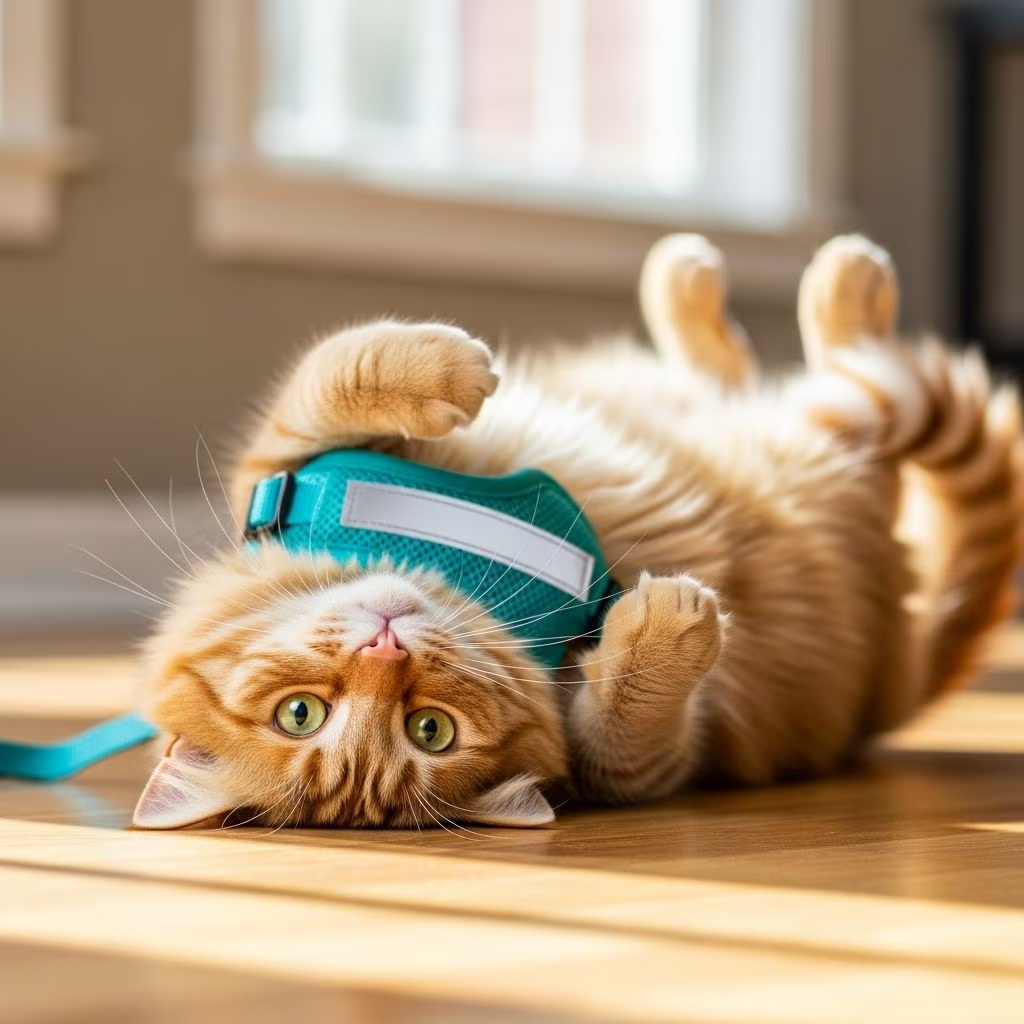
Cats often dramatically flop over when first wearing a harness, a common but puzzling behavior for many pet parents eager to take their felines outdoors. This reaction stems from a mix of instinctual responses, physical discomfort, and disrupted sensory feedback, but with patience and proper techniques, most cats adapt successfully.
Why Do Cats Fall Over When They Have a Harness On?
Several theories explain this quirky feline flop, ranging from evolutionary instincts to practical fit issues. Understanding these helps owners approach harness training with empathy and strategy.
Fight, Flight, or Freeze
When threatened, cats’ sympathetic nervous systems flood the body with adrenaline, priming them for fight, flight, or freeze. The harness may trigger this ‘freeze’ response, as the unfamiliar straps mimic a predator’s grasp, causing cats to instinctively play dead or stiffen in place.
Kitten Carrying / Pressure Points
Harnesses apply pressure around the torso, reminiscent of how mother cats carry kittens by the scruff, eliciting a neonatal reflex where kittens go limp. Some experts suggest this also mimics predator handling, prompting a ‘play dead’ survival tactic.
Poorly Fitting Harness
An ill-fitting harness—too tight, too loose, or wrongly sized—restricts movement, pinches sensitive areas, or shifts uncomfortably, leading to flops as cats avoid pain or imbalance. A snug but adjustable fit is crucial for comfort.
They Feel Confined
Cats are paragons of agility, with hyper-flexible bodies relying on free movement. A harness inhibits this natural fluidity, feeling like an unnatural constraint, which can cause disorientation and collapse until acclimated.
Your Cat Is Scared
The sudden introduction of a novel item triggers fear; cats lack context for the harness, associating it with uncertainty or strange smells, leading to freezing or flopping as a stress response.
What Does This Have To Do with a Harness? The Science Behind the Flop
Beyond instincts, research reveals cats possess a sophisticated somatosensory feedback system—a ‘sixth sense’ processing environmental inputs directly through the body for balance, reflexes, and spatial orientation, bypassing full brain processing. This enables their legendary righting reflex and adaptability.
Placing a harness disrupts this system by altering skin and muscle feedback from the torso, akin to a human wearing a weighted vest blindfolded. The result? Temporary disorientation, wobbles, or flops. Like blind cats adapting via other senses, felines habituate over time, restoring confidence.
How to Get Your Cat Used to a Harness: 9 Proven Steps
Harness training requires gradual desensitization, positive reinforcement, and supervision. Never force it—stressed cats may develop aversions. Follow these vet-recommended steps for success.
- Choose the right harness: Opt for adjustable, escape-proof models like H-style or vest types in breathable mesh. Avoid neck-clip versions that mimic collars. Measure your cat’s girth for a two-finger fit.
- Be confident: Cats mirror owner energy. Familiarize yourself with the harness design to avoid hesitant fumbling that signals danger.
- Put the harness on for 5 minutes: Secure it loosely indoors, supervise calmly, and let your cat process. Ignore mild protests; remove if extreme distress shows (panting, vocalizing).
- Use treats and praise: Reward tolerance with high-value treats during sessions to build positive associations. Pair harness with play or meals.
- Gradually increase time: Extend wear to 10-15 minutes, then hours, associating it with normal activities like eating or napping under watch.
- Practice indoors first: Encourage movement with toys; praise exploration to normalize the sensation.
- Attach a short leash: Roll it up to add weight without dragging. Let cats drag it supervised, rewarding calm behavior. Avoid retractables initially.
- Leave harness on for extended periods (supervised): Allow full-day wear during routines, monitoring for snags.
- Take short outdoor trips: Start in safe, enclosed areas. Use hunger motivation pre-meal; stay attentive.
Harness Training Tips for Success
- Timing matters: Train before meals when hunger boosts treat motivation.
- Supervise always: Prevent tangles or escapes; have a carrier handy.
- Update microchip: Essential for escape risks.
- Avoid distractions: Stay focused—phone scrolling invites accidents.
- No trees or high risks: Leashes snag easily; stick to open spaces initially.
- Patience is key: Some cats adapt in days, others weeks. Progress varies by personality.
| Type | Pros | Cons | Best For |
|---|---|---|---|
| H-Style | Adjustable, secure fit; distributes pressure evenly | May rub if poor quality | Active explorers |
| Vest/Step-In | Easy on/off; padded comfort | Can shift on slim cats | Beginners, fluffy breeds |
| Figure-8 | Simple, lightweight | Escape risk; neck pressure | Kittens (with caution) |
Frequently Asked Questions (FAQs)
Is it normal for my cat to fall over in a harness?
Yes, it’s a common reaction due to freeze instincts, poor fit, or sensory disruption. Most cats outgrow it with gradual training.
How long does it take for a cat to get used to a harness?
Varies from days to weeks; consistent short sessions with rewards speed adaptation.
What if my cat keeps flopping after training?
Check fit, try a different style, or consult a vet to rule out pain. Some cats prefer no harness.
Can all cats be leash-trained?
Most can with patience, but high-strung or elderly cats may not enjoy it. Respect their comfort.
Is a harness safer than a collar for walking?
Yes, harnesses avoid neck strain; ideal for cats that pull or bolt.
Final Thoughts on Cat Harness Training
While the sight of your cat flopping in a harness can be comical, it’s rooted in deep instincts and sensory biology. With the right approach—proper gear, step-by-step desensitization, and positivity—your cat can become a confident outdoor adventurer. Always prioritize welfare; if distress persists, indoor enrichment suffices. Happy trails!
References
- Why Do Cats Fall Over When Wearing a Harness? Possible Reasons & Tips — Hepper. 2023-10-15. https://articles.hepper.com/why-do-cats-fall-over-when-wearing-a-harness/
- Why Do Cats Fall Over in a Harness? Our Vet Explains — Catster. 2024-05-20. https://www.catster.com/cat-behavior/why-do-cats-fall-over-in-a-harness/
- Why Your Cat Falls Over in a Harness (or Clothes), Plus Solution! — SparkleCat. 2022-08-10. https://www.sparklecat.com/special/why-your-cat-falls-over-in-a-harness-or-clothes-plus-solution
- Harness Training A Cat: Easy Steps — Curiosity Trained. 2023-11-05. https://curiositytrained.com/harness-training-a-cat/
- Cat Harness Training 101: Navigating the Flopping, Freezing — Cat Harness Australia. 2024-02-14. https://catharnessaustralia.com.au/blogs/cat-harness-training/cat-harness-training-101-navigating-the-flopping-freezing-and-wobbly-walks



