

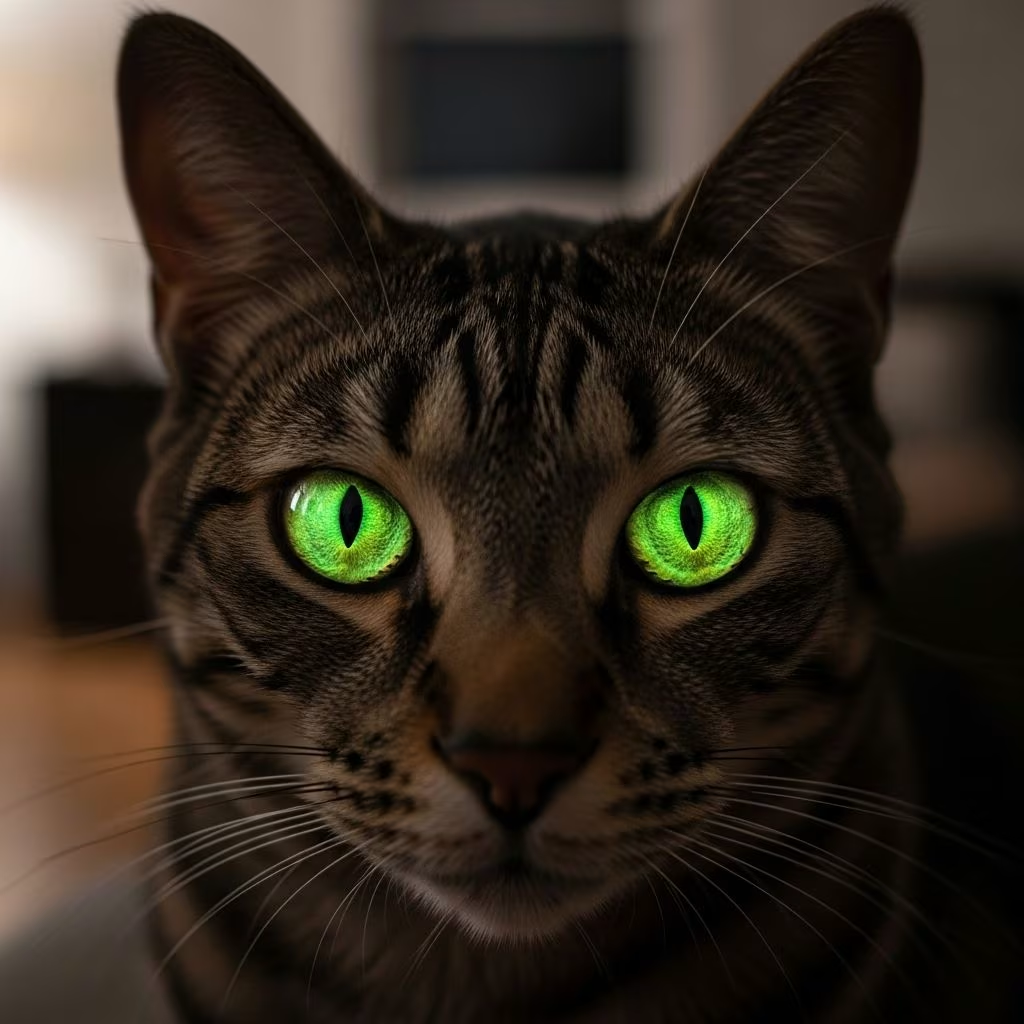
Have you ever caught your cat staring at you in the dark with eyes that seem to pierce through the shadows, glowing like tiny lanterns? This mesmerizing phenomenon, known as eyeshine, is one of the most captivating features of feline anatomy. Cats’ eyes glow due to a specialized reflective layer called the **tapetum lucidum**, which bounces light back through the retina to amplify vision in low-light conditions.
This adaptation turns cats into natural night hunters, giving them a significant edge in twilight environments where they are most active. But beyond the eerie glow, there’s a wealth of science explaining how it works, why it varies in color, and what it means for your pet’s health. In this comprehensive guide, we’ll dive deep into the optics of cat vision, evolutionary advantages, color variations, developmental changes in kittens, and red flags that warrant a vet visit.
How and Why Do Cats’ Eyes Glow in the Dark?
The glowing effect in cats’ eyes occurs when light enters the eye, passes through the retina, and hits the **tapetum lucidum**—a thin, iridescent layer of tissue located behind the retina. This structure acts like a biological mirror, reflecting the light back through the retina for a second chance at detection by photoreceptor cells.
Unlike human eyes, which lack this layer, cats’ tapetum lucidum is composed of reflective crystals made from riboflavin (vitamin B2) and zinc, enhancing light sensitivity by up to 50% in dim conditions. The glow we observe is the reflected light exiting the eye, often appearing brightest when a direct light source like a flashlight or camera flash hits it at the right angle.
Cats are **crepuscular** animals, meaning they are most active at dawn and dusk. During these low-light periods, the tapetum lucidum functions like built-in night-vision goggles, allowing them to spot prey or navigate with precision. Combined with their high concentration of rod cells—which detect motion and low light—and oversized pupils that can dilate up to 50% wider than humans’, cats achieve superior low-light vision.
The Science Behind the Tapetum Lucidum
The **tapetum lucidum**, Latin for ‘bright tapestry,’ is a hallmark of nocturnal and crepuscular animals, including cats, dogs, and many wild felines. In cats, it’s specifically called the tapetum cellulosum, a fibrous layer rich in zinc that reflects nearly 130 times more light than the human eye’s fundus.
- Structure: A thin membrane of sparkling cells positioned just behind the retina, filled with mirror-like riboflavin crystals.
- Function: Reflects unabsorbed light back to rods and cones, boosting retinal illumination without needing external light amplification.
- Evolutionary Benefit: Enhances hunting success in twilight, where prey is active but light is scarce.
However, this superpower has trade-offs. In bright light, the excessive reflection causes slight blur, requiring cats to narrow their slit-shaped pupils dramatically—up to seven times closer to objects for clear focus compared to humans. This explains why cats squint or hide during peak daylight.
What Colour Do Cats’ Eyes Glow?
The glow color isn’t fixed; it varies based on the cat’s age, genetics, light wavelength, and tapetum composition. Common hues include green, yellow, blue, and orange, determined by zinc levels and riboflavin interactions.
| Glow Color | Common In | Possible Causes |
|---|---|---|
| Green/Yellow | Adult cats | High zinc in tapetum; standard for most domestic breeds |
| Blue | Kittens, some breeds | Lower zinc; immature tapetum |
| Orange/Gold | Varied ages | Specific light angles and riboflavin density |
| Red | Potential issue | Light bypassing tapetum; health concern |
These colors can shift subtly with the incident light’s spectrum, much like a chameleon’s adaptation, making each cat’s glow uniquely spectral.
Do All Cats’ Eyes Glow the Same?
No, not all cats exhibit identical eyeshine. Factors like breed, age, health, and even individual tapetum thickness influence intensity and color.
- Breeds: Siamese and other blue-eyed breeds may show brighter blue glows due to lower melanin.
- Hybrids/Wild Cats: Big cats like lions and leopards have similar tapeta but stronger glows from larger eyes.
- Individuals: Nutritional deficiencies or genetics can weaken the layer, dimming the effect.
Domestic cats generally glow consistently, but variations highlight their diverse heritage from African wildcats.
Why Do Kittens’ Eyes Glow Blue?
Newborn kittens emerge with blue-glowing eyes because their tapetum lucidum is underdeveloped, containing fewer zinc crystals initially. This mirrors human infants’ blue eyes, which darken with melanin development.
As kittens mature around 6-12 weeks, the tapetum strengthens, shifting glow to green or yellow. Brighter glow in youth fades with age as the layer naturally degrades, but this is normal unless accompanied by other symptoms.
When to Worry About Your Cat’s Eyes
While glowing eyes are typically a sign of health, changes can signal issues. Monitor for:
- No Glow in Dark: Possible cataracts, glaucoma, or conjunctivitis blocking light to the tapetum. Vet check essential.
- Red Glow: Indicates light not reaching the reflective layer; common in seniors or sudden bright exposures causing dilation and bloodshot appearance.
- Dimming Over Time: Age-related tapetum wear is okay, but rapid changes may point to retinal disease.
- Cloudiness or Discharge: Infections or injuries impairing vision.
Regular eye exams, especially for seniors, ensure early detection. Cats hide pain well, so behavioral changes like bumping into objects warrant professional care.
How Cats’ Eyes Are Built for Night Vision
Beyond the tapetum, cats’ eyes are engineered for darkness:
- Pupils: Vertical slits expand massively for light intake.
- Rods: Six times more than humans for motion detection.
- Large Corneas: 50% bigger relative to eye size, funneling more light.
- Fewer Cones: Prioritizes low-light over color detail; cats see blues/greens best.
This suite makes cats 6-8 times better at night vision than humans, perfect for stealthy pouncing.
Frequently Asked Questions (FAQs)
Why do cats’ eyes glow green?
Green glow results from high zinc in the tapetum interacting with common light wavelengths, typical in adult cats.
Can cats see in complete darkness?
No, the tapetum requires some ambient light; total black renders them as blind as humans.
Do dogs’ eyes glow like cats’?
Yes, dogs have a similar tapetum but often brighter due to different crystal structures.
Is red eye glow dangerous?
Occasional red from flashes is fine, but persistent red suggests vet evaluation for retinal issues.
Why don’t human eyes glow?
Humans lack a tapetum lucidum, as we’re diurnal hunters relying on other visual adaptations.
References
- Why Do a Cat’s Eyes Glow? — Hill’s Pet. 2023. https://www.hillspet.com/cat-care/behavior-appearance/why-do-cats-eyes-glow
- Eyeshine: The Reason Cats’ Eyes Glow When the Lights Go Down — A-Z Animals. 2023. https://a-z-animals.com/blog/eyeshine-the-reason-cats-eyes-glow-when-the-lights-go-down/
- Why do cats’ eyes glow in the dark? — Optimax. 2023. https://www.optimax.co.uk/blog/cats-eyes-glow-dark/
- 20/20 Vision: Why Do Cats’ Eyes Glow in the Dark? — Diamond Pet. 2023. https://www.diamondpet.com/blog/health/conditions/why-do-cats-eyes-glow-in-the-dark/
- The Spooky Science of Glowing Eyes in Cats — Panthera. 2023. https://panthera.org/blog-post/spooky-science-glowing-eyes-cats



