

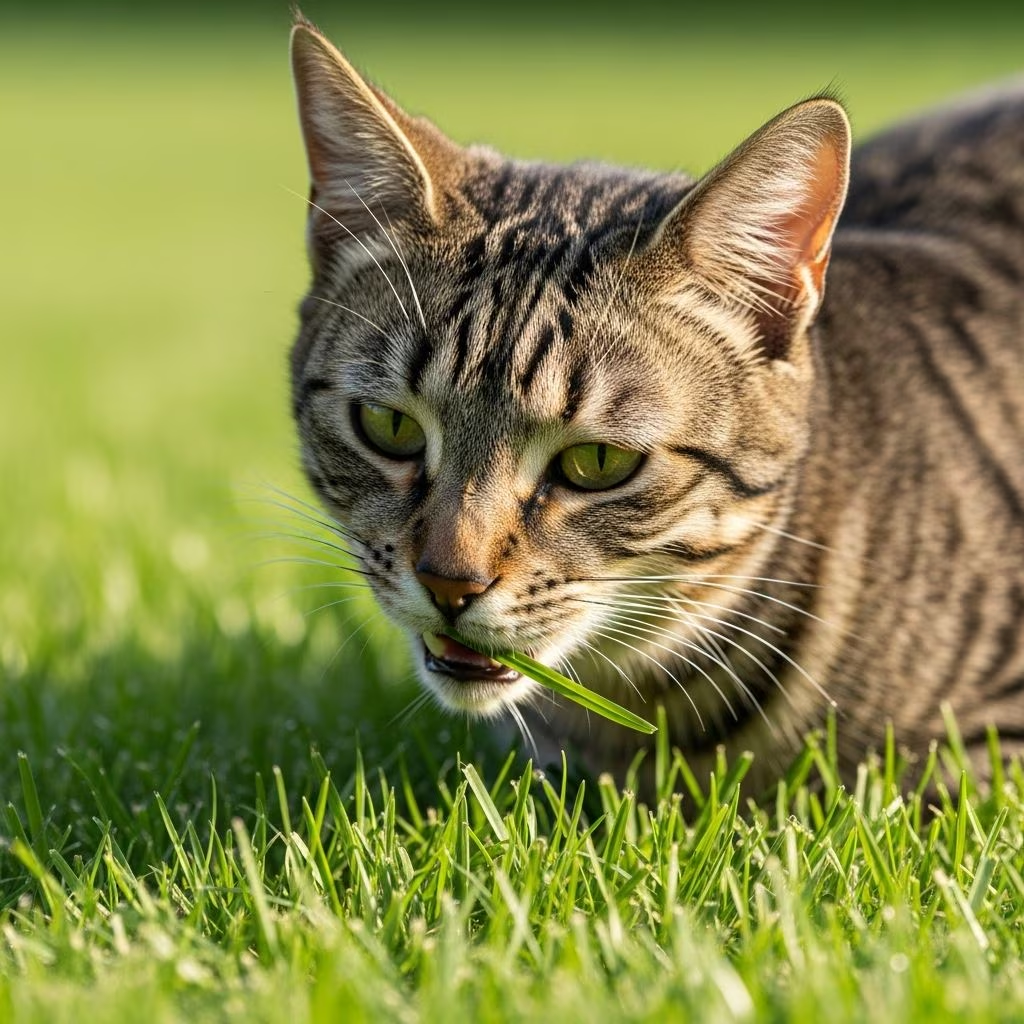
Why Do Cats Eat Grass: Understanding Your Cat’s Natural Behavior
If you’ve ever watched your feline companion venture outdoors and immediately start nibbling on grass, you might have wondered what drives this seemingly odd behavior. The image of a dedicated carnivore chewing on vegetation can be puzzling to pet owners, especially since cats lack the specialized digestive systems that herbivores possess. However, grass-eating is actually a remarkably common behavior in cats, and it’s far from random. Veterinarians and animal behaviorists have spent considerable time studying this phenomenon, and their research has revealed several compelling reasons why cats engage in this instinctive behavior. Understanding these reasons can help you better care for your cat and recognize when this behavior is normal versus when it might signal a health concern.
The Science Behind Grass Eating in Cats
Contrary to popular belief, when your cat eats grass and subsequently vomits, this outcome is not necessarily a sign of illness or distress. Instead, it represents a carefully evolved biological mechanism that has been passed down through countless generations of felines. Research conducted on wild carnivores has provided significant insights into why domestic cats maintain this behavior, even though their modern lifestyle differs dramatically from their ancestors. The behavior is so ingrained in feline biology that it appears across different cat populations and ages, suggesting a deeply rooted evolutionary purpose.
Primary Theories Behind Grass Eating
Parasite Control and Intestinal Health
One of the most compelling scientific theories regarding grass consumption in cats involves parasite management. Research examining wild carnivores and primates has revealed that these animals regularly consume non-digestible grass and other vegetation as part of a natural parasite control strategy. Wild cats and their ancestors almost certainly carried intestinal parasites, and eating grass provided an effective mechanism for expelling these unwanted organisms. When cats consume grass, the fibrous material stimulates muscle activity throughout their digestive tract, creating contractions that help dislodge parasitic worms and move them out of the system. This theory is supported by the observation that adult worms have been found in the stool of wild animals like wolves and civets, wrapped in plant materials, suggesting the animals intentionally consumed these plants for parasite removal.
While modern domestic cats typically receive regular veterinary care and parasite prevention treatments that eliminate the need for this behavior, the instinct remains deeply embedded in their genetic programming. Younger cats appear to eat more grass than their older counterparts, likely because their immune systems haven’t fully developed and are less capable of managing parasite loads on their own. This age-related difference provides further evidence supporting the parasite control hypothesis.
Hairball and Indigestible Material Removal
Another significant theory focuses on how grass helps cats manage hairballs and other indigestible materials accumulated in their digestive systems. When cats hunt and consume prey in the wild, they typically eat the entire animal, including bones, fur, and feathers. These materials cannot be easily digested and often cause discomfort or constipation. Additionally, cats swallow their own fur during regular grooming sessions, which can accumulate into problematic hairballs. By eating grass, cats can induce controlled vomiting, providing a mechanism to expel these bothersome materials. The grass acts as a physical irritant that triggers the vomiting reflex, essentially serving as a natural purging system.
It’s important to note that this vomiting is not a side effect of grass consumption—it’s frequently the intended outcome. When cats cannot naturally expel hairballs or other indigestible matter, eating grass provides a reliable solution. Interestingly, research has shown that long-haired cats, which are more prone to hairballs, don’t necessarily eat significantly more grass than short-haired cats, suggesting that hairball management may not be the sole reason for this behavior.
Nutritional Supplementation
While cats are obligate carnivores whose nutritional needs are primarily met through animal protein, grass can provide certain nutrients that complement their diet. Grass contains folic acid, a B vitamin that supports oxygen levels in the blood and aids digestive function. Additionally, grass provides fiber, which can be beneficial for cats experiencing digestive sluggishness or those prone to constipation. Although cats don’t require large amounts of fiber, a modest intake can facilitate the movement of food through their intestinal tract and reduce the likelihood of gastrointestinal blockages.
Some researchers theorize that grass consumption may address minor nutritional deficiencies or provide trace minerals that aren’t abundantly available in typical feline diets. However, a balanced commercial cat food formulated to meet all feline nutritional requirements should provide adequate vitamins and minerals, making nutritional supplementation a secondary rather than primary reason for grass eating.
Simple Enjoyment and Taste Preference
Perhaps the most straightforward explanation for why cats eat grass is that some felines simply enjoy it. Cats, like humans, possess individual personalities and taste preferences. Some cats may find the texture or taste of grass genuinely pleasurable, leading them to seek it out regularly as a form of enrichment or entertainment. This theory acknowledges that not every feline behavior needs to serve a profound evolutionary purpose—sometimes, cats eat grass simply because they like it.
Common Misconceptions About Grass Eating
Grass Eating Doesn’t Mean Your Cat Is Sick
One of the most pervasive myths surrounding feline grass consumption is that it indicates illness or nausea. While vomiting after eating grass can certainly occur, this alone is not a sign that something is wrong with your cat. Grass-eating is a common, normal behavior observed in healthy cats across all age groups and backgrounds. The presence of grass in your cat’s diet should not automatically trigger concern or a veterinary visit unless accompanied by other warning signs such as frequent vomiting, loss of appetite, lethargy, or behavioral changes.
Cats Cannot Digest Grass Like Herbivores
It’s crucial to understand that cats lack the specialized digestive equipment required to break down cellulose and other plant fibers efficiently. Unlike herbivores and omnivores that possess special gut bacteria and multiple stomach chambers designed for plant digestion, cats are carnivores with relatively simple digestive systems optimized for protein breakdown. Consequently, grass typically passes through their system relatively unchanged, often appearing in their vomit or stool. This inability to digest grass is not problematic—it’s actually part of the mechanism that makes grass useful for cats’ purposes.
Age and Individual Differences in Grass Eating
Grass-eating behavior varies considerably among individual cats. Younger cats generally eat more grass than their older counterparts, a pattern that aligns with the parasite control theory. Young animals’ immune systems are less developed, making them more susceptible to parasitic infections and requiring more active parasite management. Additionally, nutritional stress affects growing animals more significantly than mature cats, potentially driving increased grass consumption during youth.
Interestingly, cats appear to eat less grass than dogs, despite both species sharing similar evolutionary histories as carnivores. This difference may stem from variations in ancestral parasite prevalence between feline and canine species, or it may reflect behavioral differences in how cats and dogs interact with their environment and each other’s waste products. Dogs are more likely to investigate and consume fecal matter, accelerating parasite transmission, whereas cats typically bury their waste and maintain greater distance from other cats’ excrement, naturally limiting parasite exposure.
Safe Grass Options for Indoor Cats
Why Indoor Grass Matters
For indoor cats unable to access outdoor grass, providing safe indoor alternatives becomes essential. Cat grass, typically grown from oat, wheat, rye, or barley seeds, offers a pesticide-free, non-toxic option that allows cats to exercise their natural grass-eating instincts without risk. These commercial cat grass products are specifically cultivated for feline consumption and are readily available through pet supply retailers.
Setting Up an Indoor Grass Station
Creating a dedicated indoor grass area for your cat provides multiple benefits. Place small pots of cat grass in accessible locations throughout your home, preferably near windows where your cat enjoys spending time. Many cats are drawn to grass near light sources, mimicking the outdoor experience. Ensure the grass remains fresh by watering regularly and replacing pots as needed. This approach not only satisfies your cat’s natural urges but also protects your houseplants from becoming unwanted substitutes.
Plants to Avoid
While encouraging grass consumption through safe alternatives, it’s equally important to protect your cat from toxic plants commonly found in homes and gardens. Many popular houseplants are poisonous to cats, including lilies, poinsettias, sago palms, azaleas, and oleander. If your cat has access to outdoor spaces or you keep houseplants indoors, research each plant’s toxicity level and remove hazardous species. When in doubt, consult with your veterinarian about which plants are safe for your feline companion.
When to Consult Your Veterinarian
While occasional grass eating and subsequent vomiting is normal, certain situations warrant professional veterinary evaluation. Contact your veterinarian if your cat exhibits frequent vomiting accompanied by grass eating, loss of appetite, lethargy, diarrhea, or any other concerning symptoms. Additionally, if your cat suddenly develops an intense grass-eating habit after previously showing little interest, this change may indicate an underlying health issue requiring investigation. Your veterinarian can rule out conditions such as inflammatory bowel disease, gastrointestinal parasites despite preventive treatment, or other digestive disorders.
Frequently Asked Questions (FAQs)
Q: Is it normal for cats to eat grass?
A: Yes, grass eating is a completely normal behavior observed in most cats at some point in their lives. It’s not a sign of illness unless accompanied by other concerning symptoms. This behavior reflects deep evolutionary instincts related to digestion and parasite management.
Q: Why does my cat vomit after eating grass?
A: Vomiting after grass consumption is often intentional rather than accidental. Cats use grass to help expel hairballs, feathers, bones, and other indigestible materials from their stomachs. While occasional vomiting is normal, frequent vomiting should be discussed with your veterinarian.
Q: Can I stop my cat from eating grass?
A: Grass eating is an instinctive behavior that’s virtually impossible and inadvisable to stop completely. Instead of prevention, the recommended approach is to provide safe, non-toxic grass alternatives like commercial cat grass, allowing your cat to satisfy this urge safely.
Q: What type of grass is safe for cats?
A: Commercial cat grass grown from oat, wheat, rye, or barley seeds is the safest option for indoor cats. These products are specifically cultivated for feline consumption and are free from pesticides and harmful chemicals. Lawn grass treated with fertilizers or herbicides should be avoided.
Q: Do all cats eat grass?
A: While grass eating is common, not all cats engage in this behavior with equal frequency. Some cats show no interest in grass, while others seek it out regularly. This variation reflects individual personality differences and may also relate to differences in parasite exposure or dietary completeness.
Q: Does my cat eating grass mean they’re deficient in nutrients?
A: Grass eating doesn’t necessarily indicate nutritional deficiency. While grass does contain some nutrients like folic acid and fiber, a high-quality commercial cat food formulated as a complete diet should provide all necessary nutrients. If you suspect nutritional deficiency, consult your veterinarian.
Q: How often is it normal for cats to eat grass?
A: The frequency varies considerably between individual cats. Some cats eat grass several times weekly, while others may do so only occasionally. As long as your cat remains healthy with normal appetite and energy levels, variation in grass-eating frequency is not concerning.
References
- Researchers Think They Know Why Cats Eat Grass — Smithsonian Magazine. 2018-03-15. https://www.smithsonianmag.com/smart-news/researchers-figure-out-why-cats-eat-grass-180972885/
- Why Do Cats Eat Grass? — Chino Valley Animal Hospital. 2024. https://chinovalleyanimalhospital.com/blog/why-do-cats-eat-grass/
- Why do cats eat grass? — Cats Protection UK. 2024. https://www.cats.org.uk/cats-blog/why-do-cats-eat-grass
- Why Do Cats Eat Grass? — PetMD. 2024. https://www.petmd.com/cat/general-health/why-do-cats-eat-grass
- Why do cats and dogs eat grass? — Live Science. 2024. https://www.livescience.com/animals/domestic-cats/why-do-cats-and-dogs-eat-grass
- Why Do Cats Eat Grass — West Loop Veterinary Care. 2024. https://westloopvet.com/blog/why-do-cats-eat-grass/
- Mystery solved? Why cats eat grass — Science Magazine. 2021-04-20. https://www.science.org/content/article/mystery-solved-why-cats-eat-grass



