

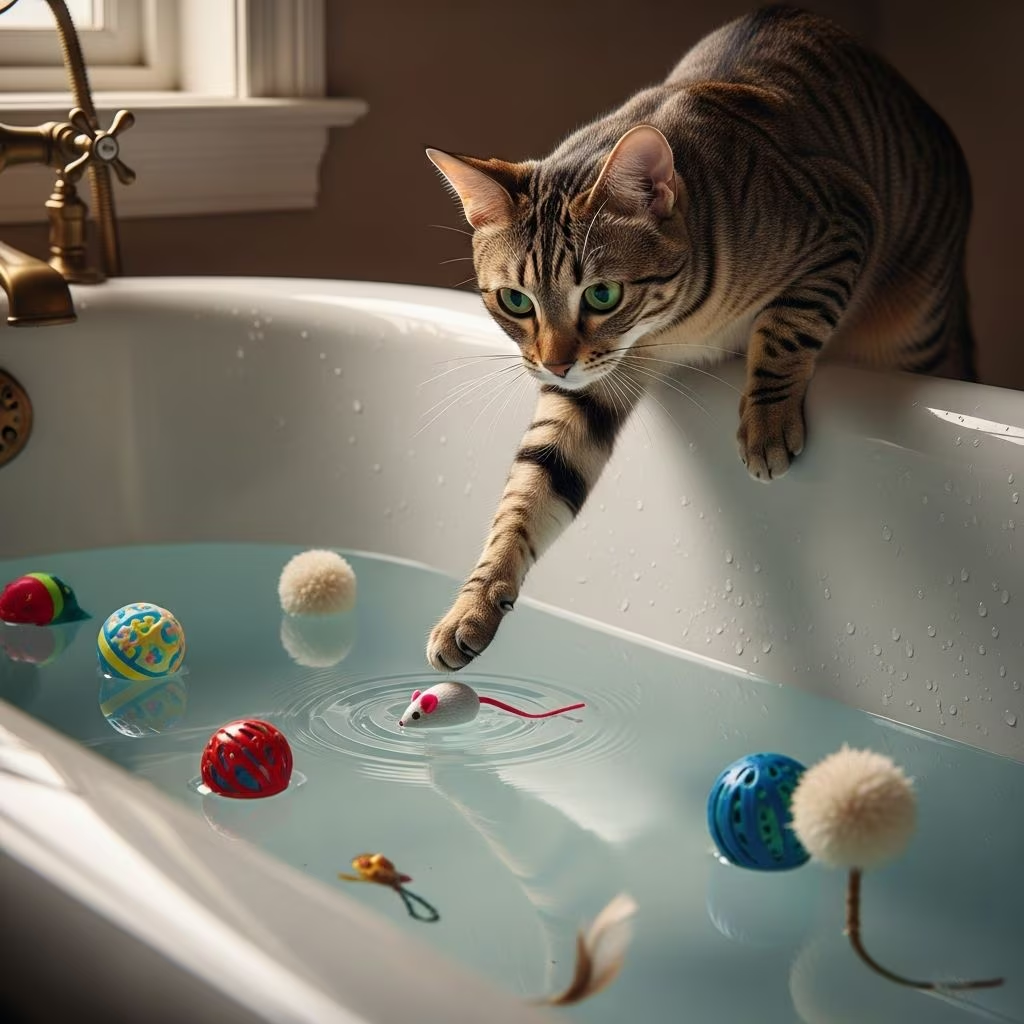
Cats often exhibit unpredictable behaviors that puzzle their owners, such as dropping toys into their water bowls. This quirky habit stems from a mix of instinctual drives, playfulness, and environmental factors, rooted in their wild ancestry and domestic adaptations.
Understanding these actions requires delving into feline psychology. Cats descend from the African wildcat (Felis silvestris lybica), retaining many predatory instincts despite domestication. Toys often represent prey, and water bowls mimic natural elements in their environment. While not all cats do this, it’s a common enough behavior to warrant exploration of its seven primary causes.
The 7 Possible Reasons Cats Drop Toys in Water
Cat behavior experts identify several explanations for this phenomenon. These range from simple mishaps to deep-seated survival instincts. Below, we break down each reason with insights from veterinary and behavioral sources.
1. Just an Accident
High-energy play sessions can lead to toys flying unpredictably, sometimes landing in the water bowl by chance. Kittens, with their clumsy exuberance, are particularly prone to this. Adult cats might overshoot during pouncing or batting, especially if the bowl is near play areas.
To mitigate accidents, relocate the water bowl to a quieter spot while ensuring it’s accessible. This simple adjustment prevents repeated occurrences without disrupting hydration routines.
2. Playing
Play is a cornerstone of cat life, mimicking hunting and providing exercise. During bursts of post-meal energy, cats may fling toys into water, discovering the fun of floating or splashing objects. The toy’s movement in water adds novelty, turning the bowl into an impromptu game zone.
Observe your cat: if they bat at the submerged toy or watch it bob, it’s likely pure entertainment. This behavior escalates during zoomies—those sudden sprints around the house fueled by pent-up energy.
3. Hunting Lessons
Cats learn hunting from their mothers in the wild, who bring live prey to teach kittens. Domestic cats may replicate this by ‘presenting’ toys as kills to safe spots like water bowls, perceived as territorial markers.
Feral cats drag prey to dens, avoiding water to prevent contamination or decomposition. Toys in bowls might symbolize this caching, though accidentally. Behaviorists note this as an echo of ancestral patterns from Felis silvestris.
4. Drowning Their Prey
Some big cats, like tigers, drown prey in water—a tactic leveraged by domestic cats treating toys as victims. Certified behaviorist Marci Koski explains that cats may instinctively submerge ‘prey’ to neutralize it.
- This aligns with wild survival strategies where water ensures prey doesn’t escape.
- Domestic cats, lacking real hunts, apply it to toys for realistic play.
- Not all breeds do this; it’s more common in high-prey-drive cats.
Evidence from observations shows cats repeatedly dunking toys, simulating kills.
5. Boredom
Intelligent cats crave stimulation. Knocking items off tables or dunking toys combats ennui, providing sensory feedback from water ripples and toy movements.
Without enrichment, cats invent games. A water bowl offers visual and tactile intrigue—watching toys sink or float entertains. Combat boredom with puzzle feeders, scratching posts, and interactive sessions to redirect energy.
6. Being Impulsive
Personality plays a role. The Feline Five model—dominance, agreeableness, extroversion, neuroticism, impulsiveness—links high impulsivity to erratic behaviors like toy-dunking.
Impulsive cats are excitable and reckless, per owner reports. This trait manifests in spontaneous actions without forethought, making water bowls targets during play. Genetic and early socialization influence this.
7. Getting Your Attention
Cats learn cause-and-effect quickly. Dropping toys in water prompts owner intervention, reinforcing the behavior through attention—even scolding counts as interaction.
It may signal feeding time or loneliness. Positive responses like laughter encourage repetition. Ignore the act and reward calm behavior to extinguish it.
Is This Behavior Normal?
Yes, dunking toys in water is normal and harmless in moderation. It reflects healthy instincts and playfulness, not distress. However, frequent occurrences signal needs like more playtime or environmental tweaks.
Monitor for patterns: if paired with aggression or litter issues, consult a vet to rule out stress or health problems.
How to Stop Cats from Putting Toys in Their Water Bowl
Managing this habit improves hygiene and reduces frustration. Here are evidence-based strategies:
- Separate food and water bowls: Mimic wild preferences; cats avoid contaminating water sources.
- Provide multiple water stations: Including fountains, which many cats prefer for running water.
- Increase enrichment: Rotate toys, add cat trees, and schedule play to curb boredom.
- Ignore and redirect: Remove toys calmly without reaction; offer alternatives.
- Use toy storage: Baskets near beds encourage ‘caching’ elsewhere.
| Strategy | Why It Works | Implementation Tips |
|---|---|---|
| Multiple Water Sources | Prevents contamination discouragement | PetNF fountain or extra bowls |
| Enrichment Toys | Reduces boredom-driven antics | Puzzle feeders, laser pointers |
| Bowl Relocation | Avoids play zone accidents | Quiet, accessible spots |
Frequently Asked Questions (FAQs)
Why does my cat put toys in the food bowl instead?
This may indicate gathering instincts or cleaning prey, extending water behaviors to food areas as central territories.
Is it dangerous for my cat?
Generally no, but contaminated water risks health. Clean bowls daily and ensure fresh sources.
My kitten does this a lot—what should I do?
Kittens outgrow clumsiness; provide supervision, toys, and stable bowls.
Does breed affect this behavior?
High-energy breeds like Bengals or Abyssinians show it more due to prey drive.
Can I train my cat to stop?
Yes, through positive reinforcement and environmental changes. Consistency is key.
Understanding Your Cat’s Wild Side
This behavior underscores cats’ semi-wild nature. From African wildcat ancestors, instincts like prey caching persist. Domestic life amplifies play versions, as toys substitute hunts.
Owners report variations: some cats fetch wet toys, others ‘wash’ them in litter then water. Anecdotes highlight individuality—your cat might combine reasons.
Embrace quirks while addressing excesses. Enriched environments foster well-adjusted pets, turning odd habits into endearing traits.
Expanding on instincts, studies on feline behavior reveal play as 80% hunting simulation. Toys in water enhance realism via resistance and unpredictability. Boredom links to welfare; understimulated cats develop stereotypes like wool-sucking.
For impulsivity, the Feline Five study (published in peer-reviewed journals) validates owner perceptions, aiding tailored interventions. Attention-seeking ties to bonding; cats view humans as family, sharing ‘kills’.
Practical expansions: fountains boost intake by 20-30% in studies, curbing bowl play. Toy rotation prevents habituation, maintaining interest.
In multi-cat homes, competition amplifies dunking as territory claims. Observe dynamics for holistic management.
References
- Why Do Cats Drop Toys in Water? 7 Possible Reasons — Catster. 2023. https://www.catster.com/cat-behavior/why-do-cats-drop-toys-in-water/
- Why Do Cats Put Toys in Water? — Chewy. 2023. https://www.chewy.com/education/cat/training-and-behavior/why-does-my-cat-drop-toys-in-the-water-bowl
- Why Does My Cat Put Toys in the Water Bowl? — Dezi & Roo. 2023. https://deziroo.com/blogs/pawsitive-connections/why-does-my-cat-put-toys-in-the-water-bowl
- Why Cats Put Toys in their Food Bowl — Portage Park Animal Hospital. 2023. https://www.portagepark.com/blog/why-cats-put-toys-in-food-bowl



