

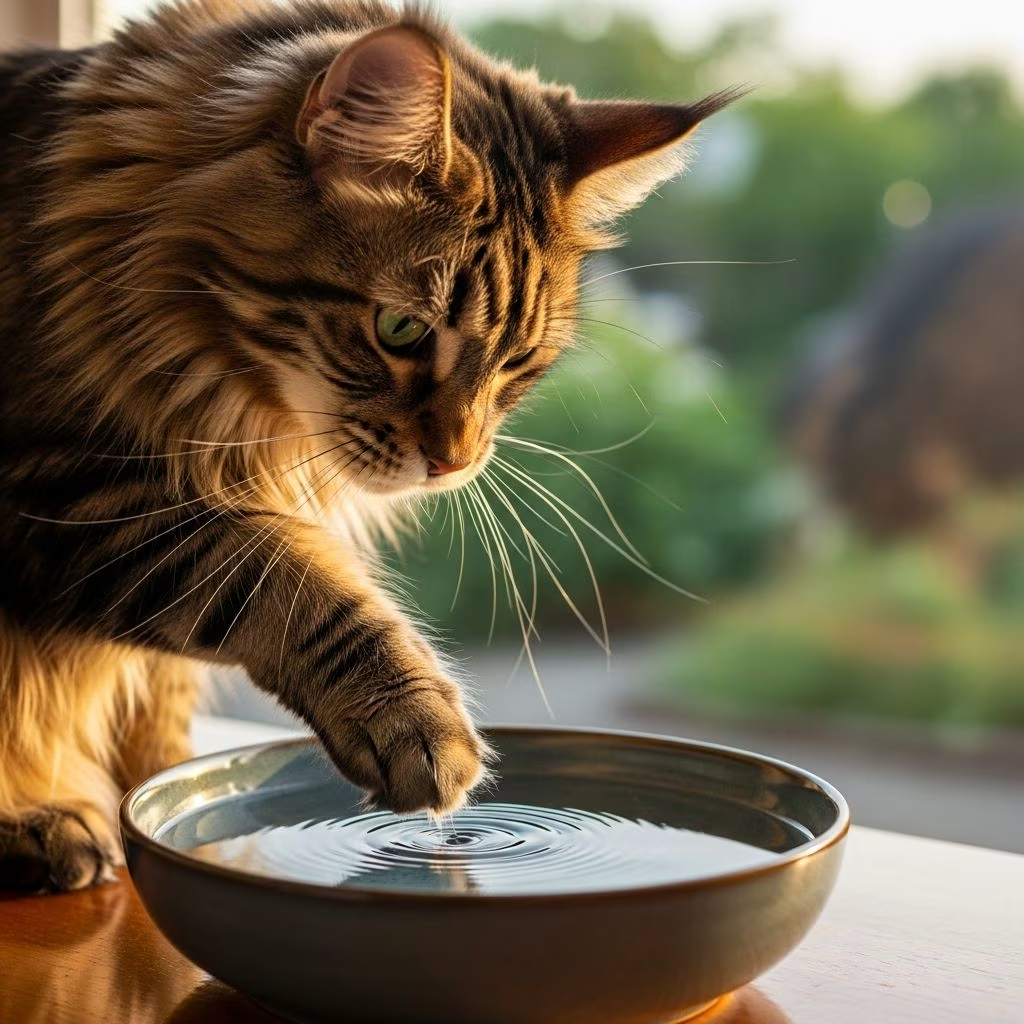
Cats dipping their paws in water bowls is a common and often endearing behavior observed in households worldwide. This quirky habit, where felines tap, scoop, or splash their water rather than lapping directly, puzzles many pet owners. While it may seem odd, it’s typically rooted in natural instincts, sensory preferences, or environmental factors. Understanding this behavior helps cat guardians provide better hydration solutions and monitor for potential health issues.
In the wild, cats evolved as cautious hunters who approached water sources warily to avoid contaminants or predators. Domestic cats retain these traits, using their highly sensitive paws—packed with nerve endings—to test water depth, safety, and movement before drinking. Paws act like natural dipsticks, allowing cats to gauge levels without committing their face fully. This article explores the primary reasons for this behavior, practical solutions, and when it signals a vet visit.
Whisker Sensitivity and Whisker Fatigue
One of the top reasons cats dip paws in water is **whisker sensitivity**. Cat whiskers, or vibrissae, are specialized hairs embedded with thousands of nerve endings that serve as tactile sensors. They detect air currents, object proximity, and spatial boundaries, functioning like radar for navigation.
When a cat lowers its head to a narrow or deep water bowl, whiskers brush against the sides or bottom, causing **whisker fatigue**—an overload of sensory input leading to discomfort or stress. Symptoms include paw-dipping to avoid whisker contact, face-rubbing on bowls, or outright refusal to drink. Cats prefer wide, shallow bowls where whiskers remain free.
- Whiskers detect subtle changes in water levels and flow.
- Narrow bowls squash whiskers, triggering avoidance.
- Solution: Switch to ceramic or glass bowls at least 3-4 inches wide.
Research from veterinary behaviorists confirms that whisker fatigue affects up to 20% of cats with standard bowls, resolvable by bowl redesign.
Instinctual Testing of Water Safety
Cats’ wild ancestors pawed at ponds or streams to check for movement, ensuring water was fresh and predator-free. Ripples indicate flow, mimicking safe, running sources over stagnant ones. Domestic cats inherit this, tapping bowls to create waves—often drinking from faucets if available.
This behavior persists because still water appears invisible to cats’ far-sighted eyes, optimized for motion detection over close-up clarity. Paw-dipping makes water visible and verifies depth without submersion risk.
- In the wild: Tests for debris, insects, or dangers.
- Modern equivalent: Preference for fountains simulating streams.
- Bonus: Licking wet paws post-dip sanitizes via saliva enzymes.
Bowl Placement and Vulnerability Concerns
Bowl location matters greatly. Cats positioned with backs to rooms feel exposed, a survival instinct from prey vulnerability. Paw-dipping allows drinking while scanning surroundings—no head-lowering required.
Walls or corners exacerbate this; cats turn awkwardly or use paws instead. Ideal spots: Open areas, 10+ feet from food (to mimic wild separation), quiet zones away from litter boxes or traffic. Multi-cat homes amplify stress, prompting multiple bowl stations.
| Problem Placement | Solution |
|---|---|
| Against wall/corner | Open floor space |
| Near food/litter | Separate quiet room |
| High traffic area | Elevated stand in calm spot |
Playfulness, Boredom, and Kitten Behavior
Not all paw-dipping is serious; many cats treat water as a toy. Splashing creates mesmerizing ripples, especially for kittens or bored adults. This peaks in young cats exploring textures but can persist if unaddressed.
Boredom signs: Knocking bowls, excessive splashing. Counter with interactive toys, puzzle feeders, or scheduled play. Kittens outgrow it with maturity, but enrich environments prevent habit-forming.
- Increase daily play: 15-20 minutes twice daily.
- Introduce water toys or bubbles safely.
- Monitor: Playful vs. frantic indicates stress.
Inconsistent Water Levels and Fussiness
Cats are creatures of habit, disliking surprises. Variable fill levels prompt paw-testing to confirm familiarity. Inconsistent refills signal change, leading to hesitation.
Solution: Use bowls with level markings or auto-fillers. Maintain routine: Same time, same amount daily. Fresh, filtered water enhances appeal, reducing pickiness.
Health-Related Reasons: When to Worry
While usually benign, sudden or exaggerated paw-dipping warrants vet checks. Common culprits:
- Vision issues: Older cats can’t see water clearly; paw tests depth. Early detection via exams preserves quality of life.
- Mobility problems: Arthritis or joint pain prevents bending; seated paw-drinking common in seniors.
- Dental/pain: Mouth sores or teeth issues make lapping painful.
- Thirst changes: Excessive dipping with increased urination signals kidney disease, diabetes, hyperthyroidism—vet ASAP.
Track intake: Normal is 3-4 oz/day per 5 lbs body weight. Changes + paw behavior = professional eval.
How to Stop or Reduce Paw-Dipping
Practical fixes promote direct drinking:
- Upgrade bowls: Wide, shallow, stainless steel or ceramic—no plastic (bacteria harbor).
- Cat water fountains: Circulating water satisfies flow instinct; top-rated models filter and quiet.
- Multiple stations: 1+ per cat +1, varied locations reduce competition/stress.
- Flavor enhancers: Vet-approved tuna water or fountains briefly.
- Positioning: Eye-level stands for seniors ease access.
Studies show fountains boost intake 20-30% by mimicking streams. Transition gradually to avoid rejection.
Benefits of Proper Hydration
Addressing paw-dipping ensures hydration, preventing urinary crystals, kidney strain, constipation. Hydrated cats have glossier coats, better energy, fewer vet bills. Paw method works but wastes water, creates messes—optimized setups benefit all.
Frequently Asked Questions (FAQs)
Is paw-dipping in water normal for cats?
Yes, it’s normal and instinctual for most cats, linked to whiskers, safety checks, and play. Only concerning if new in adults or with symptoms.
Will a cat water fountain stop this behavior?
Often yes—running water appeals to instincts, reducing paw need. Choose quiet, easy-clean models.
What if my senior cat started dipping paws?
Check for arthritis, vision loss, dental pain. Vet exam recommended; supportive care like ramps helps.
Why does my cat knock over the water bowl?
Boredom, stress, or empty bowl. Add enrichment, move to quiet spot, ensure consistent fills.
Can whisker fatigue cause other issues?
Yes, leads to dehydration if cats avoid bowls. Wide bowls resolve it quickly.
This comprehensive guide empowers cat owners to decode and optimize water habits. Observe your feline: Tailored tweaks enhance well-being.
References
- Why Do Cats Dip Their Paw in Water Bowls? — Mental Floss. 2025-01-01. https://www.mentalfloss.com/article/651928/why-do-cats-dip-their-paw-water-bowls
- 8 Reasons Cats Dip Their Paws in Water — BetterPet. 2024-06-15. https://www.betterpet.com/learn/why-cats-paw-at-water
- Why Does My Cat Dip Their Paw in Their Water Bowl? — Petlibro. 2024-08-20. https://petlibro.com/blogs/all/why-does-my-cat-dip-their-paw-in-their-water-bowl
- Why Do Cats Dip Their Paw in Water Bowls? — Asheville Cat Weirdos. 2024-05-10. https://ashevillecatweirdos.org/why-do-cats-dip-their-paw-in-water-bowls/
- Cat Dipping Paw in Water: Understanding This Curious Behavior — UAH Pet. 2024-09-01. https://www.uahpet.com/blogs/post/cat-dipping-paw-in-water-understanding-this-curious-behavior



