

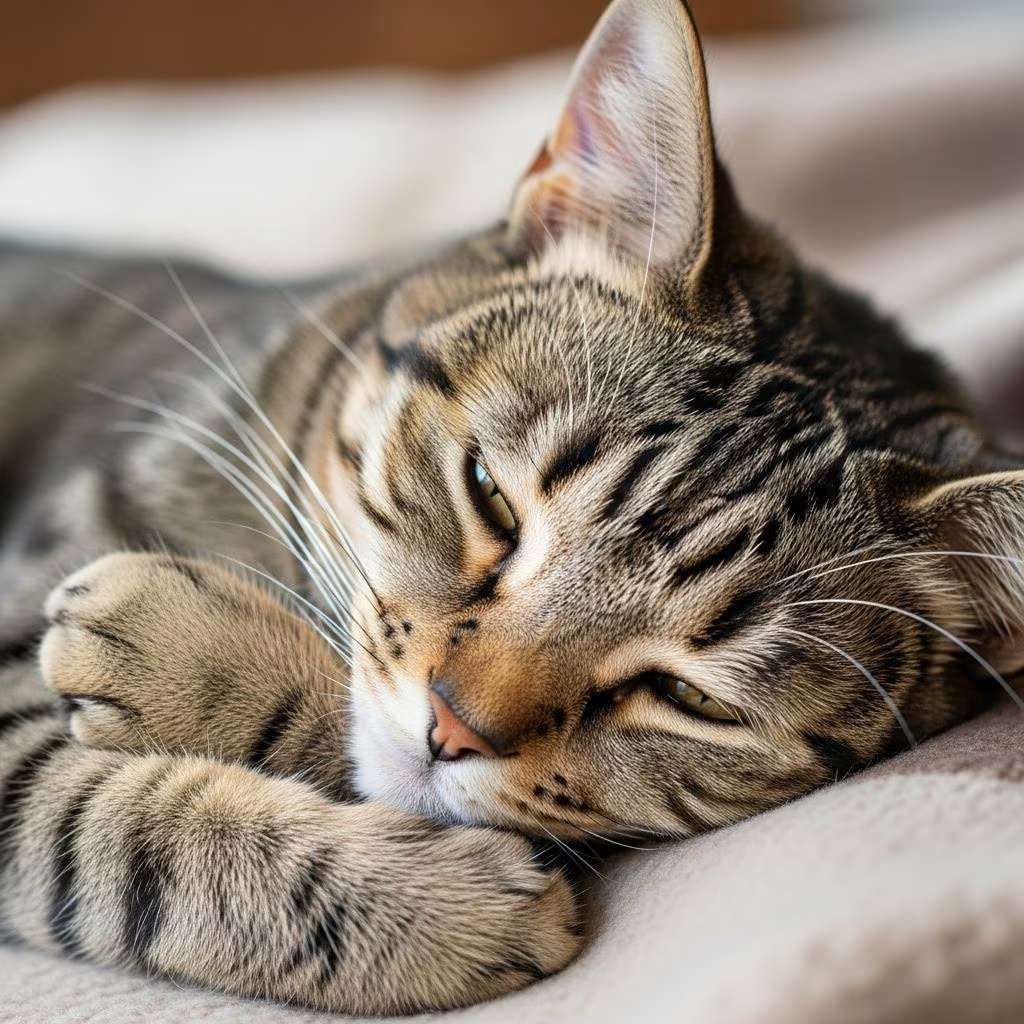
Cats exhibit many endearing behaviors, and one of the most charming is curling their paws underneath them in the famous “loaf” position. This posture, where the cat tucks its paws out of sight, makes them look utterly relaxed and adorable. However, there’s more to this habit than cuteness. Cats curl their paws for practical reasons, including maintaining **comfort**, conserving **warmth**, preparing for **naptime**, signaling “no touching,” enabling **quick responses**, or simply out of **habit**.
Understanding why cats curl their paws provides insight into their well-being and instincts. This behavior stems from their evolutionary needs as predators that balance rest with readiness. While mostly benign, excessive or unusual paw curling may signal discomfort or health issues, warranting a vet visit.
What Does It Mean When a Cat Curls Its Paws Underneath It?
When a cat curls its paws beneath its body, it often adopts the “cat loaf” or “turkey” position, resembling a bread loaf with hidden paws. This indicates the cat feels **safe and relaxed**, as exposed paws would leave them vulnerable. Cats instinctively protect their paws, which contain scent glands and are vital for hunting and navigation.
This position allows cats to conserve energy while staying alert. Unlike fully stretched out sleeping, the loaf keeps muscles primed for sudden movement. It’s common in secure environments, signaling mental ease and physical comfort.
The 6 Main Reasons Cats Curl Their Paws
Cats curl their paws for a variety of instinctual and practical reasons. Below, we break down the primary motivations, supported by veterinary insights and behavioral observations.
1. Comfort
The primary driver for many cat behaviors is **comfort**. Curling paws mimics how humans tuck legs under while lounging—purely for coziness with no deeper purpose. This position distributes weight evenly, reducing pressure on joints.
Conversely, unusual paw curling might indicate **pain or fatigue**. If your cat curls paws more frequently alongside limping, reluctance to jump, or vocalizing, consult a vet. Conditions like arthritis could cause compensatory postures.
2. Habit
Cats are creatures of habit, favoring specific spots, toys, and positions. Paw curling might start seasonally for warmth but persist year-round if enjoyable. There’s no need to discourage it if the cat appears happy—embrace the loaf!
Breeds like Maine Coons may adapt this into “paw crossing,” a variant where paws neatly overlap in front rather than fully tucking.
3. Naptime
Cats sleep or nap **12–16 hours daily**, alternating deep sleep with power naps for hunting recovery. The loaf position facilitates quick naps: paws tucked allow instant springing into action upon waking.
This conserves energy efficiently. Cats curl paws to minimize heat loss during brief rests, staying primed for prey or play.
4. No Touching
Cats control affection on their terms. Paw curling signals **”do not disturb”**—relaxed yet escape-ready. Unlike belly-up vulnerability, tucked paws enable swift swats or retreats from unwanted pets.
Watch body language: relaxed ears and eyes mean restful loafing; tense posture suggests irritation. Respect boundaries to avoid scratches.
5. Quick Responses
Despite loafing’s relaxed vibe, it’s strategically alert. Tucked paws position legs for explosive launches—ideal for pouncing on toys, evading kids/pets, or defending territory.
This reflects wild ancestry: cats rest but never fully off-guard. The loaf balances repose with readiness, paws poised to swipe or flee.
6. Warmth
Cats curl paws to **retain body heat**, especially in cooler weather. Paws, like human extremities, chill easily; tucking warms them against the body core.
Observe patterns: more loafing in winter or cool rooms. Sunbathing cats stretch out, but cold prompts curling. Tufted breeds like Maine Coons excel at this.
Other Reasons Cats Curl Their Paws
Beyond the main six, cats curl paws for grooming, exploration, emotions, and more.
- Grooming: Cats lick curled paws to clean fur, remove debris, or stimulate facial whiskers. This self-maintenance regulates temperature and hygiene.
- Exploration & Hunting: Curling flattens claws for silent stalking, better grips on slippery prey, or manipulating objects with dexterous paws.
- Emotions: Playful curling invites action; fear/anger exposes claws defensively; submission tucks paws deferentially.
- Territory Marking: Paw glands deposit scents when curled against surfaces.
When to Worry About Curled Paws
Normal paw curling is harmless, but abnormalities signal issues:
| Normal Signs | Concerning Signs |
|---|---|
| Relaxed loafing, symmetrical paws, active cat | Limping, swollen/pillow-like paws, reluctance to walk |
| Seasonal or habitual | Sudden increase with lethargy, appetite loss |
| Easy movement from position | Pain on paw touch, knuckling (pillow foot) |
“Pillow foot” or knuckling involves paws curling abnormally under due to arthritis, infections, or congenital issues. Seek vet care promptly.
Frequently Asked Questions (FAQs)
Why does my cat curl its paws when sitting?
This loaf position provides comfort, warmth, and quick getaway readiness while feeling secure.
Is the cat loaf position healthy?
Yes, it’s a positive comfort sign. No concerns unless accompanied by pain indicators.
Do all cats curl their paws?
Most do, but some prefer stretching or crossing (e.g., Maine Coons). It’s breed and personality-dependent.
Why does my cat only curl paws in certain spots?
Favorite warm/secure spots reinforce the habit for optimal relaxation.
Can curled paws indicate illness?
Rarely, but watch for asymmetry, swelling, or mobility issues signaling arthritis or pillow foot.
Conclusion
Cats curl their paws for comfort, warmth, naps, boundaries, speed, and habit—mastering the adorable loaf. Mostly benign, it showcases feline smarts. Monitor changes and vet if concerned for your cat’s health.
References
- Why Do Cats Curl Their Paws? (8 Typical Reasons) — DeviantArt / vetranchorg. 2023-10-01. https://www.deviantart.com/vetranchorg/journal/Why-Do-Cats-Curl-Their-Paws-8-Typical-Reasons-954014018
- Why Do Cats Curl Their Paws? Vet-Verified Reasons, Facts & FAQ — Catster. 2024-05-15. https://www.catster.com/cat-behavior/why-do-cats-curl-their-paws/
- Why do cats curl their paws when they’re relaxed? — Dial A Vet. 2024-08-20. https://www.dialavet.com/vet-answers/cat-curls-paws-when-lounging-36344
- Pillow Foot in Cats: A Detailed Guide — PetCareRx. 2023-11-10. https://www.petcarerx.com/article/pillow-foot-in-cats-a-detailed-guide/6501



