

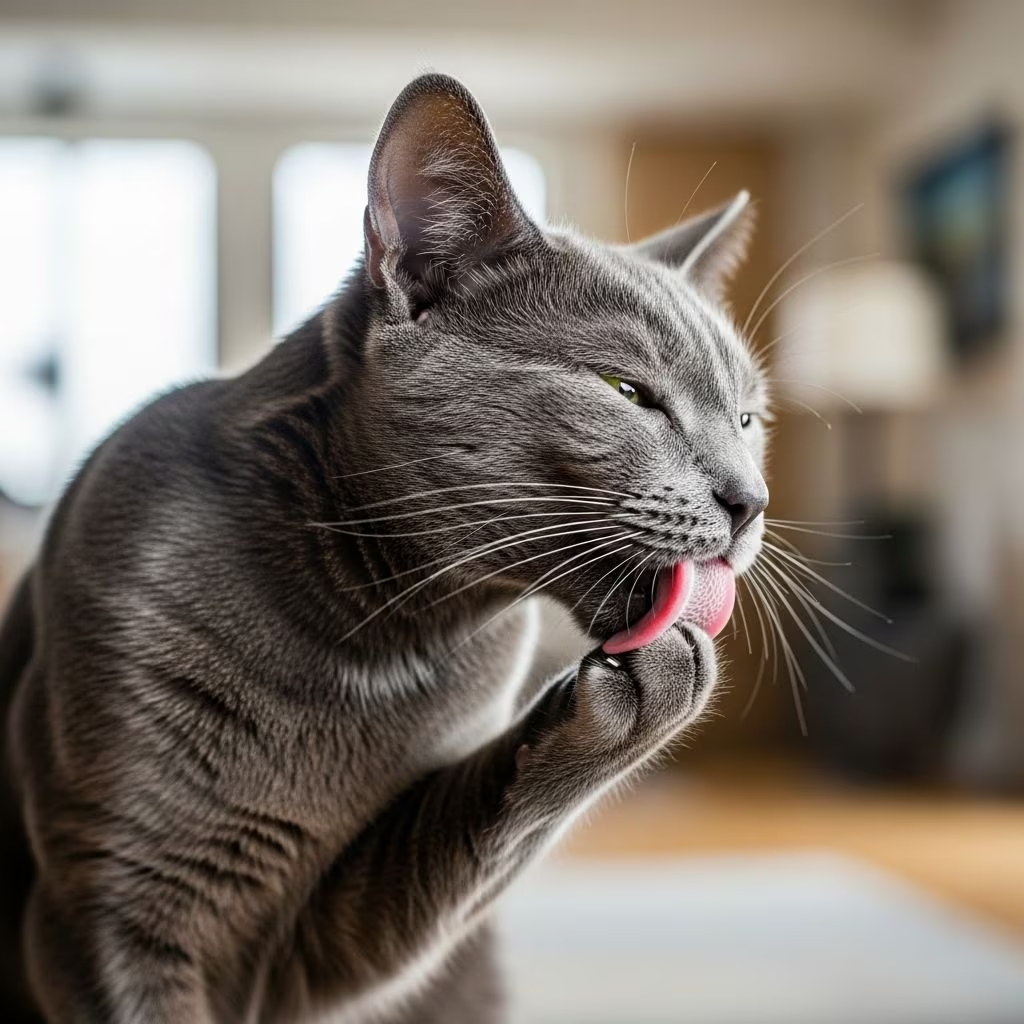
Cats dedicate 30-50% of their waking hours to grooming, a behavior rooted in instinct for hygiene, health maintenance, and emotional regulation. This meticulous self-cleaning serves multiple purposes beyond mere tidiness, from regulating body temperature to strengthening social bonds.
How Cats Groom Themselves
Cats are equipped with specialized tools for efficient grooming. Their tongues feature papillae—tiny, backward-facing spines that act like a natural brush, removing dirt, loose fur, and parasites. Forepaws serve as combs, while sharp teeth help with hard-to-reach spots. Cats strategically lick their paws to activate oil glands behind their ears, spreading sebum—a natural oil—for coat conditioning and scent marking.
This process begins early: Mother cats lick kittens to stimulate urination, defecation, and breathing while hiding scents from predators. By four weeks, kittens self-groom and engage in allogrooming (mutual grooming) with littermates and their mother, fostering lifelong habits. Adult cats spend 2-5 hours daily on this ritual, contorting flexibly to reach nearly every body part.
- Tongue: Rough surface scrapes away debris and distributes oils.
- Paws: Used to ‘wash’ face and stimulate head glands.
- Teeth: Nibble for parasite removal and mat disentangling.
Reasons Cats Groom So Much
Grooming fulfills essential physiological and psychological needs. Cats lick to stay clean, but it also cools them via saliva evaporation, stimulates blood flow, and spreads protective oils for a glossy coat.
| Reason | Benefit | Example |
|---|---|---|
| Hygiene | Removes dirt, parasites | Flea elimination |
| Temperature Regulation | Evaporative cooling | Hot weather licking |
| Circulation Stimulation | Improves skin health | Massage-like effect |
| Oil Distribution | Shiny, waterproof coat | Sebum from head glands |
Psychologically, grooming releases endorphins, providing comfort akin to human fidgeting. It’s a displacement activity during stress, embarrassment, or conflict—cats lick after mishaps like failed jumps to ‘save face’.
Allogrooming: Why Cats Groom Each Other
Allogrooming strengthens social ties, mimicking wild colony behaviors for hygiene and affiliation. Dominant cats may groom subordinates, though not strictly hierarchical like dogs; it’s more about affection and reciprocity.
Mothers groom kittens for cleanliness and bonding; adults extend this to housemates or owners, signaling trust. Licking humans often follows petting, reinforcing bonds or self-soothing overstimulation.
- Affection display
- Parasite removal in blind spots
- Scent exchange for group identity
When Grooming Becomes Overgrooming
Normal grooming maintains health, but excess leads to hair loss (alopecia), raw skin, or bald patches—termed psychogenic alopecia if behavioral. Cats may chew or barber fur symmetrically, often on flanks or belly.
Signs include:
- Bald spots without mats
- Red, inflamed skin
- Grooming >5 hours/day
- Avoidance of touched areas
Causes of Excessive Cat Grooming
Overgrooming stems from medical or behavioral triggers. Rule out health issues first.
Medical Causes
- Fleas/Allergies: Intense itching prompts nonstop licking.
- Skin Infections: Bacterial/fungal issues irritate.
- Hyperthyroidism: Common in seniors, boosts metabolism and grooming.
- Pain: Arthritis or dental problems hidden by focused licking.
Behavioral Causes
Stress disrupts routines, triggering compulsive licking for endorphin hits. Common stressors:
- New pets, babies, moves
- Boredom/lack of play
- Anxiety/separation
Cats in multi-cat homes may overgroom from territorial tension.
Is My Cat Overgrooming? How to Tell
Observe patterns: Normal groomers pause for meals/play; overgroomers fixate, ignoring needs. Check for symmetry in baldness (behavioral) vs. patchy (parasites). Skin should be clean/dry; wetness signals obsession.
Video sessions or note hotspots. If fur regrows when distracted, it’s likely stress-related.
What to Do If Your Cat Overgrooms
- Vet Visit: Exam, flea comb, skin scrapes, bloodwork for thyroid/allergies.
- Flea Control: Monthly preventives year-round.
- Enrich Environment: Puzzles, vertical spaces, play to combat boredom.
- Reduce Stress: Pheromone diffusers, consistent routines, safe zones.
- Diet Check: Omega-3s for skin health; hypoallergenic food trials.
- Monitor: Elizabethan collar temporarily; meds for severe OCD.
Improvement takes weeks; persistence warrants specialists like dermatologists.
Frequently Asked Questions (FAQs)
Why does my cat lick itself after I pet it?
This self-grooming redistributes your scent, self-soothes overstimulation, or reinforces bonding. It’s normal unless excessive.
How much grooming is too much for cats?
Over 5 hours daily or with hair loss/skin issues. Normal is 2-5 hours spread out.
Do all cats groom obsessively?
Most do extensively, but breeds like Persians need extra owner help due to long fur.
Can overgrooming cause hairballs?
Yes, excess loose fur ingestion worsens them. Hairball remedies help alongside cause treatment.
Is cat grooming a sign of happiness?
Often yes—relaxed grooming indicates contentment. Tense, rapid licking signals stress.
Understanding grooming demystifies this feline quirk, helping owners spot when fastidiousness turns problematic. Proactive care ensures your cat’s ritual remains healthy.
References
- Understanding Your Cat’s Grooming Habits — Hill’s Pet Nutrition. 2023-05-15. https://www.hillspet.com/cat-care/behavior-appearance/why-cats-groom-and-lick-themselves
- Why Do Cats Obsessively Groom Themselves and Others? — WhyCatWhy. 2022-11-10. https://www.whycatwhy.com/why-do-cats-groom-so-much/
- Why Do Cats Lick Themselves? — PetMD. 2024-08-20. https://www.petmd.com/cat/behavior/why-do-cats-lick-themselves
- Why Your Cat Grooms So Much — MSPCA-Angell. 2023-02-14. https://www.mspca.org/pet_corner/why-your-cat-grooms-so-much/
- Cats that Lick Too Much — Cornell University College of Veterinary Medicine. 2021-06-01. https://www.vet.cornell.edu/departments-centers-and-institutes/cornell-feline-health-center/health-information/feline-health-topics/cats-lick-too-much



