

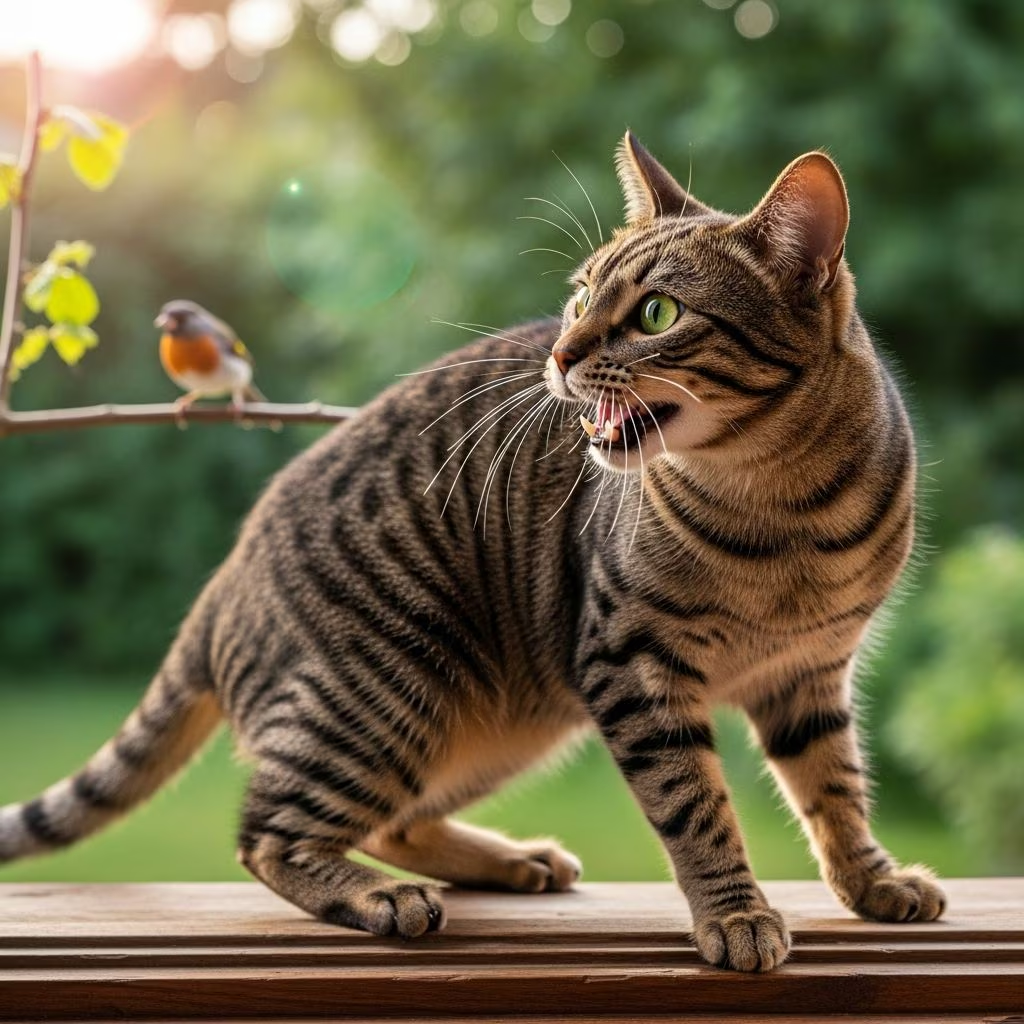
Why Do Cats Chirp at Birds? Understanding Your Cat’s Hunting Instincts
If you’ve ever watched your cat sit by a window and make unusual chirping or chattering sounds while observing birds outside, you may have wondered what was going through their feline mind. This quirky behavior is actually far more common than many cat owners realize, and it has everything to do with your cat’s natural predatory instincts. Cat chirping at birds is a completely normal behavior that stems from their evolutionary design as hunters. Rather than being a sign of distress or illness, this vocalization reveals an engaged and instinctively driven feline companion.
The Predatory Origins of Cat Chirping
At the core of cat chirping behavior lies a fundamental truth: cats are predators, and birds are their natural prey. This predator-prey relationship has evolved over thousands of years and remains deeply ingrained in the DNA of domestic cats. The chirping sound your cat makes is essentially their hunting instinct in action. When a cat sees a bird through a window, their ancient survival mechanisms activate, triggering vocalizations that are part of their natural hunting sequence.
Interestingly, this behavior is not unique to domestic cats. Large wild cats such as cheetahs and mountain lions also exhibit similar chirping and chattering behaviors in their natural habitats. This suggests that the behavior is a deeply evolutionary trait, developed over millions of years to aid in predatory success. By understanding this origin, cat owners can better appreciate why their pets engage in this behavior and recognize it as a sign of a healthy, instinctively complete animal.
Five Main Reasons Why Cats Chirp at Birds
While predatory instinct is the foundation of cat chirping, researchers and feline behaviorists have identified several specific reasons why cats make these distinctive sounds. Understanding these motivations can help you better interpret your cat’s behavior and respond appropriately.
1. Mimicking Bird Sounds for Hunting Success
One of the most fascinating theories about cat chirping involves prey mimicry. Research has shown that some wild cats, such as Brazilian wildcats, actually mimic the calls of their prey to lure them closer. Domestic cats may be employing a similar strategy when they chirp at birds. By producing sounds that resemble bird vocalizations, cats may be attempting to trick birds into thinking they are harmless, allowing them to get closer for the kill. This represents an innovative and sophisticated hunting strategy that goes beyond the typical silent stalking approach associated with cats.
Dr. Susanne Schötz, a noted cat behaviorist, explains that cats use chirping vocalization when watching birds, producing sounds that sometimes closely mimic the very birds they’re observing. This acoustic mimicry could be the cat’s way of creating a false sense of security among potential prey, drawing them into range for a successful hunt.
2. Excitement and Anticipation
Another primary reason cats chirp is pure excitement. When a cat spots a bird or squirrel outside the window, they experience a surge of adrenaline and anticipation at the prospect of a potential meal. This excited energy often manifests as chattering sounds. The chirping can be understood as an outlet for the cat’s enthusiasm and desire to engage with the prey they’ve spotted.
In some cases, this excitement may also be an involuntary reflex. The cat becomes so stimulated by seeing prey that their body naturally responds with these vocalizations, much like how humans might gasp or exclaim when surprised. The chattering serves as a pressure valve for the cat’s hunting excitement, allowing them to express their enthusiasm without immediately frightening away their potential prey.
3. Frustration at Being Separated From Prey
When your indoor cat watches birds through a closed window, they experience a unique form of frustration—not the negative kind that causes stress, but rather the stimulating kind that keeps them mentally engaged. The inability to reach prey activates what researchers call the cat’s “seeking circuit,” which is part of their brain’s reward system. This activation is actually one of the most rewarding experiences for cats, as it means the hunting game continues and becomes more challenging.
According to feline behaviorists, cats in nature don’t catch their prey every time—not even close. The most exciting part of the hunt is when prey escapes and the challenge becomes greater. This explains why indoor cats watching birds through windows often seem to be enjoying themselves rather than suffering from genuine distress. They’re essentially playing “kitty cat TV,” as one expert describes it, and they’re highly engaged with the entertainment.
4. The Killing Bite Reflex
While this reason may seem unsettling to some pet owners, it’s important to understand that the rapid jaw movements accompanying cat chirping may actually mimic the killing bite. This jaw movement is an involuntary reflex controlled by the cat’s motor system. The quick chattering motions replicate the action a cat would perform to sever the spine and snap the neck of their prey in the wild.
This behavior reflects the cat’s innate hunting sequence, where the kill bite is a critical component of their predatory strategy. The chattering vocalization essentially mimics the physical action of this lethal bite. Understanding this mechanism helps explain why the behavior appears so automated and uncontrolled—it’s because it literally is an instinctive, involuntary response to hunting stimuli.
5. Initiating the Prey Sequence
Cat behaviorists recognize that chirping often marks the beginning of a cat’s “prey sequence”—a series of behaviors cats perform when hunting. The first step of this sequence is staring at prey and becoming excited, which is precisely where chirping comes into play. This vocalization signals that the cat’s hunting instincts have been fully activated and they are ready to engage in predatory behavior.
Understanding the prey sequence helps owners recognize that chirping is not an isolated behavior but rather the opening chapter of a larger hunting narrative happening in your cat’s mind.
Is Cat Chirping Normal and Healthy?
The short answer is yes—cat chirping is entirely normal and healthy. Not only is it normal, but it should actually be encouraged. This behavior indicates that your cat has access to mental stimulation and their natural instincts are being activated in a safe environment. A cat that chirps at birds is an engaged, mentally active cat.
However, it’s worth noting that not all cats chirp. Some cats may never make this distinctive sound, and that’s perfectly fine. There’s nothing to worry about if your cat doesn’t chatter or chirp at birds. The behavior varies from cat to cat depending on individual personality, background, and breed tendencies.
Cats that do chirp tend to be more engaged and active than those that don’t. This behavior is more commonly observed in indoor cats who don’t have regular access to outdoor wildlife but can see birds through windows. However, some outdoor cats also engage in this behavior.
Signs Your Cat Is About to Chirp at Birds
If you want to observe this behavior or understand when your cat is in their hunting mindset, watch for these telltale signs:
- A crouched body position
- Ears facing forward and alert
- Wide, dilated eyes
- A focused, intense stare at the prey
- Tail moving side to side in controlled motions
When you see these signs combined, you can be confident that your cat is about to engage in hunting behavior and may produce the characteristic chirping or chattering sounds.
Should You Be Concerned About Pent-Up Energy?
One important consideration for cat owners is whether restricting your cat’s access to prey sequences can cause behavioral problems. Research indicates that preventing cats from expressing their natural prey sequence can lead to pent-up energy, frustration, and even aggression toward people or animals in the household. This is why allowing your cat to express these hunting behaviors, even in the form of watching birds through windows and chirping at them, is actually beneficial for their mental health.
Providing outlets for your cat’s hunting instincts—whether through interactive toys, puzzle feeders, or access to window perches for bird watching—helps ensure your cat remains behaviorally balanced and emotionally satisfied.
Understanding Cat Communication
While cat chirping is primarily driven by hunting instincts, it’s also worth recognizing that chirping is one of several ways cats communicate with their owners. Beyond the hunting context, cats use various vocalizations to express their needs and emotions. The chirping at birds specifically represents their attempt to engage with the world around them and express excitement about potential prey.
Some researchers suggest that cats may also be using scent-related mechanisms during chirping. Cats possess a scent organ called the Jacobson’s Organ located above the roof of their mouth, which they may activate by rapidly moving air in and out of the ducts behind their top incisors. This could allow them to gather more information about their prey through scent while they’re chattering.
Encouraging Healthy Hunting Behavior Indoors
Since cat chirping is normal and healthy, you can support this behavior by:
- Providing window perches where your cat can safely observe outdoor birds
- Offering interactive prey toys that engage hunting instincts
- Using puzzle feeders that require problem-solving and “hunting” behaviors
- Playing interactive games with toys that mimic prey movements
- Allowing supervised outdoor time if safe and practical
- Rotating toys to maintain novelty and excitement
Frequently Asked Questions (FAQs)
Q: Is my cat frustrated or unhappy when they chirp at birds?
A: Not necessarily. While some frustration from being unable to reach prey may be involved, the excitement and mental stimulation from watching birds usually outweighs any negative feelings. The hunting game itself, including the challenge of prey that escapes, is highly rewarding for cats.
Q: Why do some cats chirp and others don’t?
A: Cat chirping behavior varies by individual personality and background. Not all cats vocalize their hunting excitement in this way. Some cats may prefer silent stalking or simply don’t have the same vocal tendencies as others.
Q: Could cat chirping indicate a health problem?
A: Cat chirping at birds is a normal behavior and not a sign of illness. However, if your cat suddenly changes their vocalization patterns or shows other signs of distress, consult a veterinarian to rule out medical issues.
Q: Should I let my cat outside if they chirp at birds?
A: Whether to allow outdoor access depends on your home situation and safety considerations. Even without outdoor access, indoor cats can satisfy their hunting instincts through window watching, interactive toys, and play. If you do allow outdoor time, ensure your cat is vaccinated and supervised appropriately.
Q: Does chirping mean my cat will actually catch birds?
A: Chirping doesn’t guarantee hunting success. In fact, the vocalization might alert prey to the cat’s presence. Some experts suggest the chirping is a risky strategy, but cats with outdoor access may be more successful when the element of surprise is already lost.
Q: Can I stop my cat from chirping at birds?
A: While you technically could remove your cat’s access to windows or prey, it’s not recommended. This behavior is natural and healthy, and restricting it could lead to pent-up frustration and behavioral issues. Instead, embrace the behavior as a sign of a mentally stimulated cat.
The Bottom Line
Cat chirping at birds is a fascinating window into your pet’s natural hunting behaviors and instincts. This vocalization represents excitement, engagement, and mental stimulation—all signs that you have a healthy, behaviorally balanced cat. Whether your cat is mimicking bird sounds, expressing excitement, or enacting the killing bite reflex in miniature, they’re displaying completely normal feline behavior that has been perfected over thousands of years of evolution.
Rather than viewing this behavior as odd or concerning, celebrate it as evidence that your cat’s instincts are intact and active. By providing appropriate outlets for these hunting behaviors through enrichment activities and window access, you’re supporting your cat’s psychological wellbeing and ensuring they remain a happy, satisfied companion. The next time you hear your cat’s distinctive chirp at the birds outside, remember that you’re witnessing one of nature’s most ancient and elegant predatory behaviors, now playing out in your living room.
References
- Why Do Cats Chirp at Birds? Is This Normal? — Chewy Education. 2024. https://www.chewy.com/education/cat/training-and-behavior/why-do-cats-chirp-at-birds
- What Is Cat Chirping and Why Do Cats Do It? — Hill’s Pet Nutrition. 2024. https://www.hillspet.com/cat-care/behavior-appearance/cat-chirping
- Why Do Cats Chirp At Birds? — Feline Fab, Cat Behavior Consultant. 2019. https://imfelinefab.com/behavior/2019/3/28/why-does-my-cat-chirp-at-birds-d9ecx
- Cat chattering | Blog – Cats Protection — Cats Protection. 2024. https://www.cats.org.uk/cats-blog/why-do-cats-chatter-and-chirp-at-birds



