

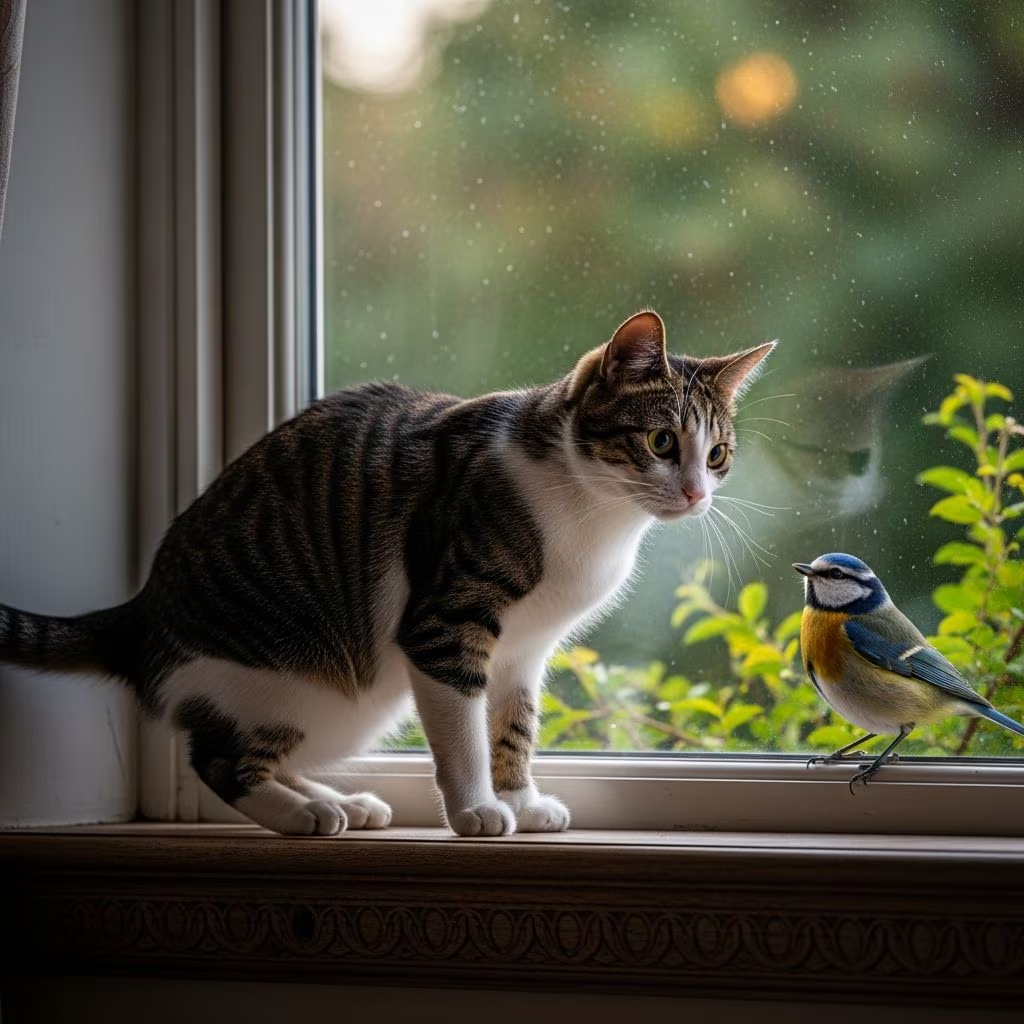
Cats chirp at birds as an instinctive response tied to their hunting heritage, often expressing excitement, frustration, or an attempt to mimic prey sounds when they spot unreachable targets like birds outside a window.
This peculiar vocalization—short, high-pitched chirps or chattering—fascinates cat owners worldwide. Even indoor cats retain wild predator traits from ancestors like the African wildcat, driving behaviors such as chirping when fixated on birds, insects, or small prey.
What Is Cat Chirping and Chattering?
Cat chirping, also called chattering or twittering, involves rapid, staccato sounds produced by a cat’s vibrating tongue against its teeth or quick jaw movements. Unlike meows for human communication or purrs for contentment, chirping is prey-specific, triggered by visual stimuli like fluttering birds.
Owners often witness this by windows: eyes locked, tail twitching, pupils dilated, as the cat emits chirps resembling bird calls or insect buzzes. It’s not aggression but heightened arousal—a blend of focus and unfulfilled predatory urge.
- Sound characteristics: High-pitched, repetitive ‘ek-ek-ek’ or trilling chirps lasting seconds.
- Body language cues: Crouched posture, intense stare, flicking tail, vibrating whiskers.
- Triggers: Birds, squirrels, flies, lizards—any fast-moving, small prey-like objects.
Chirping differs from other noises: hissing signals fear, growling warns threats, while chirping signals ‘hunt mode.’ Mother cats chirp to call kittens, hinting at its evolutionary roots.
The Science Behind Cat Chirping
Scientific explanations for chirping blend ethology, neurology, and observation. No single theory dominates, but research points to instinctual origins.
Key insights from studies:
- Frustration theory: Cats see prey but can’t reach it (e.g., glass barrier), causing ‘frustrated predation.’ Adrenaline surges without release, manifesting as jaw chattering simulating a ‘death bite.’
- Mimicry hypothesis: Cats imitate prey sounds to lure them closer. A landmark observation: Brazilian researcher Fabio Rohe recorded a wild margay mimicking pied tamarin monkey calls, fooling the primates. Domestic cats may do the same with birds.
- Excitement reflex: Neurological response to prey movement stimulates the hyoid apparatus (throat bone), producing involuntary chirps as predatory rehearsal.
Dr. Susanne Schötz, a cat vocalization expert, notes chirping occurs when ‘a bird or insect catches their attention… The cat becomes riveted and starts to chirp, tweet, and chatter.’
Evolutionary Roots of Chirping
Domestic cats (Felis catus) diverged from wildcats 10,000 years ago but retain 95% genetic similarity to African wildcats. Chirping traces to ancestral hunting strategies in solitary or small-group predators.
In the wild, stealth ambush is key, yet vocalizations like chirping might serve niche roles:
| Theory | Wild Ancestor Parallel | Evidence |
|---|---|---|
| Frustration/Practice | Jaw exercises for killing bite on rodents/birds | Observed in feral cats unable to pounce |
| Prey Mimicry | Margay monkeys; possible in other felids | Rohe’s Amazon study (first recorded in Americas) |
| Contact Call | Mothers summoning kittens during hunts | Maternal chirps evolve into adult prey response |
Unlike big cats roaring via larynx differences, small cats like domestics chirp via tongue/teeth, an adaptation for silent(ish) predation.
Modern indoor life amplifies chirping: abundant window views but no outlet, turning instinct into spectacle.
Why Don’t Cats Chirp at All Prey?
Curiously, cats chirp mainly at flying or distant prey (birds, bugs), not ground prey like mice. Theories:
- Visual trigger: Rapid bird flight mimics insects, exciting more than slow rodents.
- Barrier effect: Unreachable aerial prey spikes frustration; accessible mice prompt silent stalking.
- Scent vs. sight: Ground prey detected by smell elicits quiet hunts; birds are visual/audio feasts.
Commenters note: ‘My cats make the same noise at frogs, flies, & voles’—exceptions exist, but birds dominate.
Individual Differences in Chirping
Not all cats chirp equally. Factors include:
- Breed: Bengals, Abyssinians (wilder bloodlines) chirp more; Persians less.
- Age: Kittens chirp playfully; seniors less due to mobility/vision.
- Personality: High-prey-drive cats vocalize louder.
- Environment: Bird feeders amplify episodes.
Health note: Excessive chirping with agitation might signal stress or vision issues—consult vets.
How to Encourage or Manage Chirping
Chirping is healthy, channeling instincts. Enhance it safely:
- Install bird feeders away from windows to avoid frustration.
- Use feather toys, laser pointers for ‘hunt’ play sessions daily (15-30 mins).
- Window perches for viewing without stress.
- Interactive puzzles releasing treats mimic stalking rewards.
To reduce: Block bird views temporarily or provide alternatives. Never punish—it’s innate.
Other Cat Vocalizations Explained
Chirping is one of 16+ cat sounds. Comparison:
| Sound | Purpose | Context |
|---|---|---|
| Chirp/Chatter | Prey excitement | Window birds |
| Meow | Human attention | Food, play |
| Purr | Contentment/healing | Relaxation |
| Hiss | Fear/threat | Danger |
| Trill | Affection/greeting | Owner return |
Understanding variety deepens bonds.
Recent Research on Feline Vocalizations
2020s studies advance knowledge. Schötz’s Meowsic project analyzes chirps acoustically, linking to emotions. Wildlife ethology (e.g., Rohe 2020s) explores mimicry in neotropical cats. Veterinary behaviorists like Hill’s note chirping as positive arousal.
Future: AI sound analysis may decode dialects, aiding welfare.
Frequently Asked Questions (FAQs)
Is cat chirping a sign of happiness?
It’s excitement or arousal, not pure happiness like purring, but indicates engagement with instincts.
Do all cats chirp at birds?
No, varies by genetics, experiences; some prefer silent stares.
Can chirping harm my cat?
Rarely; excessive frustration might stress—enrich environment.
Why mimicry if cats are stealth hunters?
Innovative tactic for distant/flying prey; wild evidence supports.
Should I worry if my cat stopped chirping?
Possible aging or health; monitor with vet check.
Chirping reveals cats’ primal world—embrace it for joyful pet-parenting.
References
- Why Cats “Chirp” At Birds, According to Science — Meowingtons. 2023. https://www.meowingtons.com/blogs/lolcats/this-is-why-cats-chatter-at-birds-according-to-science
- Why Do Cats Chirp and Chatter at Birds? The Science Behind a Feline Mystery — ArtYourCat. 2024. https://artyourcat.com/blogs/art-your-cat-blog/why-do-cats-chirp-and-chatter-at-birds-the-science-behind-a-feline-mystery
- What Is Cat Chirping and Why Do Cats Do It? — Hill’s Pet Nutrition. 2024-01-14. https://www.hillspet.com/cat-care/behavior-appearance/cat-chirping
- Why Do Cats Chirp At Birds? — I’m Feline Fab (Cat Behavior Consultant). 2019-03-28. https://imfelinefab.com/behavior/2019/3/28/why-does-my-cat-chirp-at-birds-d9ecx
- Why do cats ‘chatter’? — Live Science. 2023. https://www.livescience.com/animals/domestic-cats/why-do-cats-chatter
- 9 Cat Noises and What They Mean — PetMD. 2024. https://www.petmd.com/cat/general-health/cat-noises



