

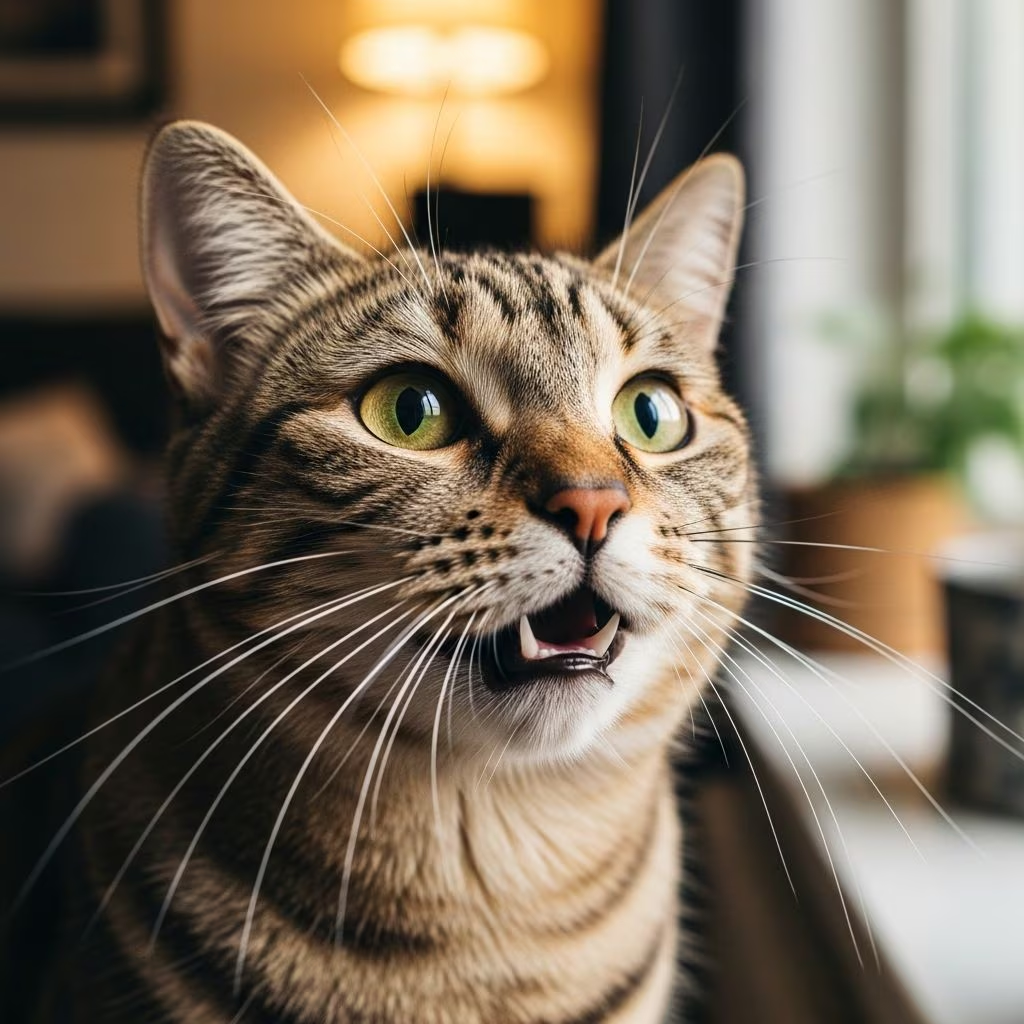
Why Do Cats Chirp? Understanding Your Cat’s Vocalizations
Cats are fascinating creatures with a rich vocabulary of sounds and behaviors that help them communicate with both their feline counterparts and their human companions. Among the most intriguing vocalizations is the **cat chirp**—a sound that often delights and puzzles pet owners in equal measure. Whether your cat is perched on the windowsill watching birds or sitting beside you on the couch, understanding what their chirps mean can deepen your bond and help you better respond to their needs.
What Is a Cat Chirp?
Before exploring the reasons behind cat chirping, it’s essential to understand exactly what this sound is. A **cat chirp**, also known as a **chirrup** or **trill**, is a short, high-pitched vocalization that bears a striking resemblance to a songbird’s warble. This distinct sound is typically produced in quick succession and has a musical quality that sets it apart from the traditional meow.
According to International Cat Care, the cat chirp is classified as a type of murmur—a vocalization category that includes purring and is described as a sound mostly formed with the mouth closed. However, some cats produce an extended version of this sound, often transcribed as ‘ek ek ek,’ which can either imitate a bird’s call or sound like a fast, rhythmic clicking depending on the individual cat.
The physical production of this sound varies. While some chirps are vocal in nature, chattering—a variation of chirping—is a low smacking sound produced by a rhythmic clashing of the jaws and is usually voiceless, meaning it doesn’t use the vocal cords.
The Context of Cat Chirping
Chirping doesn’t occur randomly; it typically happens when a cat is in a state of **heightened alertness or excitement**. You’re most likely to hear this vocalization when your cat is observing birds through a window, playing with prey-mimicking toys, or engaged in hunting behavior. Understanding the context in which your cat chirps is crucial to interpreting what they’re trying to communicate.
Why Do Cats Chirp at Birds?
One of the most common scenarios where cat chirping occurs is when felines observe birds. This behavior is deeply rooted in their natural instincts and reveals fascinating insights into feline hunting psychology.
A Sign of Predatory Excitement
When cats see birds, their **predatory instinct is triggered**, and chirping is thought to be an expression of their excitement and anticipation. This vocalization may serve multiple purposes simultaneously. According to cat behaviorist Dr. Susanne Schötz, cats employ this vocalization when a bird or insect catches their attention; the cat becomes riveted to the prey and starts to chirp, tweet, and chatter.
The intensity of this behavior is driven by a rush of adrenaline from the cat’s hunting instinct. Jackson Galaxy, a renowned cat behaviorist, emphasizes that chirping likely results from this adrenaline surge, occurring when a cat is essentially saying “that’s it, got it, zeroed in” on their prey. This is why you’ll often observe additional hunting behaviors while your cat chirps—a rigid posture with minimal movement except for a rapidly swishing tail that betrays their excitement.
Prey Mimicry and Ancestral Behavior
One of the most fascinating aspects of cat chirping is its potential connection to **prey mimicry**. Some researchers believe that cats’ chirping can actually mask their presence to lure in the birds they hunt. This behavior isn’t unique to domestic cats; it’s rooted in ancestral feline behavior. Jackson Galaxy points out that the sound is connected to a cat’s “muscle memory” and comes from an ancestral behavior of “the primal cat.”
This connection to evolutionary history is exemplified by research in the Amazon where scientists witnessed margays (a type of wild cat) imitating the sounds of tamarin monkeys—their prey of choice. This ancestral behavior demonstrates that cat chirping may be a sophisticated hunting strategy passed down through generations.
Communicating with Humans and Other Cats
Interestingly, cats may use chirping as a form of hunting communication with their human family members. Research from Village Vets reveals that chirping signals hunting opportunities between cats, and “even those who are the only cat in the household may participate in this behavior because they see you as one of their fellow cats instead.”
This perspective sheds light on why your solo cat might chirp at you when spotting prey through a window—they may be inviting you to participate in the hunt, viewing you as a fellow member of their hunting group.
Cat Chirping as Communication with Humans
Beyond hunting behavior, chirping serves important communicative functions between cats and their human companions. After thousands of years of domestication, cats have developed sophisticated ways to “speak” to their pet parents—and chirping is one of these tools.
A Greeting and Attention-Seeking Behavior
According to International Cat Care, chirps are “generally used for greeting, attention, acknowledgment and approval.” A chirp is essentially a high-pitched “Hello!” directed at their person. This use of chirping demonstrates the **social aspect of feline personalities**, showing that cats do seek interaction and communication with their human family members.
When your cat chirps and then looks directly at you, they may be trying to show you something or invite you to engage in play. This behavior is a reminder that cats have complex social needs and actively work to maintain communication with their owners. Acknowledging their chirp with a soft voice or gentle pet can reinforce this positive communication and help build trust between you and your pet.
Seeking Attention and Engagement
Chirping can be a cat’s way of **grabbing their owner’s attention**. Unlike the more demanding meow, the chirp is often a gentler, more curious invitation to interact. If your cat is chirping while looking at you or moving toward you, they’re likely trying to engage you in their world—whether that’s to show you a toy, invite you to play, or simply acknowledge your presence.
Other Reasons Cats Chirp
While hunting and communication are the most common reasons for chirping, cats employ this vocalization in several other contexts.
Expressing Frustration
Sometimes, a chirp can indicate **frustration rather than excitement**. If your cat is chirping while pacing back and forth by a closed door or standing at a window watching birds they cannot access, they may be expressing annoyance at not being able to reach their target. In these situations, the chirp takes on a slightly different quality—less joyful and more insistent.
Chirping as a Form of Greeting
Interestingly, some cats use chirping as a **form of greeting**. This behavior is more commonly observed in multi-cat households, where one cat might chirp to greet another. Similarly, some cats chirp when their humans come home from work or when they encounter a familiar person after a period of separation.
Infancy and Maternal Communication
The origins of chirping behavior trace back to **infancy**. Experts at Pet MD note that cats first hear the chirping sound when they’re kittens, as their mother uses it to call them near her and to let them know where she is. However, the purpose of this vocalization transforms significantly as cats mature, shifting from a maternal summons to a hunting signal and social greeting.
Comparing Cat Chirps to Other Feline Vocalizations
Cats have a diverse vocabulary, and understanding how chirping fits into their broader communication repertoire is helpful. According to the Veterinary Information Network, cat vocalizations fall into three main categories: **murmuring**, **meowing**, and **aggressive sounds**. The chirp is classified as a type of murmur, along with the more commonly heard purr, making it a generally positive and friendly vocalization.
The key difference between a chirp and a meow is both the sound quality and the context. Meows are more direct demands and announcements, while chirps are often softer, more exploratory communications that indicate curiosity, greeting, or excitement rather than urgent need.
What Your Cat’s Chirping Might Mean: A Quick Guide
- Chirping at the window: Hunting instinct triggered by birds or other small animals; excitement mixed with possible frustration if they cannot access the prey
- Chirping while playing: Excitement and engagement during interactive play, particularly with toys that mimic prey movements
- Chirping when you come home: A friendly greeting acknowledging your arrival
- Chirping followed by eye contact: An attempt to get your attention or invite you to engage with something they find interesting
- Chirping while pacing: Possible frustration at being unable to access something they want
- Chirping during dreams: Your cat may be reliving a hunting experience while asleep
How to Respond to Your Cat’s Chirping
Understanding your cat’s chirping is one thing; responding appropriately is another. Here are evidence-based strategies for engaging with your chirping cat:
Encourage Healthy Play
Since chirping is often connected to a cat’s hunting instincts, providing plenty of **play opportunities with hunting-focused toys** is an excellent way to interact with your cat. Toys that mimic the movement of birds or small rodents can be particularly appealing and may trigger chirping behavior in a controlled, healthy environment.
Interactive toys on strings, feather wands, and laser pointers (used appropriately) can all stimulate the predatory behavior that underlies chirping. Supervise these play sessions and listen carefully—you’ll likely hear your cat’s chirping and chattering as their hunting instincts activate.
Acknowledge Their Communication
When your cat chirps at you, taking a moment to acknowledge them with a soft voice or gentle pet lets them know their message is received. This simple action helps build trust and communication between you and your pet. Responding to their chirps reinforces that you recognize and value their attempts to communicate, strengthening your relationship.
Create Safe Bird-Watching Opportunities
If your cat enjoys watching birds from the window, ensure they have comfortable perches with good views. While you can’t prevent the chirping when they see prey, you can ensure they’re safe and comfortable while expressing their natural instincts.
Frequently Asked Questions About Cat Chirping
Q: Is cat chirping a sign that something is wrong?
A: No, chirping is generally a normal, healthy feline behavior. It indicates hunting instinct, excitement, or communication attempts. Only if chirping is accompanied by other unusual behaviors or signs of distress should you consult a veterinarian.
Q: Why does my cat chirp in their sleep?
A: Your cat is likely dreaming about hunting. The chirping during sleep is their way of reliving hunting experiences, which is a natural part of feline behavior and mental stimulation.
Q: Is chirping the same as chattering?
A: Chirping and chattering are related but slightly different. Chirping is a vocal sound, while chattering is often voiceless, produced by rapid jaw movements. However, the terms are sometimes used interchangeably, and cats often produce both sounds simultaneously.
Q: Do all cats chirp?
A: Not all cats chirp regularly, and some may chirp more frequently than others. The frequency and intensity of chirping can vary based on individual personality, hunting drive, and environmental stimuli.
Q: Should I try to stop my cat from chirping?
A: There’s no need to stop your cat from chirping—it’s a healthy, natural behavior. Instead, provide appropriate outlets for their hunting instincts through interactive play and toys.
Q: What’s the difference between a chirp and a meow?
A: Meows are typically more demanding vocalizations used for direct communication of needs, while chirps are shorter, higher-pitched sounds used for greetings, excitement, and attention-seeking. Chirps are classified as murmurs, while meows are a distinct category of feline vocalization.
Understanding Your Cat’s Unique Voice
Every cat has a unique personality and communication style. While the information provided here covers the general reasons why cats chirp, your individual cat may have their own specific triggers and patterns. Pay attention to when and how your cat chirps, and you’ll develop a deeper understanding of their personality and needs.
By recognizing chirping as a normal, healthy part of feline communication—rooted in hunting instincts, social bonding, and the long evolutionary history of cats—you can appreciate this delightful vocalization as a window into your cat’s inner world. Whether your cat is greeting you, hunting imaginary prey, or simply seeking your attention, their chirps are a reminder of the complex, fascinating creatures sharing our homes.
References
- Why Do Cats Chirp? — Whitney Veterinary Hospital. Accessed January 2026. https://whitneyvet.com/why-do-cats-chirp/
- What Is Cat Chirping and Why Do Cats Do It? — Hill’s Pet Nutrition. Accessed January 2026. https://www.hillspet.com/cat-care/behavior-appearance/cat-chirping
- Why does my cat chirp or ‘ek ek ek’? — Armarkat Online Store. Accessed January 2026. https://www.armarkat.com/blog/why-does-my-cat-chirp-or-ek-ek-ek/



