

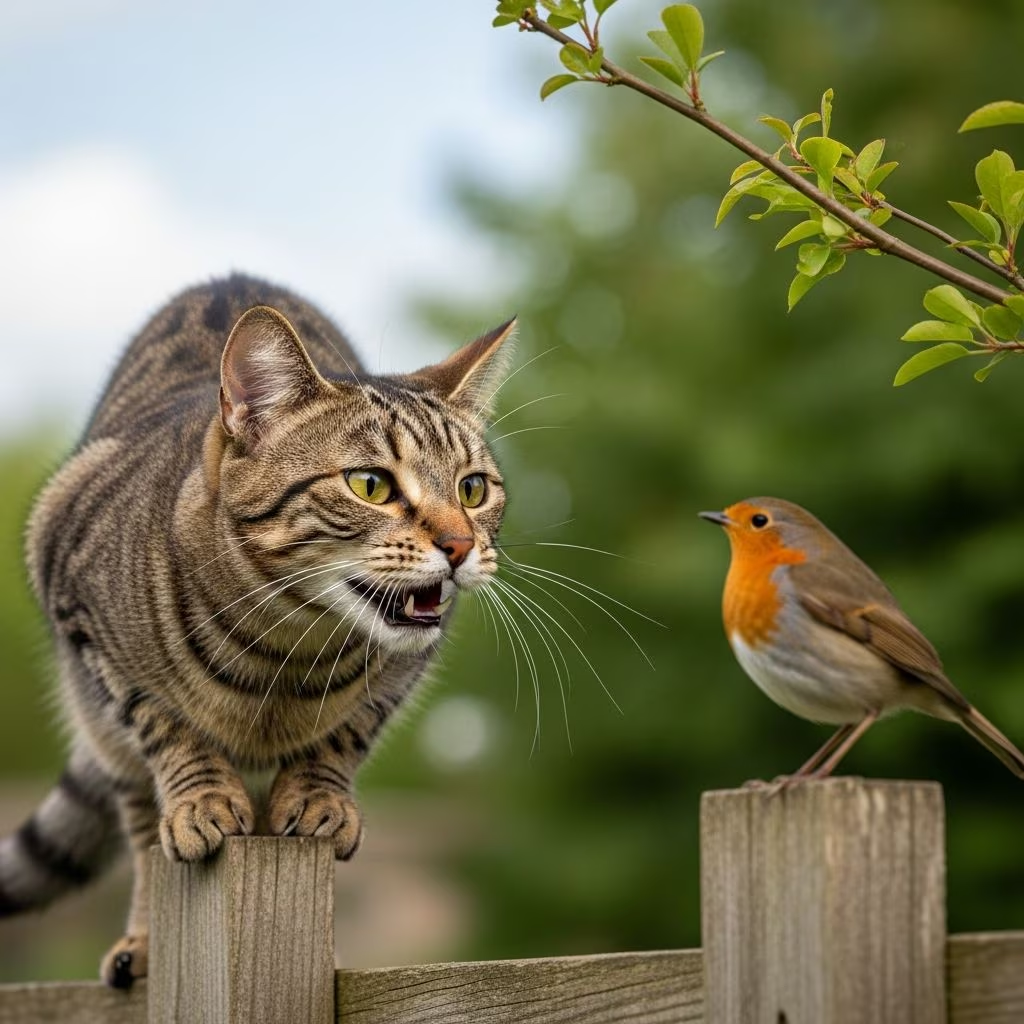
Have you ever watched your cat freeze at the window, eyes locked on a bird outside, while their jaw quivers and they emit a series of chirps, squeaks, or chattering sounds? This peculiar behavior, known as cat chattering, captivates cat owners worldwide. It’s a blend of excitement, instinct, and mystery that reveals the wild side lurking in our domestic companions. But what exactly prompts this reaction, and does it serve a purpose? In this comprehensive guide, we’ll break down the phenomenon, explore leading theories from experts and researchers, and uncover what science says about why cats chatter specifically at birds and other prey.
Chattering isn’t random noise—it’s a vocalization tied to predation, often triggered when cats spot tantalizing prey just out of reach. Understanding it helps owners appreciate their pet’s natural behaviors and even enrich their environment. Let’s dive into the details.
What Is Cat Chattering?
Cat chattering, also called chirping, twittering, or squeaking, refers to the rapid opening and closing of a cat’s mouth accompanied by staccato-like sounds. Picture your cat staring intently out the window at a fluttering bird: their ears perk up, tail twitches or wags, pupils dilate, and suddenly, that rhythmic chatter begins. This isn’t meowing or purring—it’s a unique vocalization resembling chattering teeth or bird calls.
The behavior typically occurs indoors when cats observe birds, squirrels, lizards, or insects through glass barriers. Both indoor-only cats and outdoor roamers exhibit it, though it’s more noticeable in confined settings. Body language amplifies the scene: a tense, crouched posture, whiskers forward, and laser-focused gaze signal high arousal.
- Key characteristics: Rapid jaw movements, chirp-chirp sounds, intense stare.
- Common triggers: Birds at feeders, rodents scurrying, toys mimicking prey.
- Duration: Short bursts, lasting seconds to minutes until the prey vanishes.
While amusing, chattering hints at deeper instincts. Cats don’t chatter during actual hunts—they stay silent for stealth. This raises the question: why vocalize only when success seems impossible?
Theories Behind Why Cats Chatter at Birds
Science hasn’t pinpointed a single cause for cat chattering, leaving room for compelling hypotheses. Researchers draw from ethology (animal behavior studies), observations of wild felines, and domestic cat patterns. Here are the most substantiated theories.
The Frustration Theory
One leading explanation posits chattering as an outlet for frustration. Cats are obligate predators wired to hunt, but windows block access to visible prey. This ‘near miss’ provokes pent-up energy release through vocalization and jaw quivering.
Behaviorists note cats may pace, paw at glass, or vocalize loudly alongside chattering, all signs of thwarted desire. Indoor cats, with abundant food but no outlets, show this most frequently. It’s akin to a hunter spotting game but trapped behind bars—instinct demands action, so chattering vents the tension.
The Kill-Bite Mimicry Hypothesis
British anthropologist Desmond Morris, in his seminal work on feline behavior, suggests chattering simulates the fatal neck bite cats deliver to dispatch prey. The sight of a bird triggers an involuntary rehearsal of this killing motion: jaws snapping in rapid succession as if crushing vertebrae.
This makes evolutionary sense—practice reinforces skills even without a real target. Cats’ canine teeth are designed for precise kills, and chattering mimics that precision bite rhythm.
Adrenaline and Excitement Rush
Spotting prey floods a cat’s system with adrenaline, heightening arousal. Chattering expresses this excitement, much like a dog’s bark at squirrels. Some cats even chatter at laser pointers or feather toys, blurring lines between real and simulated hunts.
Dr. Susanne Schötz, a cat vocalization expert, describes it as cats becoming ‘riveted’ to prey, chirping in response to the thrill. This aligns with fight-or-flight responses, where vocalization signals peak alertness.
Practice for Hunting Skills
Chattering may hone predatory techniques. The jaw movements replicate stalking, pouncing, and biting sequences, allowing mental and physical rehearsal. In multi-cat homes, it can signal others to join, echoing pride coordination in wild felines.
Could Cats Be Mimicking Prey Calls?
A fascinating, newer theory proposes chattering as prey mimicry—an ancient trick to lure victims closer. In 2005, Wildlife Conservation Society (WCS) researchers in Brazil’s Amazon documented a margay (Leopardus wiedii), a small wild cat, imitating pied tamarin monkey calls to draw them near. Local anecdotes described jaguars and pumas doing the same to primates and rodents.
WCS researcher Fabio Rohe highlighted this ‘psychological cunning,’ noting cats’ vocal agility rivals their physical prowess. Domestic cats, descendants of African wildcats, might retain this instinct. When chattering at birds, they could unconsciously replicate chirps to entice them closer—though glass barriers prevent success.
This theory gains traction because cat vocalizations vary by context: mothers chirp to kittens, solitaries meow less. Prey mimicry would explain why chattering sounds bird-like, potentially drawing feeders to windowsills.
Chattering in Wild vs. Domestic Cats
Domestic chattering mirrors wild relatives, underscoring evolutionary continuity. Big cats like lions and cheetahs chatter at distant prey, signaling pridemates for group hunts. Solitary hunters like margays use it for deception.
Domestic cats, though fed regularly, retain 95% wildcat DNA. House confinement amplifies instincts: abundant energy seeks outlet via chattering. In outdoors, stealth prevails; indoors, expression is uninhibited.
| Aspect | Wild Cats | Domestic Cats |
|---|---|---|
| Purpose | Communication, mimicry, signaling | Frustration release, practice, excitement |
| Triggers | Distant prey in open terrain | Window-bound prey, toys |
| Outcome | Potential hunt coordination | Harmless vocalization |
This table illustrates behavioral parallels, emphasizing how domestication modifies but doesn’t erase instincts.
Is Cat Chattering Normal? When to Worry
Chattering is benign and instinctual for most cats, occurring across ages, breeds, and sexes. Kittens start young, adults peak during prime hunting years (2-10 years). No link to aggression or illness—it’s pure predation.
Consult a vet if chattering accompanies drooling, pawing mouth, or appetite loss—these signal dental issues. Excessive chattering with anxiety signs (hiding, aggression) may indicate stress; enrich with toys or perches.
How to Encourage or Manage Chattering
- Enrich environment: Install bird feeders away from windows, use window perches, or interactive toys like feather wands.
- Safe outlets: Puzzle feeders, chase toys channel energy.
- Observe safely: Supervise outdoor time if allowed; never punish natural behaviors.
- Video it: Capture for fun or vet consults—many owners share online.
Embracing chattering strengthens bonds, turning ‘problem’ behavior into play opportunities.
Frequently Asked Questions (FAQs)
Do all cats chatter at birds?
Most do, but frequency varies. Shy or less predatory cats chatter less; Bengals or Abyssinians, more due to wild traits.
Why do cats chatter at TV birds?
Screens trigger instincts visually; no 3D cues prevent full engagement, but chattering occurs.
Is chattering painful?
No—it’s voluntary, pleasure-linked via dopamine from hunt simulation.
Can you train cats to stop chattering?
Not advisable or possible without stress; redirect with play instead.
Do female cats chatter more than males?
No significant difference; instinct-driven, not sex-linked.
Conclusion: The Enduring Mystery
Cat chattering at birds blends frustration, mimicry, practice, and raw excitement—a window into feline psyches. While theories abound, more research like WCS studies will clarify. Next time your cat chatters, marvel at their ancestral prowess. Provide outlets, and enjoy the show!
References
- Why Do Cats Chatter at Birds? — Cat in a Flat. 2023-01-28. https://catinaflat.com/blog/why-do-cats-chatter-at-birds
- Why do cats chatter? | Expert Insights — The Cat Behavior Clinic. N/A. https://www.thecatbehaviorclinic.com/why-do-cats-chatter/
- What Is Cat Chirping and Why Do Cats Do It? — Hill’s Pet Nutrition. N/A. https://www.hillspet.com/cat-care/behavior-appearance/cat-chirping
- Why cats chatter at birds is weirdly amusing — Drool by Dr. Chris Brown. N/A. https://www.drool.pet/blogs/the-why/why-cats-chatter-at-birds-is-wild



