

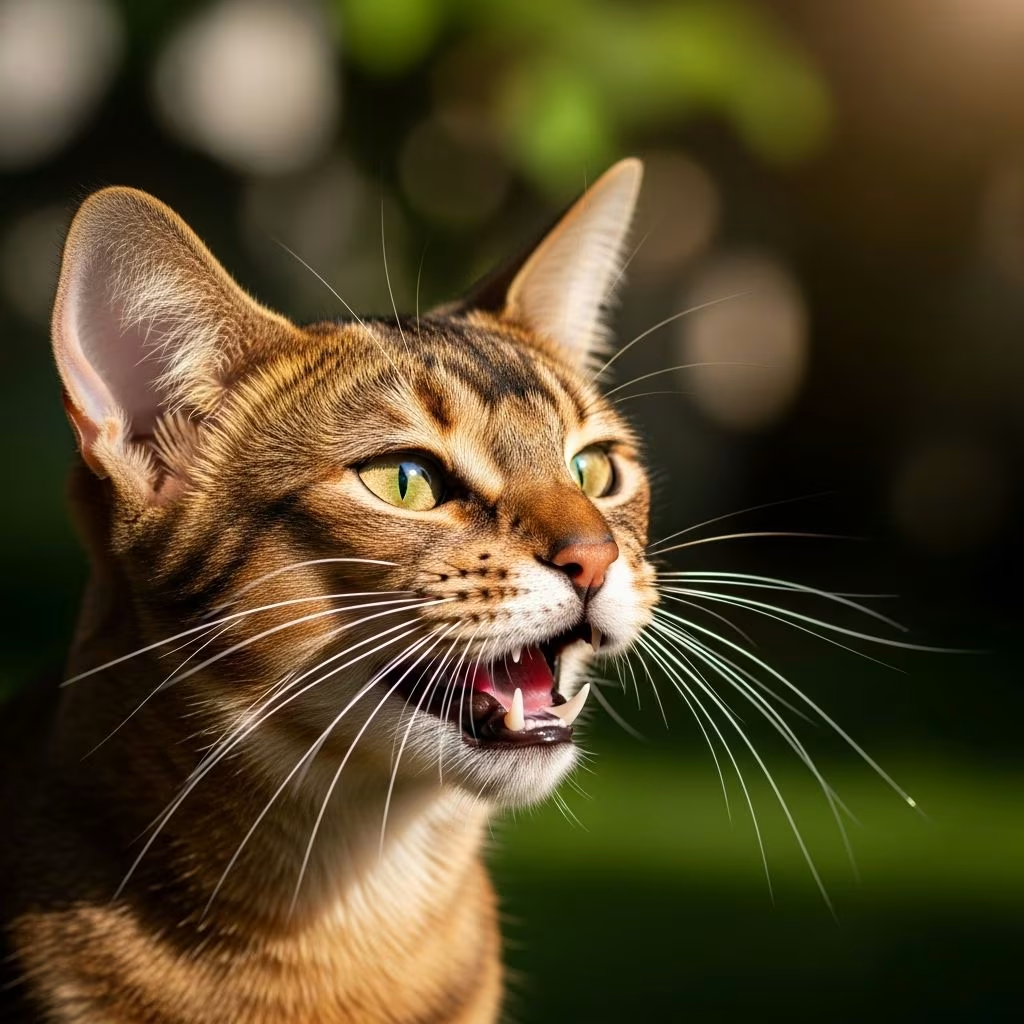
Cat chattering, also known as chirping or twittering, is one of the most intriguing vocalizations felines produce. This rapid series of clicking sounds or staccato chirps often occurs when a cat fixates on birds, insects, or other prey through a window. Pet owners frequently witness their cats freezing in intense focus, tail twitching, before unleashing this unique chatter. But what drives this behavior? Is it frustration, excitement, or something more primal? In this comprehensive guide, we delve into the science, evolutionary background, common triggers, and practical advice for cat parents.
Understanding cat chattering provides a window into the wild instincts that persist in our domesticated companions. Despite thousands of years of living alongside humans, cats retain behaviors honed for survival in the wild. Chattering bridges the gap between domestic life and ancestral hunting prowess, revealing how even well-fed indoor cats remain predators at heart. Let’s explore the key reasons and contexts behind this captivating feline phenomenon.
What Is Cat Chattering?
Cat chattering is a distinctive vocalization characterized by short, sharp sounds resembling a bird’s chirp, a squirrel’s chatter, or even a typewriter’s clacking. It typically lasts a few seconds and is accompanied by visual cues like wide eyes, flattened ears, and intense staring. Unlike meowing, which cats primarily use to communicate with humans, chattering is more instinctual and prey-directed.
Experts describe it as part of the feline hunting cycle. When a cat spots potential prey just out of reach, such as a bird at a feeder or a fly buzzing outside, their body tenses, and the chatter emerges. This behavior is universal across domestic cats and even observed in some big cats like cheetahs or servals, underscoring its deep evolutionary roots.
- Sound variations: High-pitched chirps, low clicks, or rapid bursts.
- Body language: Pupils dilated, body crouched, tail flicking rapidly.
- Duration: Brief episodes, often repeating if the prey remains visible.
Distinguishing chattering from other vocalizations is key. Meowing signals hunger or attention-seeking, purring indicates contentment, and hissing shows aggression. Chattering, however, is uniquely tied to predatory excitement.
Theories Behind Cat Chattering
Several theories explain why cats chatter, each supported by behavioral observations and evolutionary biology. The most prominent revolve around hunting instincts, though no single explanation fully captures this multifaceted behavior.
Hunting Instinct and Frustration
The leading theory posits chattering as a response to **frustration** during a hunt. Cats are obligate predators, evolved to stalk, pounce, and capture small, fast-moving prey. When prey is visible but inaccessible—barred by glass or distance—the cat’s hunting sequence is interrupted. Chattering releases pent-up energy, mimicking the jaw movements used to kill prey.
Researchers note that this “apparent bite” or teeth-chattering simulates the fatal neck bite on rodents or birds. The cat’s intense focus, often with a frozen posture, reflects calculated prey assessment, interrupted by the barrier.
Excitement and Adrenaline Rush
Another view frames chattering as pure **excitement**. Spotting prey triggers an adrenaline surge, heightening arousal. The vocalization expresses this thrill, similar to how humans might whoop in anticipation. Cat behaviorists observe that chattering intensity correlates with prey movement speed—faster flutters elicit louder chirps.
Prey Mimicry and Practice
Some experts suggest cats **mimic prey sounds** to lure them closer, a technique observed in wild felids. Alternatively, it serves as **hunting practice**, allowing indoor cats to rehearse stalking vocalizations without real risk. This aligns with cats’ solitary hunting heritage, where self-directed skill-building is essential.
Social Signaling
In multi-cat homes or with owners, chattering may signal prey to companions, echoing pride communication in lions. Cats might “share the hunt” with humans, inviting interaction or expressing shared excitement.
| Theory | Description | Supporting Evidence |
|---|---|---|
| Hunting Frustration | Pent-up energy from unreachable prey | Occurs at windows; jaw mimics killing bite |
| Excitement | Adrenaline response to prey sighting | Intensity matches prey activity |
| Practice/Mimicry | Rehearsal or luring sounds | Observed in wild cats; solitary honing |
| Social Signal | Alerting others to prey | Common in groups; owner-directed |
Chattering in Wild vs. Domestic Cats
To understand chattering fully, compare wild ancestors and modern pets. Wild cats like feral felines or big cats (lions, tigers) chatter during hunts to coordinate or signal. Cheetahs exhibit it while scanning savannas, linking it to predatory focus.
Domestic cats, provided endless kibble, rarely hunt for survival. Yet, instincts persist. Window-watching replaces stalking grasslands, turning living rooms into virtual hunting grounds. This mismatch—abundant food versus undiminished drive—fuels chattering as a behavioral relic.
Factors amplifying it in homes:
- Indoor-only lifestyles: No outlet for real hunts.
- Bird feeders or insect attractors near windows.
- Boredom: Understimulation heightens prey fixation.
When Do Cats Chatter Most?
Chattering peaks during dawn and dusk—crepuscular hunting hours. Kittens rarely do it, as instincts mature around 6-12 months. Seniors may chatter more due to cognitive changes, mistaking shadows for prey.
Common triggers:
- Birds/insects: 90% of cases involve fluttering targets.
- Toys/lasers: Mimic prey motion.
- TV wildlife footage: Visual stimuli provoke it.
Not all cats chatter equally. Breeds like Bengals or Abyssinians, closer to wild types, are more prone. Shyer cats may suppress it.
Is Cat Chattering a Concern?
Usually harmless, chattering reflects healthy instincts. However, excessive or sudden onset warrants attention:
- Sudden increase: Could signal stress, pain, or hyperthyroidism.
- Paired with aggression: Redirected frustration.
- Disorientation in seniors: Cognitive dysfunction.
Consult a vet if accompanied by appetite loss, lethargy, or litter issues. Otherwise, embrace it as normal feline joy.
How to Manage or Encourage Chattering
Channel instincts constructively:
- Interactive toys: Feather wands, laser pointers satisfy hunts.
- Enrichment: Window perches, bird feeders (safely distant).
- Play sessions: 15-20 minutes daily, mimicking prey cycles.
- Safe outdoor access: Catio or harness walks for some.
- Calming aids: Pheromone diffusers if stress-related.
Encourage by placing toys near windows or playing bird videos. This reduces frustration, preventing furniture scratching.
Frequently Asked Questions (FAQs)
Why do cats chatter at birds through windows?
Cats chatter from frustration and excitement when prey is visible but unreachable, triggering hunting instincts and jaw-biting simulations.
Is cat chattering the same as chirping or twittering?
Yes, terms are interchangeable for this rapid, prey-directed vocalization.
Do all cats chatter?
No, but most do when instincts activate; more common in high-energy breeds.
Should I worry if my cat chatters a lot?
Rarely; it’s normal unless sudden or with health changes—then see a vet.
Can I stop my cat from chattering?
Redirect with play; blocking views reduces triggers but doesn’t eliminate instincts.
Conclusion: Embracing the Chatter
Cat chattering is a testament to the enduring wild spirit in our pets. By understanding its roots in hunting, frustration, and excitement, owners can enrich their cats’ lives. Next time your feline friend chirps at a sparrow, smile—it’s a glimpse of nature’s masterpiece at work.
References
- Decoding Feline Chatter: The 5 Common Reasons Behind Your Cat’s Meowing — The Animal Doctors. 2023. https://www.theanimaldoctors.org/decoding-feline-chatter-the-5-common-reasons-behind-your-cats-meowing/
- Why do cats chatter? | Expert Insights — The Cat Behavior Clinic. 2023. https://www.thecatbehaviorclinic.com/why-do-cats-chatter/
- What Is Cat Chirping and Why Do Cats Do It? — Hill’s Pet Nutrition. 2024-01-15. https://www.hillspet.com/cat-care/behavior-appearance/cat-chirping
- Cat Daddy Dictionary: What is Cat Chattering? — YouTube (Jackson Galaxy). 2022. https://www.youtube.com/watch?v=ZQIetMwww88



