

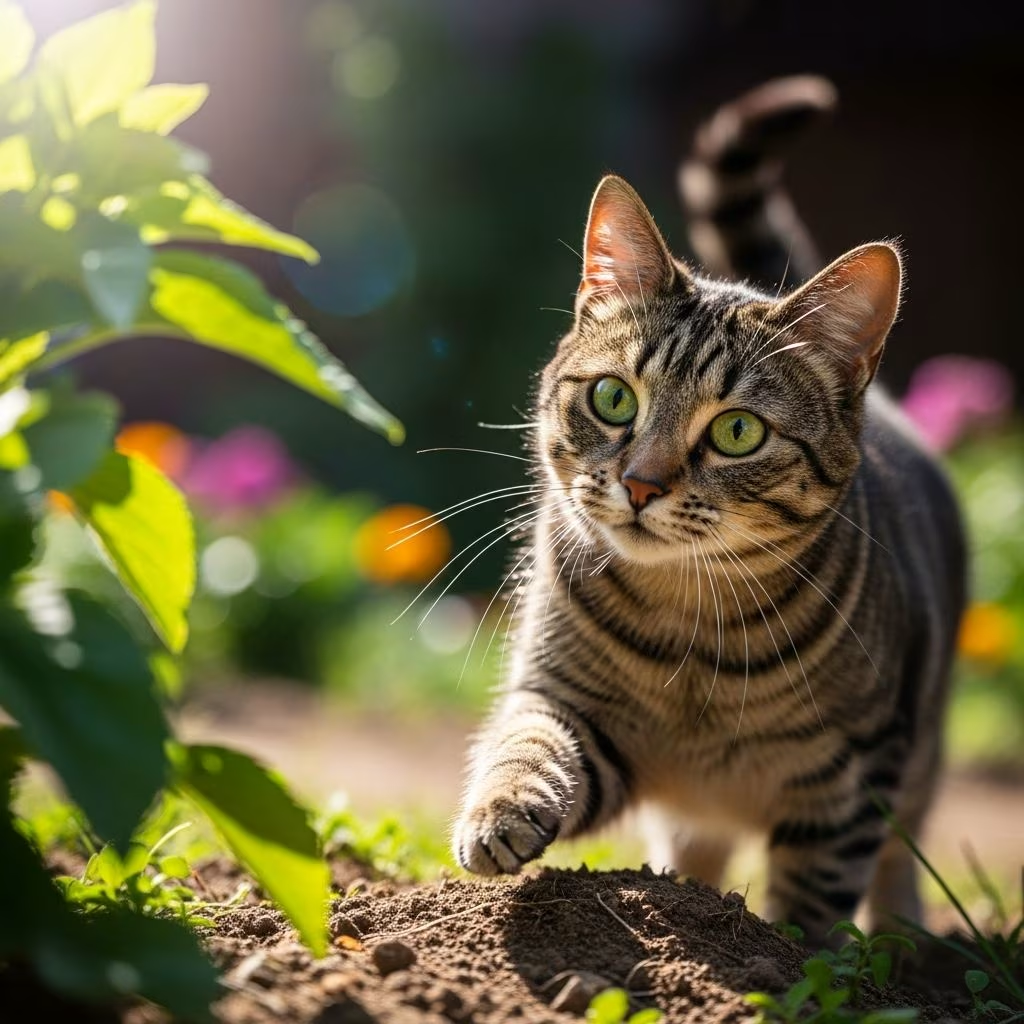
Why Do Cats Bury Their Poop: Understanding Feline Instinct
One of the most distinctive behaviors of domestic cats is their careful habit of burying their waste in the litter box. While many cat owners take this behavior for granted, it actually reveals fascinating insights into feline nature and evolutionary survival strategies. Cats bury their poop primarily due to ancient instincts inherited from their wild ancestors, instincts that continue to influence their behavior even in the safety of modern homes.
Understanding why your cat engages in this meticulous bathroom ritual can help you better care for your pet and recognize when something might be wrong. This guide explores the biological, environmental, and psychological reasons behind this common feline behavior.
The Wildly Instinctual Behavior Behind Poop Burying
Cats may be domesticated now, but deep within their DNA lies the survival instinct of their wild ancestors. The primary reason cats bury their poop is rooted in their need for self-preservation, a trait that has been hardwired into feline genetics over thousands of years.
In the wild, the positioning of cats in the food chain played a crucial role in shaping this behavior. While large predatory cats like lions and tigers often leave their waste uncovered to mark territory and assert dominance, smaller wildcats—especially those lower in the social hierarchy—bury their feces as a protective measure. This fundamental difference in behavior reflects each cat’s role and vulnerability in their natural ecosystem.
Avoiding Detection by Predators
One of the most compelling survival reasons cats bury their poop is to reduce the scent trail that predators might use to track them. By covering their waste, cats effectively hide their location from larger predators and competitors. The scent of feces serves as a clear indicator to other animals that a cat resides in the area, making the cat vulnerable to attack or territorial disputes.
Even though domesticated indoor cats live in environments free from natural predators, they retain this protective instinct. Your cat may not consciously understand that your home is safe from leopards or larger felines, but their evolutionary programming compels them to bury their waste regardless. This demonstrates how deeply ingrained survival behaviors are in the feline psyche.
Concealing Chemical Markers
Cat waste contains unique chemical scent markers called pheromones, which convey important messages to other cats. While pheromones allow cats to communicate territory and dominance, burying waste helps conceal these chemical markers from competitors. This is an exercise in concealment that serves multiple survival purposes simultaneously.
Interestingly, recent research has revealed nuanced patterns in this behavior. A 2024 study demonstrated that nursing female cats and kittens cover their poop more often compared to young and non-receptive adult females. Researchers found that nursing females bury their feces to hide chemical information and make it more difficult for predators and other cats to locate their nests. Kittens display similar behavior by covering not only their own poop but also their siblings’ and nearby kittens’ waste, suggesting this is a learned social behavior as well as an instinctive one.
Health and Hygiene Considerations
Beyond predator avoidance, cats have evolved to bury their waste for important health reasons. Leaving feces exposed can attract parasites and disease-causing organisms, threats that were significant in wild feline populations. By burying their waste, cats reduce their risk of encountering these health hazards.
This hygiene instinct reflects cats’ natural reputation for cleanliness. In the wild, cats are meticulous about their bathroom habits and will never toilet near their food and water sources if possible. This behavior protects them from contamination and disease. The same instinct carries over to domestic cats, which is why it’s important never to place a litter box adjacent to your cat’s food and water bowls.
Additionally, sniffing and examining their own feces before burying may help cats monitor their internal health. This behavior allows them to assess whether their digestive system is functioning normally, providing early warning signs of potential illness or dietary issues.
Cleanliness and Environmental Preference
Cats are renowned for their fastidious nature, and their approach to waste management reflects this deeply ingrained characteristic. Keeping their environment clean is likely a fundamental part of why cats bury their waste, a behavior that likely provided survival advantages to wild cats by reducing disease transmission within their living spaces.
In multi-cat households, this cleanliness instinct becomes particularly relevant. Dominant cats may prevent other cats from using specific litter boxes, forcing subordinate cats to find alternative locations. This territorial behavior can create stress and anxiety, potentially disrupting the normal burying behavior of less dominant felines.
Behavioral Changes and When to Worry
Environmental Disruptions
Cats are creatures of habit, and changes to their bathroom environment can significantly impact their behavior. If a cat that normally buries their feces suddenly stops, something in their environment may have changed. Common disruptions include:
- Moving the litter box to a new location
- Switching to a different litter brand or type
- Using a litter box that’s too small or dirty
- Placing the box in a high-traffic area where the cat feels exposed
- Failing to provide enough litter in the box
- In multi-cat households, not having enough litter boxes (the general rule is one box per cat plus one extra)
Even subtle changes can disrupt your cat’s comfort zone and cause them to avoid their normal burying behavior. If you’ve recently made any environmental changes, try reverting them to see if your cat resumes their typical habits.
Stress, Anxiety, and Conflict
Stress and anxiety, particularly due to conflict with other cats, play a significant role in litter box habits. Cats may skip burying their waste if they feel there’s a risk of being cornered in the litter box by a cat they don’t get along with. When a cat has been bullied in or by the litter box, fear becomes associated with the space itself.
This fear response triggers their fight-or-flight instinct, making them want to escape the litter box as quickly as possible rather than taking time to bury their waste. The anxiety returns every time they enter the box, creating a cycle of avoidance behavior. In such cases, providing separate litter boxes in different locations, away from aggressive cats, can help restore normal burying behavior.
Health Issues and Physical Discomfort
When a cat doesn’t feel well, they may lack the energy or ability to bury their poop or pee. Senior cats, particularly those with arthritis or joint pain, may struggle to get in and out of their litter box, let alone cover their waste. Physical stress from certain dietary factors can also prevent normal burying behavior.
If your cat eats too much dry food and not enough wet food, their poop can become too firm and cause stress during bowel movements. This physical discomfort may discourage them from taking the extra effort to bury. Increasing wet food intake can ease bowel movements and restore normal burying habits.
Signs that your cat may be experiencing health issues include:
- Straining to poop
- Yowling in the litter box
- Frequently licking their genital or anal areas
- Changes in litter box frequency
- Behavioral changes or reduced activity
If you notice any of these behaviors, consult your veterinarian to rule out medical issues.
Learned Behavior and Early Development
While burying poop is primarily an instinctual behavior, early development plays an important role in how consistently cats exhibit this habit. Kittens who were weaned early or didn’t receive proper litter box training from their mother may simply not know that burying is part of the normal routine.
Mother cats teach their kittens appropriate bathroom habits, including the importance of burying waste. Kittens raised without maternal guidance may never fully develop this behavior or may only partially engage in it. This highlights the importance of proper socialization and litter box training during a cat’s critical developmental period.
Territorial Marking vs. Waste Concealment
It’s important to understand that cats use their waste in two distinct ways. Dominant cats trying to assert their territory will often leave poop uncovered so that the pheromones in their waste leave a strong message to other cats. This is a territorial claim, the opposite of the concealment behavior.
In homes with multiple cats, you may observe different patterns depending on each cat’s position in the social hierarchy. More dominant cats may leave some waste uncovered as a territorial statement, while subordinate cats bury their waste to avoid conflict and maintain a lower profile. Understanding these dynamics can help you better manage multi-cat households.
Frequently Asked Questions
Q: Why does my cat keep burying her poop?
A: Burying poop is completely normal feline behavior rooted in survival instinct. It’s thought to be a protective mechanism to conceal their presence from predators and to prevent contamination of food and water sources. This behavior is 100% instinctual and is part of cats’ natural programming.
Q: Do cats like privacy when they poop?
A: Yes, cats are at their most vulnerable when defecating, so they typically prefer to go somewhere safe and quiet. Litter boxes should be placed in quiet, low-traffic areas. Many cats also prefer covered litter boxes that provide additional privacy and security.
Q: What does it mean if my cat stops burying their poop?
A: A sudden change in burying behavior can indicate several issues: environmental stress (litter box changes, relocation), conflict with other cats, medical problems causing discomfort, or litter box dissatisfaction. Evaluate recent changes and consult a veterinarian if the behavior persists.
Q: How many litter boxes should I have for my cat?
A: The general recommendation is one litter box per cat plus one extra. This ensures each cat has access to a box without conflict and reduces stress-related behavioral issues.
Q: Can diet affect my cat’s burying behavior?
A: Yes, diet plays a role. Cats eating too much dry food may develop firm stools that cause discomfort during elimination, discouraging burying. Increasing wet food intake can ease bowel movements and support normal behavior.
Conclusion
Burying poop is a perfectly normal cat behavior, linked to both evolutionary survival instincts and health preservation. This meticulous habit demonstrates how deeply connected domestic cats remain to their wild ancestors, despite thousands of years of domestication. The behavior serves multiple purposes: protecting cats from predators, maintaining hygiene, concealing their location, and keeping their environment clean.
When your cat changes their burying habits, it often signals that something requires your attention—whether environmental adjustments, social conflicts with other pets, or potential health concerns. By understanding the roots of this behavior, you can better interpret your cat’s needs and maintain their wellbeing. If changes in litter box behavior persist, don’t hesitate to consult with your veterinarian to ensure your feline friend remains healthy and happy.
References
- Why Do Cats Bury Their Poop? — PrettyLitter. Accessed January 2026. https://www.prettylitter.com/blog/why-do-cats-bury-their-poop
- Why Do Cats Bury Their Poop? — Rover.com. Accessed January 2026. https://www.rover.com/blog/why-cats-bury-poop/
- Why Do Cats Bury Their Poop? Is This Normal? — Chewy Education. Accessed January 2026. https://www.chewy.com/education/cat/training-and-behavior/why-do-cats-bury-their-poop
- Why Do Cats Bury Their Poop? — Cats.com. Accessed January 2026. https://cats.com/why-do-cats-bury-their-poop
- Why Do Cats Bury Their Poop? — Live Science. Accessed January 2026. https://www.livescience.com/33147-why-do-cats-bury-their-poop.html
- Feline Behavior Problems: House Soiling — Cornell University College of Veterinary Medicine. Accessed January 2026. https://www.vet.cornell.edu/departments-centers-and-institutes/cornell-feline-health-center/health-information/feline-health-topics/feline-behavior-problems-house-soiling



