

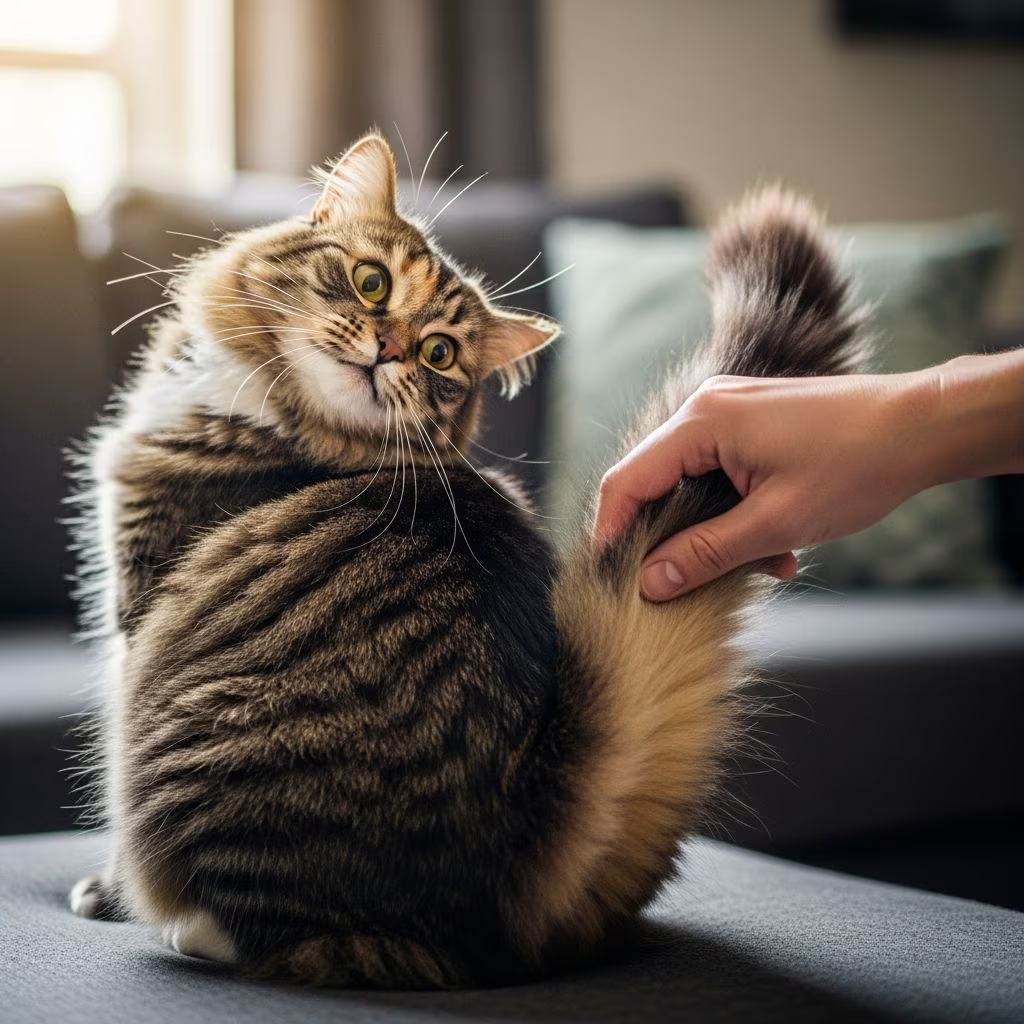
Many cat owners notice their felines reacting dramatically—purring loudly, raising their rear, or even trembling—when scratched at the base of the tail. This quirky behavior stems from a mix of anatomy, instincts, and individual preferences, making it a fascinating aspect of **cat behavior**.
While some cats adore this spot, others may become agitated. Understanding the underlying reasons helps strengthen your bond and avoid discomfort. This article delves into the science, signs to watch, and expert advice.
Why Do Cats Like Having the Base of Their Tail Scratched?
The base of a cat’s tail is packed with **sensitive nerves** branching from the spinal cord, which ends around the fifth lumbar vertebra. Scratching here stimulates these nerves, controlling the tail, hind legs, bladder, and more, creating intense sensations—pleasurable for some, overwhelming for others.
Cats release **endorphins** from this stimulation, mimicking a natural high that reduces stress and promotes euphoria, akin to goosebumps in humans. This piloerection (hair standing on end) is an evolutionary trait shared across animals.
Nerve Stimulation: A Double-Edged Sword
The spinal cord’s early termination means long nerve branches extend to the tail area, heightening sensitivity. Light scratches can feel euphoric, but over-stimulation leads to irritation. Researchers recommend observing individual cat responses to prevent aggression like petting-induced biting.
Pheromone Glands and Scent Marking
Cats have **caudal glands** at the tail base, rich in pheromones. When they rub against you or raise their tail during scratches, they’re marking you as ‘theirs,’ releasing fatty, scented substances to communicate territory and familiarity. This rubbing pattern starts at the chin, moves to cheeks, and ends at the tail.
5 Common Reasons for the Weird Behavior
Your cat’s reaction isn’t random. Here are the top explanations, drawn from veterinary insights and behavioral studies:
- Nerve Overload: Direct stimulation of caudal nerves causes giddiness or freak-outs, as these control essential functions.
- Mating Instinct Trigger: Especially in females, it mimics mounting during breeding, evoking strong hormonal responses—pleasurable or stressful depending on the cat.
- Scent Marking: Tail-raising spreads pheromones, claiming you as part of their territory.
- Cleaning or Dirt Preservation: Cats may rub to ‘clean’ via friction or preserve exploratory scents on their coat.
- Kittenhood Memories: Reminiscent of mother cats grooming and stimulating elimination in kittens, evoking comfort.
Potential Health Issues: When It’s More Than Fun
Not all reactions are benign. **Hyperesthesia syndrome**, a neurological condition, causes extreme skin sensitivity along the back and tail base. Affected cats may twitch, chase their tail, or vocalize excessively.
| Symptom | Normal Reaction | Potential Hyperesthesia |
|---|---|---|
| Tail Movement | Slow swish or raise | Rapid twitching, rippling skin |
| Body Response | Purring, leaning in | Sudden aggression, freezing |
| Frequency | Occasional | Persistent, obsessive |
If scratching obsession persists or includes skin rippling, consult a vet to rule out parasites, allergies, or hyperesthesia.
Signs Your Cat Doesn’t Like It: Stop Immediately
Cats communicate discomfort subtly. Ignore these at your peril—risking bites or eroded trust:
- Vocal Cues: Meowing, growling, hissing; purring stops.
- Ear Positions: Flattened back or ‘airplane’ wings.
- Tail Signals: Fast lashing, thumping, twitching (indicating arousal or irritation).
- Body Language: Skin twitching, stiffened muscles, freezing, position changes.
- Eye Changes: Dilated pupils, staring at your hand.
Pet briefly and gauge responses. What’s enjoyable can turn overwhelming quickly due to the area’s sensitivity.
How to Safely Scratch Your Cat’s Tail Base
Respect preferences: Some cats love it; others hate it. Start gently, watch body language, and stop at first tension sign. Alternate with chin or cheek scratches to avoid overload.
Build trust through short sessions. If your cat solicits it by rubbing, proceed cautiously. Overdoing risks ‘petting aggression.’ Individualize based on your cat’s signals.
Kitten Behavior and Maternal Grooming
This spot’s appeal traces to kittenhood. Mother cats lick the tail base to clean and stimulate urination/defecation, associating it with comfort and care. Adult scratches may trigger nostalgic bliss.
Frequently Asked Questions (FAQs)
Is tail base scratching sexual for cats?
Not directly, but it can remind females of mating due to positioning. Reactions vary; it’s more about nerves and instincts.
Why does my cat raise its butt when scratched?
This elevates the tail base for better access and pheromone release, signaling enjoyment and marking.
What if my cat twitches violently?
Could be normal arousal or hyperesthesia. Monitor; see a vet if persistent with skin rippling or aggression.
Do all cats like tail scratches?
No—preferences differ. Research advises against assuming; heed individual cues to prevent stress.
Can I train my cat to enjoy it?
Focus on observation over training. Positive associations via treats post-short sessions help, but never force.
Conclusion: Tune Into Your Cat’s Signals
Scratching the tail base elicits weird behaviors due to nerves, pheromones, instincts, and memories. While fun for many, always prioritize your cat’s comfort. Respect boundaries for a stronger bond—your feline will thank you with more purrs elsewhere.
References
- Why Do Cats Like Having the Base of Their Tail Scratched? — Cat and Dog House. 2022. https://catanddoghouse.com/why-cats-like-base-of-tail-scratched/
- 5 Reasons Why Your Cat Is Acting Weird When You Scratch the Base of Their Tail — Hepper Pet Resources. 2023. https://articles.hepper.com/reasons-why-cat-acting-weird-when-scratch-base-of-tail/
- Why Do Cats Act Weird When You Scratch The Base Of Their Tails? — YouTube (Video Transcript). 2023. https://www.youtube.com/watch?v=jLwXUU0I-Tc
- Hyperesthesia Syndrome — Cornell University College of Veterinary Medicine. 2024. https://www.vet.cornell.edu/departments-centers-and-institutes/cornell-feline-health-center/health-information/feline-health-topics/hyperesthesia-syndrome



