

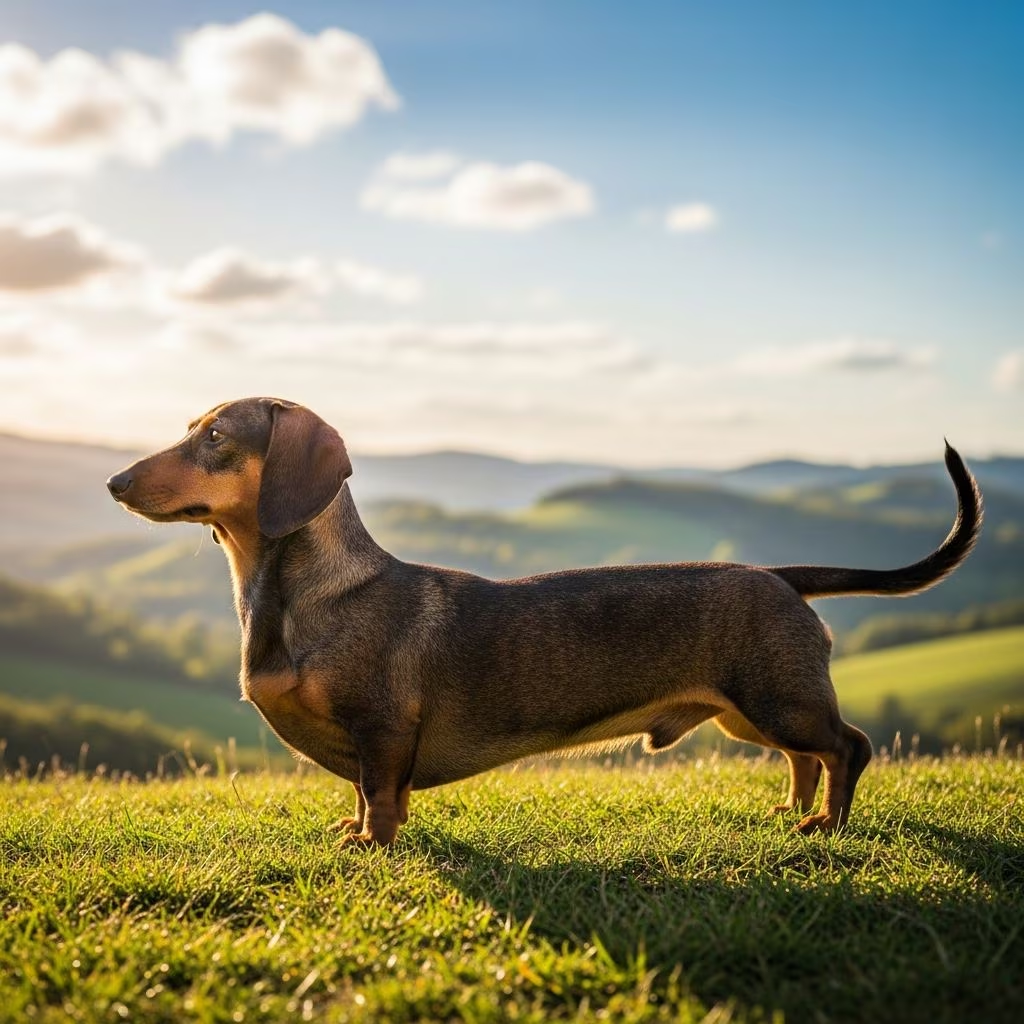
The Dachshund’s remarkable physique—characterized by an elongated torso, short legs, and sturdy build—stems directly from its origins as a specialized hunting dog in Germany. Bred to pursue badgers into narrow underground tunnels, this breed’s unique proportions allowed it to navigate tight spaces while confronting prey head-on.
The Hunting Heritage Shaping Their Form
Dachshunds, often called ‘badger dogs’ from the German ‘Dachs’ for badger and ‘Hund’ for dog, trace their roots to at least the late 17th century, though similar dogs were used in Europe since the Middle Ages for tracking burrowing animals. German foresters and hunters refined the breed in the 18th century, prioritizing traits for flushing badgers, rabbits, foxes, and even tracking wounded deer or hunting larger game like wild boar in packs.
The long body enabled these dogs to squeeze through narrow burrows without getting stuck, while short legs kept their profile low to the ground, perfect for digging and maneuvering in confined spaces. Unable to turn around in tight tunnels, Dachshunds developed bold temperaments, large teeth relative to their size, and protective facial features like a prominent brow ridge to withstand confrontations. Early versions were larger, weighing 30-40 pounds with both straight and crooked legs, but the crook-legged type prevailed for better agility.
Evolution of Size: From Standards to Miniatures
As hunting needs diversified, breeders created size variations. Standard Dachshunds, weighing 16-32 pounds, handled badgers and bigger game, while a 19th-century rabbit population boom in Germany spurred the miniature variety under 11 pounds for smaller burrows. Some breeders crossed standards with toy breeds for tinier sizes, though this produced less ideal hunters with traits like bat ears.
By 1879, Germany established desirable traits forming modern standards, emphasizing hunting prowess over show aesthetics initially. The Dachshund Club of America today upholds these, distinguishing standards, miniatures, and even tweenies (12-15 pounds, not officially recognized).
| Size Variety | Weight Range | Primary Hunting Role |
|---|---|---|
| Standard | 16-32 lbs | Badgers, deer tracking, boar |
| Miniature | 11 lbs or less | Rabbits, foxes |
| Tweenie (informal) | 12-15 lbs | Versatile small game |
Coat Types and Their Adaptive Roles
Dachshunds come in three coats, each bred for specific terrains. Smooth-coated versions likely descend from old German tracking hounds, offering a sleek, weather-resistant covering. Longhaired coats emerged from selective breeding of smooths with spaniel-like hair, ideal for thicker underbrush. Wirehaired Dachshunds, developed in the 1800s by crossing with terriers, provided wiry protection against thorns and rough ground, sometimes softening their temperament.
- Smooth: Short, shiny; low maintenance, suits mild climates.
- Longhaired: Silky, wavy; needs regular grooming to prevent mats.
- Wirehaired: Rough, dense; sheds less, excels in rugged hunting.
Colors vary widely—black and tan, red, chocolate, dapple, brindle—reflecting diverse ancestry, with breeders mixing coats for optimal local adaptation.
Temperament: Bold Hunters Turned Loyal Companions
The Dachshund’s personality mirrors its history: courageous, independent, and vivacious, as noted by the AKC, ranking it 6th in 2024 registrations. Their subterranean work fostered fearlessness, sometimes bordering on stubbornness or cheekiness, like Kaiser Wilhelm II’s biting duo. Modern Dachshunds retain hunting drive, making them alert barkers and diggers, potentially aggressive toward strangers or dogs without socialization.
Yet, they’re affectionate family pets, clever and playful, thriving with firm, consistent training to channel their energy. Their tenacity suits agility sports or earthdog trials today, honoring ancestral skills.
Health Implications of the Iconic Build
The long body, while functional, predisposes Dachshunds to spinal issues like Intervertebral Disc Disease (IVDD), where discs herniate, causing pain or paralysis. Crooked forelegs and extended backs strain the spine, especially in jumps or rough play. Obesity exacerbates risks, so weight management is crucial.
- Avoid stairs, jumping on furniture; use ramps.
- Maintain ideal weight: standards 16-32 lbs, minis under 11 lbs.
- Regular vet checks for early IVDD detection.
Other concerns include patellar luxation from short legs, heart disease, and eye issues like progressive retinal atrophy. Lifespan averages 12-16 years with proactive care. Breeding standards now prioritize health, avoiding extremes that amplify problems.
Care Essentials for the Long-Bodied Breed
Exercise suits their stamina: daily walks, play sessions, but low-impact to protect backs. Mental stimulation via puzzle toys or scent work taps their hound heritage.
Diet: High-quality food portioned to prevent weight gain. Puppies need controlled growth to safeguard developing spines.
Grooming varies by coat—weekly brushing for all, more for longhairs. Dental care is vital given large teeth in small jaws.
Dachshunds in Modern Times: From Fields to Homes
World Wars challenged the breed; anti-German sentiment led to persecution, with owners renaming them ‘badger dogs’. Post-WWI resurgence saw hunter-breeders preserve working lines amid show preferences for exaggerated length. Today, Dachshunds blend roles as pets, therapy dogs, and competitors, their form a testament to purposeful breeding.
Popularity endures for their charm and character, but responsible ownership means understanding their needs.
Frequently Asked Questions
Are Dachshunds good family dogs?
Yes, with supervision around small children due to their bold nature, but they’re loving and protective.
How do I prevent back problems in my Dachshund?
Keep them lean, prohibit jumping, use supportive beds, and schedule regular veterinary exams.
What’s the difference between standard and miniature Dachshunds?
Standards are larger for bigger game; minis for rabbits, differing mainly in size while sharing traits.
Do Dachshunds make good apartment pets?
Absolutely, if exercised daily; their size and energy fit small spaces well.
Why are some Dachshunds more stubborn than others?
Hunting independence causes this; positive reinforcement training works best.
References
- Owning a Dachshund – History, Traits & Health Concerns — Years.com. Accessed 2026. https://www.years.com/blogs/guides/owning-a-dachshund
- Dachshund Breed History — Dachshund Club of America. 2022-02. https://www.dachshundclubofamerica.org/wp-content/uploads/2022/02/Breed-History.pdf
- Dachshund History: The Badger Dog’s Fascinating Past — American Kennel Club. Accessed 2026. https://www.akc.org/expert-advice/dog-breeds/dachshund-history-badger-dog-breed/
- Dachshund — Wikipedia (informed by AKC data). Accessed 2026. https://en.wikipedia.org/wiki/Dachshund
- Dachshund | Temperament, Lifespan & History — Pooch & Mutt. Accessed 2026. https://www.poochandmutt.co.uk/blogs/by-breed/dachshund
- Dachshund – Breed History — American Teckel Club. Accessed 2026. https://www.atdr.org/info/display?PageID=10940



