

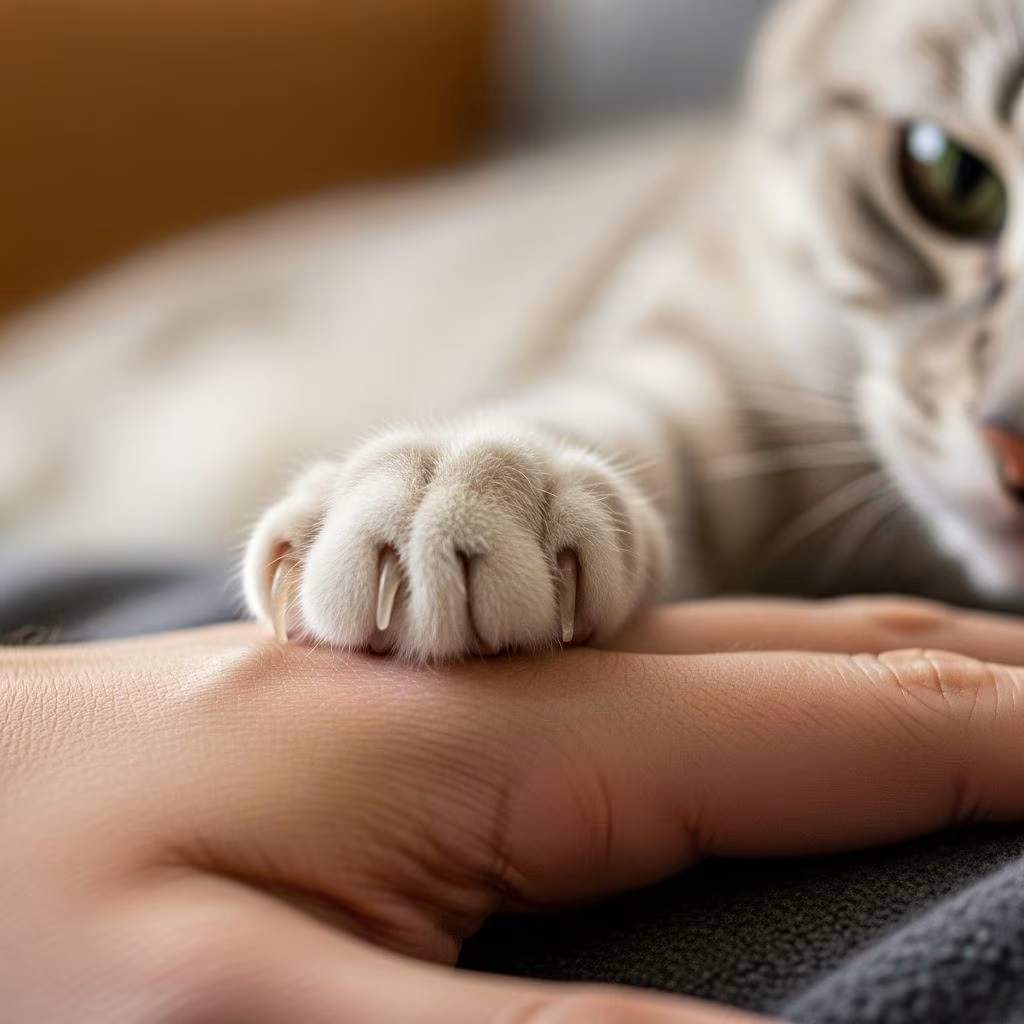
Cats communicate in subtle, nuanced ways, and one of the most endearing yet puzzling behaviors is when they gently tap you with their paw. This action can signify anything from pure affection to a polite demand for attention, food, or playtime. Understanding the context, body language, and frequency of these taps helps cat owners interpret their feline friend’s needs accurately. Far from random, paw tapping is a deliberate form of communication rooted in a cat’s instincts and social bonds.
Whether it’s a soft touch on your leg, arm, or even face, these paw contacts reveal much about your cat’s emotional state and desires. In this comprehensive guide, we’ll explore the primary reasons cats engage in this behavior, drawing from veterinary insights and behavioral studies to help you respond effectively and strengthen your relationship with your cat.
1. Seeking Attention
The most common reason cats tap you with their paw is to grab your attention. Cats are masters of subtle cues, and a paw tap is their way of saying, “Hey, human, notice me!” This often occurs when you’re busy with work, watching TV, or simply not focusing on them. A single tap followed by a stare or repetitive gentle pats indicates they’re seeking interaction.
Observe your cat’s body language for confirmation: ears forward, tail upright or slowly swishing, and wide eyes signal a desire for engagement. Ignoring the tap might lead to escalation, such as louder meows or more insistent pawing. Responding with pets, play, or verbal acknowledgment usually satisfies them and reinforces positive communication.
- Gentle, repetitive taps: Classic attention-seeking, especially in the evening when cats are most active.
- Accompanied by rubbing: Combines attention with scent-marking for affection.
- Timing matters: Often happens at mealtimes or when you’re about to leave the house.
To discourage excessive attention-seeking, ensure your cat has plenty of toys, scratching posts, and puzzle feeders to occupy them independently. Regular play sessions of 15-20 minutes twice daily can reduce needy paw taps significantly.
2. Showing Affection
Paw tapping is a profound display of trust and love from your cat. In the wild, cats reserve gentle physical contact for close family members, so when your cat taps you softly—often followed by head-butts or purring—it’s their way of saying, “You’re part of my family.” This behavior mimics kitten nursing, where they paw at their mother for milk.
Cats have scent glands on their paw pads, and tapping deposits pheromones on you, claiming you as theirs. It’s a bonding ritual that strengthens social ties. If your cat kneads while tapping (alternating pushing in and out with paws), it’s an even deeper sign of contentment and security, harking back to kittenhood comfort.
Reciprocate by slow-blinking (a cat ‘kiss’), gentle chin scratches, or lying down at their level. Avoid sudden movements, as this vulnerable gesture shows immense trust. Studies on feline behavior note that cats who paw affectionately are typically well-socialized and secure in their environment.
3. Asking for Food or Treats
A hungry cat won’t hesitate to tap you toward the kitchen. This practical pawing often involves a tap followed by walking away or staring at their bowl, leading you like a pied piper. Cats associate humans with food provision, so this tap is a direct request: “Feed me now!”
Common in multi-cat homes or with scheduled feeders, this behavior intensifies before mealtimes. If the tap comes with vocalizations like chirps or trills, it’s a clear dinner bell. To manage this, stick to consistent feeding schedules and use automatic feeders to prevent anticipatory pawing.
| Behavior Cue | Meaning | How to Respond |
|---|---|---|
| Tap + walk to bowl | Hungry | Check bowl; feed if time |
| Tap + meow + stare | Treat request | Offer measured treat |
| Persistent tapping | Overhunger | Adjust meal schedule |
Overfeeding from paw demands can lead to obesity, so use this as a cue to assess their actual needs rather than always complying.
4. Inviting Play
Energetic cats use paw taps to initiate play, mimicking hunting pounces. A light tap with dilated pupils, twitching tail, and playful crouch signals, “Let’s hunt!” This is common in young cats or during ‘zoomies’ phases.
If ignored, it may progress to claws-out taps or nips—redirect immediately to toys like feather wands or laser pointers. Play satisfies their predatory instincts, preventing boredom-induced mischief. Aim for interactive sessions that end with a meal to mimic natural hunting cycles.
- Wide eyes and low crouch: Play invitation.
- Bunny kicks follow-up: High energy needing outlet.
- Best toys: Ones that move unpredictably.
5. Requesting to Go Outside
Indoor-outdoor cats tap near doors or windows, then lead you there. This combines attention-seeking with a specific goal: freedom! Accompanied by sitting by the door or pawing the glass, it’s unmistakable.
For strictly indoor cats, this might signal cabin fever—provide window perches or catios. Safety first: check for hazards before letting them out.
6. Saying ‘Stop’ or ‘Leave Me Alone’
Not all taps are friendly. A paw push with retracted ears, swishing tail, or hissing means, “Back off!” This boundary-setting occurs during overstimulation from petting. Cats enjoy closeness but set limits—respect the tap to avoid scratches.
Learn their ‘petting threshold’: most prefer 3-5 minutes max. Signs include skin rippling or tail thrashing. Pause and let them re-initiate contact.
7. Hormonal or Territorial Marking
Unspayed females in heat paw more, often with raised rear and vocalizing, spreading pheromones. Males may do the same for dominance. Spaying/neutering reduces this dramatically.
Paw pads’ scent glands mark you as territory during kneading or tapping, fostering security.
8. Accidental Stretching or Health Issues
Stretching cats might accidentally tap if you’re nearby—their flexibility extends paws far. Persistent or limp pawing could indicate injury, arthritis, or pain. Consult a vet if sudden or one-sided, as paws are sensitive.
Cats dislike paw touching due to sensitivity for balance and hunting; tolerance shows deep trust.
How to Respond to Paw Tapping
Context is key: match response to cues. Positive reinforcement builds trust; ignoring demands prevents habits. Daily routines minimize needy taps.
Frequently Asked Questions (FAQs)
Q: Why does my cat tap my face specifically?
A: Facial tapping seeks close attention or affection, as faces hold scents. It’s intimate—respond gently.
Q: Is paw tapping a sign of dominance?
A: Rarely; usually communication, not dominance. Hormonal cats may mark territory.
Q: What if my cat paws aggressively with claws?
A: Redirect to toys; could be play or frustration. Trim nails regularly.
Q: Does paw tolerance mean my cat loves me?
A: Yes, paws are vulnerable—allowing touch indicates strong trust and bond.
Q: How to stop constant paw tapping?
A: Increase play/enrichment, consistent routines, ignore demands selectively.
Conclusion
Paw tapping enriches the human-cat bond when understood. From affection to needs, it’s your cat’s language—listen closely for a harmonious home.
References
- Why does my cat tap me with their paw? — Vet Help Direct. 2025-02-03. https://vethelpdirect.com/vetblog/2025/02/03/why-does-my-cat-tap-me-with-their-paw/
- If You Can Touch Your Cat’s Paw, It Means THIS! — The Purring Journal (YouTube). Accessed 2026. https://www.youtube.com/watch?v=rjHl5_6-BfM
- Why Does My Cat Paw My Face? — Applaws UK. Accessed 2026. https://applaws.com/uk/why-does-my-cat-paw-my-face/



