

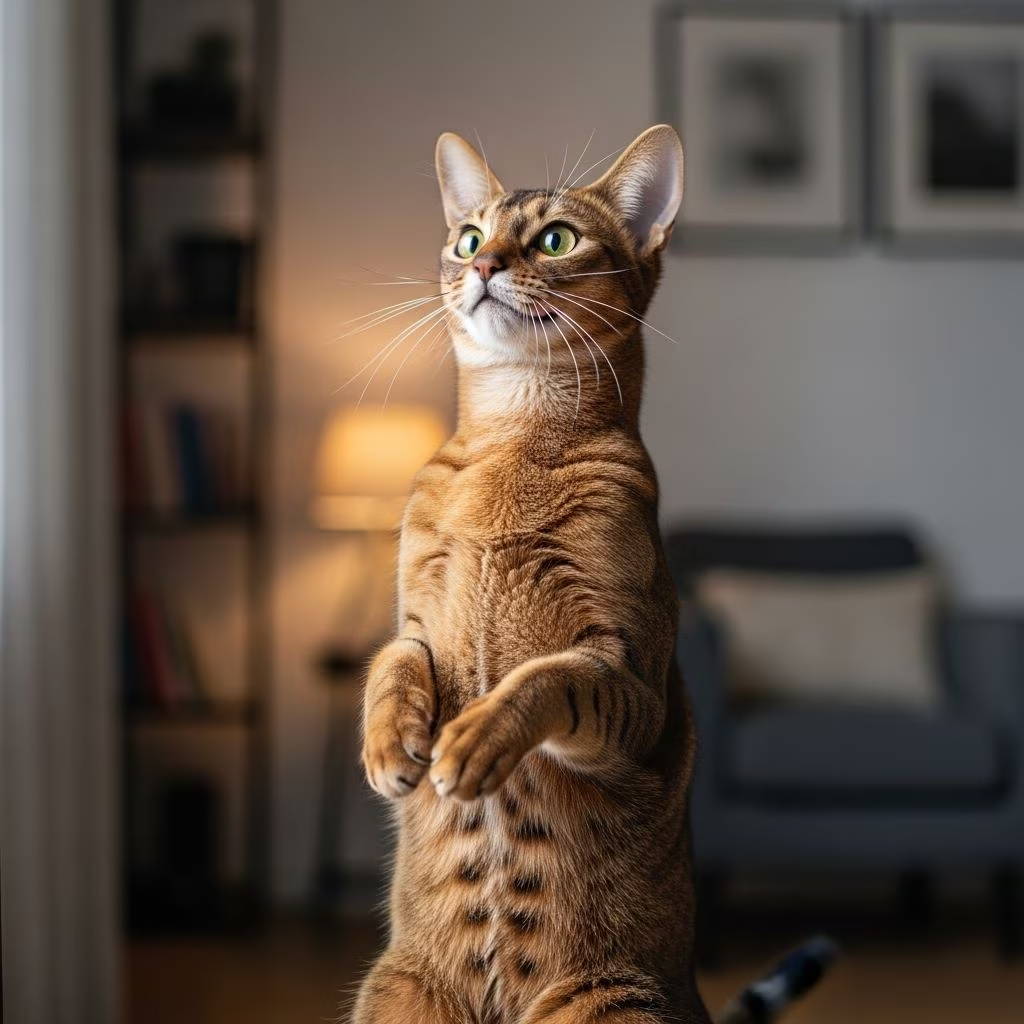
Cats engage in all manner of peculiar behaviors that leave their owners puzzled and amused. One particularly entertaining habit involves rising onto their back legs and standing upright like miniature humans. While this posture may seem comical to us, feline experts have identified numerous legitimate reasons why cats adopt this unusual stance. Understanding these motivations provides valuable insight into feline communication, survival instincts, and emotional states.
The Natural Posture Question
It’s important to recognize that standing upright on hind legs is not a natural or comfortable position for cats. Unlike primates or kangaroos, cats evolved as quadrupedal hunters designed to move efficiently on all four paws. Their skeletal structure, muscle development, and center of gravity are all optimized for horizontal movement across various terrains. However, despite this anatomical reality, cats occasionally abandon their natural posture to stand bipedally, usually in response to specific triggers or circumstances.
Veterinary professionals confirm that when cats do stand on their hind legs, something meaningful typically prompts this behavior. The posture is rarely spontaneous or without purpose—it serves as a response to environmental stimuli, emotional states, or behavioral communication needs.
Defensive Posturing and Threat Assessment
One of the primary reasons cats rear up on their hind legs relates to ancestral survival mechanisms. When cats perceive potential threats, whether from predators, unfamiliar animals, or perceived dangers, they instinctively stand upright to achieve multiple tactical advantages. This posture allows them to gain elevated visibility, surveying their surroundings more effectively to assess the nature and proximity of the threat.
The defensive stance also serves a psychological purpose. By extending themselves to full height, cats attempt to appear larger and more intimidating than their actual size. This size-amplification strategy aims to convince potential adversaries that confrontation would be unwise. Cats often accompany this upright positioning with additional threat displays, including puffing up their tail and fur to create an even more formidable appearance. In extreme situations, cats may shuffle sideways while maintaining their elevated posture, further enhancing their intimidating presentation.
This behavior reflects millions of years of evolutionary refinement. As mesopredators—animals that occupy a middle position in food chains—cats developed sophisticated defensive strategies to avoid becoming prey themselves. The bipedal stance represents one component of a complex threat-response repertoire.
Curiosity-Driven Investigation
Cats possess legendary curiosity, and their inquisitive nature frequently motivates them to stand on their hind legs. When something captures their attention—an unfamiliar sound, movement outside a window, or an intriguing object—cats may rise upright to gain a better vantage point. This behavior is particularly common when cats attempt to look over furniture, peer through windows, or examine objects positioned at elevated heights.
The elevated perspective provides cats with enhanced sensory information about their environment. By standing upright, they can see further and observe details they might miss from ground level. This investigative behavior is especially pronounced in younger cats and kittens, who display bipedal stances more frequently as they learn about their surroundings and gather information about new stimuli.
Environmental enrichment and interactive exploration are essential components of feline wellbeing. Standing on hind legs allows cats to engage more fully with their surroundings, satisfying their natural drive to understand and monitor their territory.
Food-Motivated Behavior and Treat Acquisition
Few motivations prove more powerful for cats than food-related incentives. When cats observe treats, food packages, or items held at elevated heights, they frequently stand upright to extend their reach. This behavior demonstrates cats’ problem-solving abilities and their willingness to adopt uncomfortable postures temporarily in pursuit of desired food items.
Many cat owners have observed their felines standing on hind legs while gazing at high shelves, countertops, or human hands holding desirable snacks. This motivational trigger has even led to training techniques where owners use treats to encourage cats to stand upright deliberately. The food motivation overrides discomfort, resulting in cats maintaining bipedal positions longer than they would for other reasons.
Attention-Seeking and Social Communication
Cats utilize their hind leg standing as a deliberate communication tool to attract human attention. When cats desire interaction, affection, or engagement, they may rise onto their back legs directly in front of their owners. This positioning makes the feline impossible to ignore and effectively communicates that the cat seeks interaction.
The attention-seeking function often accompanies additional behaviors that reinforce communicative intent. Cats may rub their head against their owner’s leg while standing upright, combining tactile and postural signals. This combination of behaviors creates a powerful communication that typically results in the desired response from attentive owners.
This form of communication is particularly common when owners return home after periods of absence. Cats demonstrating this behavior are essentially expressing affection and requesting cuddles or interactive play sessions.
Affectionate Interactions and Physical Contact
Beyond simple attention-seeking, cats sometimes stand on their hind legs specifically to solicit petting, head scratches, or other forms of physical affection. By positioning themselves at a height where they can more easily initiate contact with their owner’s hands and face, cats facilitate the physical interactions they desire.
Some cats stand upright as a prelude to “head bumping” or bunting behavior, where they gently bump their head against their owner’s hand, arm, or face. This combines the bipedal stance with affiliative behavior that strengthens social bonds. The posture essentially brings the cat into optimal position for initiating and receiving tactile affection.
Playful Excitement and Spontaneous Energy Release
Cats express their excitement and playful mood through various behavioral displays, and standing on hind legs frequently features in these exuberant demonstrations. During energetic play sessions, cats often chase toys, leap over objects, and briefly stand upright during their enthusiastic movements. This posture represents one component of a complex behavioral sequence that includes running, pouncing, and jumping.
The bipedal stance during play can serve multiple functions simultaneously. It may represent excitement expression, tactical positioning for pouncing, or simply the natural consequence of dynamic movement. Observing cats during these playful moments reveals that hind leg standing is typically brief, lasting only seconds before the cat returns to ground level or transitions to another movement.
Breed-Specific Tendencies
Certain cat breeds exhibit bipedal stances more frequently than others, particularly due to physical characteristics rather than behavioral differences. Munchkin cats, renowned for their characteristically short legs, frequently stand on their hind legs because their unique anatomy actually accommodates this posture comfortably. These cats demonstrate superior balance and stability while upright, making the position less stressful and more sustainable compared to typical cats.
Additionally, cats with genetic or developmental conditions affecting their front legs may stand on hind legs out of necessity rather than choice. Some cats develop with radial agenesis or radial hypoplasia—conditions that prevent proper front paw development—and must rely on bipedal movement to navigate their environment. Remarkably, these special-needs cats often compensate extraordinarily well, developing the muscular development and balance required to function effectively on their rear legs.
Frequency and Duration Considerations
Understanding typical patterns of hind leg standing helps owners distinguish between normal behavioral expression and potential concerns. For most healthy adult cats, standing on hind legs represents an infrequent, brief behavior lasting only seconds. These cats may stand upright several times monthly at most, rather than daily or regularly. The brevity and infrequency reflect that the posture remains unnatural and uncomfortable for felines despite their occasional adoption of it.
If a cat suddenly begins standing on hind legs excessively or for extended periods, or if this behavior accompanies other unusual signs, veterinary evaluation is warranted to rule out medical complications or injuries affecting mobility or comfort.
Comparative Analysis of Standing Triggers
| Behavioral Context | Associated Signals | Typical Duration | Frequency |
|---|---|---|---|
| Defensive Response | Puffed tail, flattened ears, hissing | Seconds to minutes | Occasional, when threatened |
| Curiosity Investigation | Focused attention, alert posture | Several seconds | Moderate, especially in young cats |
| Food Acquisition | Reaching motions, intense focus | Seconds | Moderate to frequent |
| Attention-Seeking | Eye contact, vocalizations | Brief to several seconds | Moderate |
| Affection Request | Rubbing, soft vocalizations | Several seconds | Occasional |
| Playful Excitement | Rapid movements, tail activity | Brief, seconds | During active play sessions |
Interpreting Body Language Context
Accurately interpreting why a cat stands on hind legs requires considering the broader behavioral and environmental context. The same posture carries different meanings depending on accompanying signals. A cat standing upright with puffed fur, flattened ears, and tail held high presents a defensive posture, while a cat standing with relaxed facial features and soft vocalizations communicates social interest and affection-seeking rather than threat.
Environmental context similarly influences meaning. A cat rising onto hind legs while facing an unfamiliar dog exhibits defensive behavior, while the identical posture adopted toward a beloved owner likely communicates affection or attention-seeking. Observant owners learn to read these contextual cues, enabling more accurate interpretation of their cat’s intentions and emotional states.
When to Consult a Veterinarian
While occasional hind leg standing represents normal feline behavior, certain patterns warrant professional evaluation. Consult a veterinarian if your cat:
- Stands on hind legs excessively or for extended periods daily
- Shows reluctance to use front legs or walks with an abnormal gait
- Demonstrates pain, limping, or discomfort when moving
- Suddenly changes previously established behavioral patterns
- Accompanies hind leg standing with other unusual behaviors or symptoms
These situations may indicate underlying medical conditions, injuries, or neurological concerns requiring professional diagnosis and treatment.
Appreciating Feline Behavior
The diversity of reasons cats stand on their hind legs reflects the complexity and sophistication of feline behavior. From primitive survival instincts to nuanced social communication, this quirky posture serves multiple functions in the cat’s behavioral repertoire. Rather than viewing hind leg standing as a random oddity, understanding its underlying causes provides deeper insight into feline psychology, motivation, and the intricate ways cats interact with their environment and human companions.
Observing and appreciating these behavioral moments enriches the human-feline relationship, enabling owners to respond more appropriately to their cats’ needs and to celebrate the unique personality each feline brings to their household.
Frequently Asked Questions
Is it normal for cats to stand on their hind legs?
Yes, occasional bipedal standing represents normal feline behavior. However, it remains an unnatural posture that typically occurs in brief episodes lasting only seconds, usually in response to specific triggers such as curiosity, food motivation, or attention-seeking.
Should I be concerned if my cat frequently stands on hind legs?
While occasional hind leg standing is normal, excessive frequency or extended duration may warrant veterinary evaluation to rule out medical issues, injuries, or neurological concerns affecting your cat’s mobility or comfort.
Why do some cats stand on hind legs more than others?
Breed characteristics, personality traits, early socialization experiences, and individual temperament all influence how frequently cats adopt bipedal postures. Additionally, certain breeds like Munchkins stand more often due to physical anatomy that accommodates this position more comfortably.
Can I train my cat to stand on hind legs?
Yes, many owners successfully train cats to stand upright using positive reinforcement with treats and praise. The food motivation proves powerful enough to encourage cats to adopt and maintain the posture temporarily.
What does it mean when my cat stands and rubs against my leg?
This behavior typically communicates affection and desire for cuddles or physical interaction. Your cat is using the bipedal stance to position itself optimally for receiving the attention it seeks from you.
References
- Why Cats Stand Up on Their Hind Legs — Cat Cave Co. https://catcaveco.com/blogs/main/why-cats-stand-up-on-their-hind-legs
- Why Is Your Cat Standing Up On Their Two Hind Legs? — Rover.com. https://www.rover.com/blog/cat-standing-up/
- Why Do Cats Stand Up On Their Back Legs? — YouTube. https://www.youtube.com/watch?v=OjwmTAFSnKc
- The Curious Case of Cats: Why They Stand on Two Legs — Oreate AI. https://www.oreateai.com/blog/the-curious-case-of-cats-why-they-stand-on-two-legs/13e9335148287f3fd6cf1c07d8593f8c



