Why Cats Sniff Butts: Understanding Feline Communication
Discover why cats sniff each other's butts and what this behavior reveals about feline communication.
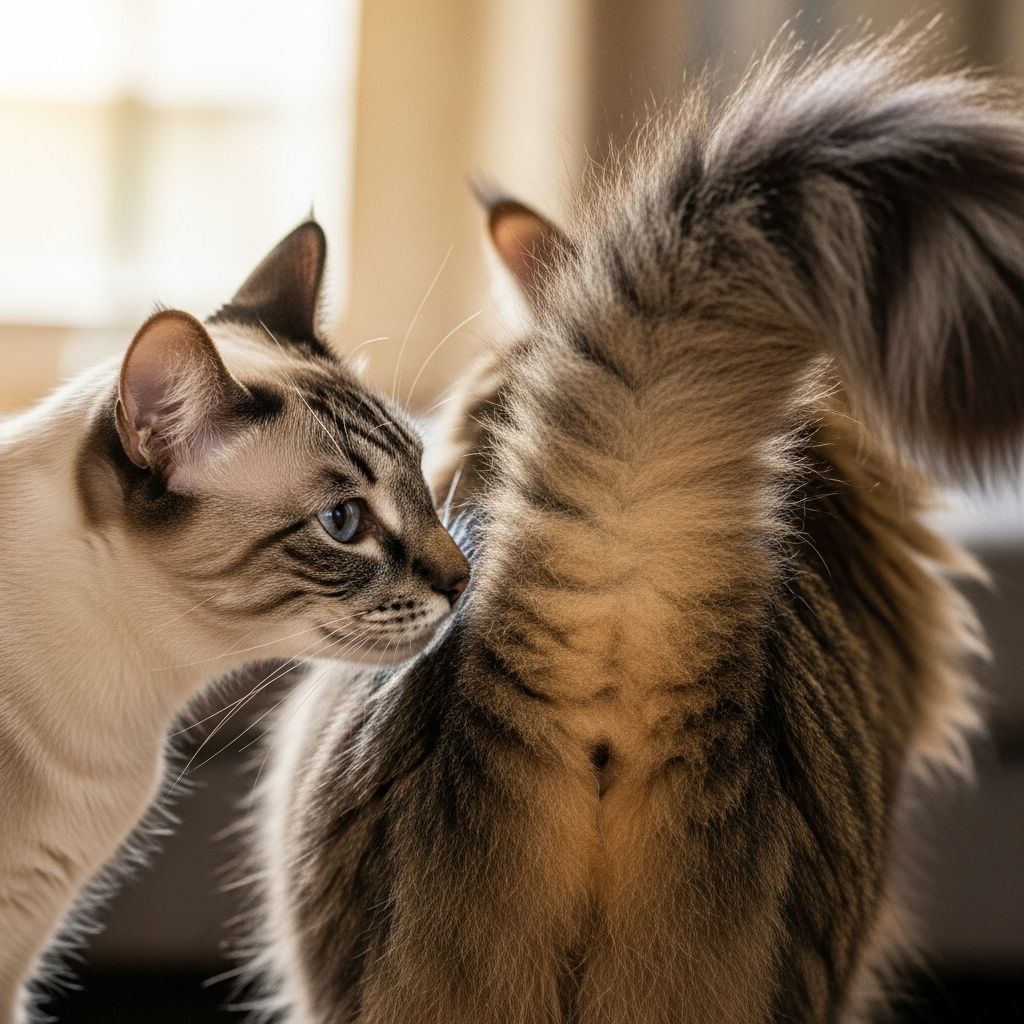
If you’ve ever observed cats meeting for the first time, you’ve likely noticed one of their most distinctive behaviors: sniffing each other’s rear ends. While this behavior might seem peculiar or humorous to human observers, it represents a sophisticated and essential form of feline communication. Rather than being crude or inappropriate, butt sniffing is a fundamental way that cats gather critical information about one another, establish social hierarchies, and build relationships. Understanding this behavior provides insight into the complex sensory world of cats and reveals just how much information they can extract from a simple scent exchange.
The Science of Feline Scent Communication
Cats rely heavily on their sense of smell to navigate and understand their world. With approximately 40 times more scent receptors than humans, cats possess an extraordinarily refined olfactory system. This remarkable sensory capability makes smell their primary language for communication, far surpassing what humans accomplish through sight and sound. Every cat carries a unique chemical signature that other cats can read like a personalized ID card, containing information about their health, emotional state, diet, and reproductive status.
The foundation of this scent-based communication system lies in specialized scent glands distributed throughout a cat’s body. These glands produce pheromones—chemical signals that convey specific messages to other cats. The concentration and composition of these pheromones vary between individual cats, creating a distinctive olfactory profile that remains consistent over time. This is why cats can recognize familiar companions and identify strangers based purely on scent.
The Role of Anal Glands in Cat Communication
At the center of the butt-sniffing phenomenon are the cat’s anal glands, two tiny sacs located on either side of the rectum. These specialized structures produce a potent, pungent fluid rich in pheromones and unique chemical markers. The scent produced by these glands is intensely concentrated, allowing other cats to extract substantial amounts of information from a brief sniff. When a cat defecates, secretions from these glands are naturally released, further marking territory and leaving chemical messages for other animals to discover.
Every cat’s anal gland secretion has a unique composition, creating an individual scent signature. Interestingly, researchers have discovered that the bacterial microbiome within these glands plays a crucial role in generating the hundreds of organic compounds that make up each cat’s distinctive odor profile. The anal gland microbiome typically contains signature bacteria including Corynebacterium, Bacteroides, Proteus, and Lactobacillus. These microorganisms produce volatile organic compounds through metabolic processes, essentially creating a biological scent printer that generates the chemical signals other cats can interpret.
Other Important Scent Glands in Cats
While anal glands are the primary focus when discussing butt sniffing, cats possess scent glands throughout their bodies that contribute to their overall communication system:
Facial Glands: Located around the cheeks, lips, chin, and forehead, these glands release pheromones when cats engage in a behavior called bunting—rubbing their faces against people, objects, or other animals. This behavior marks territory as safe and familiar while simultaneously expressing affection and comfort.
Paw Glands: Situated between the pads of the paws, these glands release scent whenever cats scratch surfaces. This is why scratching serves multiple purposes for cats beyond simple claw maintenance—it’s an important mechanism for depositing their scent and communicating their presence to other felines.
Tail and Base-of-Tail Glands: These glands contribute scent markers located in close proximity to the rear end, providing additional information during butt-sniffing interactions. The tail’s involvement in scent marking explains why cats often rub their tails on people and objects as a form of communication.
The Vomeronasal Organ and Pheromone Detection
Cats possess a specialized sensory structure called the vomeronasal organ, also known as Jacobson’s organ, located in the roof of the mouth. This organ specializes in detecting and processing pheromones—chemical signals that trigger instinctive behavioral responses. When a cat performs what’s known as the Flehmen response, with slightly opened mouth and lips curled upward in what appears to be an uncomfortable grimace, they’re actually channeling scent molecules through this specialized organ. The pheromones travel through the vomeronasal organ to the accessory olfactory bulb in the brain, where instinctive responses are triggered based on the chemical information received.
This sophisticated sensory pathway allows cats to extract nuanced information from scent that goes far beyond simple odor detection. The Flehmen response can often be observed after cats sniff another cat’s rear or investigate particularly interesting scent markers in their environment.
What Information Do Cats Exchange During Butt Sniffing?
When one cat sniffs another cat’s rear end, an impressive amount of information is transmitted in just seconds. This biological data transfer includes:
Sexual and Reproductive Status: Cats can immediately determine whether another cat is in heat, neutered or spayed, or capable of reproduction. This information is critical for mating-related behaviors and social interactions.
Health and Wellness: The chemical composition of anal gland secretions can reveal information about a cat’s overall health status, immune function, and any current illnesses or infections. Cats instinctively use this information to make decisions about social contact and mating.
Individual Identity: Each cat’s unique scent profile functions as a biological ID card, allowing cats to identify specific individuals they’ve encountered before and determine whether they’re meeting someone new.
Emotional State: Stress hormones, anxiety markers, and other emotional indicators are reflected in scent composition, allowing cats to assess another’s emotional condition.
Recent Activities and Diet: Changes in diet and recent activities leave traces in a cat’s scent profile, providing information about what the cat has been eating and doing.
Territorial Markers: Cats can determine whether another feline has been in their territory and identify territorial markers left by that individual.
The Social Functions of Butt Sniffing
Butt sniffing serves multiple important social functions in feline communities, both in multi-cat households and in outdoor feline populations.
Establishing Proper Greetings
For cats, butt sniffing is the equivalent of a human handshake or greeting ritual. When cats meet, whether for the first time or after a period of separation, they typically approach each other’s rear ends before anything else. This allows them to exchange crucial information and establish a baseline of familiarity before closer face-to-face interaction. Cats that have never met before will be more cautious during this sniffing process, while familiar cats may engage in briefer sniffs before moving on to other forms of interaction.
Displaying Dominance
In multi-cat environments, the cat that initiates the butt-sniffing often demonstrates higher social status. A dominant cat may sniff another cat’s rear and then respond with a growl or hiss, asserting their position in the social hierarchy. Conversely, a more submissive cat may allow the dominant cat to sniff them without reciprocation, or may wait for permission before sniffing back. These subtle signals help establish and maintain social order without resorting to overt aggression.
Building and Reinforcing Bonds
Cats that regularly engage in mutual scent exchanges strengthen their social bonds and reinforce group cohesion, particularly in multi-cat households. Repeated exposure to another cat’s scent through sniffing helps cats remember one another and maintain emotional connections. This behavior is especially important in preventing misunderstandings and reducing tension between household cats.
Trust and Acceptance
When a cat allows another feline to sniff their rear end, they’re demonstrating a degree of trust and acceptance. This vulnerable position makes butt sniffing a social gesture that indicates willingness to interact peacefully. Cats that refuse to allow sniffing may be expressing discomfort, fear, or rejection of social contact.
Scent Marking and Territory Communication
Beyond direct cat-to-cat communication, butt sniffing connects to broader territorial communication systems. Cats use their anal glands to leave chemical messages throughout their environment, creating a scent map that communicates to other cats. When a cat deposits anal gland secretions during defecation, they’re essentially leaving territorial announcements that say “I was here” and convey information about their presence and status to any cats that subsequently find and sniff this mark.
This scent-based communication system allows cats to gather intelligence about their neighborhood or household without direct confrontation. A cat can learn which other cats live nearby, their reproductive status, health condition, and territorial boundaries simply by sniffing scent marks left behind.
Scent and Emotional Comfort
Interestingly, cats also use scent for their own emotional regulation and self-soothing. Cats feel comforted when surrounded by familiar scents, which explains why they may urinate or spray around their environment during times of stress or anxiety. This behavior allows them to mix their own scent with their surroundings, creating a more reassuring sensory environment. During travel or when separated from owners, cats may demonstrate stress-related spraying or urine marking on objects heavily scented with their owner’s scent, such as beds or couches, as a coping mechanism.
Understanding Abnormal Butt-Sniffing Behavior
While butt sniffing is entirely normal feline behavior, sudden changes in this behavior warrant attention. If a cat suddenly avoids butt sniffing, becomes defensive about their rear end, or shows reluctance to engage in normal greeting behaviors, this may indicate an underlying problem.
Common reasons for avoidance include anal gland infections or impaction, which can make the area sensitive or painful. Other medical conditions such as arthritis, digestive problems, or general illness can also contribute to discomfort when another cat approaches from behind. If your cat becomes unusually resistant to normal sniffing behaviors, consultation with a veterinarian is advisable to rule out medical issues.
How Cats Present Their Rear Ends to Humans
Occasionally, cats display behavior where they stick their rear ends in their owner’s face or present their rear prominently. This is a friendly, appeasing gesture that reflects proper feline etiquette. By presenting their rear end to humans, cats are engaging in a social interaction that, while confusing to humans, represents a sign of trust and affection in feline terms. Cats are essentially offering to allow humans to “sniff” them as part of social bonding, mirroring the behavior they use with other cats.
Frequently Asked Questions About Cat Butt Sniffing
Why do cats sniff each other’s butts during greetings?
Cats sniff each other’s butts as a natural greeting ritual that allows them to gather important social and biological information through scent glands located in this area. This behavior helps them identify other cats, assess health status, determine reproductive condition, and establish familiarity.
What information do cats learn by sniffing another cat’s anal glands?
Through anal gland secretions, cats can learn about another cat’s sexual and reproductive status, current health condition, emotional state, individual identity, and recent activities including dietary changes. They can also detect territorial markers and determine whether they’ve encountered this particular cat before.
How do anal glands contribute to cat communication?
Anal glands produce unique scent markers containing pheromones that serve as chemical signals. These glands release distinctive information about the cat’s identity, status, and condition, facilitating social interaction, territorial marking, and information exchange between felines.
Is it normal for cats to suddenly avoid butt sniffing?
Sudden avoidance of butt sniffing might indicate stress, illness, or physical discomfort in the anal gland area. If your cat suddenly becomes resistant to this normal greeting behavior, consultation with a veterinarian is recommended to identify potential medical issues.
What does the Flehmen response mean?
The Flehmen response, characterized by a slightly open mouth and curled lips that make cats appear to grimace, is an active attempt to process pheromones through the vomeronasal organ. This response typically follows sniffing and indicates that the cat is intensely analyzing chemical signals received from scent.
Conclusion
Cat butt sniffing, while amusing to humans, represents one of the most sophisticated and essential communication systems in the feline world. This behavior leverages cats’ extraordinary sense of smell, specialized scent glands, and evolved sensory organs to create a complex language that conveys vital information about identity, health, status, and emotional state. Understanding this behavior deepens our appreciation for feline intelligence and the intricate ways cats interact with their environment and with one another. By recognizing butt sniffing as natural, appropriate, and important cat behavior, cat owners can better support their pets’ social needs and emotional well-being.
References
- Why Do Cats Sniff Butts? Reasons Behind the Behavior — Kinship. 2025. https://www.kinship.com/cat-behavior/why-do-cats-sniff-butts
- Why Do Cats Sniff Each Others Butts? Understanding Feline Greetings — PetsCare. 2025. https://www.petscare.com/news/post/why-cats-sniff-each-others-butts
- Why Cats Sniff Each Other’s Butts — DNA Science, PLOS. 2023-11-30. https://dnascience.plos.org/2023/11/30/why-cats-sniff-each-others-butts/
Similar Articles



Read full bio of medha deb