

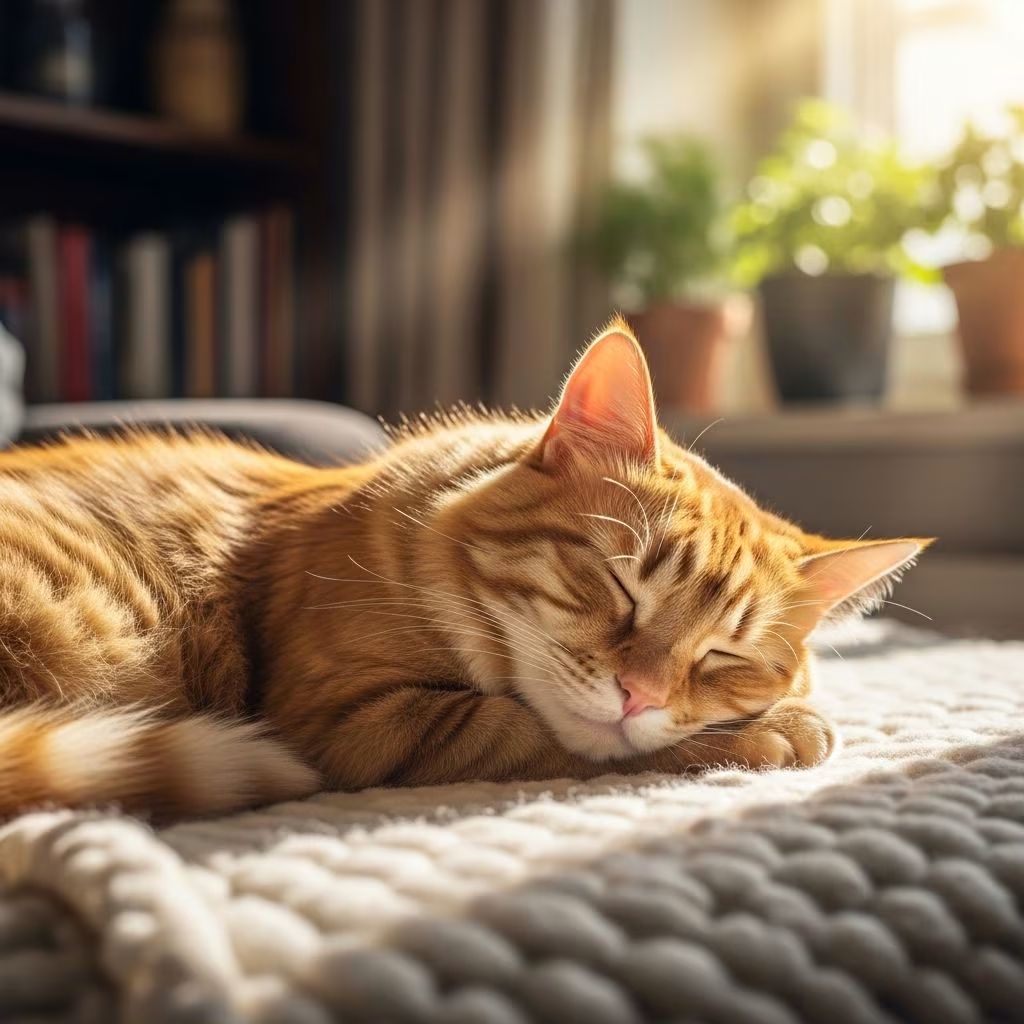
Cats dedicate 12 to 18 hours a day to sleep, far exceeding human needs, due to their evolutionary role as efficient predators requiring energy conservation and rapid alertness. This polyphasic pattern involves multiple short naps rather than consolidated nighttime rest, aligning with their crepuscular nature of peak activity at dawn and dusk.
The Evolutionary Roots of Feline Slumber
As obligate carnivores and skilled hunters, cats evolved to expend bursts of intense energy chasing prey, necessitating prolonged recovery periods. In the wild, this strategy maximizes survival by balancing high-energy pursuits with extensive rest, preventing exhaustion. Domestic cats retain this trait, even without hunting obligations, sleeping in short cycles averaging 50 to 113 minutes each.
Research confirms cats’ sleep-wake cycles respond to environmental cues like light-dark transitions, which boost alertness and reduce deep sleep phases. Unlike diurnal humans, cats’ crepuscular rhythm primes them for activity during twilight hours when small mammals are active, explaining pre-dawn “zoomies.”
Decoding Cat Sleep Stages and Patterns
Cats experience sleep similar to humans, progressing through non-REM (light and deep slow-wave sleep) to REM stages, though cycles are shorter. EEG studies reveal cats spend about 50% of time in light sleep, 35% awake, and 15% in REM, where twitching and dreaming occur as eyes dart horizontally and vertically.
Polyphasic sleep allows cats to remain vigilant; brief catnaps (15-30 minutes) restore the body without full vulnerability. Slow-wave activity, a marker of deep non-REM sleep, peaks after deprivation, demonstrating homeostatic regulation akin to other mammals.
| Sleep Stage | Description | Duration in Cats | Key Features |
|---|---|---|---|
| Light Sleep | Initial rest phase | ~50% of sleep time | Easily aroused, conserving energy |
| Deep Non-REM (Slow-Wave) | Restorative phase | Variable | High delta waves (0.75-4.5 Hz) |
| REM Sleep | Dreaming phase | ~15% of day | Twitching, limp muscles, eye movements |
How Age Influences Sleep Duration
- Kittens: Up to 20 hours daily to fuel rapid growth and neural development.
- Adults: 12-16 hours, balancing activity and rest.
- Seniors: Often exceed 18 hours due to reduced mobility and health factors.
About 40% of cats sleep beyond 18 hours, particularly as they age, reflecting adjusted energy needs.
Preferred Sleeping Positions and Brain Lateralization
Two-thirds of cats favor sleeping on their left side, privileging the right brain hemisphere for threat detection upon waking. This lateral bias enhances spatial awareness and escape responses, as the left visual field feeds into the right hemisphere specialized for predator/prey processing. Elevated spots like shelves provide safety and oversight, reducing deep sleep vulnerability.

Cats in smaller homes may sync more with owners’ schedules, showing adaptability.
Environmental Factors Shaping Sleep
Light-dark cycles significantly alter patterns; short cycles increase wakefulness and fragment sleep. Domestic setups with 14-hour light periods show uniform distribution except during feeding, with higher slow-wave activity in light phases. Play deprivation leads to rebound non-REM and REM, underscoring regulatory mechanisms.
Signs of Healthy vs. Excessive Sleep
Normal sleep supports vitality, but excessive lethargy (beyond age norms) may signal illness, pain, or depression. Monitor for:
- Sudden increases in sleep duration
- Reluctance to eat or play
- Hiding or unusual positions
Consult a vet if patterns shift dramatically, as seniors may sleep more from arthritis or thyroid issues.
Enhancing Your Cat’s Sleep Quality
- Provide quiet, elevated beds in dim areas mimicking natural hides.
- Maintain consistent feeding/play schedules to align crepuscular peaks.
- Enrich environment with toys to burn energy, promoting deeper naps.
- Avoid disruptions during prime sleep windows.
Interactive sessions before dawn curb night activity, fostering better human-cat coexistence.
Frequently Asked Questions (FAQs)
How many hours should my cat sleep?
Adults: 12-18 hours; kittens up to 20; seniors often more.
Do cats dream during sleep?
Yes, during REM, evident from twitching and eye movements, similar to humans.
Why does my cat sleep on its left side?
65% prefer this for right-brain threat processing advantage.
Is my cat sleeping too much?
Normal unless accompanied by other symptoms like appetite loss; vet check recommended.
Can I change my cat’s sleep schedule?
Somewhat, via routine play/feeding, but crepuscular instincts persist.
Common Sleep Myths Debunked
| Myth | Fact |
|---|---|
| Cats are nocturnal | Crepuscular: active at dawn/dusk. |
| All cat sleep is deep | Mostly light naps for quick arousal. |
| Sleep needs don’t vary by age | Kittens/seniors sleep most. |
References
- Effects of a short light-dark cycle on the sleep-wake patterns of the cat — PubMed. 1982. https://pubmed.ncbi.nlm.nih.gov/228374/
- Sleep and EEG slow-wave activity in the domestic cat — PubMed. 1990. https://pubmed.ncbi.nlm.nih.gov/2322413/
- Two-Thirds of Domestic Cats Prefer to Sleep on Their Left Side — Sci.News. 2024. https://www.sci.news/biology/cat-sleep-14013.html
- Why do cats sleep so much? — Union Lake Veterinary Hospital. Recent. https://unionlakeveterinaryhospital.com/blog/why-do-cats-sleep-so-much
- Catnap Connoisseurs: How Cats Sleep — Fear Free Happy Homes. Recent. https://www.fearfreehappyhomes.com/catnap-connoisseurs-how-cats-sleep/
- How Many Hours Do Cats Sleep? — Sleep Foundation. Recent. https://www.sleepfoundation.org/animals-and-sleep/how-much-do-cats-sleep
- Why Do Cats Sleep So Much? — PetMD. Recent. https://www.petmd.com/cat/behavior/why-do-cats-sleep-so-much



