

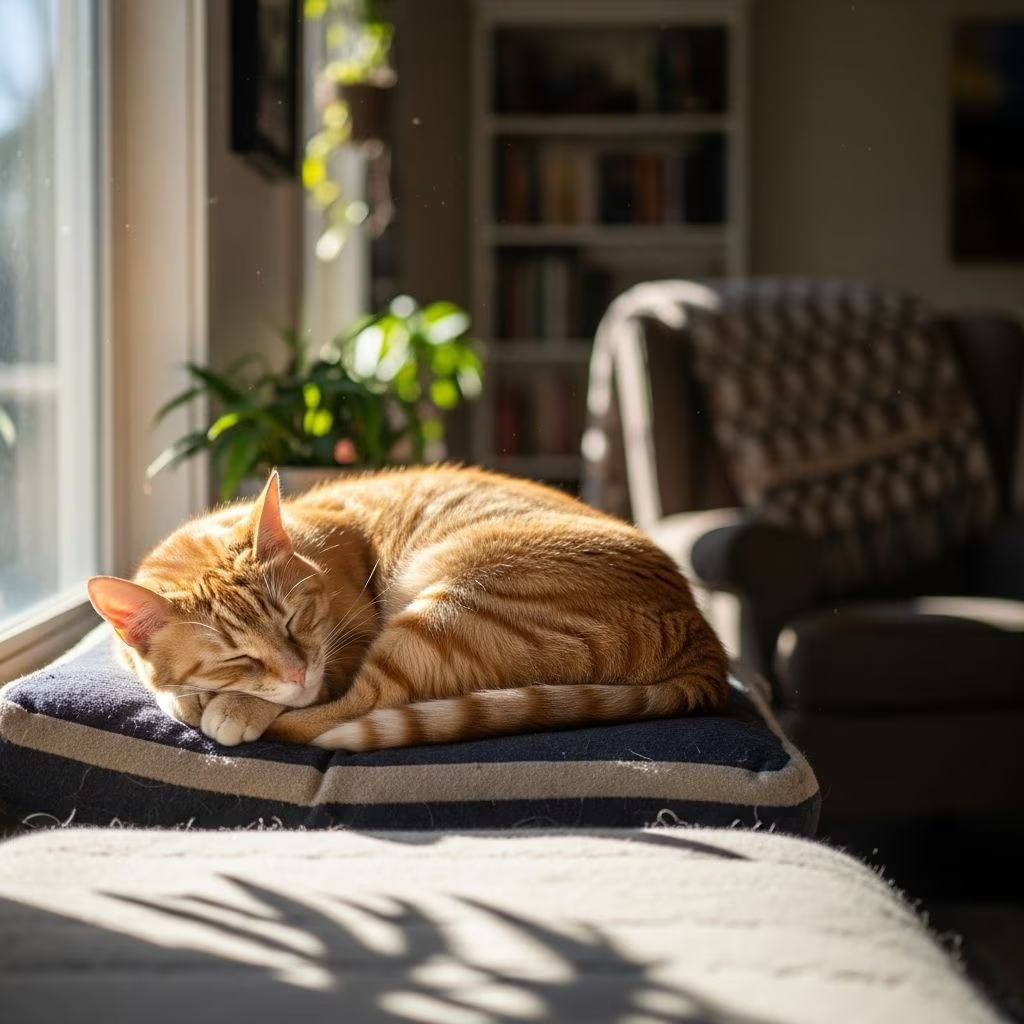
Why Do Cats Sleep So Much? Understanding Feline Rest Patterns
If you’ve ever wondered why your cat spends what seems like most of the day sleeping, you’re not alone. The behavior can seem puzzling to cat owners accustomed to human sleep patterns, but there are fascinating biological and evolutionary reasons behind it. The average cat sleeps between 12 to 18 hours per day, with some cats sleeping even longer—up to 20 hours daily. In fact, cats spend approximately two-thirds of their entire lives sleeping, a remarkable figure that speaks to the importance of rest in feline biology. Understanding why cats sleep so much requires exploring their evolutionary history, circadian rhythms, and the unique physiology that sets them apart from humans and other domestic animals.
How Much Do Cats Really Sleep?
The amount of sleep cats get might surprise you. Research shows that adult cats average between 10 to 13 hours of sleep daily, though this varies significantly among individual cats. Young cats typically sleep around 16 hours a day, while senior cats may sleep up to 20 hours as they age. About 40 percent of cats sleep longer than 18 hours, making extended rest periods a common feline trait.
What’s particularly interesting is how cats distribute their sleep. Unlike humans who sleep in one long, uninterrupted session at night, cats sleep in shorter, frequent naps called “catnaps.” A typical cat nap lasts between 50 to 113 minutes, allowing cats to maintain alertness while still getting the rest they need. This polyphasic sleep pattern—sleeping multiple times throughout the day—is fundamentally different from the monophasic sleep humans experience.
The Evolutionary Basis: Predatory Energy Conservation
To understand why cats sleep so much, we must look back at their evolutionary history as predators. Because cats are natural predators, they expend significant energy stalking, chasing, and catching prey. Historically, wild cats had to hunt multiple times a day to survive, exerting tremendous physical and mental effort during these pursuits. Sleep became the primary mechanism for recovering from these energy-intensive activities.
Even though house cats no longer need to hunt for every meal, their bodies retain this ancestral programming. Cats conserve energy for hunting periods by sleeping during times when their prey would be inactive. This energy conservation strategy remains hardwired into their biology, even when their next meal comes from a food bowl rather than a successful hunt. The long hours of rest allow cats to maintain the physiological reserves necessary for quick, explosive movements when they need them.
Understanding the Crepuscular Nature of Cats
One key to understanding feline sleep patterns lies in recognizing that cats are crepuscular animals, meaning they are most active during dawn and dusk—the twilight hours when their natural prey is most active. This differs from the common misconception that cats are nocturnal (active at night). Unlike humans who follow a diurnal rhythm (awake during the day, asleep at night), cats have evolved biological adaptations optimized for low-light hunting.
Over millions of years, cats have evolved to be low-light predators, with eyesight specifically adapted for activity during twilight hours. Their eyes contain a high concentration of rod cells, allowing them to see effectively in dim light and detect movement with remarkable precision. Because their natural hunting windows occur at dawn and dusk, cats sleep more during other parts of the day to conserve energy for these critical periods.
Interestingly, research suggests that cats are flexible with their sleep-wake cycles. While crepuscular activity is their default setting, cats can adapt their activity levels to match their environment. Outdoor, free-roaming cats adjust their activity to match prey availability throughout the day and night. Indoor cats often mirror the activity levels of their human households, waking and sleeping more during times when their families are active. This adaptability shows that while feline behavior has deep evolutionary roots, environmental factors significantly influence when and how much cats actually sleep.
The Physiology of Cat Sleep: REM and Non-REM Cycles
Cats experience sleep stages remarkably similar to humans, despite differences in duration and frequency. Like humans, cats undergo both REM (rapid eye movement) and non-REM sleep cycles. However, the characteristics and distribution of these sleep stages differ in important ways.
During light, slow-wave non-REM sleep—which typically lasts about 25 minutes—cats often appear to be in a meditative, Buddha-like state. During this phase, their muscles and senses remain partially active, allowing them to bolt from sleep instantly to chase prey or escape danger. This differs from human non-REM sleep, where we become deeply relaxed and less responsive to our surroundings.
Research using electroencephalogram (EEG) technology, which measures brain activity during sleep, has revealed fascinating details about feline sleep architecture. One landmark study found that in a 24-hour period, cats spent approximately 35 percent in wakefulness, 50 percent in light sleep, and 15 percent in paradoxical (REM) sleep. This distribution allows cats to maintain a state of semi-alertness even while sleeping, a crucial adaptation for wild predators who must remain vigilant against threats.
Age and Individual Variations in Cat Sleep
Just as sleep requirements vary among humans, sleep duration varies considerably among individual cats. Some cats sleep as little as possible, while others approach the 20-hour maximum. Several factors influence these individual differences:
- Age: Kittens and senior cats sleep more than middle-aged adults. Young kittens sleep extensively during growth phases, while older cats sleep more due to decreased energy levels and potential health conditions.
- Activity Level: More active cats may require more sleep to recover from their exertion, while less active indoor cats might sleep slightly less.
- Health Status: Cats experiencing illness or chronic conditions often increase their sleep duration as the body directs energy toward healing.
- Environmental Factors: Light intensity, household noise levels, and stress can all influence how much cats sleep.
- Feeding Schedule: The timing of meals can entrain cat activity patterns, with cats becoming more active around feeding times.
Environmental Influences on Cat Sleep and Behavior
Recent scientific research has demonstrated that environmental conditions significantly impact cat sleep patterns and stress levels. Studies examining light quality and shelter conditions found that light intensity and light composition modulate stress in cats. Cats in dim, blue-depleted light showed reduced cortisol levels compared to those in standard lighting, suggesting that environmental lighting affects both sleep quality and stress responses.
Additionally, research confirms that cats exhibit circadian activity patterns with peak activity when lights turn on, indicating that they respond to environmental cues in their surroundings. This underscores the importance of providing appropriate lighting and environmental enrichment for indoor cats, as these factors directly influence their sleep-wake cycles and overall well-being.
The Role of Sleep in Feline Health and Development
Extensive sleep is not merely an idle behavior in cats—it serves critical physiological functions. Sleep allows cats to:
- Conserve Energy: By sleeping 12-18 hours daily, cats maintain energy reserves for hunting and play without constant feeding.
- Regulate Body Temperature: Sleep helps cats manage their metabolic rate and thermoregulation.
- Process Memories: Like humans, cats consolidate memories during sleep, particularly during REM phases.
- Support Growth: Young cats require extensive sleep for proper physical and neurological development.
- Maintain Immune Function: Sleep strengthens immune system responses and helps cats fight off infections.
- Recover from Physical Exertion: Sleep allows muscles to repair and rebuild after activity.
Frequently Asked Questions
Q: Is it normal for my cat to sleep 18+ hours a day?
A: Yes, it is completely normal. The average cat sleeps 12-18 hours daily, and about 40 percent of cats sleep even longer. Senior cats and young kittens often sleep toward the higher end of this range.
Q: Why does my cat sleep during the day but is active at night?
A: Cats are crepuscular animals, naturally most active at dawn and dusk. However, indoor cats often adapt their schedules to match their households. If your cat is very active at night, it may indicate insufficient daytime enrichment or stimulation.
Q: Can I adjust my cat’s sleep schedule?
A: Yes, cats are adaptable animals that can adjust their activity patterns to environmental cues. Increased playtime and feeding schedules can help shift when your cat is most active, though some crepuscular tendencies will remain.
Q: How much sleep does a senior cat need?
A: Senior cats often sleep 18-20 hours daily or even more. Increased sleep in older cats is normal and reflects decreased energy levels and the body’s need for more recovery time.
Q: Does my cat really sleep as much as it appears?
A: Cats spend about 50 percent of their time in light sleep, during which they remain partially alert. Your cat may appear asleep while still monitoring its surroundings, so some of those “sleeping” hours involve semi-conscious awareness.
References
- Why do cats sleep so much? — Union Lake Veterinary Hospital. Accessed January 14, 2026. https://unionlakeveterinaryhospital.com/blog/why-do-cats-sleep-so-much
- Catnap Connoisseurs: How Cats Sleep — Fear Free Happy Homes. Accessed January 14, 2026. https://www.fearfreehappyhomes.com/catnap-connoisseurs-how-cats-sleep
- Light quality and time in shelter modulate behavior and cortisol in cats — National Center for Biotechnology Information (NCBI). 2024. https://pmc.ncbi.nlm.nih.gov/articles/PMC12182317/
- Everything You Need to Know About How Cats Sleep — Discover Magazine. Accessed January 14, 2026. https://www.discovermagazine.com/everything-you-need-to-know-about-how-cats-sleep-46573
- Why do cats sleep so much? The hidden science of feline shuteye — Science Focus. Accessed January 14, 2026. https://www.sciencefocus.com/nature/why-do-cats-sleep-so-much
- Cat Sleep: 6 Interesting Facts About Cat Sleeping Habits & Dreams — World’s Best Cat Litter. Accessed January 14, 2026. https://www.worldsbestcatlitter.com/blog/6-interesting-facts-about-your-cats-sleeping-habits/



