

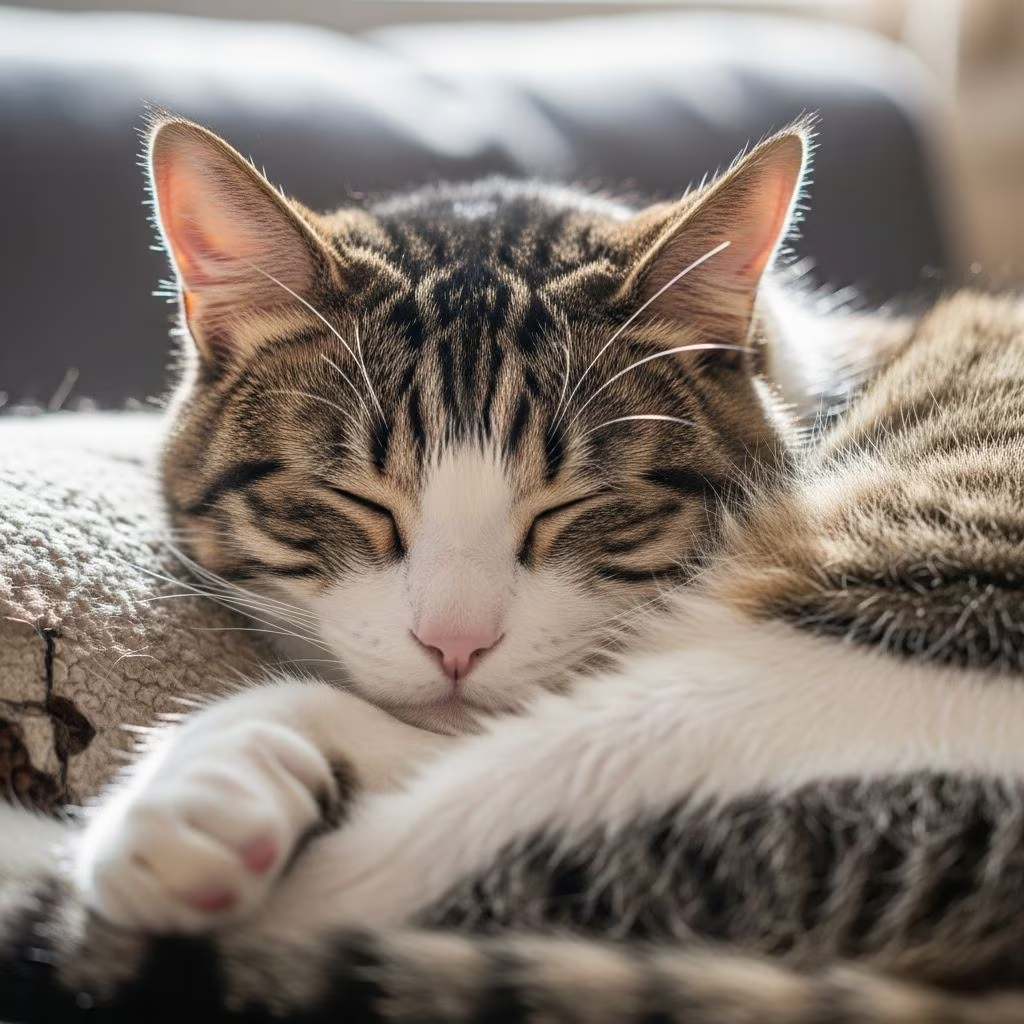
Cats typically sleep between 12 and 18 hours per day, following a polyphasic pattern of multiple short naps rather than one long session, which aligns with their crepuscular nature of peak activity at dawn and dusk.
The Evolutionary Roots of Feline Sleep Patterns
Cats’ sleep habits stem from their wild ancestry as skilled predators. Unlike diurnal humans active during daylight, domestic cats retain crepuscular tendencies, meaning they are most energetic during twilight hours when prey like birds and rodents are active. This adaptation allowed ancestral felines to hunt efficiently while conserving energy during less productive times, such as midday heat or deep night.
In modern homes, this translates to cats dozing through much of the day and night, awakening for brief bursts of play that mimic hunting. Artificial lighting and scheduled feeding can slightly shift these rhythms, but the core instinct persists, ensuring cats remain primed for sudden action.
Understanding the Feline Sleep Cycle
Cats experience a sophisticated sleep architecture similar to humans but adapted for their lifestyle. They cycle through non-rapid eye movement (NREM) sleep, including light and deep phases, and rapid eye movement (REM) sleep, often in shorter bursts averaging 78 minutes per nap.
- Light Sleep (Pre-NREM): Cats enter a drowsy state where they stay semi-alert, ears twitching at sounds and body ready to spring. This phase dominates their rest, comprising about 50% of total sleep time, enabling quick responses to environmental cues.
- Deep NREM Sleep: Here, breathing slows, and muscles relax fully, aiding physical restoration after energetic pursuits like pouncing or climbing.
- REM Sleep: Characterized by rapid eye movements, twitching paws, and whisker flicks, this stage lasts 5-7 minutes per cycle and is linked to dreaming. Cats may appear to ‘act out’ hunts in their sleep, reflecting mental processing of daily experiences.
Average daily breakdown shows cats spending 35% awake, 50% in light sleep, and 15% in REM or deep sleep, totaling 10-16 hours depending on age and health.
How Age Influences Cat Sleeping Habits
Sleep needs vary across life stages due to growth, activity levels, and health changes.
| Life Stage | Average Sleep Hours | Key Reasons |
|---|---|---|
| Kittens (0-6 months) | 18-20 hours | Rapid growth, brain development, and frequent feeding require extensive recovery. |
| Adults (1-10 years) | 12-16 hours | Energy conservation for hunting-like play and territory patrol. |
| Seniors (10+ years) | 16-20 hours | Reduced mobility, arthritis, or organ decline leads to more rest. |
Kittens dive straight into REM for neural development, while seniors nap more to manage age-related fatigue.
Health Benefits and Energy Conservation
Extensive sleep serves critical functions beyond mere rest. It conserves energy expended in bursts of high-intensity activity—equivalent to wild hunting—allowing cats to recharge efficiently. Sleep regulates body temperature, as felines seek warm spots to maintain optimal 100-102.5°F internal heat.
Moreover, polyphasic naps reduce stress hormones like cortisol, bolstering immunity and cognitive health. Studies in shelter settings show enriched sleep areas with hiding spots improve overall well-being. REM sleep may even correlate with feeding regulation, though recent analyses show no strong direct link in controlled conditions.
Signs of Healthy vs. Problematic Sleep
Normal cat sleep involves position changes, light snoring, and periodic awakenings. Watch for these red flags indicating potential issues:
- Sudden increase in sleep beyond usual amounts, possibly signaling anxiety, pain, or illness like hyperthyroidism.
- Lethargy without napping cycles, or reluctance to move from sleep spots.
- Disrupted night sleep turning into full nocturnal activity, often from boredom or poor daytime stimulation.
- Twitching excessively during REM, which is normal, but paired with vocalizing or rigidity could suggest seizures.
Consult a vet if sleep patterns shift dramatically, as they may reflect underlying conditions.
Optimizing Your Cat’s Sleep Environment
To support natural rhythms, create feline-friendly rest zones:
- Multiple Sleep Spots: Provide elevated perches, enclosed beds, and window seats for variety, respecting territorial instincts.
- Consistent Schedule: Feed and play at dawn/dusk to align with crepuscular peaks, promoting deeper day sleeps.
- Quiet Retreats: Use covered carriers or tunnels to mimic dens, reducing household noise disruptions.
- Temperature Control: Keep areas 70-85°F with blankets or heated pads for chilly sleepers.
- Enrichment Balance: Interactive toys during active hours prevent night wakefulness from pent-up energy.
Track sleep with apps or cameras to note patterns, adjusting as needed for multi-cat homes where competition may fragment rest.
Common Myths About Cat Sleep Debunked
Myth 1: Cats are nocturnal. False—they’re crepuscular, not night-active, though indoor lights can blur this.
Myth 2: All that sleep means laziness. It’s strategic energy management for predatory efficiency.
Myth 3: Cats don’t dream. REM behaviors strongly suggest they do, processing hunts and play.
FAQs on Feline Sleep
Do all cats sleep the same amount?
No, kittens and seniors sleep more than prime adults; breed and health also factor in.
Why does my cat sleep on me?
It seeks warmth, security, and bonding, combining comfort with territorial marking.
Can I train my cat to sleep at night?
Partially, via evening play and morning feeds, but instincts resist full shifts.
Is excessive twitching during sleep normal?
Yes, it’s typical REM dreaming; monitor if accompanied by distress.
How does spaying/neutering affect sleep?
It often increases sleep post-procedure due to recovery, stabilizing patterns long-term.
By appreciating these dynamics, owners foster happier, healthier cats through informed care.
References
- Why do cats sleep so much? | Helpful Insights | Cat Behaviorist — The Cat Behavior Clinic. 2023. https://www.thecatbehaviorclinic.com/my-cats-are-up-all-night/
- Are Cats Nocturnal or Crepuscular? Unveiling Feline Rhythms — Kitty Nook. 2024. https://kittynook.com/blogs/kittynookcorner/are-cats-nocturnal-or-crepuscular-unveiling-feline-rhythms-1
- The Science of Cat Napping: Why Cats Sleep So Much — Cats at Home Pet Sitting. 2024-01-05. https://catsathomepetsitting.com/2024/01/05/the-science-of-cat-napping/
- How Many Hours Do Cats Sleep? — Sleep Foundation. 2025. https://www.sleepfoundation.org/animals-and-sleep/how-much-do-cats-sleep
- Why Do Cats Sleep So Much? — PetMD. 2024. https://www.petmd.com/cat/behavior/why-do-cats-sleep-so-much
- Rapid eye movement sleep and its relationship to feeding behavior — PubMed (NCBI). 1984. https://pubmed.ncbi.nlm.nih.gov/6494306/
- Catnap Connoisseurs: How Cats Sleep — Fear Free Happy Homes. 2023. https://www.fearfreehappyhomes.com/catnap-connoisseurs-how-cats-sleep/



