

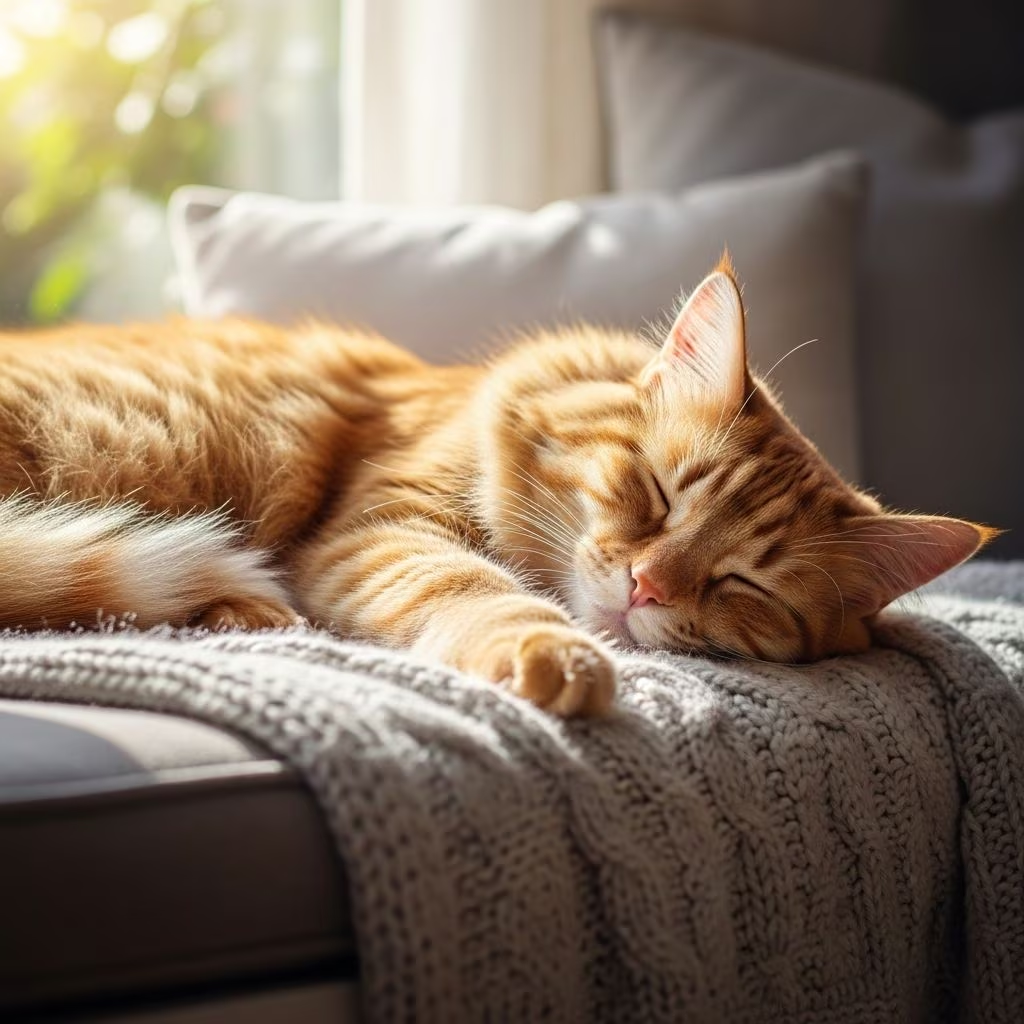
Cats dedicate 12 to 18 hours daily to sleep, far exceeding human needs, due to their polyphasic patterns evolved for energy conservation and hunting efficiency.
The Evolutionary Roots of Feline Slumber
Feline sleep habits trace back to wild ancestors who hunted small prey like rodents and birds, active at dawn and dusk. This **crepuscular** nature means cats peak in activity during twilight hours, sleeping heavily otherwise to preserve energy for bursts of hunting.
Domestic cats retain this trait, with over 75% of mammals sharing polyphasic sleep—multiple short rests rather than one long bout. Humans are outliers with monophasic nighttime sleep.
How Much Do Cats Really Sleep?
Average adult cats sleep 12-18 hours per day, with 40% exceeding 18 hours. Kittens and seniors often reach 20 hours.
| Life Stage | Average Daily Sleep | Notes |
|---|---|---|
| Kittens | 18-20 hours | High growth demands rest |
| Adults | 12-16 hours | Polyphasic naps average 78 minutes |
| Seniors | 16-20 hours | Increased due to lower activity |
These figures come from EEG-monitored studies showing cats asleep 79 of every 104 minutes in a day.
Decoding the Feline Sleep Cycle
Cats cycle through **NREM** (non-rapid eye movement) and **REM** (rapid eye movement) sleep, mirroring humans but in shorter 50-113 minute naps.
NREM: Light and Deep Restoration
In NREM, cats enter light sleep easily roused by noise. Brain waves slow, aiding physical repair. They transition multiple times before deeper stages.
REM: Dreaming and Brain Reset
REM features rapid eye twitches, limb flicks, and heightened brain activity—likely dreaming of hunts. Cats get 3-8 hours daily in peaks, more in youth.
- Eye movements: Horizontal and vertical, unlike human horizontal-only.
- Muscle atonia: Prevents acting out dreams.
- Peaks: Align with activity bursts at dawn/dusk.
Prime Motivations for Extended Cat Naps
Several factors drive this sleepiness, rooted in biology and environment.
Energy Conservation Strategy
As obligate carnivores, cats expend high energy chasing prey or toys. Post-play naps recharge glycogen stores, mimicking wild feast-famine cycles.
Temperature Regulation
Cats lack efficient sweating, so sleep in warm spots or more during heat to lower metabolism and cool down.
Daily Routines and Circadian Cues
Consistent feeding aligns sleep; irregular schedules disrupt it. Shelter studies show light intensity affects cortisol and activity, with dim blue light reducing stress.
Age and Lifestyle Influences on Sleep
Sleep varies by life stage and home setup.
- Kittens: Rapid growth fuels long sleeps for development.
- Adults: Balanced 12-16 hours, adjustable by play.
- Seniors: Arthritis or thyroid issues extend rest to 18+ hours.
- Indoor vs. Outdoor: Indoor cats sleep more from less stimulation; enrich with toys.
Diet links directly: Prior REM boosts next meal intake, per studies.
Spotting Normal vs. Problematic Sleep
While prolific sleeping is normal, shifts signal issues.
| Normal Signs | Warning Signs |
|---|---|
| Consistent naps in sunny spots | Sudden 20+ hour sleep |
| Twitching during REM | Lethargy, no play interest |
| Dawn/dusk zoomies | Difficulty waking, confusion |
Excessive sleep may indicate hyperthyroidism, pain, or depression. Consult vets for bloodwork if patterns change abruptly.
Optimizing Your Cat’s Sleep Environment
Enhance rest and activity for health.
- Provide elevated, warm beds near windows for sunbathing.
- Maintain feeding/play routines to sync circadian rhythms.
- Use puzzle feeders to combat boredom-induced sleep.
- Dim lights evenings mimic dusk, promoting natural cycles.
- Interactive sessions before bed tire them appropriately.
Cats vs. Humans: A Sleep Showdown
Humans average 7-9 hours monophasically; cats double that polyphasically. Shared REM/NREM, but cats’ shorter cycles suit predator life. EEGs confirm similar brain waves.
Cats’ weak endogenous circadian rhythm entrains strongly to light/food, unlike rigid human clocks.
FAQs: Common Cat Sleep Questions
Do all cats sleep the same amount?
No, varies by age, health, and breed. Persians may sleep more than active breeds like Abyssinians.
Why does my cat sleep on me?
Warmth, security, and bonding; your body heat and heartbeat mimic safety.
Is it bad if my cat sleeps all day?
Normal if active evenings. Monitor for health changes.
Can diet affect cat sleep?
Yes, nutrient-rich food supports REM and energy, linking to better rest.
How to reduce excessive sleeping?
Increase play, rotate toys, check vet for underlying issues.
Advanced Insights from Sleep Research
1960s cat EEG studies by Michel Jouvet pioneered REM discovery, showing 15% paradoxical sleep in 24 hours. Recent shelter data reveals light spectra modulate cortisol, with blue-depleted dim light easing stress over days.
Polyphasic sleep suits ambush predators: rest conserves for explosive pursuits.
References
- Sleep in Domestic Cats — Gina Mason / Taylor W. 2022. https://ginamason.net/psych391/pdf/TaylorW.pdf
- The Sleepy Secrets of Cats: Why Cats Sleep So Much — Darwin’s Pet. Accessed 2026. https://www.darwinspet.com/blogs/pet-behavior/the-sleepy-secrets-of-cats-why-cats-sleep-so-much
- Cat Sleep Cycle: Patterns, Health Signs, and Tips for Owners — Welltayl. Accessed 2026. https://welltayl.com/blogs/news/cat-sleep-cycle
- Why do cats sleep so much? — Union Lake Veterinary Hospital. Accessed 2026. https://unionlakeveterinaryhospital.com/blog/why-do-cats-sleep-so-much
- Catnap Connoisseurs: How Cats Sleep — Fear Free Happy Homes. Accessed 2026. https://www.fearfreehappyhomes.com/catnap-connoisseurs-how-cats-sleep/
- Light quality and time in shelter modulate behavior and cortisol in shelter cats — PMC / NIH. 2023-10-12. https://pmc.ncbi.nlm.nih.gov/articles/PMC12182317/
- How Many Hours Do Cats Sleep? — Sleep Foundation. Accessed 2026. https://www.sleepfoundation.org/animals-and-sleep/how-much-do-cats-sleep



