

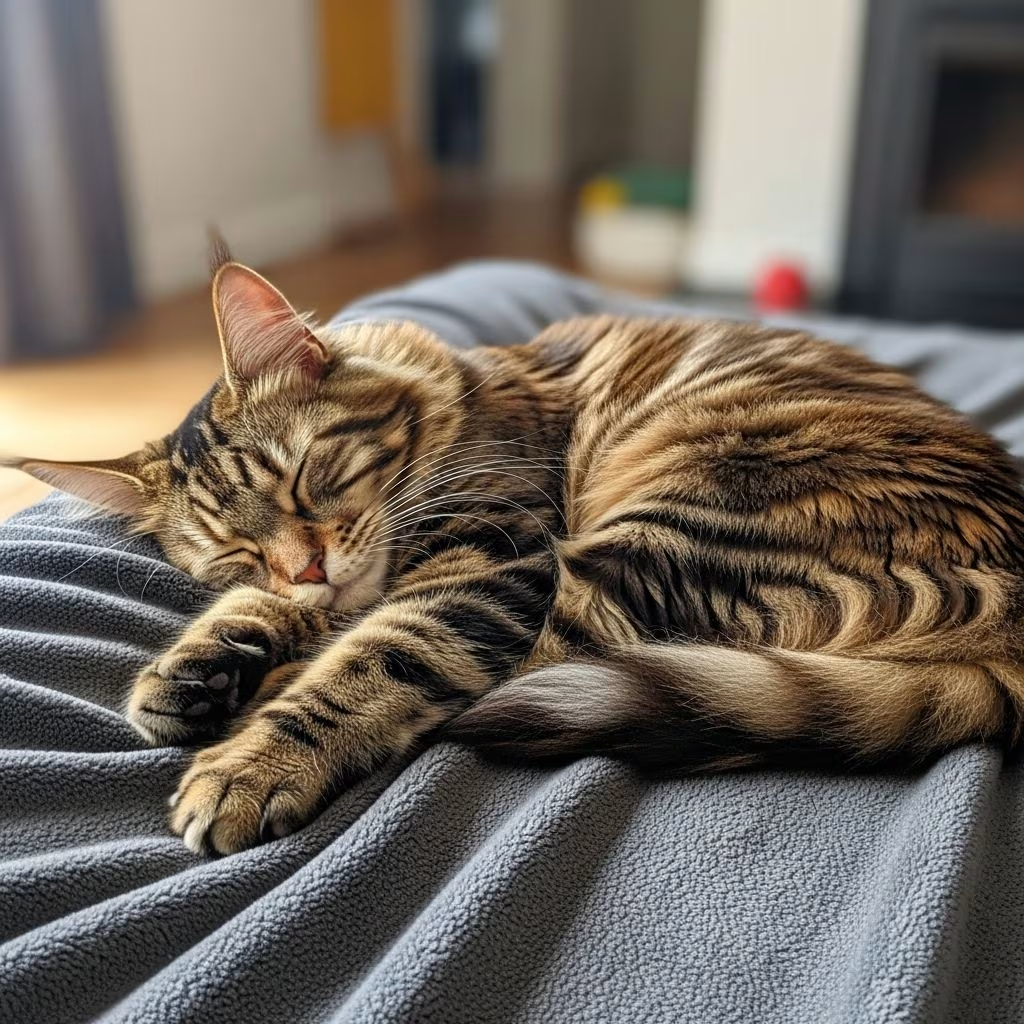
Cats exhibit a striking preference for sleeping on their left side, with research showing approximately two-thirds of observed felines choosing this position. This bias is not random but linked to evolutionary advantages in threat detection and rapid response, driven by brain hemispheric specialization.
The Science Behind Cats’ Left-Side Sleeping Preference
A groundbreaking study published in Current Biology analyzed 408 YouTube videos of sleeping cats, revealing a statistically significant leftward bias: 66% slept on their left side compared to 34% on the right. Cats sleep 12-16 hours daily in vulnerable states, often in elevated spots to monitor threats from below. This position allows the left visual field—processed by the right brain hemisphere—to remain unobstructed upon waking, facilitating quick threat assessment and escape.
The right hemisphere excels in spatial awareness, danger processing, and coordinating rapid movements, providing a survival edge. Sleeping on the left side directs visual input from potential predators or prey straight to this specialized region, minimizing reaction time delays.
Brain Hemispheric Asymmetry in Cats
Brain lateralization, where hemispheres specialize in distinct tasks, underlies this behavior. In cats, the right hemisphere dominates threat detection and visuospatial processing, while the left handles routine or positive stimuli. When sleeping on the left side, a cat’s left visual field (right hemisphere input) scans the environment first upon arousal, optimizing predator evasion or hunting.
- Right Hemisphere Role: Threat identification, escape coordination, spatial navigation.
- Left Hemisphere Role: Familiar objects, social cues, less urgent processing.
- Visual Field Split: Left field to right brain; right field to left brain.
This asymmetry mirrors patterns in birds and fish, suggesting deep evolutionary roots across species for vigilance during rest.
How Sleeping Position Affects Threat Detection
Sleep renders animals defenseless, amplifying the need for efficient post-sleep vigilance. Cats on elevated perches sleep sideways to keep one visual field open. Left-side sleeping ensures the threat-sensitive right hemisphere activates immediately, granting milliseconds advantage against predators approaching from below or the side.
Experimental controls excluded mirrored videos, confirming authenticity. The bias persists across domestic cats, implying instinct over learned habit.
| Sleeping Position | Obstructed Field | Active Hemisphere on Wake | Survival Benefit |
|---|---|---|---|
| Left Side | Right Visual Field | Right Hemisphere (Threat Processing) | Fast detection/escape |
| Right Side | Left Visual Field | Left Hemisphere (Routine Processing) | Slower threat response |
Evolutionary Survival Strategy
This preference likely evolved as cats’ wild ancestors faced constant predation risks. Prolonged sleep (up to 70% of life) necessitated adaptations minimizing vulnerability. Left-side dominance enhances post-sleep hunting efficiency too, as the right hemisphere aids prey tracking.
Researchers hypothesize additional factors like pawedness or environment, but hemispheric asymmetry provides the strongest explanation. Future studies may test wild felines or correlate with personality traits.
Common Cat Sleeping Positions Explained
Beyond side preference, cats’ positions signal comfort levels:
- Side Sleeping (Left/Right): Deep relaxation; fully exposed belly indicates trust.
- Curled Up: Conservation of body heat; moderate security.
- Loaf Position: Alert rest; paws tucked for quick movement.
- Belly Up: Utmost vulnerability; total safety perceived.
- Sphinx: Light sleep; ready to spring into action.
Side sleeping facilitates rapid arousal, aligning with survival needs.
Why Do Cats Sleep So Much?
Cats are crepuscular (active dawn/dusk), sleeping 12-16 hours to conserve energy for bursts of hunting. Kittens and seniors sleep more (up to 20 hours). Domestic cats retain wild sleep patterns despite ample food, prioritizing rest for muscle repair and neural maintenance.
Observing Your Cat’s Sleep Habits
Monitor your cat: Does it favor left-side sleeping in elevated spots? Note head direction toward potential threats. Variations may indicate stress or health issues—consult vets for sudden changes.
Frequently Asked Questions (FAQs)
What percentage of cats sleep on their left side?
Approximately two-thirds (66%), per analysis of 408 videos.
Why does the left visual field matter for cats?
It connects to the right brain hemisphere, specialized for detecting dangers and coordinating escapes.
Is this left-side preference universal in cats?
Observed in domestic cats; wild felines warrant further study.
Does sleeping position indicate health problems?
Usually instinctual, but reluctance to side-sleep may signal pain—vet check advised.
Can I train my cat to sleep differently?
No; it’s hardwired evolutionarily.
How much do cats sleep daily?
12-16 hours, varying by age and activity.
References
- Lateralized sleeping positions in domestic cats — Sevim Isparta et al. 2025-06-23. https://doi.org/10.1016/j.cub.2025.04.043
- Why cats prefer to sleep on their left side may be part of a survival strategy — phys.org. 2025-06-23. https://phys.org/news/2025-06-cats-left-side-survival-strategy.html
- Scientists Reveal Why Cats Always Sleep on Their Left Side — SciTechDaily. 2025-06-23. https://scitechdaily.com/scientists-reveal-why-cats-always-sleep-on-their-left-side/
- Scientists Find Most Cats Sleep on Their Left Side – This Could Be Why — ScienceAlert. 2025-06-23. https://www.sciencealert.com/scientists-find-most-cats-sleep-on-their-left-side-this-could-be-why
- Why Do Most Cats Sleep on Their Left Side? — Psychology Today. 2025-10-01. https://www.psychologytoday.com/us/blog/psychology-tomorrow/202510/why-do-most-cats-sleep-on-their-left-side



