

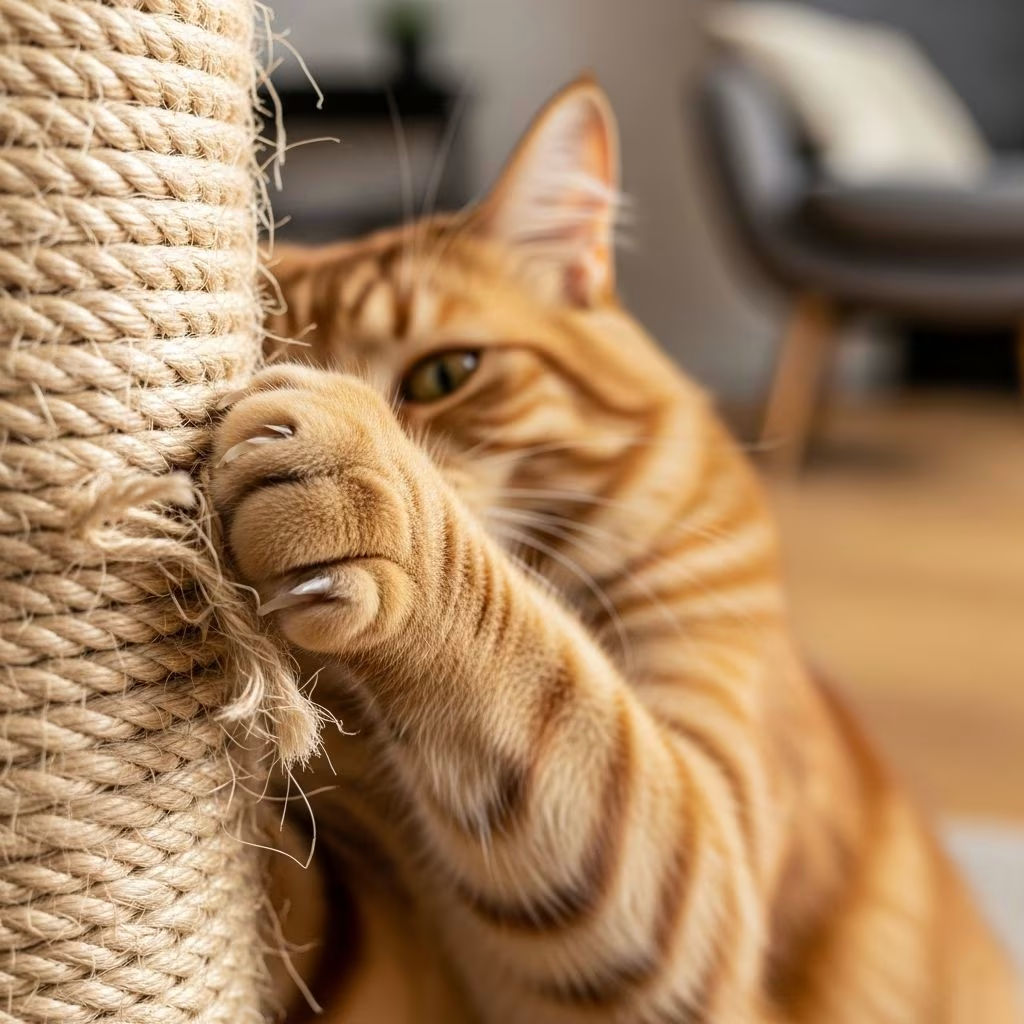
Why Do Cats Scratch? Understanding Your Cat’s Natural Behavior
Scratching is a completely normal and beneficial behavior for cats, but it can become problematic when directed at furniture, carpets, and other household items. To effectively address destructive scratching, it’s essential to understand why cats engage in this behavior in the first place. Cats scratch for multiple important reasons, and recognizing these motivations is the first step toward finding lasting solutions.
Territory Marking and Scent Communication
One of the most important reasons cats scratch is to mark their territory both visibly and through scent marking. When cats scratch, they deposit pheromones from glands in their paws, creating a chemical signature that communicates ownership and familiarity within their environment. This territorial marking behavior helps cats feel secure and in control of their living space. The visible claw marks also serve as a visual boundary marker, signaling to other cats that an area belongs to them.
Claw Maintenance and Physical Health
Beyond territory marking, scratching serves essential physical functions for your cat’s health. The scratching motion helps cats shorten and condition their claws, removing the outer dead sheath and maintaining optimal claw length and sharpness. Without regular scratching opportunities, cats’ claws can become overgrown, uncomfortable, and prone to health issues. This is a natural grooming behavior that cats cannot simply stop doing—it’s as important to them as brushing teeth is for humans.
Stress Relief and Anxiety Management
Some cats scratch to relieve household anxiety or stress. Tensions between multiple cats, seeing stray or feral cats outdoors, or recent household changes can cause a cat to feel anxious and insecure about their environment. When cats are stressed or anxious, scratching becomes a coping mechanism that helps them manage their emotions and re-establish their sense of control.
Exercise and Energy Release
Cats sometimes scratch to relieve excess energy. Scratching combines stretching, muscle engagement, and physical exertion, making it an effective outlet for pent-up energy. Cats that lack sufficient playtime and interactive engagement may scratch more frequently as a way to burn calories and stay physically active.
Why You Cannot Stop Cat Scratching—But You Can Redirect It
It’s important to establish realistic expectations: you cannot stop a cat from scratching because it is a fundamental feline behavior that serves crucial physical and psychological purposes. Rather than attempting to eliminate scratching entirely, the goal should be to direct the scratching to appropriate surfaces and locations within your home. This approach respects your cat’s natural needs while protecting your furniture and maintaining a harmonious living environment.
Understanding this distinction is crucial for maintaining the cat-owner bond. Cats that are prevented from engaging in normal scratching behaviors may experience frustration, increased stress, and behavioral problems. By redirecting rather than restricting, you support your cat’s wellbeing while solving the problem of furniture damage.
How to Redirect Cat Scratching: Practical Solutions
1. Provide Appropriate Scratching Posts
The foundation of redirecting scratching behavior is providing appropriate scratching posts that are appealing to your cat. When selecting scratching posts, look for options that are:
- Tall and sturdy – Posts should be stable enough for cats to scratch without tipping over and tall enough for full-body stretching
- Made of preferred materials – Sisal rope and carpet are popular choices that mimic natural scratching surfaces like tree bark
- Strategically placed – Position posts in locations where your cat is already scratching, such as near the couch in the living room, or in areas where you’d prefer scratching to occur
- Easily accessible – Ensure posts are in frequently-visited areas of your home so your cat will naturally gravitate toward them
2. Offer a Variety of Scratching Textures and Surfaces
Different cats have different preferences when it comes to scratching surfaces. Provide multiple scratching options to increase the likelihood that your cat will find at least one appealing:
- Sisal rope (vertical scratching)
- Carpet or carpet runners (horizontal scratching)
- Corrugated cardboard (a natural material cats enjoy)
- Natural wood posts (mimicking tree bark)
- Slanted scratching posts (angled surfaces)
Offering both vertical and horizontal scratching options accommodates different scratching preferences and allows your cat to engage in their full range of natural scratching behaviors.
3. Encourage Post Usage with Positive Reinforcement
Once you’ve provided appropriate scratching posts, use positive reinforcement to encourage your cat to use them. Apply catnip or pheromone products to the post to make it more appealing. Dangle toys on the post to encourage investigation and interaction with your paws. When your cat scratches an appropriate post, reward them with treats or praise to reinforce the desired behavior.
An important note: avoid taking your cat’s paw and rubbing it down the scratching post, as this technique may have the opposite effect and cause your cat to develop an aversion to the area.
4. Trim Your Cat’s Claws Regularly
Regular claw maintenance is an essential part of managing destructive scratching. Trimming your cat’s claws can help reduce the damage caused by scratching, though it does not eliminate the scratching behavior itself. Benefits of regular claw trimming include:
- Reduced damage to furniture and household items when scratching occurs
- Decreased need for cats to scratch as frequently for claw maintenance
- Lower risk of overgrown, uncomfortable claws
- Prevention of claw-related health issues
Use sharp nail trimmers that cut rather than crush the nail, and replace trimmers regularly to maintain effectiveness. Pair claw trimming with high-value food rewards and gentle, low-stress handling to help your cat accept and even enjoy the experience. Teaching kittens to be comfortable with nail trimming early in life is particularly beneficial for long-term management.
5. Consider Nail Caps as a Damage-Reduction Strategy
Nail caps are form-fitting plastic covers that fit over your cat’s claws, significantly reducing the damage caused by scratching while allowing the natural scratching behavior to continue. They come in various colors and are reapplied as nails grow. However, not all cats tolerate nail caps comfortably, so monitor your cat’s response. If your cat becomes extremely distressed by the caps, discontinue use rather than causing ongoing stress.
6. Make Problem Areas Less Appealing
While providing appropriate alternatives is most important, you can also make undesirable scratching targets less appealing. Humane deterrents that work effectively include:
- Double-sided tape – Creates an unpleasant, sticky texture cats dislike
- Aluminum foil – The texture and sound deter many cats
- Plastic or loosely draped material – Changes the surface texture and feel
- Citrus or menthol scents – Cats strongly dislike these odors
- Motion-activated deterrents – Motion detector air sprays or alarms startle cats away from problem areas
- Booby traps – Stacked plastic cups that topple when disturbed create a harmless but startling consequence
Importantly, these deterrents work best when combined with appropriate scratching alternatives. Otherwise, your cat may simply move to another undesired target. Never use harmful deterrents such as spraying water, yelling, or any form of physical punishment, as these damage the cat-owner relationship and don’t address the underlying motivation for scratching.
7. Use Pheromone Products to Reduce Scratching Motivation
Pheromone products are scientifically-backed tools that can help manage destructive scratching. Two types are particularly useful:
- Feliway Classic – Applied to surfaces you want to discourage scratching on, this pheromone reduces the impulse to scratch through its stress-relieving properties and by promoting a sense of familiarity and safety.
- Feliway MultiCat/Feliway Friends – An appeasing pheromone that reduces stress and, in turn, decreases the urge to scratch through territorial marking.
Additionally, a newer product called Feliscratch has been shown to be effective in encouraging cats to scratch in desired areas.
8. Provide Enrichment and Adequate Playtime
Environmental enrichment and interactive play reduce boredom-related scratching. Provide your cat with plenty of attention and interactive toys that offer mental and physical stimulation. A regular daily routine that includes social play, object play, and exercise helps redirect scratching instincts and keeps your cat engaged and satisfied.
9. Restrict Access When Necessary
In some cases, temporary restriction of access to problem areas may be necessary, particularly when you cannot supervise. Partial confinement or “cat-proofing” strategies include:
- Closing doors to restrict access to certain rooms
- Using child locks or barricades on furniture
- Temporarily covering furniture with protective materials
- Creating a dedicated play area where your cat spends time when unsupervised
The goal of access restriction is to prevent reinforcement of inappropriate scratching behavior until your cat has consistently chosen appropriate alternatives.
10. Address Underlying Stress and Anxiety
If your cat is scratching excessively throughout the home, they may be expressing insecurity about their environment. Address potential sources of stress by:
- Diffusing pheromones throughout your home to promote calmness
- Ensuring all household cats have easy access to food, water, and rest areas
- Managing tensions between multiple cats through separate resources and supervision
- Addressing external stressors like stray cats visible outdoors through window coverings if needed
- Consulting with a veterinary behaviorist to rule out medical issues and develop a customized behavioral modification plan
What NOT to Do: Avoid These Ineffective and Harmful Strategies
Several common approaches to cat scratching are ineffective or harmful and should be avoided:
- Declawing – This procedure is strongly discouraged as it removes the last bone of each toe and causes chronic pain and behavioral problems.
- Punishment-based deterrents – Spraying with water, yelling, or any form of physical punishment damages your relationship with your cat and doesn’t address the underlying motivation for scratching.
- Rubbing your cat’s paw on the post – This may create an aversion to the scratching post rather than encouraging its use.
- Relying solely on deterrents without alternatives – Without appropriate scratching options, your cat will simply find another undesired target.
Creating an Optimal Scratching Environment
Success in managing destructive scratching comes from understanding your individual cat’s preferences. Consider:
- Substrate preference – What material does your cat prefer to scratch? (carpet, sisal, cardboard, wood)
- Location preference – Where does your cat naturally scratch? (near sleeping areas, entry points, along walls)
- Scratching style – Does your cat prefer vertical, horizontal, or angled surfaces?
- Environmental factors – Are stress, lack of play, or boredom contributing to excessive scratching?
Once you understand these preferences, you can design a scratching environment that satisfies your cat’s needs while protecting your furniture.
Frequently Asked Questions
Q: Can I stop my cat from scratching altogether?
A: No. Scratching is a fundamental feline behavior that serves important physical and psychological purposes. The goal should be to redirect scratching to appropriate surfaces rather than trying to eliminate it entirely.
Q: How many scratching posts do I need?
A: Provide multiple scratching posts in various locations throughout your home. The exact number depends on your home’s size and your cat’s scratching habits, but having at least 2-3 posts in different areas increases the likelihood your cat will find appropriate alternatives.
Q: Is declawing a good solution for destructive scratching?
A: No. Declawing is strongly discouraged by veterinary professionals. It removes the last bone of each toe, causes chronic pain, and often leads to behavioral problems including increased biting and litter box avoidance.
Q: How often should I trim my cat’s claws?
A: Claw trimming frequency varies by cat, but most cats benefit from regular trimming every 2-4 weeks. Consult your veterinarian for personalized recommendations based on your cat’s individual needs.
Q: Do pheromone products really work?
A: Yes. Research supports the effectiveness of pheromone products like Feliway in reducing scratching behavior by promoting relaxation and security. Results may vary by individual cat.
Q: My cat ignores the scratching posts I bought. What should I do?
A: Try applying catnip, pheromone spray, or other attractive scents to the posts. You can also try different materials and positions. If your cat has shown a preference for a specific furniture fabric, use a scratching post covered with similar material.
Q: Is scratching behavior a sign of a behavior problem?
A: Normal scratching is not a behavior problem—it’s healthy and necessary. However, excessive or compulsive scratching may indicate stress, anxiety, or an underlying medical issue. Consult your veterinarian if scratching behavior changes suddenly or becomes extreme.
References
- Redirect Cat Scratching from Furniture — Hamlin Animal Hospital. Accessed January 2026. https://www.hamlinvet.com/blog/december-pet-behavior-how-to-stop-your-cat-from-scratching-furniture
- Cat Behavior Problems – Scratching Behavior — VCA Animal Hospitals. Accessed January 2026. https://vcahospitals.com/know-your-pet/cat-behavior-problems—scratching-behavior
- Common Feline Problem Behaviors: Destructive Scratching — National Center for Biotechnology Information (NIH), PMC. 2024. https://pmc.ncbi.nlm.nih.gov/articles/PMC11373750/
- 6 Ways to Redirect Your Cat’s Scratching Behavior — Alley Cat Allies. Accessed January 2026. https://www.alleycat.org/community-cat-care/cat-behavior-scratching/
- Cat Behavior Problems: Scratching Behavior — Arch Animal Hospital West. Accessed January 2026. https://archanimalhospitalwest.com/cat-behavior-problems-scratching-behavior/
- A Cat Owner’s Guide to Scratching — Memorial Villages Animal Hospital. Accessed January 2026. https://mvahpets.com/a-cat-owners-guide-to-scratching/
- Feline Behavior Problems: Destructive Behavior — Cornell University College of Veterinary Medicine, Feline Health Center. Accessed January 2026. https://www.vet.cornell.edu/departments-centers-and-institutes/cornell-feline-health-center/health-information/feline-health-topics/feline-behavior-problems-destructive-behavior
- Destructive Scratching – Prevention and Solutions — PAWS (Progressive Animal Welfare Society). Accessed January 2026. https://www.paws.org/resources/destructive-scratching/



