

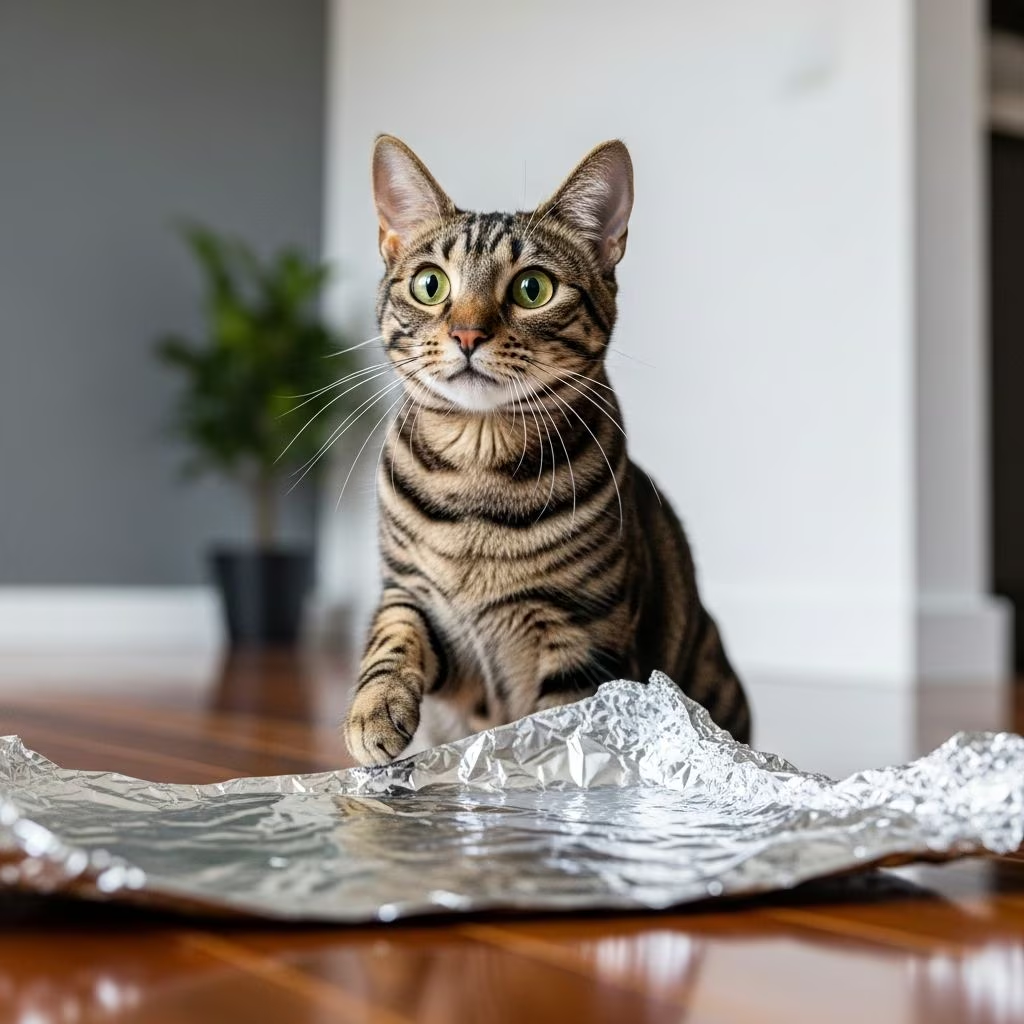
The internet is filled with videos of cats dramatically recoiling from sheets of aluminum foil, their eyes wide and bodies tensing in apparent panic. These clips have become a familiar meme, shared across social media platforms with captions like “Cat logic” or “The great foil incident.” But beneath the humor lies a legitimate question: do cats genuinely dislike aluminum foil, or is this simply an internet exaggeration? The answer involves understanding the complex sensory world of cats and how their evolutionary adaptations interact with everyday household materials.
The Sensory Explosion: Why Foil Overwhelms Feline Senses
When cats encounter aluminum foil, they’re not reacting to a single unpleasant stimulus but rather a combination of sensory experiences that violate their expectations about their environment. Cats rely heavily on environmental consistency and predictability to navigate their world safely. When they encounter something that behaves unexpectedly—making noise, shifting underfoot, or creating unfamiliar visual patterns—their natural caution intensifies. This sensory overload explains why the reactions are so pronounced and immediate.
The Auditory Challenge
Perhaps the most significant factor in cats’ aversion to aluminum foil is the sound it produces. Cats possess hearing capabilities that dramatically exceed human perception, detecting frequencies up to 64 kHz compared to humans’ maximum of approximately 20 kHz. This extraordinary auditory range evolved to help cats hunt small rodents and detect threats in their environment. When a cat steps on or touches aluminum foil, the crinkly noise it generates reaches frequencies that are exceptionally high-pitched and startling to feline ears. For cats evolved to detect the ultrasonic vocalizations of prey animals, this sharp, sudden sound can feel intrusive and potentially threatening rather than merely strange.
Veterinarians specializing in feline behavior note that the specific acoustic properties of foil—a combination of crinkling frequencies and sudden onset—can be particularly irritating to sensitive cat ears. The unpredictability of the sound, created by the random crinkles and shifts in the material, adds another layer of sensory disturbance. A cat cannot predict when the next sound will occur or how intense it will be, which heightens their stress response.
Tactile Confusion and Instability
Beyond sound, the texture of aluminum foil creates profound tactile confusion for cats. The smooth yet rigid surface of kitchen foil stands in sharp contrast to the textures cats regularly encounter—carpet, grass, soil, and the various furnishings of their homes. More problematic than mere unfamiliarity is the way foil behaves under a cat’s paws. The material shifts, crinkles, and moves in unpredictable ways, creating a sense of instability that even confident felines find disconcerting.
Cats have evolved with specific expectations about how surfaces should feel and behave. Hard surfaces should be stable; soft surfaces should provide traction or comfort. Foil defies these categorizations, being simultaneously smooth and creating friction, rigid yet somehow yielding when pressure is applied. This contradiction between expected and actual tactile feedback triggers a defensive response in many cats. Additionally, some behavioral specialists note that foil’s reflective, slightly slick surface may superficially resemble water or wet surfaces, and cats instinctively avoid anything that appears wet or slippery.
Visual Disturbance and Predatory Instincts
The reflective quality of aluminum foil creates another sensory dimension that affects feline perception. The shiny material reflects light unpredictably, creating glints, flashes, and shifting reflections that can mimic movement. To a cat’s evolutionary mind, these flickering patterns resemble either the eyes of a potential threat lurking in shadows or the rapid movements of prey animals attempting escape. This visual ambiguity, combined with the unfamiliar surface texture and alarming sound, creates a multi-sensory alarm that triggers a cat’s fight-or-flight response.
The Behavioral Foundation: How Cats Process Unexpected Sensory Input
Understanding cats’ foil reactions requires recognizing how feline neurology processes unexpected environmental changes. Cats, unlike some other animals, have evolved in solitary hunter niches where environmental awareness directly correlates with survival. They depend on consistent environmental patterns to identify danger, locate prey, and navigate territory safely. When something violates these established patterns—particularly multiple sensory violations simultaneously—cats default to caution rather than curiosity.
The International Association of Animal Behavior Consultants has noted that when cats perceive a potential threat, their instinctive response is not to investigate or confront but rather to flee and hide. This escape-first mentality served cats well in the wild, where investigating unknown threats could prove fatal. While domestic cats are no longer facing such existential dangers, their neurological responses remain unchanged. The combination of unexpected sound, unstable texture, and ambiguous visual information creates sufficient threat perception for the escape response to activate.
Dispelling the Permanence Myth: How Cats Adapt and Overcome Foil Aversion
One of the most important clarifications about cats and aluminum foil concerns its longevity as a deterrent. While the initial reaction is typically dramatic and reliable, the aversion is not permanent. This distinction fundamentally affects how pet owners should approach using foil as a behavioral management tool.
Research on feline behavior modification indicates that repeated exposure to aluminum foil gradually diminishes its deterrent effect. As cats repeatedly encounter the material without negative consequences—it neither bites them nor causes harm—they learn to reassess the threat level. What initially triggered panic gradually becomes merely unusual, then familiar, and eventually unremarkable. Many cats will eventually walk across foil without hesitation, while some even begin treating it as a toy, pouncing on it or batting at it playfully.
This adaptation process typically occurs over days to weeks, depending on individual cat personalities and cognitive styles. More curious, confident cats often overcome foil aversion more quickly than anxious or cautious felines. Some cats may maintain mild wariness even after habituation, while others seemingly forget their initial fear entirely once they’ve determined the material poses no actual danger.
Practical Applications and Limitations
When Foil Works as a Deterrent
Despite its temporary nature, aluminum foil can serve practical purposes in household pet management, particularly in short-term scenarios. Many pet owners have discovered that laying foil on countertops or tables can briefly discourage cats from jumping to these surfaces, helping protect items that might otherwise fall prey to feline curiosity or provide access to forbidden foods.
The effectiveness stems not from permanent aversion but from the sensory overwhelm creating enough momentary reluctance to alter behavior. For cats considering counter-surfing, the moment of hesitation caused by foil’s presence may be sufficient to redirect them toward alternative behaviors. Similarly, wrapping furniture or placing foil around areas prone to scratching can temporarily reduce unwanted scratching by making those locations less appealing than designated scratching posts.
Why Long-Term Reliance on Foil Fails
Research examining behavioral deterrents, including aluminum foil, found that such strategies were not associated with sustained reductions in unwanted scratching or other undesired behaviors. This finding highlights a crucial limitation: foil addresses symptoms rather than underlying behavioral drivers. A cat that counter-surfs because it seeks elevated vantage points, experiences boredom, or is drawn to food remnants will eventually overcome foil aversion and return to the behavior once habituation occurs.
Expert veterinarians consistently advise against treating foil as a standalone solution. As one veterinary professional explained, once cats determine that foil presents no genuine threat, they lose their fear and resume their original behaviors. This adaptation pattern underscores the importance of combining any deterrent strategy with comprehensive environmental enrichment and positive reinforcement approaches.
Superior Alternatives to Aluminum Foil
Understanding foil’s limitations has led behavioral specialists to recommend alternative deterrents that prove more effective over extended periods:
- Double-sided tape: Cats consistently dislike the sticky sensation on their paws and tend to maintain aversion even after repeated exposure, making it more durable than foil.
- Environmental enrichment: Providing appropriate outlets for natural behaviors—multiple scratching surfaces in varied textures, vertical spaces for climbing, and interactive toys—addresses root causes of problematic behaviors rather than merely suppressing symptoms.
- Feline pheromone products: Commercially available pheromone sprays mark appropriate areas with calming chemical signals, encouraging cats to redirect behaviors toward designated locations with effectiveness rates as high as 74%.
- Positive reinforcement: Rewarding desired behaviors creates lasting associations far more effective than punishment-based or startling deterrents.
Understanding Individual Feline Personality Differences
Not all cats respond identically to aluminum foil. Personality, past experience, age, and temperament all influence how dramatically any individual cat reacts. Bold, curious cats may approach foil cautiously, quickly overcome initial hesitation, and adapt rapidly. Anxious or cautious cats may display more pronounced startle responses and maintain wariness longer, though they will still eventually habituate with repeated exposure.
Additionally, some cats demonstrate remarkable problem-solving abilities and creativity in working around deterrents. These cats may find ways to navigate around foil barriers, use objects to push foil aside, or learn that foil-free areas exist just beyond the protected zones. Such cats often require multilayered behavioral management approaches combining several deterrent strategies with positive redirection.
The Role of Social Media in Foil Mythology
The widespread popularity of aluminum foil as a cat deterrent has been significantly amplified by internet culture. Social media platforms contain countless videos documenting cats’ dramatic reactions to foil, often with humorous captions or exaggerated setups designed to maximize dramatic response. While entertaining, this phenomenon has contributed to misconceptions about foil’s effectiveness and permanence as a behavioral solution.
The humor and viral nature of these videos have created a feedback loop where pet owners eagerly experiment with foil specifically hoping to capture amusing reactions, then share results online, further reinforcing the cultural narrative around cat-foil interactions. This cultural phenomenon is distinct from scientific understanding of feline behavior and can lead owners to overestimate foil’s practical utility in actual behavioral management scenarios.
Developing Comprehensive Behavioral Strategies
Veterinarians and certified animal behaviorists recommend comprehensive approaches to feline behavioral challenges that address underlying motivations rather than relying on temporary deterrents. A complete strategy typically includes:
- Identifying the specific motivation driving the undesired behavior (seeking elevation, scratching for territorial marking, attention-seeking, etc.)
- Providing appropriate outlets for these natural behaviors in designated locations
- Creating an enriching environment with varied textures, heights, and interactive elements
- Establishing consistent positive reinforcement when cats engage with appropriate alternatives
- Employing temporary deterrents like foil only as brief auxiliary tools within this larger framework
This integrated approach produces lasting behavioral modification whereas deterrent-only strategies consistently fail to produce sustainable change.
Frequently Asked Questions
Do all cats react the same way to aluminum foil?
No. While most cats display at least some caution or reaction to foil initially, the intensity and duration of the response vary considerably. Individual personality, age, prior experience, and temperament all influence responses. Some cats habituate extremely quickly while others maintain wariness longer, though habituation ultimately occurs in most cases.
Is aluminum foil dangerous for cats?
Aluminum foil itself is not toxic to cats and poses no chemical danger. However, cats should not ingest foil, and sharp edges could potentially cause injury. The concern is primarily about behavioral stress from the sensory properties rather than physical safety.
How long does foil typically work as a deterrent?
Effectiveness duration varies but typically ranges from days to several weeks. Most cats overcome initial aversion relatively quickly once they determine foil poses no genuine threat. Some cats adapt within 48 hours while others maintain wariness for several weeks before habituation occurs.
Can foil be combined with other deterrents for better results?
Yes. Combining foil with other strategies like double-sided tape, pheromone products, or environmental enrichment may provide more comprehensive deterrence. However, the most important component remains addressing underlying behavioral motivations through enrichment and positive reinforcement.
What’s the best alternative if foil stops working?
Double-sided tape provides more durable aversion, while providing appropriate enrichment (scratching posts, climbing spaces, interactive toys) addresses root behavioral causes. Combining these approaches produces superior long-term results compared to foil alone.
References
- The Curious Case of Cats and Aluminum Foil: A Deep Dive Into Feline Reactions — Oreate AI. 2025. https://www.oreateai.com/blog/the-curious-case-of-cats-and-aluminum-foil-a-deep-dive-into-feline-reactions/
- Do cats really hate aluminium foil? What makes them startle and what science says — Times of India. 2024. https://timesofindia.indiatimes.com/etimes/trending/do-cats-really-hate-aluminium-foil-what-makes-them-startle-and-what-science-says/
- Unwanted Scratching Behavior in Cats: Influence of Management, Enrichment, and Behavioral Factors — National Center for Biotechnology Information (NCBI). 2022. https://pmc.ncbi.nlm.nih.gov/articles/PMC9559527/
- Why Do Cats Fear Aluminum Foil? Understanding Their Unique Sensory World — Oreate AI. 2025. https://www.oreateai.com/blog/why-do-cats-fear-aluminum-foil-understanding-their-unique-sensory-world/



