

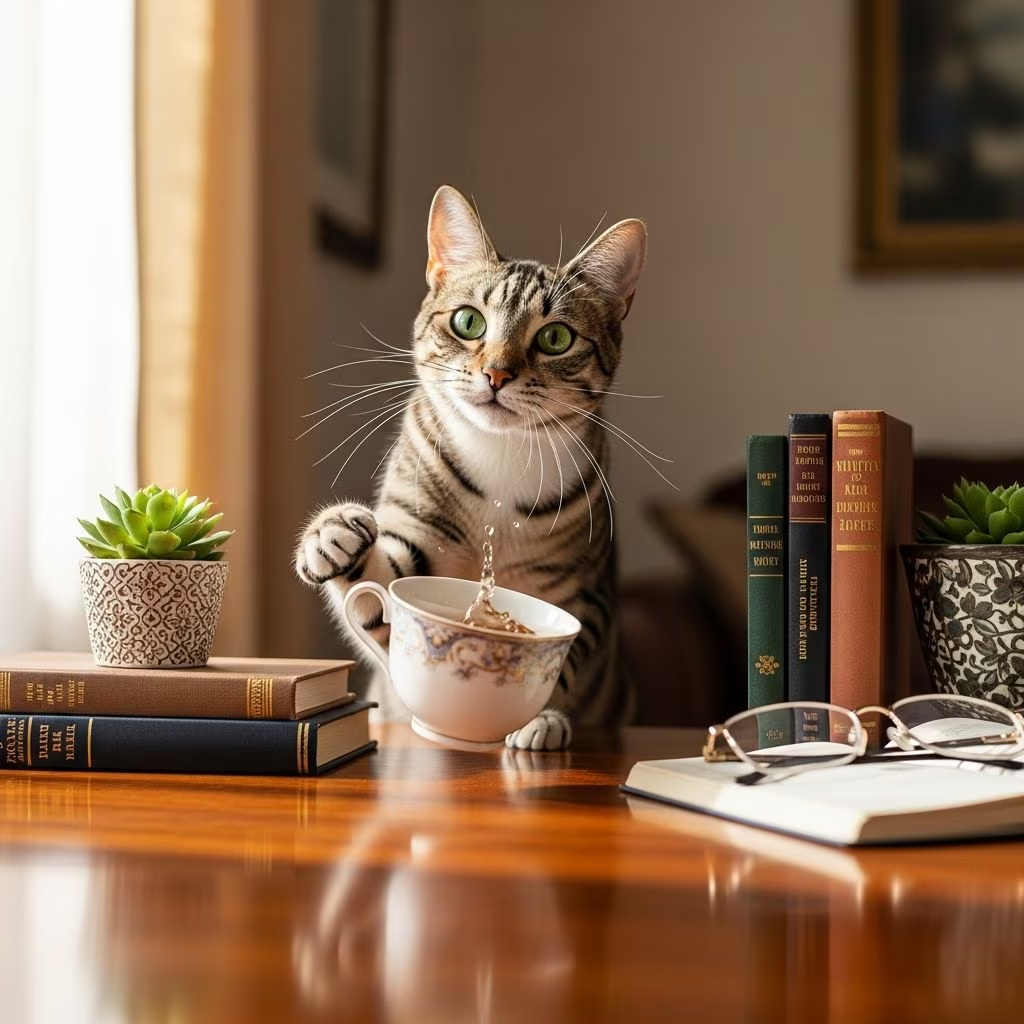
Cats frequently bat at and topple household items from tables, shelves, and counters, a behavior rooted in their evolutionary traits and daily needs. This action serves multiple purposes, from sensory exploration to social interaction, revealing much about a cat’s well-being.
The Evolutionary Roots of Feline Toppling
Domestic cats descend from wild ancestors like the African wildcat, which relied on precise paw movements to hunt small prey. Today, this instinct persists, prompting cats to swipe at stationary objects that mimic prey when disturbed.
When a cat paws at a pen or glass, it simulates capturing rodents or birds, testing if the item ‘flees’ by rolling or falling. This predatory drive activates automatically, especially for lightweight, movable objects, as cats’ sensitive paw pads detect subtle vibrations and textures.
Sensory Investigation Through Paw Action
Cats possess over 200 million scent receptors and highly tactile paws, using them as primary tools for environmental assessment. Pushing items off edges allows them to evaluate texture, weight, and acoustic properties—hard versus soft, heavy versus light, silent versus clattering.
- Texture analysis: Determines if an object is smooth, rough, or sticky.
- Movement patterns: Observes rolling, bouncing, or sliding trajectories.
- Sound feedback: Registers crashes or thuds, reinforcing the interaction.
Kittens particularly excel in this, treating every surface as a laboratory for growth and coordination development.
Attention as a Learned Reward
Many cats master cause-and-effect quickly, discovering that toppling an item elicits human response. Whether owners scold, laugh, or clean up, any engagement reinforces the habit, as cats prioritize interaction over its tone.
This peaks during owner-focused activities like reading or computing, where the cat strategically disrupts to reclaim focus. Ignoring such bids initially, then rewarding calm behavior, breaks the cycle effectively.
Boredom and the Need for Enrichment
Indoor cats, common in urban settings, face limited stimulation, leading to self-entertained chaos. Without outlets, they improvise by manipulating objects, escalating to repetitive targeting of favored items.
Indicators include:
- Persistent focus on specific objects despite relocation.
- Combining with high-energy bursts or meowing.
- Increased frequency during idle periods.
Asserting Territory and Control
Felines view homes as extensions of their domain, using paw swipes to curate spaces. New additions like vases or gadgets often face rejection via displacement, signaling disapproval of unapproved changes.
This territorial tweak provides satisfaction through environmental mastery, akin to scratching posts marking boundaries.
Emotional Triggers: Stress and Frustration
Displacement activities emerge under duress, such as relocations, new pets, or routine shifts. Toppling redirects anxiety, targeting high-value items symbolically.
Frustration from unmet basics—delayed meals, scant play—manifests similarly, urging owners to audit welfare holistically.
Life Stage Variations in Behavior
| Age Group | Typical Motivations | Characteristics |
|---|---|---|
| Kittens | Play, learning | Clumsy, frequent, exploratory |
| Adults | Attention, routine | Targeted, habitual |
| Seniors | Stress, cognition | Erratic, less playful |
Developmental phases dictate intensity; seniors may signal health declines like cognitive dysfunction.
Health Concerns Masquerading as Mischief
Sudden surges warrant scrutiny:
- Aggressive swiping with vocalization.
- Paired with lethargy or appetite shifts.
- Obsessive repetition ignoring deterrents.
These may indicate hyperthyroidism, vision loss, or neurological issues; veterinary evaluation ensures timely intervention.
Proven Strategies to Curb Toppling
Redirect rather than punish, as reprimands amplify engagement. Enrichment fortifies resilience:
- Secure valuables: Use quake-proof mats or edge barriers.
- Interactive toys: Wand teasers, puzzle feeders mimic hunts.
- Vertical spaces: Shelves, trees channel energy upward.
- Scheduled play: 15-minute sessions twice daily exhaust instincts.
- Ignore and reward: Divert attention calmly, praise stillness.
Consistency yields results within weeks, transforming frustration into harmony.
Understanding Feline Intelligence
Experts affirm cats as active world-shapers, not passive dwellers. Dr. Sarah Heath notes agency in such acts, underscoring non-spiteful intent. Their problem-solving rivals dogs, evident in strategic object use.
FAQs
Is knocking things over a sign my cat hates me?
No, it’s instinctual exploration or communication, not malice.
How do I stop my cat from pushing glasses off counters?
Remove access, provide alternatives, and ignore the act while rewarding calm.
Does spaying/neutering reduce this behavior?
It may temper aggression but not core instincts; enrichment remains key.
When should I see a vet for this habit?
If sudden, excessive, or with health symptoms.
Are some breeds more prone?
Active breeds like Bengals or Abyssinians, but all share instincts.
Embracing the Feline Nature
This quirk highlights vitality—curiosity, agility, smarts. Viewing it through cats’ lenses fosters patience, enriching bonds via tailored environments.
References
- Why Do Cats Knock Things Over? Behaviour & Training Explained — Pet Care Shed. 2023-05-15. https://petcareshed.com.au/blogs/pet-supplies/why-do-cats-knock-things-over-behaviour-training
- Why Cats Knock Things Off Tables: The Psychology Behind Feline Mischief — Asheville Cat Weirdos. 2024-02-10. https://ashevillecatweirdos.org/why-cats-knock-things-off-tables-the-psychology-behind-feline-mischief/
- If your cat keeps knocking things over, you might actually be the… — Upworthy. 2023-11-20. https://www.upworthy.com/cats-knocking-things-over
- Why Do Cats Knock Things Over? — Diamond Pet Foods. 2024-01-05. https://www.diamondpet.com/blog/behavior/why-do-cats-knock-things-over/
- Why Cats Knock Things Off Tables? 8 Reasons Why! — Cats.com. 2023-08-12. https://cats.com/why-do-cats-knock-things-off-tables



