

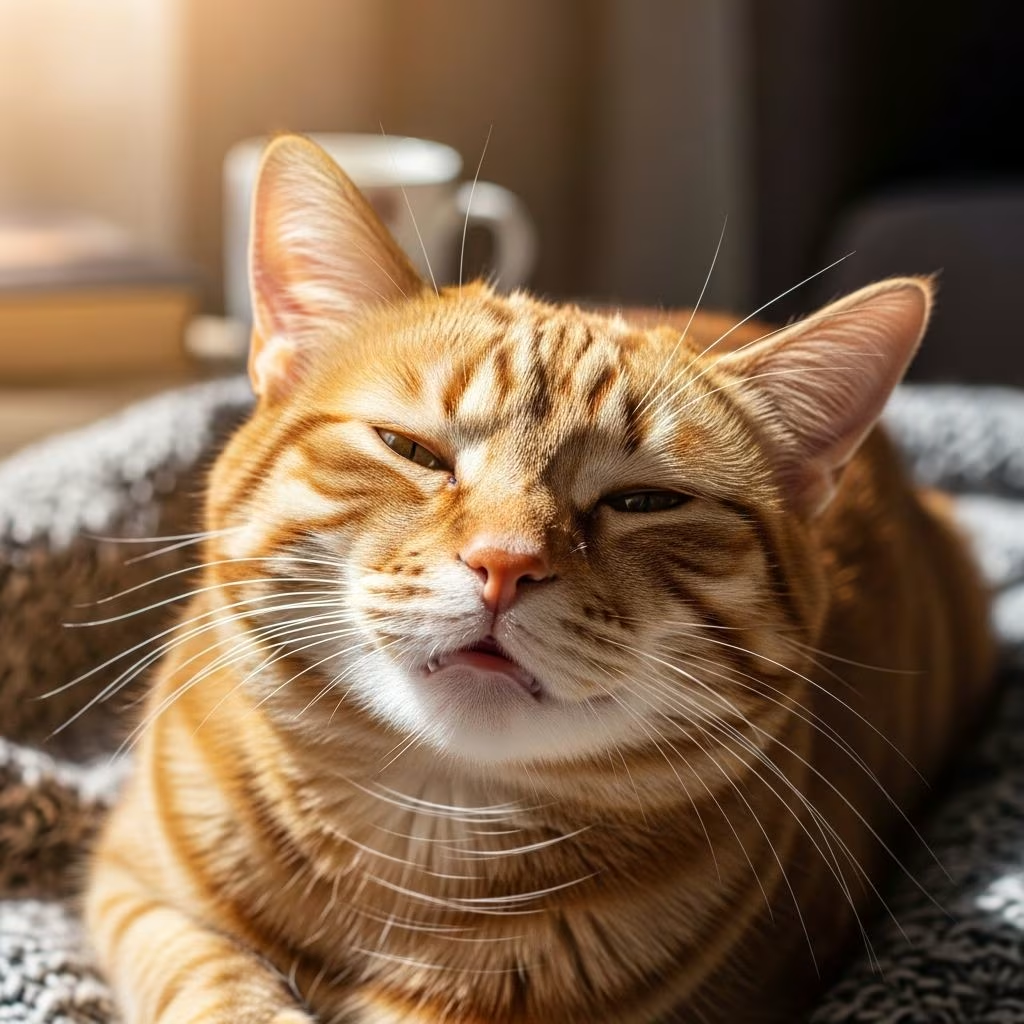
That deep, rumbling purr from your cat can be one of the most comforting sounds in a pet owner’s life, but when it’s exceptionally loud, it sparks curiosity. Why do some cats purr so intensely? Loud purring often signals strong emotions, from pure bliss to subtle distress, and recent scientific breakthroughs reveal the unique anatomy enabling this powerful vibration.
This article delves into the mechanics of loud purring, its varied meanings, breed differences, health implications, and practical advice for cat parents. Understanding these rumbles strengthens the human-feline bond and helps spot when your cat needs attention.
The Science Behind a Cat’s Loud Purr
Recent research has revolutionized our understanding of how cats produce their signature purr, especially the loud variety. Scientists once believed purring required constant muscle contractions in the larynx, twitching 20-30 times per second. However, a groundbreaking study challenges this.
Researchers from the University of Vienna examined larynges from eight deceased domestic cats. By simulating airflow without neural input or muscle activity, they elicited purring frequencies of 25-30 Hz—the exact range of a typical cat purr. This proves purring is largely a passive process driven by specialized anatomy.
Key to loud purring are “purring pads”—dense pads of connective tissue, collagen, and elastin embedded in the vocal folds. These pads increase vocal cord density, slowing vibrations to produce low-frequency rumbles despite cats’ small size. Normally, short vocal cords yield high pitches like meows; the pads enable the deep, sustained purr, amplifying volume in some cats.
This mechanism resembles human “vocal fry,” a low, gravelly sound from loose, thick cords. In cats, the pads create a long closed phase in vibrations, sustaining the purr automatically after a brain signal initiates it. A neural oscillator in the brain may fine-tune it, but muscles play a minimal role.
Loud purring likely stems from larger or denser purring pads, more forceful airflow from the diaphragm, or heightened emotional states boosting amplitude. Frequencies range 25-150 Hz, with louder purrs often at the lower end for deeper resonance.
Reasons Why Your Cat Purrs So Loudly
Loud purring isn’t just contentment; cats deploy it in diverse contexts. Here’s why your feline might rumble at high volume:
- Ultimate Relaxation and Happiness: The classic scenario—your cat sprawls on your lap, eyes half-closed, purring thunderously during pets. This solicits more interaction and signals safety.
- Hunger or Solicitation: Cats purr loudly at mealtime, embedding a 220-520 Hz ‘solicitation purr’ mimicking a human baby’s cry to urge feeding.
- Self-Soothing in Stress: Injured, anxious, or ill cats purr loudly to calm themselves, observed in vets or recovery.
- Maternal Bonding: Mother cats purr loudly to communicate with kittens, guiding nursing and movement via vibrations.
- Pain Management: Cats in distress purr to ease discomfort, possibly aiding healing.
Volume amplifies with intensity; a supremely content or needy cat purrs louder to emphasize the message.
Do All Cats Purr at the Same Volume?
No—purr volume varies widely. Some cats whisper softly; others sound like outboard motors. Factors include:
- Genetics and Breed: Maine Coons and Persians often purr louder due to larger larynges. Siamese produce high-pitched versions.
- Age: Kittens purr softly; adults intensify with maturity.
- Size and Anatomy: Bigger cats with denser purring pads generate stronger vibrations.
- Personality: Outgoing cats purr louder to express affection; shy ones stay quiet.
- Health: Vibrant cats purr more forcefully; illness dampens it.
Observing your cat’s baseline helps gauge changes.
Is Loud Purring Always a Good Sign?
Often yes, but context matters. Concerning signs:
| Positive Loud Purring | Potential Concern |
|---|---|
| Relaxed body, kneading, slow blinks | Flattened ears, dilated pupils, hiding |
| During play or cuddles | Constant purring without eating |
| Mealtime excitement | Purring with limping or vomiting |
Monitor for weight loss, lethargy, or aggression. Excessive loud purring can signal hyperthyroidism or pain. Consult a vet if sudden or paired with symptoms.
Health Benefits of Your Cat’s Purr
Beyond emotion, purring may heal. Frequencies (25-50 Hz) match those promoting bone growth, fracture healing, pain relief, and tendon strength—used in human therapy. Cats likely self-medicate via purring during injury.
For humans, stroking a loudly purring cat lowers stress, blood pressure, and anxiety, releasing endorphins. Studies show purr therapy aids recovery.
How to Encourage Louder Purring in Cats
Boost those rumbles:
- Provide safe, cozy spots with soft bedding.
- Use interactive toys and play daily.
- Gently brush or massage favorite areas.
- Maintain routine feeding/schedules.
- Employ pheromones or calming music.
- Avoid stressors like loud noises.
Respond to solicitation purrs promptly for conditioning.
Fun Facts About Loud Cat Purring
- Cheetahs purr, but lions roar—domestics uniquely purr and meow.
- Purring starts in utero for kitten-mother bonding.
- Some purr only on exhale; others continuously.
- Record purr? A Maine Coon at 67.8 decibels.
- Purring synchronizes in groups for harmony.
Frequently Asked Questions (FAQs)
Why is my cat purring so loudly all of a sudden?
Sudden loud purring often means intense happiness, hunger, or stress. Check context and health.
Can loud purring indicate pain?
Yes, cats purr to self-soothe during discomfort. Watch for other symptoms.
Do certain breeds purr louder?
Larger breeds like Maine Coons purr more powerfully due to anatomy.
Is it normal for cats to purr while sleeping?
Absolutely—deep REM sleep triggers contentment purrs.
Why does my cat purr loudly but then bite?
Overstimulation; loud purr signals joy turning to ‘enough!’.
Can purring be too loud?
Volume varies; excessive with illness warrants vet check.
References
- Scientists Think They’ve Finally Figured Out How Cats Purr — ScienceAlert. 2022-12-01. https://www.sciencealert.com/important-news-scientists-think-theyve-finally-figured-out-how-cats-purr
- How do cats purr? New finding challenges long-held assumptions — Science.org. 2022-12-01. https://www.science.org/content/article/how-do-cats-purr-new-finding-challenges-long-held-assumptions
- The Science Behind the Purr: Unraveling the Mystery — The Refined Feline. 2023-01-15. https://www.therefinedfeline.com/the-science-behind-the-purr/
- Why and how do cats purr? — Library of Congress. 2024-05-10. https://www.loc.gov/everyday-mysteries/zoology/item/why-and-how-do-cats-purr/
- Why Do Cats Purr | The Science Behind A Normal Feline Behavior — TVMF. 2023-08-20. https://www.tvmf.org/articles/why-do-cats-purr/
- Why do cats purr? — BBC Science Focus. 2023-11-12. https://www.sciencefocus.com/nature/why-do-cats-purr



