

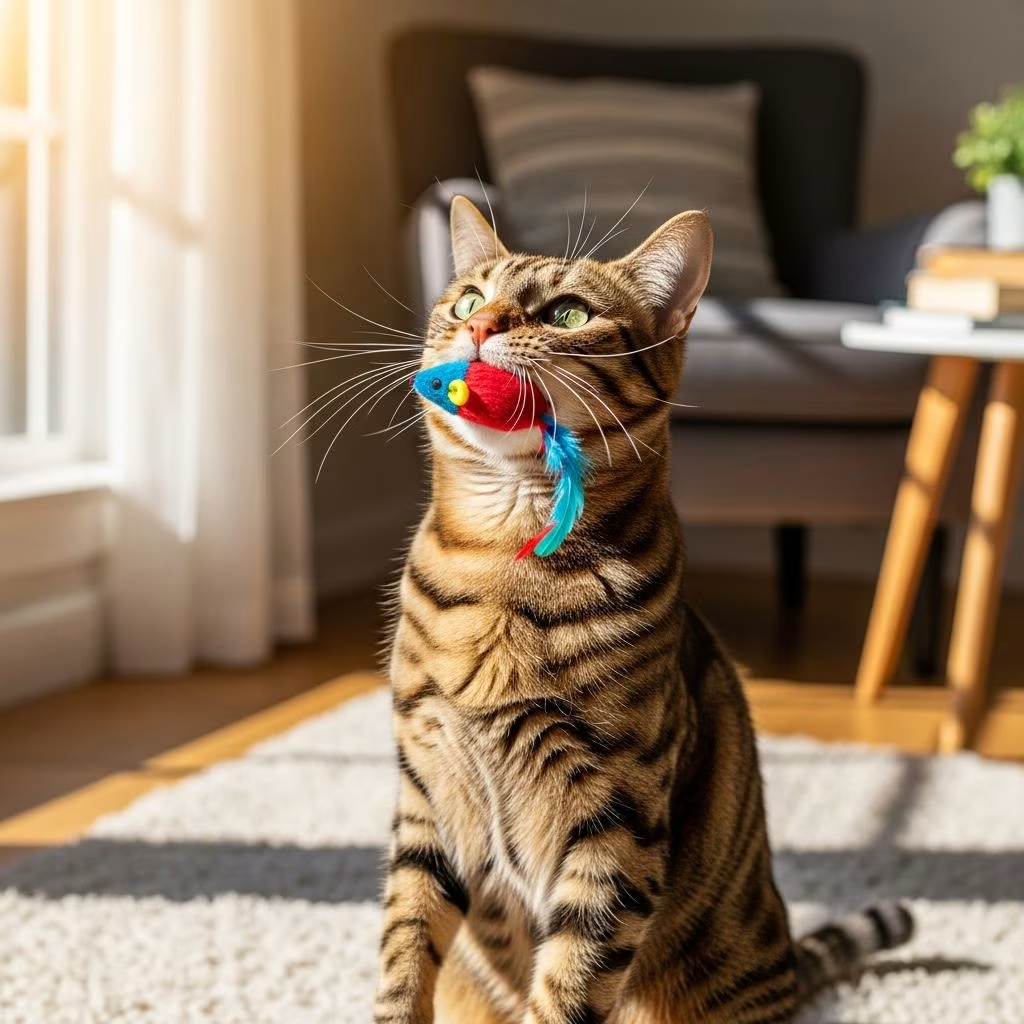
Cats frequently carry toys to their owners, dropping them expectantly at feet or on beds. This behavior stems from deep-rooted instincts mimicking wild survival tactics, combined with domesticated emotional expressions toward trusted companions.
The Evolutionary Roots of Toy Presentation
Domestic cats descend from solitary hunters like the African wildcat, where capturing prey ensured survival. Today, toys substitute for live quarry, allowing felines to practice essential skills. When a cat delivers a toy, it reenacts bringing kills back to a safe den, viewing the home as a secure base.
In the wild, mother cats teach kittens by carrying dead prey, encouraging them to pounce and eat. Adult cats extend this to family members, including humans, as a teaching or sharing gesture. This instinct persists despite generations of domestication, highlighting how play fulfills predatory drives.
Play as a Gateway to Stronger Bonds
Interactive play ranks high in cat preferences, often surpassing food or solo toys in appeal. Cats initiate games by presenting toys, signaling a desire for engagement. Studies show frequent play correlates with higher quality-of-life scores and closer guardian relationships.
- Play initiation by cats boosts mutual trust.
- Guardians who join in report improved cat behavior during withheld play periods.
- Diverse toys prevent habituation, sustaining interest.
Toys mimicking prey—those that dart, chirp, or flutter—excite hunting responses most effectively. Tossing such items erratically simulates real pursuit, tiring cats mentally and physically while forging companionship.
Affection Through Feline “Gifts”
Unlike overt dog displays, cat love appears subtle. Dropping a toy acts as a heartfelt offering, akin to sharing spoils with pride members. Cats perceive owners as extended family, gifting “prey” to express care and inclusion.
This mirrors wild group dynamics where successful hunters provision weaker members or offspring. For pet cats, it’s a profound trust indicator: they deem you worthy of their hard-won “catch.” Responding positively reinforces this emotional tie.
When Toys Signal Maternal Drives
Females often exhibit nurturing by transporting toys mouth-agripped, meowing as if calling kittens. Even spayed or unmated, hormonal echoes trigger this. Toys become surrogate young, carried to safe spots like beds or bowls for “protection.”
Males display it less but may do so during high-energy phases. Observing context—nighttime rituals or stress events—reveals protective instincts at play. Providing soft, kitten-sized toys can channel this harmlessly.
Boredom, Stress, and Attention Needs
| Trigger | Behavior Sign | Solution |
|---|---|---|
| Boredom | Frequent toy drops, excess energy | Enrich environment with puzzles, rotations |
| Stress/Anxiety | Increased presentations, vocalizing | Calming aids, routine play sessions |
| Attention-Seeking | Drops during idle times | Scheduled interactions, ignore demands |
Understimulated cats resort to toy parades for fun. Boredom busters include wand toys or automated movers. Stress amplifies this as self-soothing; recent changes like moves prompt more “gifts.”
Attention bids peak evenings when owners relax. Engaging briefly then redirecting prevents reinforcement of needy habits. Multi-cat homes see competition, with toys marking territory or soliciting exclusive play.
Decoding Toy Choices and Locations
Cats select favorites based on “prey” simulation: fuzzy mice evoke rodents, feathered wands birds. Placement matters—food bowls become “nests” for caching, instinctually safe from rivals.
Bed deposits signal nighttime bonding or guarding. Kleptomania traits lead some to hoard socks alongside toys, gathering instincts at work. Understanding preferences tailors better playthings.
How to Respond to Your Cat’s Offerings
- Engage Enthusiastically: Toss the toy, mimic prey death throes—praise captures.
- Rotate Inventory: Introduce novelties weekly to combat habituation.
- Set Boundaries: Night drops? Gently return toy to play area.
- Monitor Excess: Overdoing suggests vet check for anxiety or health issues.
- Foster Independence: Solo toys like balls encourage self-play.
Consistent responses build rituals, enhancing welfare. Play 15-20 minutes daily, ideally dusk, aligning with crepuscular peaks.
Health and Welfare Insights
Regular toy interactions combat obesity, sharpen reflexes, reduce stress hormones. Peer-reviewed data links playfulness to welfare metrics, with guardians noting behavioral shifts sans play.
Excessive fixation—carrying one toy nonstop—may indicate separation anxiety, especially solo-raised cats bonding toys as “children.” Consult vets if paired with appetite loss or hiding.
Frequently Asked Questions
Why does my cat meow while carrying toys?
Meowing simulates calling kittens to food or seeks your participation in the hunt. It’s a vocal play cue or maternal call.
Is it bad if my cat brings dead animals instead?
Outdoor cats gift real prey from instinct. Discourage access, reward toys indoors to redirect.
My cat hides toys under furniture—normal?
Yes, caching mimics wild prey storage. Provide hiding alternatives like boxes.
Why only at night?
Nocturnal peaks amplify instincts; your presence offers interaction.
Should I throw away chewed toys?
Inspect for hazards, but favorites hold emotional value—replace gradually.
Enhancing Play for Lasting Connection
View toy presentations as privileged invitations into your cat’s world. By participating, you honor ancestral drives while nurturing modern companionship. Invest in quality toys, observe patterns, and play proactively—your cat’s quirky gifts evolve into shared joy.
References
- The Feline Gift-Giving Phenomenon: Why Does My Cat Bring Me Toys — PetLibro. 2023. https://petlibro.com/blogs/all/the-feline-gift-giving-phenomenon-why-does-my-cat-bring-me-toys
- Why Does My Cat Carry a Toy Around & Meow? — Kitty Help Desk. 2023. https://www.kittyhelpdesk.com/help-desk/why-does-my-cat-carry-a-toy-and-meow
- Why Do Cats Bring You Gifts? — PetMD. 2024-01-15. https://www.petmd.com/cat/behavior/why-do-cats-bring-you-gifts
- Cats just want to have fun: Associations between play and welfare in domestic cats — PMC (Peer-reviewed). 2024. https://pmc.ncbi.nlm.nih.gov/articles/PMC10936385/
- 10 Reasons Why Cats Put Toys in Food or Water Bowls — Cats.com. 2023. https://cats.com/why-cats-put-toys-in-food-or-water-bowls



