

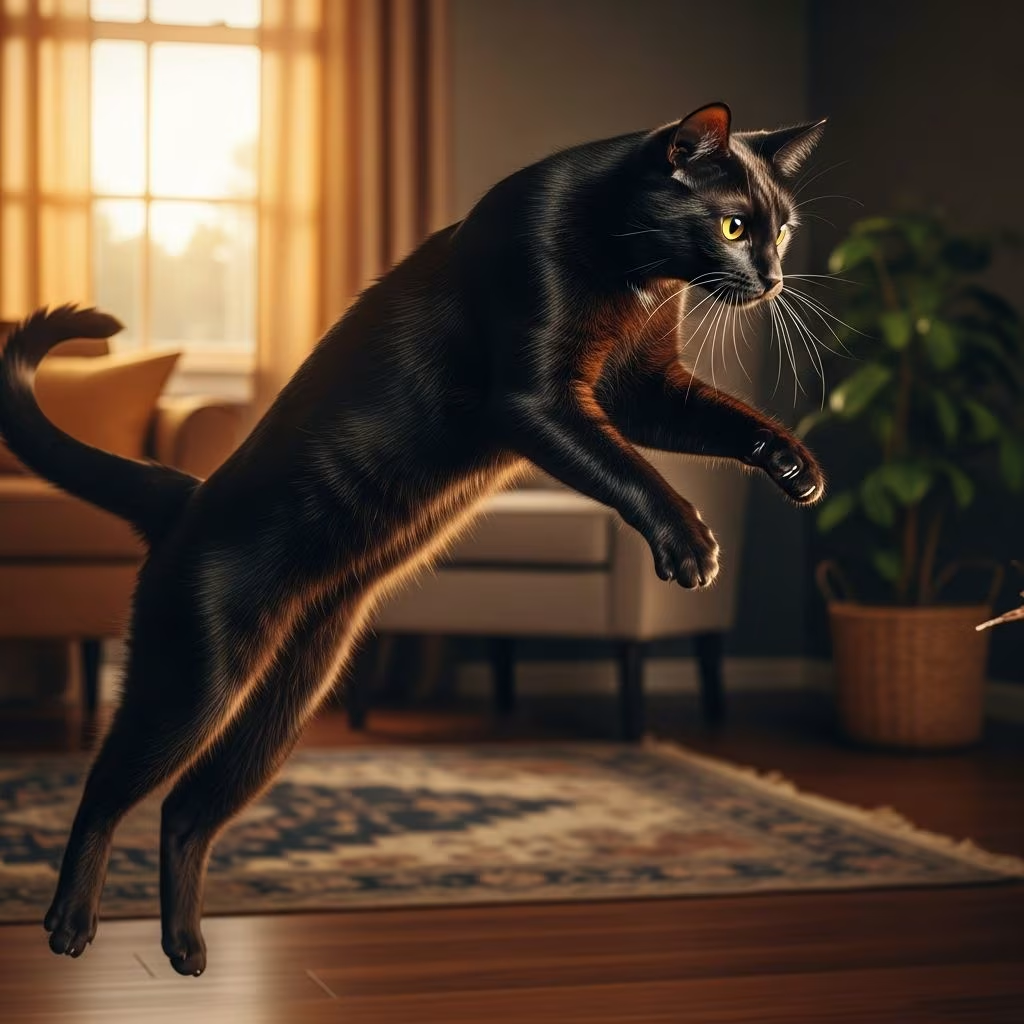
Cats pounce as a core expression of their predatory heritage, blending survival skills with domestic playfulness. This behavior, seen in kittens and adults alike, serves multiple purposes from skill-building to emotional release.
The Evolutionary Roots of Feline Pouncing
Domestic cats descend from wild ancestors who relied on stealthy stalking and explosive pounces to capture prey efficiently. Even well-fed house cats retain this drive, practicing on toys, shadows, or unsuspecting humans to satisfy innate urges.
In the wild, a pounce positions the cat to deliver a fatal neck bite with minimal energy expenditure. At home, this translates to cats “hunting” feather wands or laser dots, tossing them post-capture as if subduing live quarry. This ritual persists because it fulfills biological programming, keeping muscles toned and reflexes sharp regardless of food bowls.
Young kittens especially benefit, using pounces to develop coordination, depth perception, and problem-solving. Leaping at dangling strings hones the precision needed for real hunts, turning play into essential training.
Common Triggers for Pouncing in the Home
Understanding context reveals whether a pounce signals joy or distress. Here are key scenarios:
- Play Initiation: Cats often crouch low, wiggle their hindquarters, then launch at moving feet or hands, viewing owners as prime playmates.
- Boredom Relief: Insufficient stimulation leads to ambushes on legs or furniture, as cats seek outlets for pent-up energy.
- Affection Display: Gentle pounces with retracted claws mimic social bonding in multi-cat groups, signaling “you’re my favorite”.
- Overstimulation Response: Extended petting can trigger sudden attacks if tail twitching or ear flattening is ignored.
These actions reinforce bonds when reciprocated with interactive toys, creating a cycle of mutual engagement.
Decoding Body Language Before the Leap
Cats telegraph intentions through subtle cues. Playful pounces feature dilated pupils, forward ears, and a playful chirp or meow, with claws sheathed to avoid injury.
Aggressive or fearful versions show flattened ears, growling, hissing, or fully extended claws, often paired with piloerection (fur standing on end). The pre-pounce “wiggle”—a rhythmic butt shake—likely balances the body, revving muscles like a coiled spring for optimal launch power.
| Playful Pounce | Aggressive Pounce |
|---|---|
| Relaxed tail, chirps/meows | Thrashing tail, growls/hisses |
| Retracted claws, gentle contact | Extended claws, hard bites |
| Followed by rolling or batting | Escalates to scratches, hiding |
This table highlights distinctions for quick assessment during interactions.
When Pouncing Signals Underlying Issues
Not all pounces are benign. Sudden increases in older cats may indicate hyperthyroidism or pain, prompting veterinary checks.
Fear-driven attacks occur when cats feel cornered by loud noises or unfamiliar guests, using pounces defensively alongside swats. Environmental stressors like vacuum cleaners can agitate felines into redirected aggression.
Play aggression escalates if kittens aren’t socialized properly, leading to hard bites during human games. Multi-pet homes see interspecies pounces as invitations or dominance bids, potentially sparking fights.
Safe Ways to Channel Pouncing Energy
Redirect instincts with targeted enrichment:
- Interactive Toys: Feather wands, mouse-shaped kickers, and laser pointers mimic prey movement, satisfying hunt cycles.
- Daily Sessions: 15-20 minutes twice daily prevents boredom-fueled ambushes.
- Enrichment Zones: Cat trees, window perches, and puzzle feeders build jumping skills safely.
- Training Techniques: Distract mid-stalk with treats or toys; never punish, as it heightens anxiety.
For aggressive cases, consult vets to rule out health issues before behaviorists intervene.
Age-Specific Pouncing Patterns
Kittens: Learning Through Leaps
Kittens pounce relentlessly to master motor skills, swatting siblings in roughhousing that builds bite inhibition. Provide soft toys to focus energy away from hands.
Adults: Refined Hunters
Mature cats pounce with precision, often on shadows or socks, maintaining physical fitness.
Seniors: Monitoring Changes
Declining pounces may signal arthritis; sudden surges warrant thyroid screenings.
Building a Pounce-Proof Household
Prevent unwanted attacks by avoiding triggers: freeze motion during ambushes, use deterrents like double-sided tape on furniture, and schedule play before high-energy times like dawn.
Foster multi-cat harmony with separate resources and supervised intros, reducing territorial pounces.
FAQs on Cat Pouncing
Why does my cat pounce on me at night?
Nocturnal crepuscular rhythms amplify energy; evening play drains reserves.
Is pouncing on feet normal?
Yes, it imitates small prey; wear socks or redirect to toys.
How to stop aggressive pouncing?
Increase enrichment, ignore demands, and vet-check for issues.
Do all cats pounce?
Most do, varying by personality and breed; Bengals and Abyssinians excel.
Can pouncing harm kittens?
Gentle play is fine; separate overzealous litters.
Expert Insights on Feline Dynamics
Veterinarians emphasize daily interaction for emotional balance, noting understimulated cats channel instincts inappropriately. Toys simulating prey extend play, bonding owners and pets.
References
- 4 Reasons Your Cat Loves to Pounce on You — Kinship. 2023. https://www.kinship.com/cat-behavior/reasons-your-cat-loves-to-pounce-on-you
- Stalking and Pouncing in Cats: Reasons and Solutions — Petcube. 2023. https://petcube.com/blog/cat-pouncing/
- Cat Pouncing Behavior — All Animals Veterinary Hospital. 2024. https://www.allanimalsvet.com/cat-pouncing-behavior/
- What Does It Mean If Your Cat Pounces or Stalks You? — Pets4Homes. 2023. https://www.pets4homes.co.uk/pet-advice/what-does-it-mean-if-your-cat-pounces-on-you-or-stalks-you.html
- Understanding Cat Play Behavior: Signs of Aggression vs. Healthy Play — Repounce. 2024. https://repounce.com/blogs/news/understanding-cat-play-behavior-signs-of-aggression-vs-healthy-play



