

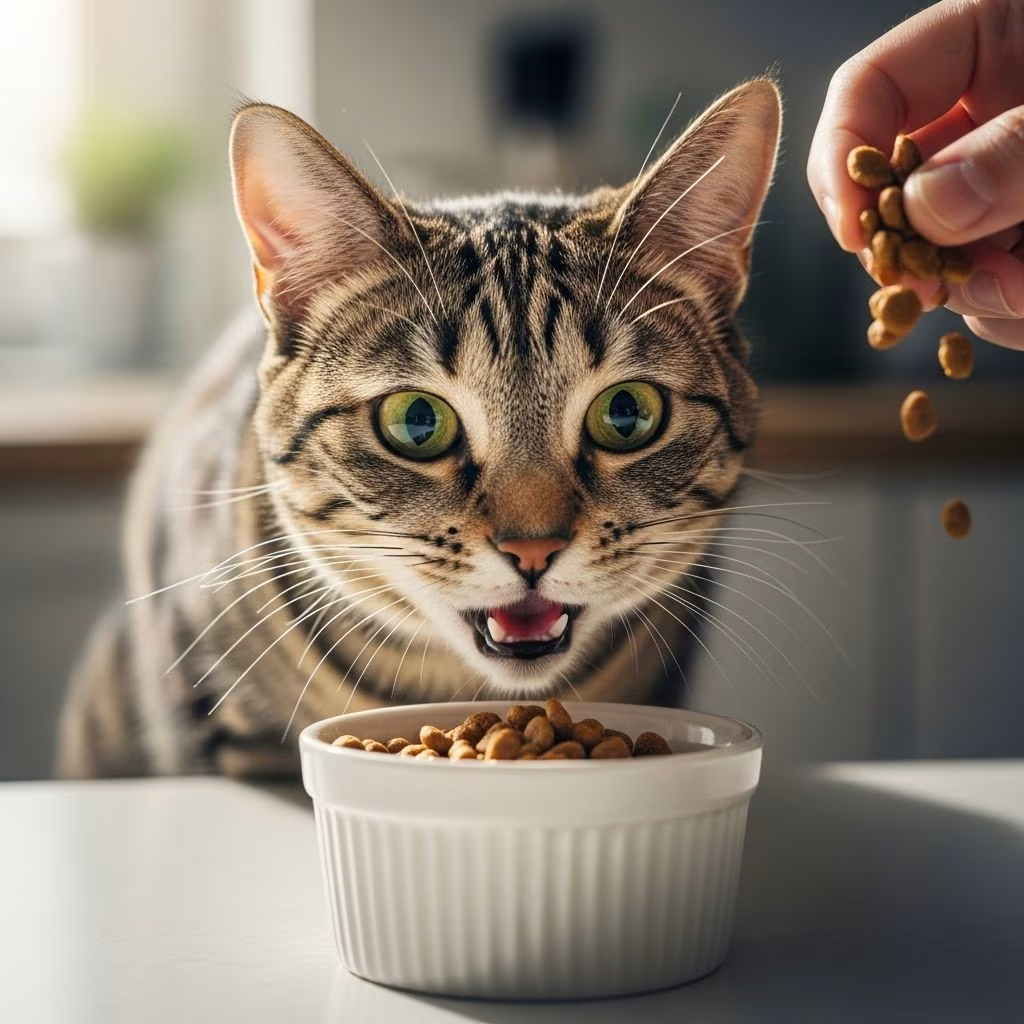
Cats are notorious for their vocalizations, especially around mealtime. That piercing meow as you approach with their food bowl isn’t just random noise—it’s a complex blend of instinct, learned behavior, and communication tailored to their human companions. Understanding why cats meow when they see food coming can help you strengthen your bond and ensure your feline friend’s well-being.
This behavior stems from their evolutionary history as solitary hunters, where securing food was a high-stakes endeavor. In the wild, cats didn’t have reliable meal schedules, so vocalizing to solicit food from mothers or companions was a survival tactic. Domestic cats retain this trait, meowing primarily at humans rather than other cats, as they’ve adapted their communication to manipulate us effectively.
The Evolutionary Roots of Feline Meowing
Meowing in cats is largely a product of domestication. Kittens meow to their mothers for milk and attention, but adult cats in the wild rarely vocalize to each other for food. Instead, feral cats rely on silent hunting and body language. House cats, however, have refined meowing into a tool specifically for humans, with studies showing they adjust their meows’ pitch and duration to elicit faster responses from us.
When your cat spots the food bag or hears the can opener, their survival instincts kick in. Certified cat behaviorist Mieshelle Nagelschneider explains that cats may perceive even a partially full bowl as insufficient due to anxiety over future meals. Without opposable thumbs, they depend entirely on you, triggering stress responses that manifest as urgent meows. This is particularly evident in cats fed from deep bowls where food piles up around the edges, leaving the center empty and signaling ‘danger’ to their primal brain.
Common Reasons Cats Meow at Mealtime
Several factors contribute to this excited vocalization. Here’s a breakdown:
- Survival Anxiety: Cats worry about food scarcity. Even with food visible, they meow to ensure a steady supply, rooted in their inability to self-feed.
- Whisker Fatigue: Deep or narrow bowls rub against sensitive whiskers, causing discomfort (whisker fatigue). Veterinarian Sarah Wooten, DVM, notes this overstimulation leads to avoidance of remaining food and anticipatory meowing.
- Attention-Seeking: If meowing previously prompted a response—like petting or extra treats—cats learn to repeat it. IAABC consultant Ingrid Johnson highlights how simple acknowledgment reinforces the behavior.
- Boredom and Lack of Stimulation: Wild cats hunt 24 small prey items daily. Bowl-feeding bores them, prompting meows for more engaging ‘hunts’ via puzzles or scatter-feeding.
| Reason | Symptoms | Solution |
|---|---|---|
| Survival Instinct | Meows before bowl is empty | Scheduled meals, puzzle feeders |
| Whisker Fatigue | Avoids edges of food | Wide, shallow bowls |
| Attention | Meows intensify with response | Ignore vocalization, reward quiet |
| Boredom | Meows at full bowl | Enrichment toys, varied feeding |
Is Meowing at Food Normal? When to Worry
Occasional meows are normal, reflecting excitement or mild anxiety. However, excessive or sudden meowing warrants attention. The San Diego Humane Society advises ruling out medical issues like hunger from inadequate diet, pain, or distress, especially if paired with weight loss or lethargy. Healthy adults hunger every 8-10 hours, aligning with their crepuscular (dawn/dusk active) nature.
Sudden changes could indicate hyperthyroidism, dental pain, or cognitive decline in seniors. Consult a vet if meowing disrupts sleep or persists despite interventions. Dr. Wooten recommends vet checks for any feeding habit shifts.
How to Stop Excessive Meowing at Food
Managing this behavior requires consistency and enrichment. Start by addressing root causes:
- Optimize Feeding Setup: Switch to wide, ceramic or glass bowls to prevent whisker fatigue. Elevate bowls for comfort.
- Ignore Attention-Seeking: Nagelschneider advises completely ignoring meows— no talking, eye contact, or feeding until quiet. Preempt by refilling bowls proactively.
- Incorporate Enrichment: Use puzzle feeders, treat balls, or scatter kibble to mimic hunting. Johnson suggests this satisfies instincts and reduces boredom meows.
- Adjust Schedule: Feed 3-4 small meals daily instead of free-feeding or twice-daily. Automatic feeders prevent ‘demand’ meowing.
- Play Before Meals: 10-15 minutes of interactive play tires them out, making mealtime calmer.
For nighttime meowing, provide pre-bed enrichment like puzzle meals. This curbs hunger-driven wake-ups.
Understanding Cat Communication Beyond Meows
Meowing is just one tool. Cats also purr for contentment, chirp at prey, and growl in threat. At mealtime, tail flicks signal impatience, while slow blinks convey trust. Learning these cues enhances your response.
Breeds like Siamese are genetically more vocal, but environment plays a larger role. Indoor cats may meow more due to pent-up energy.
Expert Tips for a Happier Mealtime
- Rule out health issues first.
- Observe patterns: Is it bowl-specific or general hunger?
- Enrich daily: Rotate toys, provide perches, cat TV (bird feeders).
- Use positive reinforcement: Treat quiet sitting at mealtime.
- Monitor weight: Adjust portions to prevent obesity from overfeeding responses.
Frequently Asked Questions (FAQs)
Why does my cat meow at a full food bowl?
Your cat may experience whisker fatigue, boredom, or survival anxiety, mistaking the bowl’s edges for emptiness. Switch to wider bowls and add enrichment.
Should I ignore my cat’s food meows?
Yes, if attention-seeking. Wait for silence before feeding to extinguish the behavior.
Is excessive meowing a sign of illness?
It can be—check for pain, hunger, or thyroid issues with a vet, especially if sudden.
How often should I feed my cat?
2-4 small meals daily matches their grazing nature, reducing beg-meows.
Do all cats meow for food?
No, but most domestic cats do, especially vocal breeds. Enrichment minimizes it.
Conclusion: Turning Meows into Moments of Joy
By decoding why cats meow when they see food coming, you transform potential frustration into an opportunity for better care. Implement these strategies, and watch your cat’s vocalizations shift from demands to contented purrs. Patience and understanding are key to a harmonious home.
References
- Why Do Cats Think Their Food Bowl Is Empty? — Chewy.com. 2023-05-15. https://www.chewy.com/education/cat/training-and-behavior/why-do-cats-think-their-food-bowl-is-empty
- Behavior Challenges: Excessive Meowing — San Diego Humane Society. 2024-02-10. https://sdhumane.org/resources/behavior-challenges-excessive-meowing/
- Why Does My Cat Meow After Eating? — Centre of Excellence. 2023-11-20. https://www.centreofexcellence.com/cat-meows-after-eating/
- Cat Meowing at Full Food Bowl: Understanding the Behavior — Uahpet. 2024-01-05. https://www.uahpet.com/blogs/post/cat-meowing-at-full-food-bowl-understanding-the-behavior



