

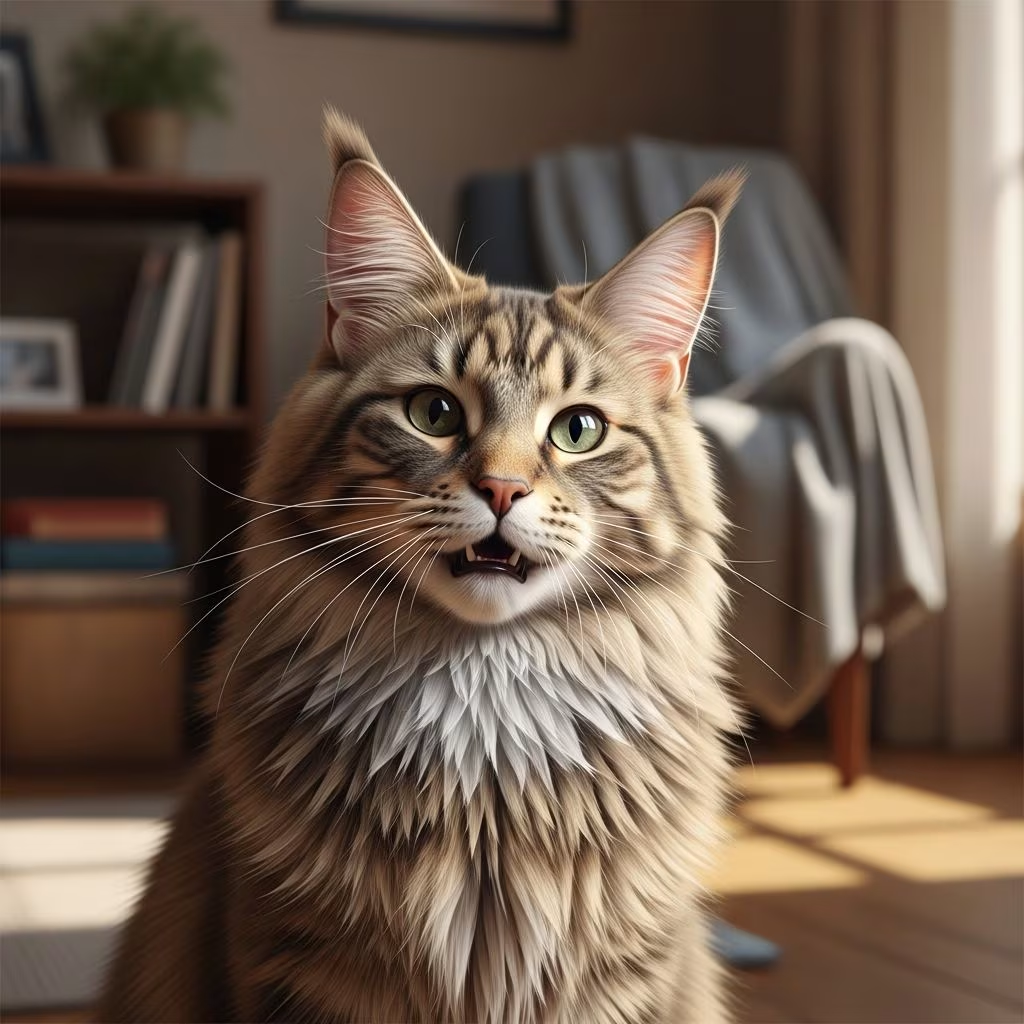
Why Do Cats Meow Back When You Talk to Them?
If you’ve ever engaged in what feels like a conversation with your cat, you’re not alone. Many cat owners find themselves in a delightful exchange where they speak to their feline companion, only to be answered with soft meows and chirps. This phenomenon is completely normal and happens in households around the world. But what does it really mean when your cat meows back at you? Is your cat actually trying to have a conversation, or is something else going on?
Yes, it’s normal for your cat to meow back when you talk to them. They’re probably just making small talk—or they want something. But in some cases, especially if you notice a change in their normal meowing habits, it could be a sign of a health issue. Understanding why your cat communicates this way helps strengthen your bond and ensures you’re attentive to any changes that might indicate a problem.
The Science Behind Cat Vocalizations
Cats are inherently social creatures, and despite their reputation for independence, they have developed sophisticated ways to communicate with humans. Unlike their wild ancestors, domestic cats use meowing primarily to interact with people rather than with other cats. Research shows that cats can distinguish between when their owner is talking to them specifically and when they are just talking in general. Cats are also more responsive to their owner’s voices than those of strangers, which suggests that cats may recognize when their owner is addressing them personally.
Cats communicate through a combination of body language, facial expressions, and vocalizations. When your cat meows back at you, they’re engaging in a form of two-way communication that mimics human conversation patterns. This behavior demonstrates that cats understand the value of reciprocal interaction and have learned that meowing is an effective way to get their human’s attention and response.
Reasons Why Cats Meow at You
1. They’re Making “Small Talk”
Sometimes, your cat meows back at you for the same reason your neighbor reciprocates small talk about the weather—they’re just being friendly. Cats try their best to communicate with their two-legged companions, and engaging in conversation is a sign of affection and social bonding. As social beings, good communication is important to them. When your cat meows back at you, they may simply be acknowledging your presence and engaging in friendly interaction.
This type of small talk is particularly common if you have a naturally vocal cat breed. Cats that engage in this behavior are often demonstrating their trust in you and their desire to maintain a positive relationship. The high-pitched quality of these meows often indicates friendly intent, and some cats will even trill—a sound that resembles slightly high-pitched rolling Rs—which is typically a sign of affection.
2. They’re Hungry
If you’re chatting in the kitchen and your feline friend joins in with some meows, it might be dinnertime. Even if your cat doesn’t understand what you’re saying, they know that humans respond to back-and-forth conversation better than other forms of communication like tail twitches or body language cues. Cats learn through experience that meowing, particularly demand meows that are loud and hard to ignore, gets results when they want something like food or attention.
Food-motivated meows are typically more insistent and frequent than social meows. If your cat meows back when you’re in the kitchen or near their food bowl, they’re likely communicating hunger or anticipation of mealtime. This learned behavior demonstrates your cat’s intelligence and their ability to manipulate their environment to get what they need.
3. They Want Attention
OK, so you fed your cat, and they’re still answering your every utterance with meows. It’s possible they want their second favorite thing: attention. Repetitive meowing usually indicates that your cat wants something, and they’re tasking you with providing it. That “something” could be any number of things, including play, petting, or interactive engagement.
Cats are more social than many people realize, and they genuinely enjoy spending time with their humans. When your cat meows back at you repeatedly, consider it an invitation to spend quality time together. An impromptu playtime session, a petting session, or simply sitting down to engage with your cat can satisfy their need for attention and strengthen your relationship.
4. They Like You
If you have a chatty cat, consider it a compliment. Engaging in “conversation” is a sign of affection, especially when the meows are high-pitched and playful. Cats reserve meows for communicating with people, so when your cat chooses to meow back at you, they’re demonstrating that they view you as worthy of their vocal attention. This behavior indicates that your cat feels safe, comfortable, and bonded with you.
Some cats are naturally more verbal than others, but regardless of their baseline talkativeness, when they meow in response to you, it’s a form of engagement. Trilling, in particular, is often done by mother cats towards their young, and with humans, it’s a clear sign of affection and maternal-like care from your feline friend.
5. They’re a Chatty Cat Breed
Some cat breeds are naturally more talkative than others. Siamese cats are known to be particularly vocal, so expect quite a bit of “back talk” and loud meows from these famously verbose furry friends. Siamese cats are intelligent and social, and they often crave attention from their pet parents. They’re known for being vocal and affectionate, which means meowing is just part of their personality.
Other vocal breeds include Bengals, Tonkinese, and Oriental cats. If you have one of these breeds or a cat that appears to be a mix of vocal bloodlines, constant meowing may simply be their natural communication style. Understanding your cat’s breed tendencies can help you appreciate their chattiness as a feature rather than a bug.
6. They’re in Pain
Not all meowing is positive. While most cats have the gift of gab or remain mostly quiet, a sudden change in meowing patterns can indicate a health concern. If your normally quiet kitty starts meowing or your cat is vocalizing more often, begins excessive meowing, or yowls, it’s time to get suspicious and consider pain as a cause.
There is a pretty big range from mostly silent cats to quite chatty ones, but if you notice a significant deviation from your cat’s normal behavior, pain, illness, or cognitive dysfunction could be the culprit. Excessive meowing, particularly if it sounds panicked or is accompanied by other signs of distress, warrants immediate veterinary attention.
Understanding Different Types of Cat Meows
Not all meows are created equal. Cats have developed a sophisticated vocabulary of meows, each with different meanings and purposes. Understanding these distinctions can help you better interpret what your cat is trying to communicate.
Short, frequent meows often indicate general conversation or greeting. Longer, more drawn-out meows typically signal a request or demand. High-pitched meows usually convey friendliness and positive emotion, while lower-pitched meows or yowls can indicate distress, frustration, or pain. Some cats also make chirping or trilling sounds, which are signs of affection and excitement.
When your cat meows back at you specifically, pay attention to the tone, pitch, and context. Is your cat’s body language relaxed with a slowly blinking gaze? That’s a good sign they’re engaged in friendly communication. Are their ears back, tail puffed, or body tense? These could indicate fear or discomfort requiring your attention.
Meowing and Cat Health: When To Be Concerned
While it’s normal for cats to meow back when you speak to them, some meowing-related behaviors are cause for concern. If you notice that your cat is meowing more, meowing less, or meowing differently than usual, it’s time to make an appointment with your veterinarian. Pain, illness, or cognitive dysfunction could be causing the behavior change.
Additionally, most cats are afraid of loud noises, so they prefer a lower volume environment. If you notice your cat meowing excessively in response to your normal voice volume, or if they seem distressed by sounds that previously didn’t bother them, this could indicate hearing changes or anxiety issues that warrant professional evaluation.
Age-related cognitive dysfunction in senior cats can also lead to increased vocalization, particularly at night. If your aging cat has suddenly become very vocal or confused about meowing at inappropriate times, consult your veterinarian about potential cognitive decline.
How to Respond to Your Cat’s Meows
Now that you understand why your cat meows back at you, the question becomes: how should you respond? The key is to respond consistently and thoughtfully to your cat’s vocalizations. When you acknowledge your cat’s meows with your own response, you’re reinforcing that communication works and strengthening your bond.
If your cat is meowing for food, ensure they’re being fed on a regular schedule and that portions are appropriate. If they’re seeking attention, try to set aside dedicated playtime or petting sessions. If your cat seems to simply want to chat, enjoy the interaction—it’s a special form of affection many cats don’t share with everyone.
However, be mindful not to reward excessive meowing with immediate attention, as this can reinforce demanding behavior. Instead, respond to your cat’s meows appropriately based on their needs, and ignore attention-seeking meows when they’re becoming excessive or disruptive.
Frequently Asked Questions
Q: Why does my cat meow when I sneeze?
A: Your cat may meow back in response to sudden loud noises or vocalizations like sneezes. Some cats also seem to be acknowledging your vocalization and responding with their own. This is typically not a cause for concern and is just your cat engaging in reciprocal communication.
Q: Is it bad if my cat meows constantly?
A: Constant meowing can depend on your cat’s breed and personality. If it’s normal for your cat, it’s just their communication style. However, if there’s a sudden increase in vocalization, this could indicate hunger, attention-seeking, stress, or health issues. Monitor the context and consult your vet if concerned.
Q: Do cats understand what I’m saying when I talk to them?
A: Cats don’t understand human language in the way other humans do. However, they recognize certain words, learn their names, and respond to tone of voice. They’re more focused on your emotional state and the attention you’re giving them than the actual words you’re saying.
Q: Should I worry if my cat stopped meowing back?
A: If your normally vocal cat has suddenly stopped meowing, it could indicate a health issue, pain, stress, or hearing loss. A sudden change in vocalization patterns warrants a veterinary check-up to rule out underlying health concerns.
Q: What does it mean when a cat trills at you?
A: Trilling is a sign of affection and positive emotion in cats. It’s a sound resembling high-pitched rolling Rs, often made by mother cats to their kittens. When your cat trills at you, they’re showing warmth, affection, and comfort in your presence.
References
- Why Cats Meow Back at You — Catster. 2024. https://www.catster.com/cat-behavior/why-do-cats-meow-back-at-you/
- Why Cats Meow Back When You Talk to Them — Hepper. 2024. https://articles.hepper.com/why-cats-meow-back-when-talking-to-them/
- Cat Communication and Behavior — American Veterinary Medical Association (AVMA). 2024. https://www.avma.org/resources-tools/pet-owners/petcare/cats
- Feline Vocalizations and Health — International Society of Feline Medicine. 2023. https://www.isfm.net/
- Understanding Cat Meows — Whiskers Paws Love. 2024. https://whiskerspawslove.org/article/why-do-cats-meow-back-when-you-talk-to-them/



