

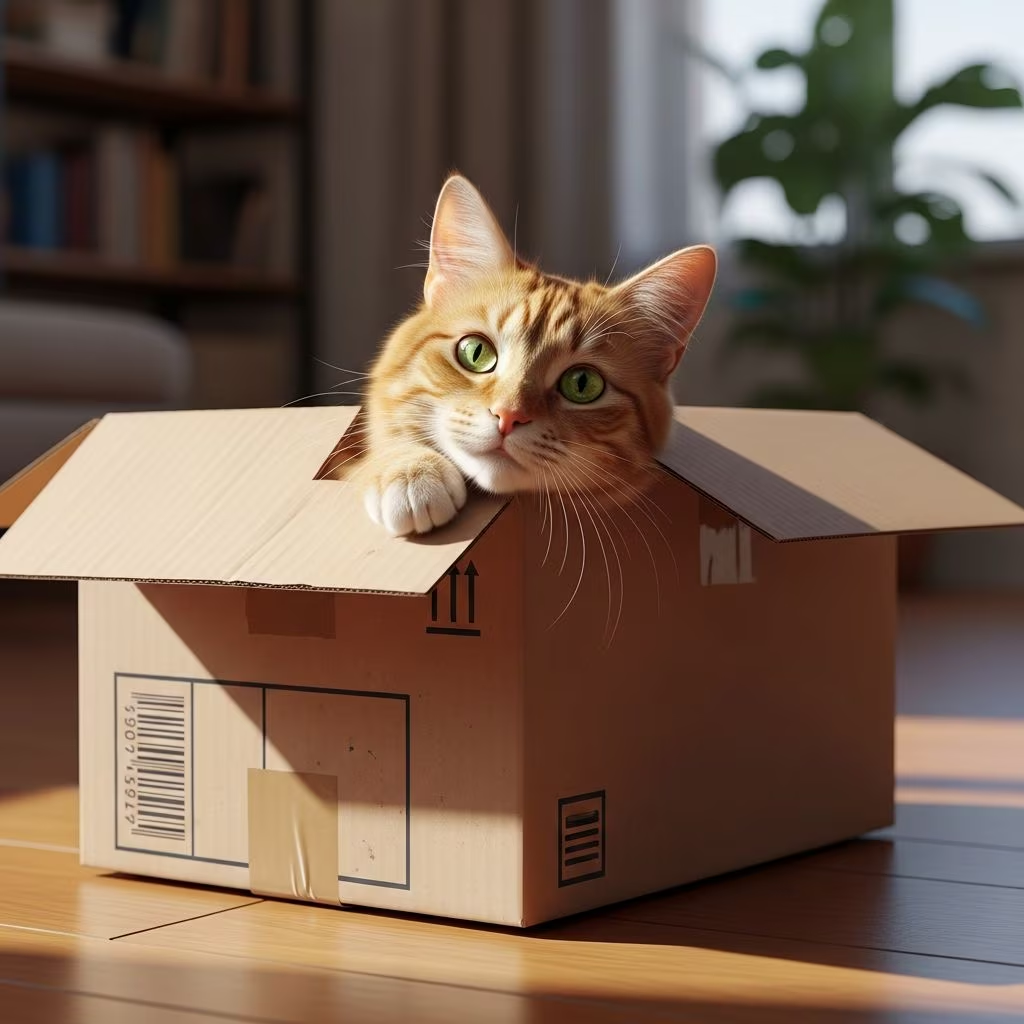
If you have ever brought home a new purchase in a cardboard box only to find your cat claiming it as their personal territory within minutes, you are not alone. This quirky behavior is nearly universal among feline companions, yet many cat owners never stop to consider the underlying reasons behind this seemingly simple attraction. The truth is that cardboard boxes serve multiple critical functions in a cat’s daily life, from providing psychological comfort to fulfilling instinctual needs. Understanding these motivations can help you better support your cat’s wellbeing and create an enriched home environment.
The Instinctive Need for Refuge and Security
At the core of feline behavior lies a fundamental drive to locate safe spaces where cats can observe their surroundings without exposing themselves to potential threats. Even the most confident household cat retains ancestral instincts that view open spaces as vulnerable territory. When a cat enters a cardboard box, they experience an immediate sense of control over their environment. The enclosed walls create clear boundaries, limiting the angles from which predators or unwanted visitors can approach, which explains why cats will position themselves strategically within boxes to maintain optimal surveillance capabilities.
This refuge-seeking behavior is not limited to anxious or timid cats. All felines, regardless of temperament, appreciate the psychological benefit of having a dedicated retreat space. In multi-cat households, boxes become particularly valuable as neutral zones where individual cats can decompress and escape social tensions. The box essentially functions as a personal sanctuary that broadcasts to other household members: “This is my space, and I am safe here.”
Thermal Regulation and Physical Comfort
Cats maintain a higher baseline body temperature than humans, ranging from 100 to 102.5 degrees Fahrenheit compared to the human norm of 98.6 degrees. This biological reality means cats are constantly seeking warm microclimates within their homes. Corrugated cardboard, with its layered construction and air pockets, functions as an excellent natural insulator by trapping body heat and minimizing heat loss. When a cat curls up inside a cardboard box, they create a personal warming chamber that maintains their elevated temperature with minimal physical effort.
This thermal benefit becomes especially pronounced during cooler months or in homes with limited heating. Many cat owners have observed their felines gravitating toward cardboard boxes during winter or in climate-controlled homes where temperatures remain cool. The combination of cardboard’s insulating properties and the cat’s own body heat creates a cocoon-like environment that rivals commercial heating beds in terms of comfort and effectiveness.
Stress Reduction Through Environmental Control
Veterinary research has documented the profound impact of hiding spaces on feline stress levels. A notable 2014 study demonstrated that cats introduced to new environments experienced significantly lower stress levels when provided with cardboard boxes as hiding refuges, compared to cats without such accommodations. These cats not only showed measurable physiological indicators of reduced stress but also adapted to their new surroundings faster and with greater behavioral confidence.
This principle has practical applications in high-stress environments such as animal shelters and veterinary clinics. When caregivers place cardboard boxes on their sides within these settings, cats gain the dual benefit of a ground-level hiding space and the option to perch on top of the box for elevated observation. This combination allows cats to choose their comfort level based on their current anxiety state: hiding when feeling overwhelmed, and monitoring from above when feeling more secure.
The stress-reduction benefit extends to territorial marking as well. Cats mark their environment with pheromones by rubbing their facial glands on surfaces, including cardboard boxes. This scent-marking behavior transforms an unfamiliar or generic box into a personalized possession, reinforcing the cat’s sense of ownership and security within their home.
Exploration, Play, and Predatory Engagement
Despite their reputation for aloofness, cats are fundamentally curious animals driven by exploration and play. A simple cardboard box transforms into an interactive playground that stimulates multiple dimensions of feline cognition and instinct. The textured surface of cardboard invites scratching, clawing, and gnawing—all behaviors that help cats maintain claw health, mark territory, and satisfy tactile needs. The sound produced by scratching cardboard is particularly satisfying to many cats, with some studies suggesting that 62 percent of cats respond enthusiastically to this acoustic stimulus.
Beyond surface scratching, boxes present opportunities for stalking and ambush behavior that mirrors hunting in the wild. Cats naturally position themselves in boxes to observe potential “prey” moving past their position, practicing the predatory techniques they would employ in natural hunting scenarios. Cut-out holes in boxes further enhance this dynamic, allowing cats to pounce through openings at hands, feet, or toys. For cats living indoors without access to small prey, cardboard boxes provide essential outlets for channeling hunting energy in appropriate and enriching ways.
Boxes as Multi-Purpose Enrichment Tools
The versatility of cardboard boxes as enrichment objects extends far beyond their standard upright configuration. Boxes can be positioned on their sides to create tunnel-like passages, stacked to form climbing structures, or modified with multiple entry and exit points to transform them into complex play environments. This adaptability means a single cardboard box can serve different purposes throughout its lifecycle, maintaining novelty and interest over extended periods.
Many cat owners experiment with modifying boxes by cutting windows, adding scratching pads, or placing toys inside. These modifications leverage the cat’s natural curiosity and problem-solving abilities, encouraging them to engage more deeply with the enrichment object. Additionally, boxes can be nested within each other or positioned to create obstacle courses, challenging cats physically and mentally.
Special Considerations for Different Life Stages
While cardboard boxes benefit cats of all ages, specific adaptations can optimize comfort for different life stages. Senior cats, in particular, benefit from boxes with lower entry points or shallow openings that accommodate reduced flexibility and mobility. Larger boxes with gentle inclines or modified edges prevent elderly cats from straining during entry and exit.
Kittens and younger cats may prefer boxes with multiple holes and complex internal structures that support their higher activity levels and exploratory drives. Middle-aged cats typically appreciate standard configurations that balance security with easy accessibility. Recognizing these age-related preferences allows pet owners to select or modify boxes that precisely meet their individual cat’s needs.
Safety Considerations When Providing Cardboard Boxes
While cardboard boxes are generally safe for cats, several precautions ensure optimal safety and hygiene. Before presenting a box to your cat, remove all packing materials including plastic, Styrofoam, bubble wrap, and tissue paper. Similarly, eliminate all fasteners such as staples, twist ties, tape, and nails that could injure your cat’s skin, paws, or mouth if accidentally ingested.
Inspect boxes for any chemical coatings, printing inks, or residual pesticides that may have been applied during manufacturing or storage. Boxes previously used for food storage, especially those treated with anti-fungal or antimicrobial agents, should be avoided. Additionally, ensure boxes are structurally sound with no sharp edges, splinters, or deteriorated areas that could cause injury.
Regular inspection of boxes your cat actively uses helps identify when they become soiled, damaged, or unsanitary. Cats appreciate clean, fresh boxes, so rotating boxes periodically and replacing those showing significant wear maintains both hygiene and appeal. For cats with health issues or those prone to urinary accidents, replacing boxes more frequently prevents odor accumulation and maintains a sanitary environment.
Creating an Optimal Box Environment
Strategic placement of cardboard boxes throughout your home maximizes their benefit for your feline companion. Position boxes in quiet areas away from high-traffic zones, loud appliances, and windows with excessive outdoor stimulation. Cats prefer boxes located in spaces where they can rest undisturbed while maintaining visual access to common household areas. Avoid placing boxes in direct sunlight for extended periods, as excessive heat can make them uncomfortable despite their insulating properties.
Pairing cardboard boxes with comfortable materials such as blankets, towels, or cat beds enhances their appeal. Some cats appreciate cushioning that provides additional comfort and softness, while others prefer the natural texture of corrugated cardboard. Offering both options allows your cat to choose their preference. Additionally, rotating different boxes periodically introduces novelty and reignites interest in what might otherwise become a familiar object.
Frequency and Preference Distribution Among Cats
Research into feline box preferences reveals consistent patterns in how cats prioritize different cardboard options. Among cat owners surveyed, standard cardboard boxes remain the most popular form, accounting for approximately 72 percent of preferred items. Cardboard tubes and specialized cardboard scratchers comprise secondary preferences, suggesting that while boxes dominate, cats appreciate variety in cardboard configurations.
Individual cats display varying levels of enthusiasm for boxes based on personality, early experiences, and environmental factors. Some cats become devoted box residents, spending hours daily in their favorite hiding spots. Others engage with boxes episodically, using them primarily during periods of stress or when seeking novelty. Understanding your specific cat’s box preferences enables you to provide tailored enrichment that aligns with their behavioral patterns and personality traits.
Practical FAQ Section
How often should I replace my cat’s cardboard boxes?
Replace boxes when they become visibly soiled, damaged, or develop persistent odors. For frequently used boxes, replacement every 2-4 weeks is reasonable. For lightly used boxes, replacement every 4-8 weeks typically suffices. Individual cats’ usage patterns will determine optimal replacement frequency.
Are certain types of cardboard better than others for cats?
Corrugated cardboard with two or three layers provides optimal insulation and durability. Avoid thin, single-ply cardboard that lacks structural integrity or thermal properties. Clean, untreated boxes from reputable sources are preferable to boxes that may contain chemical residues or manufacturing contaminants.
Can I use cardboard boxes as makeshift litter boxes?
While technically possible, dedicated cardboard litter boxes require frequent replacement due to moisture absorption and odor retention. They can serve as temporary solutions or backup options but are not ideal for permanent litter management compared to traditional litter pans.
What if my cat ignores cardboard boxes?
Some cats have less pronounced box preferences, particularly those raised with alternative enrichment options. Providing boxes in strategic locations, introducing novel modifications, or pairing boxes with catnip can increase appeal. If your cat consistently ignores boxes, respect their preferences while continuing to offer other appropriate hiding and enrichment spaces.
Conclusion: The Enduring Appeal of Cardboard Enrichment
Cardboard boxes represent one of the simplest yet most effective enrichment tools available to cat owners. Their multifaceted benefits—encompassing security, comfort, stress reduction, play, and territorial expression—explain their universal appeal among feline populations. By understanding the psychological and physiological motivations driving this behavior, pet owners can better meet their cats’ behavioral and physical needs through strategic box placement and thoughtful environmental enrichment. The humble cardboard box, often overlooked as discarded packaging, transforms into a valuable component of comprehensive feline care and enrichment.
References
- Why Do Cats Like Boxes So Much? Top 7 Reasons — cats.com. 2024. https://cats.com/why-do-cats-like-boxes
- Why You Should Give Your Cat a Cardboard Box — Best Friends Animal Society. 2024. https://bestfriends.org/pet-care-resources/why-you-should-give-your-cat-cardboard-box
- Why Do Cats Like Cardboard Boxes? — Hill’s Pet Nutrition. 2024. https://www.hillspet.com/cat-care/behavior-appearance/why-do-cats-like-cardboard-boxes
- Why Do Cats Love Boxes? Is This Normal? — Chewy Education. 2024. https://www.chewy.com/education/cat/training-and-behavior/behavior-pet-facts-why-do-cats-like-boxes
- Why Do Cats Like Boxes? — Zoetis Petcare. 2024. https://www.zoetispetcare.com/blog/article/why-cats-like-boxes
- Cats love cardboard: How to Keep Your Feline Friend entertained and amused with your leftover cardboard — Cardboard Cat Homes. 2024. https://cardboardcathomes.com/blogs/info/cats-love-cardboard-how-to-keep-your-feline-friend-entertained-and-amused-with-your-leftover-cardboard



