

Why Do Cats Like Running Water: Understanding Your Cat’s Fascination
If you’ve ever turned on a faucet only to have your cat immediately appear, eager to drink from the flowing stream, you’re not alone. Many cat owners witness this seemingly inexplicable behavior daily. Their feline companions show a distinct preference for running water over the still water in their bowls, often ignoring perfectly clean drinking vessels in favor of a dripping tap or fountain. This behavior isn’t random or stubborn—it’s rooted in millions of years of evolutionary biology and sensory preferences that remain hardwired in modern domestic cats.
Understanding why cats like running water requires us to look beyond simple preference and examine the deep biological and behavioral reasons that drive this common feline behavior. From survival instincts inherited from wild ancestors to the sensory stimulation that running water provides, there are multiple compelling explanations for why your cat finds a kitchen faucet more appealing than a ceramic bowl.
The Evolutionary Instinct: Safety and Survival
The primary reason cats prefer running water traces back to their wild ancestors and the survival instincts that have been passed down through generations. In nature, standing water is often a breeding ground for bacteria, parasites, and other contaminants that could make a cat seriously ill. A stagnant puddle or pond presents a significant health risk to wild felines, while running water from streams and rivers is far less likely to harbor dangerous pathogens.
Over thousands of years of evolution, cats developed an instinctive preference for moving water sources. This wasn’t a conscious decision but rather a survival mechanism that benefited those cats who avoided contaminated water. Those with the instinct to seek running water survived longer, reproduced more successfully, and passed this preference to their offspring. Today, even though most domestic cats have access to clean tap water and filtered water bowls, this ancient instinct remains deeply embedded in their behavioral DNA.
Feline behaviorists confirm that cats’ evolutionary wiring makes them naturally suspicious of still water. While domestic cats don’t consciously worry about contamination in their water bowls, the instinctive drive toward moving water remains powerful. Your cat isn’t being difficult when it insists on drinking from a dripping tap—it’s responding to millions of years of evolutionary programming that has taught felines to equate running water with safety and freshness.
Sensory Stimulation: Sound, Sight, and Touch
Beyond evolutionary survival instincts, cats are drawn to running water because of the rich sensory experience it provides. Cats are creatures with highly developed senses, and moving water activates multiple sensory pathways simultaneously.
Visual Appeal
Cats’ eyesight is specifically tuned to detect movement. In the wild, this ability helps them spot prey darting through grass or water. When a cat looks at still water in a bowl, it presents little visual interest—just a flat, reflective surface. Running water, however, creates ripples, reflections, and constant movement that captivates a cat’s attention. The shimmer of flowing water and the visual disturbance it creates trigger the same visual tracking instincts that cats use when hunting. This is why many cats will sit mesmerized by a fountain or watch intently as water flows from a faucet.
Auditory Cues
The sound of water is equally important to a cat’s fascination. Cats possess exceptional hearing, and the trickling, dripping, or splashing sounds of running water trigger their curiosity. These sounds mimic natural streams and water sources from their wild heritage, creating a multisensory experience that still water simply cannot replicate. The acoustic stimulation of running water appeals to the same hearing abilities that help cats detect the movements of potential prey.
Tactile Engagement
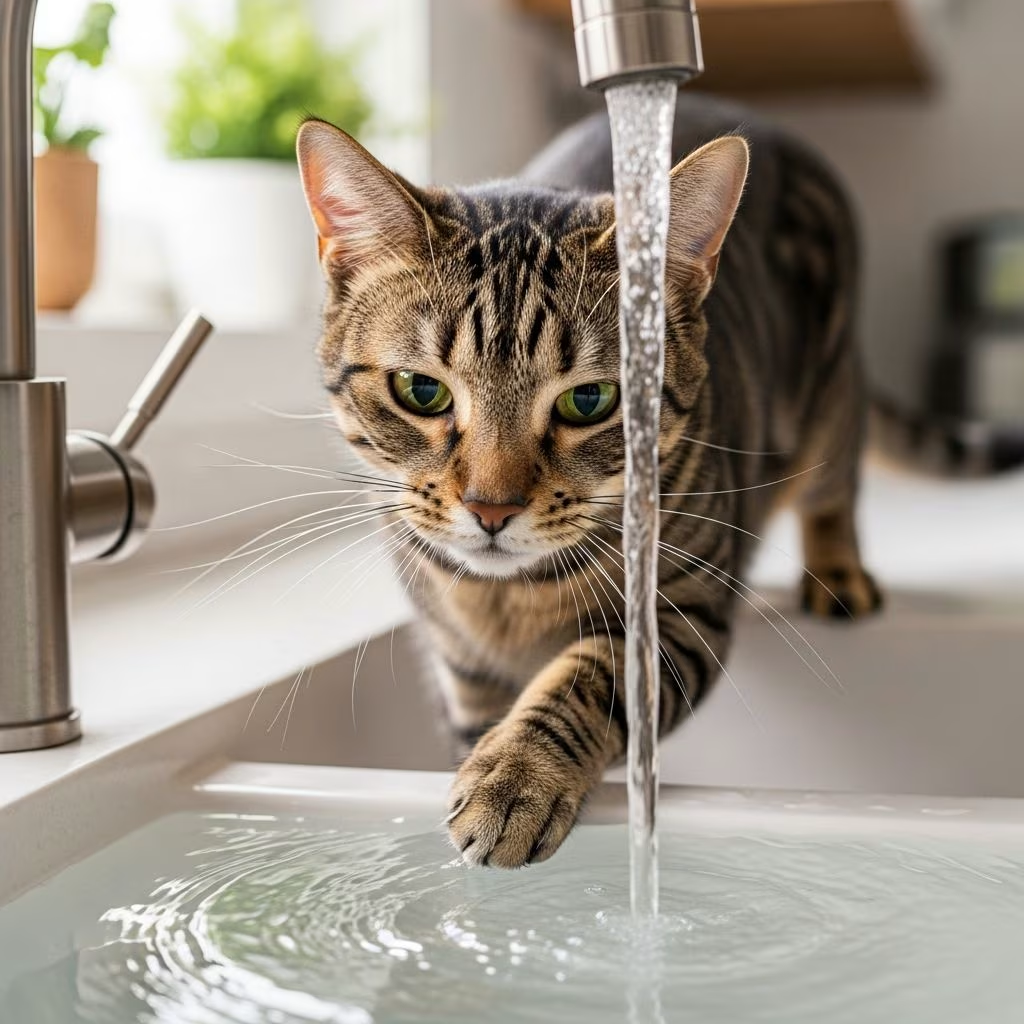
Many cats don’t just drink from running water—they actively engage with it by batting at the stream, placing their paws under the flow, or pawing at the water to make it move. This tactile interaction satisfies their need for physical engagement and play. The touch of moving water on their paws provides sensory feedback that static water cannot offer. For cats, running water represents an interactive experience rather than merely a hydration method.
The Connection to Hunting Instincts
Running water does more than quench a cat’s thirst; it taps directly into their hunting and predatory instincts. Cats are ambush predators, and their entire sensory system evolved to detect, stalk, and capture moving prey. The movement and sound of running water stimulate these same instincts, which is why many cats approach fountains or faucets with the same focused attention they would give to a hunting opportunity.
When a cat plays with running water, batting at the stream or attempting to “catch” droplets, it’s engaging in predatory behavior. This isn’t play in the casual sense—it’s a natural expression of hunting that provides mental and physical stimulation. Even well-fed, domesticated cats retain these ancient predatory drives, and running water provides an outlet for them. Offering your cat access to running water through a fountain or by allowing supervised faucet time can help satisfy these deep behavioral needs.
Common Water-Related Cat Behaviors Explained
Understanding the root causes of running water preference helps explain other common feline behaviors related to water:
Batting at Taps and Dripping Faucets
Many cat owners observe their feline companion perched at the sink, batting at a dripping faucet or waiting impatiently for someone to turn on the tap. This behavior combines multiple motivations: the cat recognizes that the tap produces water (learned behavior), the movement satisfies hunting instincts, and the sensory stimulation provides enrichment. Cats are quick learners and will quickly associate the sound of human activity near the sink with the promise of running water.
Knocking Over Water Bowls
Some cats deliberately tip their water bowls, creating puddles or splashes on the floor. While this can seem destructive, it often represents the cat’s attempt to create movement and make the water more interesting. The cat may be trying to simulate running water by causing the bowl’s contents to slosh and flow. Alternatively, the cat may be expressing frustration with the bowl’s size, depth, or placement, preferring to drink from the resulting puddle where they have more control over the water’s movement.
Playing in Shower and Bath Areas
Though most cats avoid being submerged, many show genuine curiosity about wet sinks, bathtubs, and shower areas. This behavior reflects interest in water movement and the sensory experience rather than a desire to swim. Cats in these environments are engaging in exploratory behavior and environmental enrichment, investigating the fascinating movement and sounds that water creates.
Waiting by the Sink
One of the most endearing behaviors is when a cat sits patiently by the sink, waiting for their human to turn on the tap. This demonstrates both the power of learned associations and the strength of the cat’s preference for running water. Once a cat learns that turning on the faucet produces their preferred water source, they will often signal their desire for this behavior through meowing, pawing, or simply positioning themselves by the sink expectantly.
Health Benefits of Increased Hydration
Beyond behavioral preferences, running water and pet fountains offer genuine health advantages for cats. Proper hydration is critical for feline health, particularly for preventing urinary and kidney issues.
Preventing Urinary and Kidney Problems
Cats are prone to dehydration because they have a naturally low thirst drive compared to other animals. This evolutionary adaptation served them well when their prey provided much of their water intake, but it creates challenges for modern indoor cats fed dry kibble. Chronic dehydration can lead to serious health problems including:
- Urinary tract infections
- Kidney stones
- Chronic kidney disease
- Bladder inflammation
By encouraging increased water intake through running water fountains, owners can help prevent these common and sometimes serious health conditions. Studies have shown that cats who have access to running water drink significantly more than those with only still water bowls, leading to improved hydration and better long-term health outcomes.
Improved Water Quality
Many modern cat water fountains include filtration systems that improve water quality by removing debris, excess minerals, and contaminants. These multi-stage filters can soften hard water by removing minerals like magnesium and calcium that contribute to urinary problems in cats. The combination of movement (which appeals to the cat’s instincts) and improved water quality (which meets the cat’s actual health needs) makes fountains an ideal solution.
Why Some Cats Ignore Their Water Bowls
Understanding the reasons cats prefer running water helps explain why some felines seem to ignore their water bowls entirely:
Taste and Chemical Sensitivities
Cats possess sensitive palates and can detect chlorine and other chemicals in tap water that humans cannot perceive. If your tap water has a strong chemical taste or odor, your cat may refuse to drink from it in a static bowl. Running water can somewhat mask these tastes, and it also allows volatile chemicals to dissipate more readily. Additionally, water left sitting in a bowl can develop unpleasant odors or stale tastes over time, whereas fountains continuously circulate fresh water.
Negative Associations
If a cat has had a negative experience near their water bowl—such as slipping on water, being startled while drinking, or experiencing pain during urination—they may develop an aversion to that location. These negative associations can be strong enough to cause a cat to completely avoid their water bowl. Running water from a different source (like a tap in another room) allows the cat to drink without triggering these negative associations.
Boredom and Novelty
Some cats are simply drawn to novelty and variety. A static bowl may seem boring compared to the dynamic, interactive experience of a dripping tap or fountain. This is particularly true for intelligent, active cats that require more environmental enrichment and mental stimulation.
Solutions and Alternatives to Satisfy Your Cat’s Preferences
If your cat’s obsession with running water is becoming problematic—such as constantly jumping on the sink or demanding access to the faucet—there are several practical solutions:
Pet Water Fountains
The most effective solution is to provide a dedicated pet water fountain. These devices simulate running water in a controlled, convenient manner. Benefits include:
- Continuous circulation that appeals to your cat’s instincts
- Built-in filtration systems that improve water quality
- Encourages higher water intake for better health
- Reduces or eliminates unwanted sink behaviors
- Available in various styles and sizes to suit your home
Training and Behavioral Management
With patience and consistency, you can train your cat to satisfy its water preferences through positive reinforcement. Reward your cat for drinking from the fountain rather than the sink, and gradually reduce access to sink water. This approach requires consistency from all household members but can effectively redirect the behavior.
Water Bowl Placement and Variety
Some cats prefer having multiple water sources in different locations. Try placing several bowls throughout your home and experiment with different bowl types, depths, and materials. Some cats prefer wider, shallower bowls that don’t touch their whiskers while drinking.
Filter and Quality Improvements
If you’re unable to use a fountain, improve the water quality in your cat’s bowl by using filtered water, frequently changing the bowl water, and ensuring the bowl is kept clean and free from food residue.
Understanding Your Individual Cat
While running water preference is nearly universal among cats, individual cats may have specific preferences and behaviors. Some cats become obsessed with water to the point where it interferes with daily life, while others show only mild interest. Factors affecting individual preference include:
- Age (older cats sometimes develop stronger fixations)
- Breed (some breeds with water-resistant coats have ancestral water affinity)
- Health status (medical issues can increase water obsession)
- Environmental enrichment levels
- Previous experiences and learned associations
If your cat’s water obsession seems excessive or is accompanied by other behavioral changes, consult your veterinarian to rule out underlying health issues.
Frequently Asked Questions
Q: Is it safe to let my cat drink from the kitchen faucet?
A: Occasional faucet drinking is generally safe if your water supply is clean and treated. However, if you’re concerned about hygiene or want to discourage the behavior, a pet fountain is a better solution that meets the same instinctual needs.
Q: Do all cats like running water?
A: Most cats show some preference for running water, but the intensity varies. Some cats are relatively indifferent to the distinction, while others become strongly obsessed with obtaining running water.
Q: Will a pet fountain solve my cat’s water obsession?
A: A quality pet fountain addresses many of the reasons cats prefer running water and satisfies most cats’ preferences. It’s the most effective single solution for redirecting water-related behaviors away from sinks and faucets.
Q: Can excessive water interest indicate a health problem?
A: Sudden changes in water-seeking behavior, especially when extreme, can indicate medical issues like diabetes, kidney disease, or thyroid problems. If your cat’s water obsession seems excessive or new, consult your veterinarian.
Q: How often should I change water in a fountain?
A: Most pet fountains should have water changed every 2-3 days, with filters replaced according to manufacturer recommendations, typically every 2-4 weeks depending on the fountain and water quality.
Q: Are there cat breeds that especially like water?
A: Some breeds like the Turkish Van and Bengal have water-resistant coats and ancestral connections to aquatic environments, making them more likely to enjoy water play and potentially have stronger attractions to running water.
References
- Why Cats Love Running Water | Behavioural Fascination & Fixes — Pet Care Shed. 2025. https://petcareshed.com.au/blogs/pet-supplies/why-cats-love-running-water
- Cats and Water: The Mysterious Relationship Explained — Four Paws. 2025. https://www.fourpaws.com/pets-101/cat-corner/cats-and-water
- Why Does My Cat Drink Water From The Sink? — Catit USA. 2025. https://catit.us/blogs/news/why-does-my-cat-drink-water-from-the-sink
- Water Obsessed Cats | Cat Behavior Tips — Rita Reimers. 2025. https://ritareimers.com/cat-behaviors/water-obsessed-cats/
- Cat Keeps Playing with Water Fountain: Understanding the Behavior — UA Pet. 2025. https://www.uahpet.com/blogs/post/cat-keeps-playing-with-water-fountain-understanding-the-behavior



