

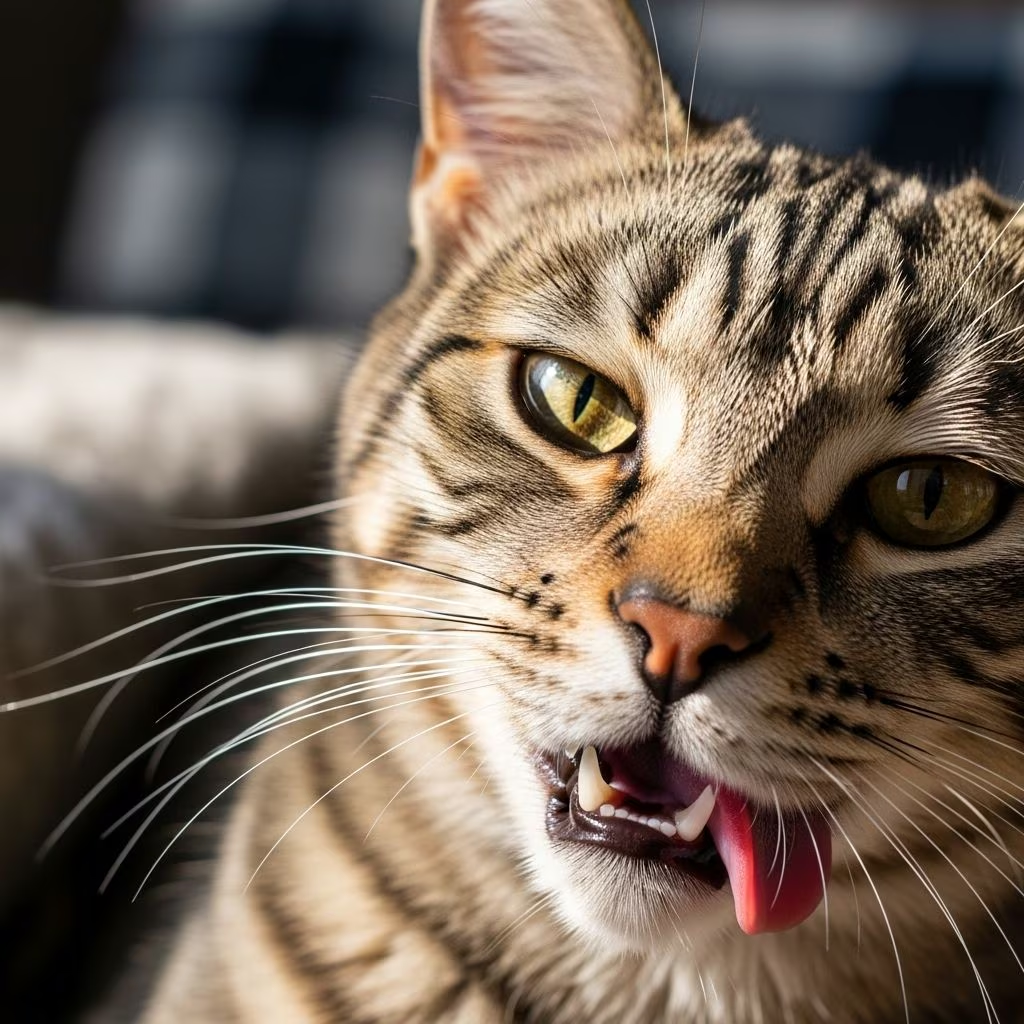
One of the most puzzling yet endearing behaviors in cats is when they lick you affectionately, only to follow up with a sudden bite. This “lick then bite” pattern leaves many cat owners wondering if they’ve done something wrong. In reality, it’s a natural expression rooted in feline instincts, social bonding, and sensory responses. Understanding this behavior helps strengthen your bond with your cat and prevents misunderstandings that could lead to scratches or stress.
Cats use licking as a primary form of communication, mimicking how mother cats groom their kittens to show care and reinforce family ties. The subsequent bite often serves as a gentle nudge or boundary setter, not aggression. Factors like overstimulation, playfulness, or even health concerns can influence this sequence. By observing your cat’s body language—such as tail flicks, ear positions, and pupil dilation—you can better interpret and respond to these signals.
It’s All About Affection and Grooming
The most common reason cats lick then bite is pure **affection**. Cats view their humans as part of their social group, and licking is their way of allogrooming—mutual grooming that builds trust and bonds, just as they do with fellow cats or kittens. A mother’s rough tongue cleans and stimulates her litter, and adult cats extend this to loved ones.
Following the lick, a soft “love bite” may occur. These are gentle nips, not meant to harm, signaling “you’re family” or playfully reciprocating grooming. Unlike hard bites, love bites feel like a nibble, often accompanied by purring and relaxed body posture. This behavior strengthens emotional connections, with your cat essentially saying, “I accept you in my circle.”
- Grooming ritual: Licking transfers scents, marking you as “safe.”
- Bonding signal: Gentle bite mimics kitten play with mom, reinforcing ties.
- Reciprocation: Your cat may “groom” you back after you pet them.
If your cat frequently licks your hands, face, or hair before a light bite, it’s likely affection. Encourage this by responding calmly, perhaps with slow blinks to mimic cat “I love you” signals.
Playful Aggression or Invitation to Play
Cats are natural hunters, and what seems like a bite might be an invitation to **play**. Kittens learn bite inhibition through play-fighting with siblings, nipping without causing pain. Adult cats retain this, licking to initiate then biting to escalate into mock hunts.
Look for play cues: forward-pointing ears, dilated pupils, upright tail, and bouncy movements. The lick simulates grooming before a pounce, turning you into a playmate. This is common in energetic young cats or those with excess energy.
| Play Cues | Meaning |
|---|---|
| Ears forward, whiskers out | Excited and engaged |
| Tail up or twitching | Ready for action |
| Dilated pupils | High arousal for play |
| Low crouch or wiggle | About to “pounce” |
To engage safely, use toys like wand teasers or balls instead of hands. This redirects energy and teaches appropriate play boundaries, reducing bites over time.
Overstimulation: When Enough Is Enough
One frequent trigger for lick-then-bite is **overstimulation** from petting. Cats have hypersensitive skin, especially along the back, tail base, and belly. What starts as enjoyable stroking overloads their nerves, prompting a lick (affection) followed by a bite to say, “Stop!”.
Pre-bite warnings include skin rippling, tail thrashing, flattened ears, or whisker tension. Ignoring these leads to petting-induced aggression, where the cat suddenly swats or bites. Indoor cats, with less natural outlets, are prone to this.
- Sensitive zones: Avoid over-petting flanks or tail—cats tolerate head/chin scratches better.
- Session limits: Keep pets short (3-5 minutes) and watch for twitches.
- Recovery time: After a bite, give space; the lick may follow as an apology or self-soothing.
Manage by learning your cat’s tolerance. Pet in preferred areas, pause frequently, and end on a high note before overstimulation hits.
Other Reasons Cats Lick and Bite
Beyond affection, play, and overstimulation, other factors contribute:
- Anxiety or stress: Licking displaces stress; bites follow if unresolved. Changes like new pets trigger this.
- Attention-seeking: Cats learn licking gets reactions, prompting bites for more interaction.
- Dominance or boundaries: A firmer bite asserts hierarchy, especially with multiple cats/humans.
- Health issues: Excessive licking/biting signals allergies, fleas, dry skin, or pain. Check for scabs, hair loss, or sudden changes.
Parasites like fleas cause obsessive licking, often on the back/neck. Allergies or dry skin itch similarly. If behavior intensifies or localizes, vet checks rule out medical causes.
Understanding Cat Body Language
Deciphering lick-bite requires reading **body language**. Cats communicate subtly:
- Relaxed:** Slow blinks, upright tail tip, soft purr—lick-bite is loving.
- Excited/Playful: Dilated eyes, playful stalk—engage with toys.
- Irritated: Tail lash, ear flick, tense body—back off immediately.
- Stressed: Crouched posture, wide eyes, excessive groom—address environment.
Observe patterns: Time of day, location, or triggers reveal motives. Apps or journals track behaviors for insights.
How to Respond When Your Cat Licks and Bites
Positive responses build trust:
- Stay calm: No yelling—cats read tension.
- Redirect: Offer toys for play bites.
- Shorten sessions: End petting before bites.
- Enrich environment: Scratching posts, puzzles reduce boredom.
- Vet visit: For persistent or intense behaviors.
Use pheromone diffusers or calming treats for stress. Consistent boundaries teach limits without punishment.
Is It Normal? When to Worry
Lick-then-bite is **normal** in moderation, varying by cat personality. Kittens outgrow rough play; seniors may bite from arthritis pain.
Worry signs:
- Hard, drawing blood bites.
- Sudden onset or escalation.
- Accompanied by aggression, hiding, or appetite loss.
- Over-grooming causing bald spots.
Consult a vet or behaviorist if concerning. Early intervention prevents compulsions.
Frequently Asked Questions (FAQs)
Q: Why does my cat lick me then bite my hand?
A: Likely overstimulation or play. Watch for tail flicks; stop petting and redirect to toys.
Q: Are love bites harmful?
A: No, they’re gentle. If painful, it’s overstimulation—respect boundaries.
Q: Why does my cat lick then bite during cuddles?
A: Affection turning to overstimulation. Pet shorter sessions in safe zones.
Q: Does licking then biting mean my cat is mad?
A: Rarely. Check body language; true anger shows hissing/swatting.
Q: How to stop my cat from biting after licking?
A: Enrich play, limit pets, ignore unwanted bites, reward calm.
Q: Can health problems cause this?
A: Yes, fleas/allergies prompt licking/biting. Vet exam if excessive.
This behavior, while surprising, reflects your cat’s complex emotions. Patience and observation foster harmony.
References
- Cats and Compulsive Scratching, Licking, and Chewing — WebMD. 2023-05-15. https://www.webmd.com/pets/cats/features/cats-and-compulsive-scratching-licking-and-chewing
- Why Does My Cat Lick Me Then Bite Me? — PrettyLitter. 2024-02-10. https://www.prettylitter.com/blog/why-does-my-cat-lick-me-then-bite-me
- Why Does My Cat Bite Then Lick Me? — Stephanie Weaver Artist. 2023-11-20. https://stephanieweaverartist.com/blogs/animal-fun-facts/why-does-my-cat-bite-then-lick-me-exploring-the-playful-behaviors-of-cats-with-cookie-s-adventures-in-my-artwork
- Why Does My Cat Lick Me? 7 Common Reasons — PetMD. 2024-08-05. https://www.petmd.com/cat/behavior/why-does-my-cat-lick-me
- Why Does My Cat Lick Me Then Bite Me? The Mystery Explained — Noots Pets. 2023-12-01. https://nootspets.com/blogs/news/why-does-my-cat-lick-me-then-bite-me



