

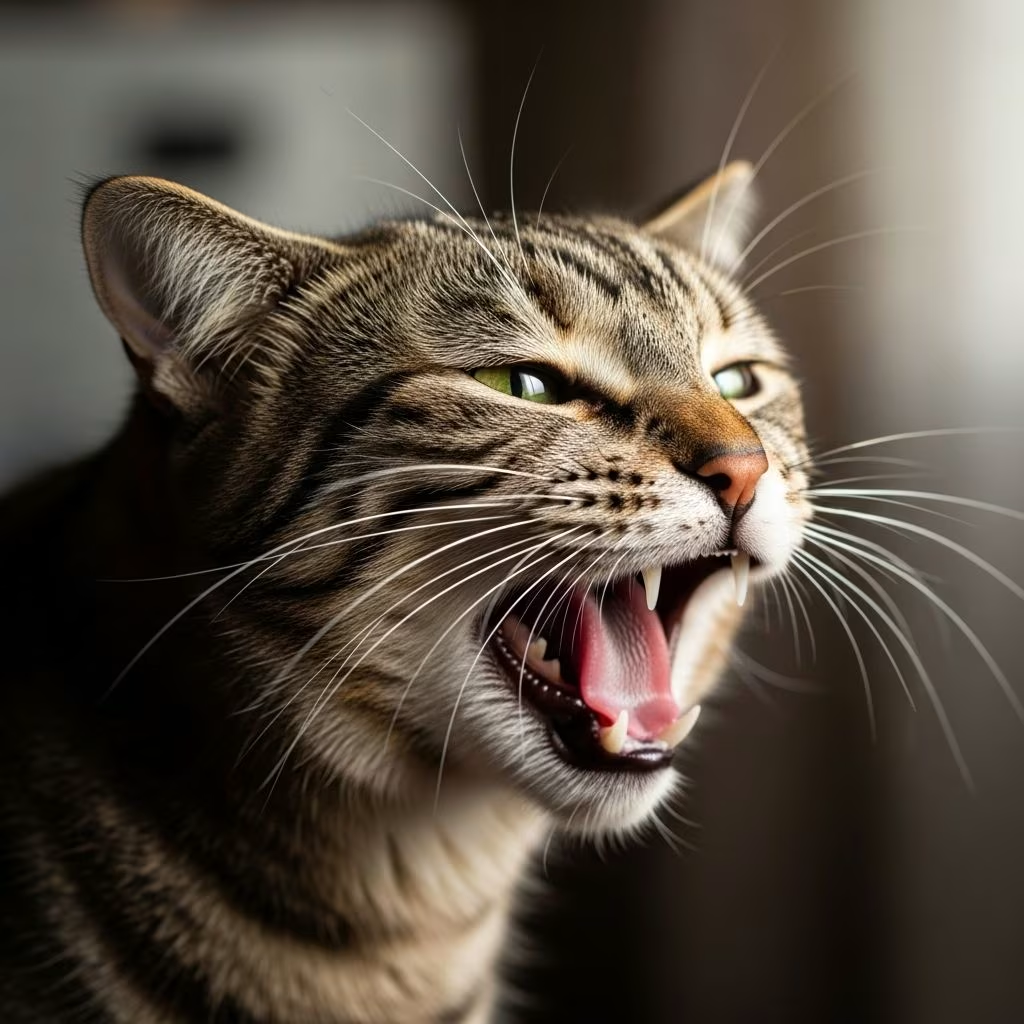
Cats communicate through a rich repertoire of sounds, but hissing stands out as one of the most direct and unmistakable signals. This sharp, explosive noise serves as a feline alarm, alerting others to back off. Far from being random, a cat’s hiss conveys specific messages rooted in instinct, often tied to discomfort, threat perception, or physical distress. Understanding these triggers helps owners foster safer interactions and stronger bonds with their pets.
The Science Behind the Hiss: Instinctual Communication
Hissing originates from a cat’s evolutionary past as a solitary hunter. In the wild, it acts as a non-contact deterrent, mimicking the sound of venomous snakes to ward off predators or rivals without physical confrontation. Domesticated cats retain this reflex, using it in homes to express boundaries. Body language amplifies the message: ears flatten, fur bristles (piloerection), pupils dilate, and the tail may lash or puff up, signaling escalating tension.
Unlike meows, primarily directed at humans, hissing targets perceived threats, whether animal, human, or environmental. It’s rarely aggressive in intent but escalates if ignored, potentially leading to swats or bites. Recognizing context is key—sudden hisses at familiar people often point to underlying issues like health problems rather than outright dislike.
Primary Triggers: Fear and Defensive Responses
Fear tops the list of reasons cats hiss. When confronted by unfamiliar sights, sounds, or beings—like a new guest, vacuum cleaner, or stray animal—cats default to defense. The hiss says, “I’m scared; stay back.” Accompanying signs include crouching, arched backs, and frozen postures, preparing for flight or fight.
- Environmental stressors: Loud noises, sudden movements, or rearranged furniture can provoke hissing as cats reclaim control over their territory.
- Stranger encounters: New people or pets trigger defensive hissing until scents and routines become familiar.
- Heightened states: Puffed tails and sideways stances indicate peak fear, urging immediate space-giving.
Owners report hissing during thunderstorms or fireworks, where the cat seeks hiding spots. Patience and gradual desensitization, like playing calming sounds at low volumes, can mitigate these episodes.
Territorial Instincts: Guarding Space and Resources
Cats are inherently territorial, and hissing enforces personal bubbles. Multi-cat homes see frequent hissing over food bowls, litter boxes, or prime perches. A mother cat fiercely hisses to shield kittens, viewing any approach as a risk. Even neutered cats display this during resource scarcity.
| Situation | Hissing Trigger | Typical Response |
|---|---|---|
| New pet introduction | Intruder in territory | Hiss with swatting; slow integration needed |
| Food competition | Resource guarding | Separate feeding stations |
| Kitten protection | Maternal defense | Respect distance; monitor health |
To ease tensions, provide vertical spaces like cat trees and multiple resources matching cat numbers plus one.
Overstimulation and Petting Boundaries
Many cats adore affection but have limits. Petting-induced hissing, or “petting aggression,” arises when touch shifts from pleasurable to irritating. Tail twitching, skin rippling, or ear flicking precede the hiss—early warnings often missed by enthusiastic owners.
- Focus pets on head, cheeks, and chin; avoid belly or base of tail.
- Short sessions: 2-3 minutes max, pausing for consent checks.
- Watch for freeze responses; sudden stillness signals overload.
This behavior peaks in interactive breeds like Bengals, where sensory input overwhelms quickly. Redirect energy with toys to prevent frustration buildup.
Pain and Health-Related Hissing
Hissing signals acute or chronic pain, masking vulnerability. A normally affectionate cat hissing during routine handling warrants veterinary attention. Common culprits include arthritis, dental issues, abscesses, or injuries from falls.
Subtle signs pair with hissing:
- Limping or reluctance to jump.
- Excessive grooming or neglect thereof.
- Appetite loss, hiding, or aggression spikes.
Vets note hissing during exams often reveals hidden wounds. Early intervention prevents chronic conditions; regular check-ups catch silent sufferers.
Inter-Cat Dynamics and Social Hissing
In households with multiple cats, hissing facilitates hierarchy negotiation. Newcomers provoke resident hisses, establishing pecking orders without fights. Play-hissing during roughhousing differentiates from true conflict by relaxed ears and play bows.
Persistent hissing signals stress; pheromone diffusers or separate territories aid harmony. Spaying/neutering reduces hormone-driven territoriality.
How to Respond: Calming Strategies for Hissing Cats
Immediate action: Back away slowly, avoiding eye contact, which cats interpret as challenge. Speak softly in a monotone to de-escalate.
- Assess safety: Ensure no imminent danger; remove triggers if possible.
- Create calm: Dim lights, play soothing music, offer treats from distance.
- Enrich environment: Scratching posts, puzzle feeders reduce baseline stress.
- Consult pros: Vets rule out pain; behaviorists address chronic issues.
Never punish hissing—it heightens fear. Positive reinforcement builds trust over time.
FAQs: Common Questions About Cat Hissing
Why does my cat hiss at me after years together?
Sudden changes like illness, routine disruptions, or aging-related pain often explain this. Vet visit first.
Is hissing at other cats normal?
Yes, especially introductions. Monitor for fights; intervene if ears flatten fully.
Should I ignore a hissing cat?
Respect the signal by giving space, but investigate causes to prevent recurrence.
Can kittens hiss too?
Yes, mimicking adults or during play/pain. It’s developmental; gentle handling teaches boundaries.
When is hissing an emergency?
If paired with lethargy, vomiting, or wounds—seek vet care immediately.
Preventing Hissing Through Proactive Care
Proactive steps minimize hissing: scheduled play mimics hunting, reducing pent-up energy. Feliway diffusers mimic calming pheromones. Health tracking via apps logs behavior changes early.
Understanding hissing transforms it from scary to informative. Cats hiss to communicate needs, not hatred. By decoding these vocalizations, owners create supportive homes where felines thrive securely.
References
- Why Do Cats Hiss? 6 Reasons Behind the Behaviour — Purina UK. 2023-05-15. https://www.purina.co.uk/articles/cats/behaviour/understanding-cats/why-do-cats-hiss
- My Cat is Hissing: What Does it Mean? — Bottletree Animal Hospital. 2024-02-10. https://bottletreeanimalhospital.com/blog/cat-is-hissing/
- Hissing Isn’t Hating: Why Cats REALLY Hiss — SparkleCat.com. 2022-11-20. https://www.sparklecat.com/diary/hissing-isnt-hating-why-cats-really-hiss



