

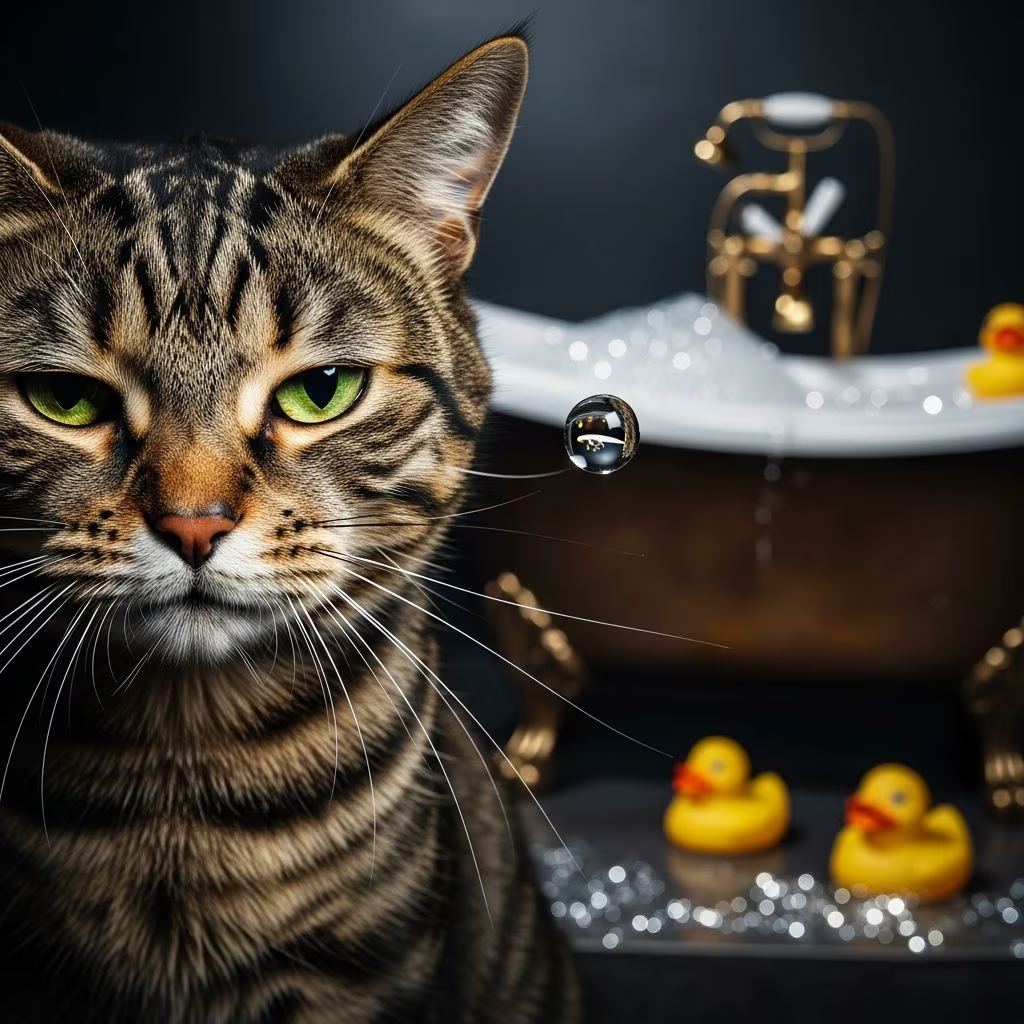
Why Do Cats Hate Water: Understanding Your Feline’s Aversion
If you’ve ever tried to bathe your cat or noticed them frantically avoiding even a light sprinkle of water, you’re not alone. Most domestic cats have a notorious reputation for despising water, and this behavior isn’t a mere quirk—it’s rooted in science, evolution, and individual experience. Understanding why your feline friend reacts this way can help you navigate bath time more effectively and create a more water-friendly environment for your pet.
The relationship between cats and water is complex and multifaceted. While some cats seem completely indifferent to moisture and even enjoy playing with running water from a faucet, the majority of domestic cats go to great lengths to avoid getting wet. This widespread aversion stems from a combination of biological factors, evolutionary history, sensory sensitivities, and learned behaviors that have shaped feline preferences over thousands of years.
The Evolutionary Origins of Water Aversion
To truly understand why cats hate water, we must look back at their evolutionary past. Domestic cats descend from the African wildcat, scientifically known as Felis silvestris lybica, which originated in dry, arid regions across the Middle East, North Africa, and Central Asia. These desert-dwelling ancestors rarely encountered large bodies of water or had any need to interact with aquatic environments during their daily survival.
Unlike tigers or other big cats that evolved near water sources and developed swimming abilities as hunting strategies, African wildcats were terrestrial hunters. Their diet consisted primarily of small land animals such as rodents, insects, and other ground-dwelling prey. This hunting lifestyle didn’t require them to venture into water, so they never developed the physiological or behavioral adaptations necessary for comfortable water interaction.
Over millennia, this lack of water exposure became hardwired into the cat’s evolutionary programming. As the domestic cat evolved from these desert-dwelling ancestors, they inherited a natural aversion to water that persists in our modern pets today. This ancestral preference means that most cats aren’t biologically predisposed to seek out or enjoy aquatic experiences the way some other animals do.
Sensory Sensitivities and Physical Discomfort
The Weight and Discomfort of Wet Fur
One of the most significant reasons cats hate water relates to the physical sensation of being wet. A cat’s fur coat is incredibly dense and absorbent, designed by nature to provide insulation and protection in dry environments. When water saturates this fur, it becomes heavy and waterlogged, significantly restricting a cat’s natural agility and mobility.
This physical impediment creates genuine stress for cats. Their evolutionary success as predators has always depended on their ability to move quickly, climb efficiently, and escape danger at a moment’s notice. When wet fur weighs them down, cats feel vulnerable and exposed. They cannot move with their typical grace and speed, making them feel as though they’ve lost control over their body—a sensation that contradicts everything their instincts tell them they should be able to do.
Additionally, wet fur takes an extraordinarily long time to dry completely. Cats spend a significant portion of their day grooming themselves meticulously, and they understand intuitively that wet fur requires extensive care to restore to its proper condition. The prospect of spending hours in a damp, uncomfortable state is psychologically distressing to these naturally fastidious animals.
Temperature Shock and Disorientation
Cats are creatures of habit and comfort. They prefer their environment to be predictable and stable, with temperatures and sensations they can anticipate and control. When a cat encounters water unexpectedly—or worse, is suddenly immersed in it—the temperature shock can be profoundly disorienting.
Water temperature, whether cold or hot, surprises the cat’s nervous system and triggers an instinctive fight-or-flight response. This sudden physiological jolt not only feels unpleasant but can also trigger lasting negative associations with water that may persist for years.
Olfactory Disruption and Stress
Perhaps one of the most overlooked reasons cats hate water involves their extraordinary sense of smell. Cats possess approximately 14 times more olfactory receptors than humans, meaning they detect scents at a level humans cannot even comprehend. This sensitive nose is absolutely central to how cats perceive and navigate their world.
When a cat gets wet, water doesn’t simply dampen their fur—it disrupts their carefully maintained scent markers and pheromones. These chemical signals serve multiple critical functions: they help cats feel secure in their territory, communicate with other cats, and even recognize themselves and their humans. When water masks or removes these scent markers, cats experience genuine distress and disorientation.
Tap water itself presents another olfactory challenge. Most tap water contains chemicals like chlorine and fluoride added for human safety. To a cat’s sensitive nose, these chemicals can smell harsh, unpleasant, or even toxic. Additionally, the mineral content and chemical composition of tap water varies by location, and cats may detect cues in the water that trigger an instinctive avoidance response.
Loss of Control and Unpredictability
Cats are creatures who thrive on control and predictability. They prefer environments where they can anticipate what will happen next and can escape or adjust their position as needed. Water—particularly moving water—violates these fundamental preferences.
Water’s fluid nature makes it inherently unpredictable. It moves in ways cats cannot fully control or predict. When water flows, splashes, or moves unexpectedly, it creates a sense of chaos that conflicts with the cat’s need for order and control. This unpredictability can trigger anxiety and fear responses.
Furthermore, water can affect a cat’s balance and proprioception. These animals rely on precise sensory feedback to understand their position in space and to execute their lightning-fast reflexes. Water interferes with this feedback system, making cats feel unsteady and unsafe. The slippery nature of wet surfaces reduces their ability to maintain traction, escape quickly if needed, or defend themselves—all critical survival capabilities in a cat’s mind.
Negative Experiences and Learned Behavior
Beyond evolutionary and biological factors, many individual cats develop water aversion through negative personal experiences. If a cat is forcefully bathed, sprayed with water as punishment, or accidentally falls into water, this traumatic event can create lasting psychological associations between water and danger or discomfort.
A single frightening experience—such as accidentally falling into a bathtub or being caught in unexpected rain—can imprint a fear response that persists throughout the cat’s entire life. This learned behavior is particularly powerful in cats because they have excellent memories for negative experiences.
Kittens also learn behavior patterns from observing adult cats. If a kitten’s mother displays strong water aversion, the kitten may learn to mimic this behavior, even without having direct negative experiences with water themselves. This social learning reinforces water avoidance across generations of cats in the same household.
Early Socialization and Individual Variations
While most cats hate water, individual variation exists, and early socialization plays a significant role in determining whether a particular cat will develop water aversion. Kittens exposed to various sights, sounds, scents, textures, and experiences during their critical socialization period—typically the first 7 to 14 weeks of life—develop into more confident and adaptable adult cats.
If a kitten is gently and gradually introduced to water during this formative period, they may grow up feeling more comfortable around aquatic environments. However, this exposure must be positive and non-threatening. Forcing a kitten into water or creating negative associations will have the opposite effect.
It’s important to note that individual personality differences matter tremendously. Even with positive water exposure, some kittens may still develop water aversion due to their inherent temperament and personality traits. Conversely, some cats with no prior water exposure may naturally be more water-tolerant than their peers. Breed also plays a role—certain breeds like Bengal cats, Abyssinians, and Sphynx cats tend to have less pronounced water aversion than other breeds.
The Complexity of Feline Water Preferences
Interestingly, many cats display contradictory behaviors regarding water. A cat that fiercely resists baths may enthusiastically play with water dripping from a faucet or batting at water in a sink. This seeming contradiction actually makes perfect sense when you understand what triggers a cat’s water aversion.
When a cat plays with running water from a faucet, only their paws become wet. They maintain control over the interaction, can stop at any time, and experience the sensory stimulation of moving water without the full-body immersion that triggers their aversion. The movement and sound of running water also stimulate a cat’s natural prey drive, making this interaction intrinsically rewarding despite their general water dislike.
This distinction helps explain why a cat might enjoy playing with water but absolutely refuse a bath. The key difference lies in the cat’s sense of agency, control, and the degree of water exposure involved.
Practical Strategies for Water-Averse Cats
Making Bath Time More Tolerable
If you must bathe your water-averse cat, several strategies can make the experience less traumatic. Use warm water rather than cold, which feels less shocking to the system. Move slowly and speak in calm, soothing tones to help your cat feel safer. Keep the bath brief and consider using waterless shampoos or grooming wipes as alternatives to traditional baths whenever possible.
Allow your cat to acclimate gradually to the bathing space before introducing water. Let them explore the bathroom and bathtub when it’s dry, creating positive associations with the environment before water ever enters the picture.
Environmental Modifications
Create a water-friendly environment by providing fresh drinking water in multiple locations away from litter boxes and food bowls. Some cats enjoy fountains or running water sources, which can encourage hydration while providing the water play they sometimes enjoy.
Frequently Asked Questions About Cats and Water
Q: Do all cats hate water?
A: No, not all cats hate water. While most domestic cats display water aversion, some breeds and individual cats are more water-tolerant or even water-loving. Bengal cats, Sphynx cats, and Abyssinians often show less aversion to water than other breeds. Individual temperament, early socialization experiences, and genetics all influence whether a particular cat will hate water.
Q: Can I help my cat become more comfortable with water?
A: Yes, gradual positive exposure can help. If you have a kitten, gentle introduction to water during the socialization period can increase comfort levels. For adult cats, introduce water slowly and positively—start with playing with water from a faucet, then gradually progress to more water exposure if your cat shows interest. Never force a cat into water, as this will reinforce negative associations.
Q: Why do some cats like running water from faucets?
A: Cats are drawn to running water because the movement and sound stimulate their natural prey drive. Additionally, they control the interaction and only get their paws wet, avoiding the full-body immersion that triggers their aversion. The novelty and sensory stimulation of moving water appeal to their hunting instincts.
Q: Is it necessary to bathe my cat?
A: Most domestic cats don’t require regular baths because they groom themselves thoroughly. Unless your cat has gotten into something harmful, has a skin condition requiring medicated baths, or has long fur that becomes matted, bathing is usually unnecessary. Consult your veterinarian for specific recommendations based on your cat’s needs.
Q: What should I do if my cat accidentally gets wet?
A: Remain calm to avoid transferring stress to your cat. Gently wrap them in a soft towel and allow them to dry naturally in a warm, quiet space. Avoid using hair dryers unless your cat is accustomed to the sound, as this can increase stress. Provide comfort and reassurance, and don’t attempt to restrain your cat if they’re distressed.
References
- Why do cats hate water? — Live Science. Accessed November 28, 2025. https://www.livescience.com/animals/domestic-cats/why-do-cats-hate-water
- Why Do Cats Hate Water? The Truth Will Surprise You — Purrfect Grooming. Accessed November 28, 2025. https://purrfectgrooming.pet/blog/b/why-do-cats-hate-water/
- Why Do Cats Hate Water? — Britannica. Accessed November 28, 2025. https://www.britannica.com/story/why-do-cats-hate-water
- Why do cats hate water? An expert explains — Popular Science. Accessed November 28, 2025. https://www.popsci.com/science/why-cats-hate-water/
- Why do cats hate water? A deep dive into feline fears and wild roots — Big Cat Rescue. Accessed November 28, 2025. https://bigcatrescue.org/conservation-news/why-do-cats-hate-water-a-deep-dive-into-feline-fears-and-wild-roots
- Why some cats hate water—and others don’t — Wisdom Panel. Accessed November 28, 2025. https://www.wisdompanel.com/en-us/blog/why-cats-hate-water
- National Research Council Study on Cat Water Requirements — National Research Council. Accessed November 28, 2025. https://www.nationalacademies.org/



