

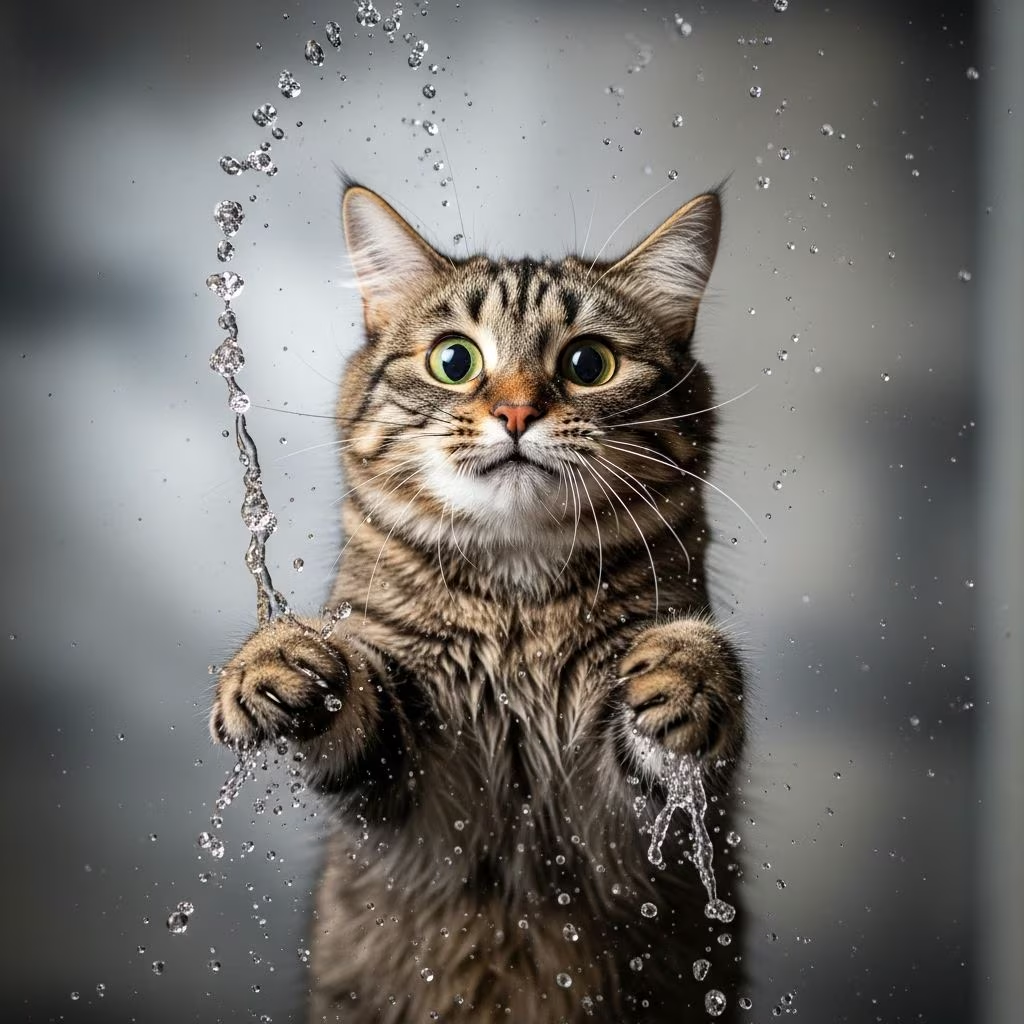
Most domestic cats exhibit a strong aversion to water, often fleeing at the sight of a bathtub or sprinkler. This behavior stems from a combination of evolutionary history, biological traits, and sensory sensitivities that make water unappealing or stressful for them.
The Evolutionary Roots of Cats’ Water Aversion
Domestic cats descend from the African wildcat (Felis silvestris lybica), a species adapted to arid desert environments in the Middle East and North Africa. These ancestors rarely encountered large bodies of water like rivers or lakes, evolving with minimal need for swimming or water exposure. Unlike dogs, whose ancestors worked alongside humans in water-related tasks such as retrieving game or rescue operations, cats had no such selective pressure. Dogs developed water-repellent coats, webbed feet, and retrieval instincts over generations, while cats prioritized agility on land for hunting small prey.
In dry climates, cats obtained most hydration from prey, reducing their ‘thirst drive’ for open water sources. Water was primarily a drinking resource, not for play or bathing, fostering an instinctual view of immersion as unnecessary and risky.
Why Wet Fur is a Cat’s Nightmare
Cat fur is highly absorbent, soaking up water and becoming heavy, waterlogged, and slow to dry. This added weight impairs a cat’s nimbleness, making escape from predators difficult and triggering feelings of vulnerability. Wet fur also mats, disrupts insulation, and can lower body temperature, heightening discomfort and hypothermia risk—even for indoor cats with lingering instincts.
Cats are fastidious groomers, spending up to 50% of their waking hours maintaining their coat. Wet fur undermines this control, feeling alien and stressful. In contrast, many dog breeds have fur that repels water, dries quickly, and supports active play.
Sensory Overload: Smells, Sounds, and Shock
Cats possess an acute sense of smell—14 times stronger than humans—making them sensitive to water’s odors. Tap water often contains chlorine, fluoride, or other chemicals that, while safe for drinking, register as unpleasant or alarming to felines. Submersion introduces unfamiliar scents, masking natural pheromones essential for territory marking and communication, causing distress.
Sudden water sprays disorient cats by bombarding multiple senses: cold shock, unfamiliar smells, and unpredictable motion. This sensory overload mimics threats, spiking stress hormones like cortisol. Even dripping faucets intrigue some cats due to prey-like movement and sounds, but full immersion crosses into aversion territory.
Trauma and Learned Behavior
Negative experiences amplify water phobia. A fall into a bathtub or forced bath can traumatize a cat, associating water with helplessness and fear. Kittens are particularly impressionable; early positive exposure during the socialization window (2-7 weeks) can foster comfort, but mishandled introductions create lifelong aversion.
For adults, repeated stressful baths—for cleaning messes or medical reasons—reinforce anxiety. Vets recommend ‘bathless baths’ with wipes or dry shampoos to minimize trauma.
Why Do Cats Hate Being Sprayed with Water?
Spraying water is a common training myth, but it backfires on cats. The sudden blast startles them, overwhelming senses without warning. It doesn’t teach behavior like ignoring furniture scratching; instead, it builds generalized fear of the sprayer (often the owner). Stress responses include hiding, aggression, or redirected scratching, worsening issues.
- Sudden onset: Triggers flight response via cold shock and noise.
- Scent disruption: Chemicals alter familiar environments.
- Loss of control: Cats hate unpredictability, preferring to initiate interactions.
Positive reinforcement, like treats or play redirection, proves more effective for training.
The Smell Factor: Why Water Seems Unpleasant
Beyond chemicals, water dilutes a cat’s scent profile, erasing pheromones used for security and identity. Unfamiliar water smells—rain, pools, or taps—signal danger instinctively, evoking wild avoidance of contaminated sources.
- Chlorine/chemicals: Detectable at low levels, evoking distaste.
- Instinctual cues: Mimics unsafe, predator-laden waters.
- Pheromone loss: Causes identity and territory distress.
Are There Cats That Like Water?
Not all cats shun water; individual variation exists due to genetics, breed, and upbringing. Some enjoy paw-dipping in sinks or chasing faucets, stimulated by motion mimicking prey.
Water-Loving Breeds
| Breed | Water Affinity | Traits |
|---|---|---|
| Turkish Van | High (“Swimming Cats”) | Water-repellent coat, love baths and pools. |
| Turkish Angora | Moderate-High | Enjoys splashing, playful with water. |
| American Shorthair | Moderate | Tolerant if socialized early. |
| Bengal | Moderate | Curious, may fish or play in shallow water. |
| Sphynx | Variable | Hairless; baths needed, some adapt well. |
Turkish Vans famously swim recreationally, holding breath to hunt fish. Early socialization overrides instincts in many cats.
Cats vs. Dogs: A Tale of Evolutionary Divergence
Dogs’ water tolerance traces to working breeds selected for aquatic tasks, with physical adaptations like oily coats and strong paddling. Cats lack these; their sleek build suits stealth hunting, not swimming. Culturally, humans reinforce dog water play, while cats face baths as punishment, deepening divides.
Tips for Helping Water-Averse Cats
Never force immersion; it entrenches fear. Gradual desensitization works best:
- Start with shallow, warm bowls for paw play; reward with treats.
- Use running faucets for observation, progressing to paw dips.
- Opt for sponge baths or vet-recommended wipes.
- For baths: Cover eyes/ears, use gentle streams, dry thoroughly with warm towels.
- Consult behaviorists for severe phobias.
Frequently Asked Questions (FAQs)
Do all cats hate water?
No, while most do, breeds like Turkish Vans love it, and socialization influences tolerance.
Why do cats play with faucets but avoid baths?
Dripping water mimics prey movement without full wetting; baths overwhelm with immersion.
Can I train my cat to like water?
Yes, via positive, gradual exposure starting young. Avoid punishment.
Is it safe to bathe cats?
Occasionally yes, if needed, but use cat-safe shampoo and minimize stress to prevent health issues.
Why don’t cats drink from bowls but love sinks?
Running water stays fresh; still bowls stagnate, triggering instincts.
References
- Why do cats hate water? Feline hydrophobia, explained — ManyPets. 2023. https://manypets.com/uk/articles/why-do-cats-hate-water/
- Why do cats hate water? — Live Science. 2023-10-17. https://www.livescience.com/animals/domestic-cats/why-do-cats-hate-water
- Why Do Cats Hate Water? — Britannica. 2023. https://www.britannica.com/story/why-do-cats-hate-water
- Why Do Some Cats Hate Water? — PetMD. 2024-05-20. https://www.petmd.com/cat/general-health/why-do-some-cats-hate-water
- Why do cats hate water? An expert explains. — Popular Science. 2023. https://www.popsci.com/science/why-cats-hate-water/



