

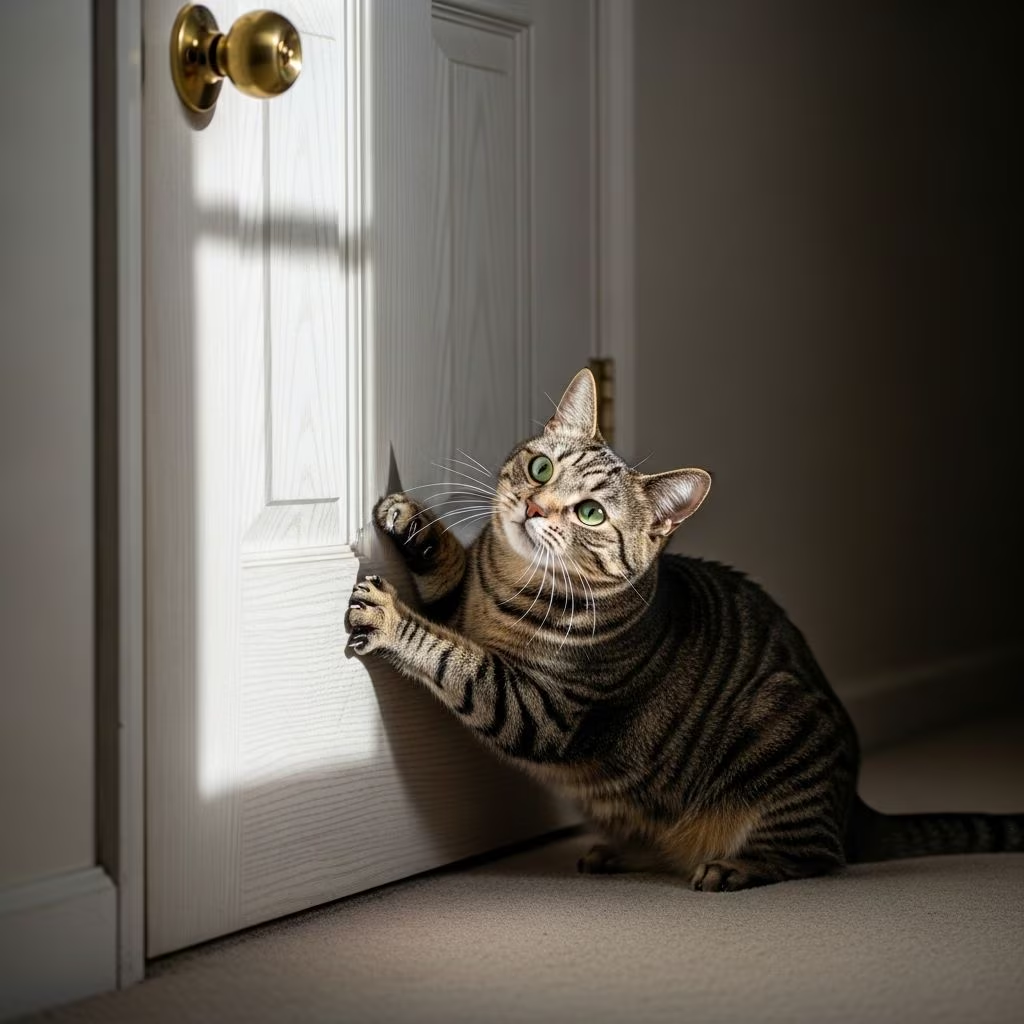
Why Do Cats Hate Closed Doors: Understanding Feline Behavior
One of the most common and frustrating behaviors cat owners encounter is their feline companion’s intense dislike of closed doors. Whether it’s incessant meowing, persistent scratching, or continuous pawing at the door frame, cats seem determined to keep every door in the house wide open. This seemingly simple behavioral quirk actually stems from complex psychological and instinctual factors rooted in how cats perceive their environment, territory, and relationship with their human companions. Understanding why your cat exhibits this behavior is the first step toward managing it effectively and creating a harmonious living situation for both you and your pet.
The Territorial Nature of Cats
Cats are inherently territorial animals, and this fundamental aspect of their nature plays a significant role in their aversion to closed doors. When you close a door, you disrupt your cat’s sense of ownership and control over their domain. To a cat, a closed door represents an unacceptable barrier that prevents them from accessing and surveying what they consider their territory. This perceived loss of control can trigger frustration and anxiety, leading them to claw, meow, or push against the door in an attempt to reassert their dominance over their space.
Cats require a sense of security within their territory, and not having access to important areas within their domain can be deeply distressing. Cats need to feel secure in their territory, and not having access to those important areas within their territory could drive them to dislike closed doors. When you restrict access to certain rooms or areas of your home, you’re essentially creating invisible boundaries that your cat hasn’t authorized. This violation of their territorial expectations generates significant stress and frustration.
Curiosity and the Fear of Missing Out (FOMO)
Beyond territorial concerns, cats possess an insatiable curiosity that makes closed doors particularly frustrating for them. The inability to see or hear what’s happening beyond a closed door heightens their natural investigative instincts and makes them more determined to gain access. Cats rely heavily on their senses, especially hearing and smell. When they detect sounds or scents from the other side of a door, their need to investigate becomes almost irresistible, even if there’s nothing particularly interesting awaiting them.
Modern pet owners have coined the term “FOMO”—fear of missing out—and surprisingly, cats experience this phenomenon as well. After all, who knows what you’re doing behind the closed door without them? You might be opening a can of tuna, preparing a delicious meal, or worst of all from your cat’s perspective, interacting with another pet. This creates a compelling psychological drive to be present and aware of everything happening in their environment.
Survival Instincts and Environmental Awareness
A cat’s disdain for closed doors isn’t merely about curiosity or territory—it’s deeply connected to their primal survival instincts. In the wild, being aware of their surroundings is essential for avoiding predators and locating food. Even though domesticated cats have never faced actual threats in most cases, they retain these fundamental survival behaviors programmed into their DNA over millennia of evolution.
When a closed door limits a cat’s ability to monitor their environment, it can make them feel vulnerable and anxious. A closed door limits a cat’s ability to monitor their environment which can make them feel vulnerable. Your cat cannot see what’s happening in other areas of your home, cannot identify potential threats, and cannot confirm that spaces they consider part of their territory remain safe and familiar. This creates a persistent sense of unease that drives them to desperately try to regain visual and sensory access to restricted areas.
Social Bonds and Separation Anxiety
Despite the popular stereotype of cats as aloof, independent creatures, research has revealed that most cats form surprisingly strong emotional bonds with their human companions. A 2017 study found that cats—despite their reputation as being independent animals—preferred human interaction to other stimuli, including food, toys, and scents. This means that for many cats, being separated from you by a closed door can feel like an act of rejection.
Cats commonly exhibit what researchers call “separation anxiety,” though this condition is often underrecognized in feline pets. A closed door can feel like a rejection, leading them to try to reunite with you. This behavior is particularly pronounced in cats who are more socially inclined or prone to anxiety. Many cats follow their guardians from room to room throughout the day, and a closed door disrupts this comforting routine. Your cat may feel confused, anxious, or even abandoned when suddenly unable to reach you, especially behind bathroom doors where they cannot even hear you clearly.
Independence Versus Control
While cats are famous for their independent nature, they paradoxically also crave control over their environment. A closed door represents a loss of control which can be particularly aggravating for a creature that thrives on predictability and routine. Even if your cat doesn’t necessarily want to enter a particular room, they still want the option to do so. The ability to choose is fundamentally important to feline psychology.
It’s less about what’s behind the door and more about asserting their autonomy. When you close a door, you’re making a decision for your cat—you’re saying “no, you cannot go this way.” Cats, who prefer to make their own decisions and maintain agency over their lives, find this restriction deeply frustrating. This explains why some cats will meow at doors they rarely or never actually use; it’s not about accessing the space itself, but about asserting their right to access it.
The Benefits of Keeping Doors Open
Understanding the reasons behind your cat’s door-related behavior can help you see why maintaining open doors offers significant advantages for your feline companion’s wellbeing.
Reduces Stress and Anxiety
Closed doors can make cats feel trapped or excluded which may lead to anxiety or frustration by keeping doors open you allow your cat to move freely throughout their environment. This freedom reinforces their sense of control and reduces the likelihood of stress-related behaviors including destructive actions, excessive vocalization, and elimination outside the litter box.
Supports Natural Exploration
Cats are natural explorers, and restricting their access to certain areas inhibits their normal behavioral patterns. Open doors allow them to engage in the environmental surveillance behaviors that are deeply ingrained in their nature.
Prevents Destructive Behavior
Closed doors can lead to unwanted behaviors like scratching at the door frame or incessant meowing. These behaviors, once established, become remarkably difficult to eliminate. Preventing them from developing in the first place is far easier than trying to break an ingrained habit afterward.
Enhances Social Connection
An Open Door signals inclusivity and security to your cat. It communicates that you welcome them into your spaces and reinforces your bond. Many cats experience closed doors as rejection, while open doors send a message of acceptance and togetherness.
When You Must Close Doors
Despite the benefits of keeping doors open, sometimes circumstances require you to close them. You may need to restrict access during home renovations, when a visitor is allergic to or fearful of cats, while introducing a new pet to your household, or for safety reasons. When you must close doors, implementing gradual desensitization techniques can help your cat adjust with minimal stress.
Start by closing the door for very brief periods and immediately opening it again, gradually extending the duration over days or weeks. Provide positive associations by offering treats and praise when the door is closed. Never punish your cat for their reaction to closed doors, as this addresses only the symptom and not the underlying anxiety.
Recognizing Changes in Door-Related Behavior
If your cat suddenly begins displaying unusual interest in a door they previously ignored, pay attention. If you notice a change in their behavior around a closed door, there is a good chance your cat knows something that you don’t. A sudden increase in meowing or scratching at a particular door might indicate that something has changed in that space—perhaps a mouse, an unfamiliar sound, or another animal has captured your cat’s attention. Investigating these behavioral changes can sometimes reveal important information about your home’s security or environment.
The Role of Individual Personality
It’s important to recognize that individual cats display varying degrees of sensitivity to closed doors. Some cats seem relatively unbothered by restricted access, while others become extremely anxious and vocal. Factors influencing this variation include the cat’s age, prior experiences, personality type, and the strength of their bond with their human. A cat with a strong attachment to their owner or those prone to anxiety will typically struggle more intensely with closed doors than a more independent or emotionally resilient cat.
Frequently Asked Questions
Q: Why do cats attack closed doors?
A: Cats might attack closed doors because they’re anxious or angry at being separated from you. They can also attack closed doors as a game when they’re looking for fun or feeling bored. The intensity of these attacks often reflects the level of anxiety or frustration your cat is experiencing.
Q: Why can’t cats decide to go in or out?
A: Cats like to be indecisive—it’s a normal part of cat behavior. When they’re hovering by the door deciding whether to go in or out, it means they have your attention and they are calling the shots. This indecision is often a form of control—they want to maintain the option without committing to a choice.
Q: Why do cats scratch closed doors?
A: A cat might scratch closed doors to get their owner’s attention because they feel bored, lonely, or hungry. They’re also unlikely to approve of a closed door because it blocks off some of their territory. Scratching serves multiple purposes: it’s a communication method, a stress-relief mechanism, and a way to assert territorial control.
Q: What should I do if my cat won’t stop meowing at closed doors?
A: Resistance to opening the door in response to meowing is difficult but important. If you try to resist the urge to open the door, they may experience an extinction burst and the behavior may get worse. However, maintaining consistency will eventually extinguish the behavior. Alternatively, keep doors open when possible, or work with a certified cat behaviorist to develop a behavior modification plan addressing the underlying anxiety.
Q: Is my cat’s obsession with closed doors a sign of a problem?
A: If your cat demands that you keep the door open at all times, there’s something really bothering them. It may be distress related to being separated from you or feeling trapped. While curiosity plays a role, most cases stem from anxiety. Consider consulting with a veterinary behaviorist if the behavior is severe or affecting your cat’s quality of life.
Creating a Cat-Friendly Home Environment
The most effective approach to managing your cat’s aversion to closed doors is to create an environment that respects their fundamental needs and instincts. By understanding the Primal instincts driving your cat’s Behavior you can create an environment that respects their need for security and exploration, helping to reduce their frustration with Closed Doors.
Whenever possible, maintain open access throughout your home. Provide multiple resources such as litter boxes, water bowls, and hiding spaces in different areas so your cat doesn’t feel dependent on accessing specific rooms. Install baby gates or cat-proof doors if you need to restrict access while still allowing your cat to see and smell what’s happening in restricted areas. Create vertical spaces like cat trees and shelves so your cat can survey their territory from elevated positions.
Overall cats hate closed doors because they go against their Natural Instincts and behaviors whether it’s their territorial nature insatiable curiosity social bonds or need for control closed doors represent a disruption. By recognizing these deep-rooted motivations and adapting your home accordingly, you can significantly reduce the stress and frustration your cat experiences while creating a more harmonious living environment for your entire family.
References
- Why Cats HATE Closed Doors: Understanding Feline Territory — YouTube. 2025. https://www.youtube.com/watch?v=JbnpEfFlCm0
- Why Do Cats Hate Closed Doors? — Mental Floss. 2024. https://www.mentalfloss.com/animals/cats/why-cats-hate-closed-doors
- Why Do Cats Hate Closed Doors? 9 Possible Reasons — Cats.com. 2024. https://cats.com/why-do-cats-hate-closed-doors
- Getting Your Cat Used To Closed Doors — Class Act Cats. 2024. https://classactcats.com/blog/getting-your-cat-used-to-closed-doors/
- Why Do Cats Hate Closed Doors: A Kitty’s Point of View! — Feliway. 2024. https://us.feliway.com/blogs/news/why-do-cats-hate-closed-doors-a-kittys-point-of-view



