

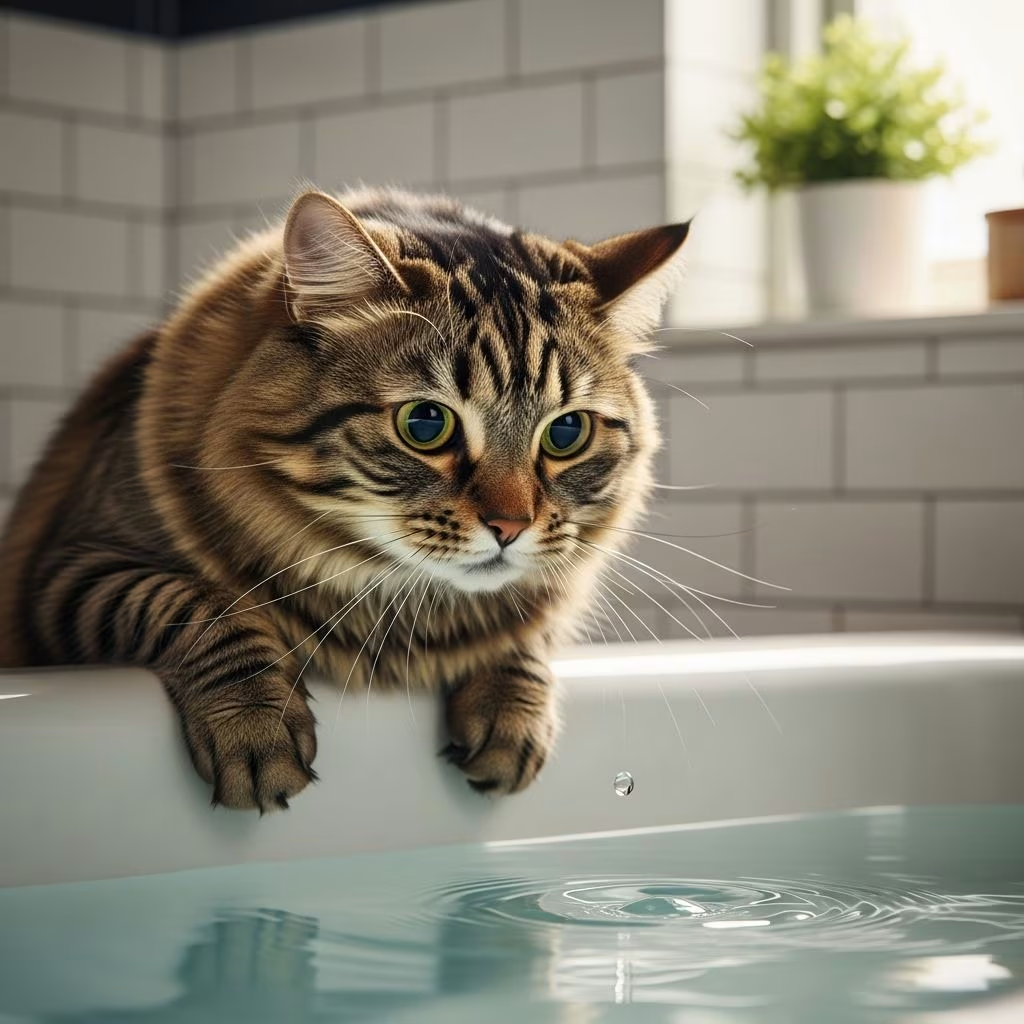
Most domestic cats exhibit a strong aversion to water, often fleeing at the sight of a bathtub or sprinkler. This behavior stems from a combination of evolutionary adaptations, physical discomfort, and heightened sensory perceptions that make wetness undesirable for felines.
The Evolutionary Roots of Feline Water Aversion
Cats originated from wild ancestors in arid regions of the Middle East and Africa, environments where large bodies of water like rivers or lakes were scarce. These early felines, such as the African wildcat, adapted to survive with minimal water intake, deriving most hydration from prey. Unlike dogs, whose ancestors frequently interacted with water through hunting and retrieval tasks, cats had no evolutionary pressure to develop comfort with submersion.
This lack of exposure means modern cats view open water primarily as a drinking source rather than a playground. Their instincts prioritize land-based agility over aquatic activities, viewing water as a potential hazard rather than recreation.
How Water Impacts a Cat’s Fur and Mobility
A cat’s dense fur is designed for insulation and stealth, but it absorbs water readily, becoming heavy and slow to dry. This waterlogging disrupts thermoregulation, leaving cats chilled and uncomfortable for hours. The added weight impairs their signature grace, making quick escapes from threats difficult—a vulnerability in the wild.
Wet fur also mats, hindering self-grooming routines that cats rely on for hygiene and scent marking. This physical burden heightens stress, as cats associate wetness with reduced predatory defenses.
| Aspect | Dry Fur Benefits | Wet Fur Drawbacks |
|---|---|---|
| Mobility | Lightweight, agile movement | Heavy, sluggish motion |
| Temperature Control | Efficient insulation | Prolonged chilling |
| Grooming | Easy maintenance | Matting and irritation |
| Scent | Preserves natural odors | Masked pheromones |
Sensory Overload: Smell, Sound, and Surprise
Cats possess an acute sense of smell, detecting chemicals like chlorine in tap water that humans overlook. These odors can signal danger or unfamiliarity, triggering avoidance. Water’s movement and splashing also overwhelm, startling cats with sudden sensations.
Being sprayed or submerged disorients felines, bombarding multiple senses simultaneously. This sensory chaos mimics predatory threats, prompting flight responses. In contrast, controlled interactions like pawing at faucets allow cats to engage without full immersion.
Learned Behaviors and Traumatic Encounters
Negative experiences amplify innate dislikes. A fall into water or forced bathing can imprint lifelong fear, as cats generalize the terror to all water sources. Early socialization plays a key role; kittens exposed positively to water during critical periods (2-7 weeks) may develop tolerance.
Personality influences vary: confident, curious cats explore more readily, while timid ones retreat. Owners forcing baths often reinforce aversion, whereas gradual introductions build familiarity.
Breeds and Individuals That Embrace Water
Not all cats shun water. Certain breeds show affinity due to genetics or selective breeding:
- Turkish Van: Nicknamed “swimming cats,” they possess water-repellent coats and love splashing in pools.
- Bengal: Energetic and adventurous, often drawn to baths or streams.
- Abyssinian: Playful explorers comfortable with wet play.
- Sphynx: Hairless skin dries quickly, reducing discomfort.
Even non-breeds may enjoy dripping faucets or fishing, as motion mimics prey. Flowing water intrigues without full wetting.
Comparing Cats and Dogs: Why the Difference?
Dogs’ water tolerance traces to working breeds bred for aquatic tasks—retrieving fowl, herding fish, or rescues. Selective breeding yielded webbed feet, oily coats, and enthusiasm reinforced by humans. Cats, solitary hunters, never faced such demands.
Safe Ways to Introduce Cats to Water
Respecting instincts, gradual exposure minimizes stress:
- Start with shallow, still water in a familiar container.
- Let the cat approach voluntarily; reward curiosity with treats.
- Use lukewarm water to avoid shocks.
- Limit to paws first, progressing slowly.
- Avoid forcing; end on positive notes.
For bathing necessities, use cat-safe shampoos and minimal water. Dry thoroughly post-exposure.
Health Considerations Around Water
While aversion is normal, monitor for extremes. Rare medical issues like hyperthyroidism can alter behaviors. Consult vets for unusual phobias. Hydration remains key; fountains encourage drinking without immersion.
Frequently Asked Questions (FAQs)
Can all cats learn to like water?
Many can tolerate it with patient socialization, especially kittens, but full enthusiasm is breed- and personality-dependent.
Why do cats play with faucets but hate baths?
Faucets offer control and prey-like motion without soaking; baths overwhelm with lack of escape.
Is it safe to bathe my cat?
Yes, sparingly with proper technique. Most need infrequent baths due to self-grooming prowess.
Do wild cats like water?
Some, like fishing cats, swim expertly; domestics retain less adapted traits.
Conclusion: Respecting Feline Nature
Understanding water aversion empowers better cat care. Embrace their preferences while gently expanding comfort zones where needed. (Word count: 1678)
References
- Why do cats hate water? Feline hydrophobia, explained — ManyPets. 2023. https://manypets.com/uk/articles/why-do-cats-hate-water/
- Why Do Cats Hate Water? — Britannica. 2023-10-26. https://www.britannica.com/story/why-do-cats-hate-water
- Why do cats hate water? — Live Science. 2023. https://www.livescience.com/animals/domestic-cats/why-do-cats-hate-water
- Why Do Cats Hate Water? — Purina. 2023. https://www.purina.com/articles/cat/behavior/understanding-cats/why-do-cats-hate-water
- Why Do Cats Hate Water? — Hill’s Pet. 2023. https://www.hillspet.com/cat-care/behavior-appearance/why-do-cats-hate-water
- WHY CATS HATE WATER? | Dr. Lindsay Butzer Veterinarian Explains! — YouTube (Dr. Lindsay Butzer DVM). 2025-05-04. https://www.youtube.com/watch?v=j0w0EBkTtRU



